
Home » Posts tagged 'Catholic Church' (Page 6)
Tag Archives: Catholic Church
Church Reform Wishlist: Precedence and Papal Honors
Of Precedence and Papal Honors (Or, “Monsignors, medals, and more!”)
Full disclosure: i helped get some acquaintances a papal knightood for their commendable service to the Church, i know some others. I know several monsignori, most quite deserving of recognition. If we have these things, we should use them, but first ask whether we should have them at all.
- The presbyterate and diaconate are equal in ‘rank and dignity’. We really should not even be talking about ‘rank’ with regard to the life of the Church anyway. Are not all equal in Christ?
- I am not sure we should, but as long as we do still care about an order of precedence, patriarchs precede cardinals, and major archbishops ought to be considered equal to cardinal-bishops. .
- On one hand I think we should eliminate the vestiges of the renaissance court – the three grades of monsignori, the five grades of papal knights, the two medals, and perhaps even the college of cardinals, honorary canons, etc.
- On the other hand, I believe that if we do have these things – and there are reasons to have the means of recognizing good and faithful service to the church – they ought to be exercised more equitably and transparently, to whit:
- Clear qualifications or requirements for each honor should be widely available, clearly understandable, and published on the Vatican website.
- There should be universal consistency, too. A parish organist of fifty years and a Swiss Guard of two can both receive the Benemerenti medal. Likewise some dioceses do not have monsignori at all, some award it after a set number of years of service, and if you work in the curia, it was, until quite recently, all but guaranteed after five years (one term) of service.
- Nominations should have an open process that allows at least initial proposals to come from all corners of the Church. There are many deserving people who will never be recognized simply because nobody knows how to get it done.
- Generous donors should either not be so awarded, or only granted the lowest category of particular order. The higher levels reserved for those who have given of their time and talent.
- We should make broader use of the awards as appropriate for ecumenical, interreligious, and even non-believing leaders who have contributed in someway to the Church and to the world.
- e.g., the diplomats accredited to the Holy See are frequently made Knights of the Order of Pope Pius IX. Maybe it would be appropriate to make the outgoing Representative of the Archbishop of Canterbury to the Holy See an honorary canon of St. Peter’s, or of St. Paul’s without the Walls? Or at least a Pian Knight, too!
- If the papal knighthoods are for the laity, and the monsignori for the clergy, then deacons should be able to be awarded with all the levels of monsignor. Alternatively, restrict the highest (protonotary apostolic) to the diaconate (which is the historic origin of this role anyway), the middle (honorary prelate) to the presbyterate, and the lowest (chaplain of his holiness) to lay ecclesial ministers, or to both presbyters and deacons.
- Publish a report each year, and a sum total of all awards given, which includes clarification of who was awarded, for what reason, and where they are. I would be happy to help with the research!
- Gentlemen of His Holiness are, basically, finely dressed ushers. Is it really an honorific? Why not just have the ushers do this job? If it is an honorific, let it become more systematic like the rest.

Jump to:
- Church Reform Wishlist: Open Letter and Introduction
- Church Reform Wishlist: The Eastern Catholic Churches
- Church Reform Wishlist: The College of Bishops
- Church Reform Wishlist: The College of Cardinals
- Church Reform Wishlist: The Roman Curia
- Church Reform Wishlist: Ministry and Holy Orders
- Church Reform Wishlist: Precedence and Papal Honors
- Church Reform Wishlist: Catholic Education
- Church Reform Wishlist: Liturgy
Church Reform Wishlist: Catholic Education and Pastoral Formation
Education
- All candidates for pastoral ministry, whether presbyterate, diaconate, or lay ecclesial ministry, are required to take an introductory course in ecumenism, and in interreligious dialogue. At last count, only about 1/3 of seminaries were in compliance. Enforce this.
- No minor seminaries!
- Seminarians should not be isolated in their formation, but prepare for a life of ministry with deacons and lay ecclesial ministers alongside candidates for the diaconate and lay ecclesial ministry
- There should be an accreditation system for pontifical universities that utilizes Catholic higher education leaders from around the world and from outside the pontifical/ecclesiastical system
- The clericalism contained in the Congregation for Education’s governing documents on the distinction between “theology” (only for priests) and “religious studies” (for religious and laity) should be rooted out completely.
- A commitment to consultation and collaboration, and an understanding of the difference, should be inculcated in all called to pastoral ministry.
- Formation for ministry in the U.S. means, generally, a BA in philosophy and theology or a BA in something else with some prerequisite work, and then a Master of Divinity or similar. In Rome, the degree for ordination is a Baccalaureate in THeology, after a partial degree in Philosophy. What about psychology, leadership, non-profit administration, etc? Why a seven year program in one system, and a five year program in another?
- The Roman pontifical system needs a desperate overhaul. It needs to accept that there have been lay students earning theology degrees for a century and adapt accordingly. There is so much overlap and repetition between the universities and institutes, a lack of funding, a surplus faculty and a deficiency of staff, and a tendency to be isolated from the broader theological and academic world. Do there really need to be seven faculties of canon law, and two dozen faculties of theology? All the universities, athenae, and institutes combined probably only have 10,000 students in residence. Perhaps it is time to have an actual system in place here, to which all the participating universities belong. This would take an extensive blog in itself….
Jump to:
- Church Reform Wishlist: Open Letter and Introduction
- Church Reform Wishlist: The Eastern Catholic Churches
- Church Reform Wishlist: The College of Bishops
- Church Reform Wishlist: The College of Cardinals
- Church Reform Wishlist: The Roman Curia
- Church Reform Wishlist: Ministry and Holy Orders
- Church Reform Wishlist: Precedence and Papal Honors
- Church Reform Wishlist: Catholic Education
- Church Reform Wishlist: Liturgy
Church Reform Wishlist: Liturgy
Liturgy
- Actually, i do not have too much to say. So much has been said, and liturgy is probably the best case of successful, ongoing reform, despite the bumps. So just a couple small things: put into law that which theology and history holds to be evident. Or, where we have two practices that go back centuries, the older one should be the norm, for example:
- The most ancient form of receiving communion is in the hand. Make this the norm, and receiving in the tongue, a later practice, an accepted alternative.
- Communion under both species as the norm, with exceptions as appropriate
- Translate the universal version of the GIRM into each language on the Vatican website – currently the English is actually the adaptations for the USCCB and does not reflect the original, universal, Latin version. It leads to some confusion.
- The Eucharist is the Sunday Liturgy, it should be more or less limited to Sundays. The rest of the week should have the liturgy of the hours publicly celebrated in parishes.
- The Creed should be recited without the Filioque, as a norm, in all liturgies.
- The portions of Liturgicam Autenticam which violate previous ecumenical agreements should be abrogated.

Jump to:
- Church Reform Wishlist: Open Letter and Introduction
- Church Reform Wishlist: The Eastern Catholic Churches
- Church Reform Wishlist: The College of Bishops
- Church Reform Wishlist: The College of Cardinals
- Church Reform Wishlist: The Roman Curia
- Church Reform Wishlist: Ministry and Holy Orders
- Church Reform Wishlist: Precedence and Papal Honors
- Church Reform Wishlist: Catholic Education
- Church Reform Wishlist: Liturgy
Vatican Bank’s first-ever Annual Report
As if there was not enough in the Church reform circuit today, with the Roman pontiff’s second big interview and the first meeting of the Council of Cardinals responsible for reforming the apparati of universal governance, the Istituto per le Opere di Religione (Institute for the Works of Religion), better known as the Vatican Bank, issued its first-ever annual report in its 125 year history.
The groundwork was laid by Pope Benedict in 2010, whose most successful reform efforts, arguably, revolved around Vatican finances. The efforts were accelerated after Pope Francis was elected.
In 2012, the IOR commemorated 125 years of history since the creation of its predecessor, the “Commissione ad Pias Causas”, by Pope Leo XIII in 1887.
According to the president’s letter,
The Annual Report seeks to contribute to the transparency which the Catholic Church, our customers, our correspondent banks, our authorities and the public rightfully expect.
The IOR posted earnings of EUR 86.6 million, which allowed us to contribute EUR 54.7 million towards the budget of the Holy See, while transferring EUR 31.9 m to our general operating risk reserves.
And we are conservative: in 2012 we had a balance sheet total of EUR 5 billion in assets, with equity of EUR 769 million. On an operating level, we stand on very solid foundations.
The IOR has about 18,900 customers, half of which are religious orders. The dicasteries and nunciatures of the Holy See account for another 15%. Bishops and other clergy are about 13%, dioceses 9%, and the rest split between employees, educational institutes, and of course, the Holy See itself and the Vatican City-State.
The IOR launched its first website in July of this year: www.ior.va.
The full 100-page report is available for download or review here.
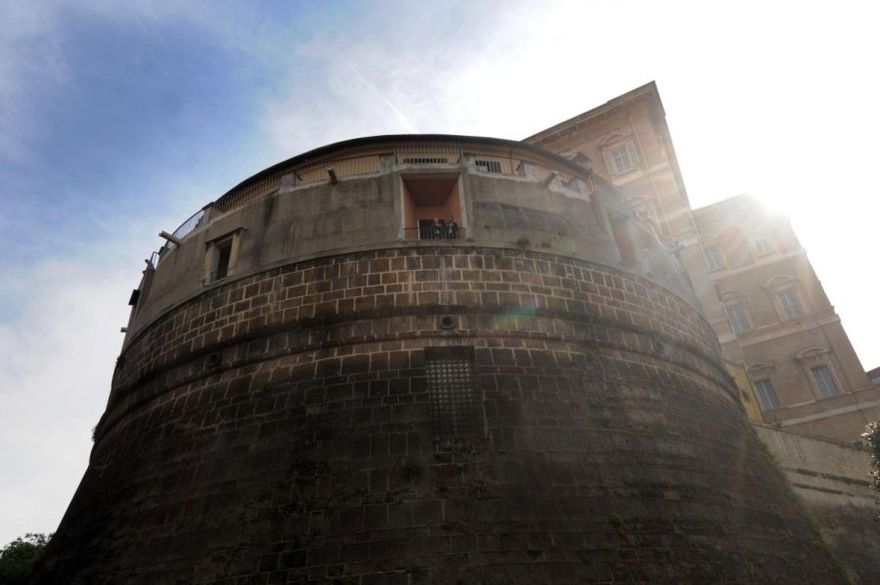
Tower of Nicholas V – HQ of the IOR
Francis the Reformer: Some Reflections
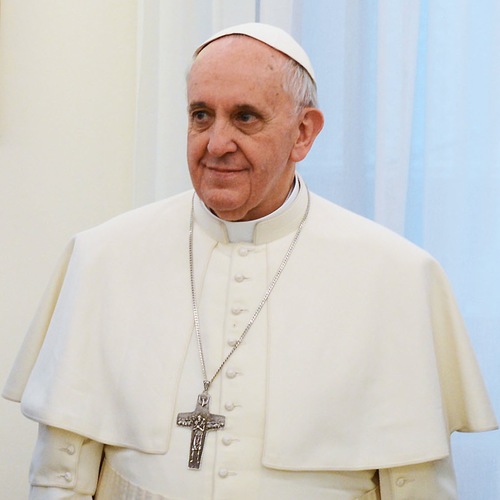
In his latest bombshell interview – this time with the left-leaning, secular La Repubblica – Pope Francis shows again that he really is a pope who gets it: Most of the Church – indeed, most of the world – is not much interested in the crimson and lace of renaissance papal pageantry, or the single-issue heterodoxy of even the most well-meaning culture warriors.
Instead, we are yearning, thirsting, starving for the Gospel, and for the reforms necessary to move the Light of the Nations out from under the bushel basket and back onto the lamp-stand. Let the world see, and the world will believe. The only way to focus on the Big Thing is to clear out the little things that, by justice, need changing. Tinkering is not enough, and prayer without action is merely piety.
In the last six months, I have seen and heard the bishop of Rome take on clericalism, careerism, triumphalism, and narcissism in ecclesial leadership – the root causes of the sexual abuse crisis, the financial crisis, and the vocations crisis, to name a few. He has touted a hermeneutic of mercy, and condemned the selfish materialism of the world. He desires a poor church for the poor, and is willing to actually do something about it. He has promised discussion on the role of women in the Church (though, to be fair, so did Popes John Paul II and Benedict), and there is reason to believe it might actually happen. He proposes reforming the curia, the synod of bishops, and the attitude of princely prelates.
In his first interview, with La Civiltà Cattolica, he talked about the importance of dialogue, discernment, and the frontier. When asked about reforming the Roman Curia, he talked about ecumenism and the need for ecumenical reception, especially from the Christian East, in the areas of synodality and collegiality. He talked about the Jesuit gift for being centered on Christ and the Church while reaching out to the borders, to the people on the fringe, most in need of Mother Church’s warm embrace and, sadly, mostly likely to have experienced a clerical cold shoulder. Previously, when asked for advice for leadership in any field, his said his advice is always the same: “Dialogue, dialogue, dialogue!”
Today he referred twice to the late Cardinal Carlo Martini, archbishop of Milan and perennial papabile for the moderates in the college of cardinals. In his first angelus, he cited Cardinal Walter Kasper, the brilliant theologian and chief ecumenist under Pope Benedict. He also made a few remarks that seem to have been lost in translation, so we shall see!
The bishop of Rome is called, in canon law, the Roman Pontiff. Sometimes he is given the imperial title of pontifex maximus. These are, truly, ecumenical titles that literally mean “bridge-builder”. The bishop of Rome, as successor of Peter, has as his unique vocation to build up unity between divided Christians and churches. Like his predecessors in the last fifty years, Pope Francis is clearly dedicated to this. Nearly twenty years after Pope John Paul II asked for input on how to reform the Petrine Ministry for the sake of Christian Unity, Pope Francis seems ready to start implementing some of the recommended changes.
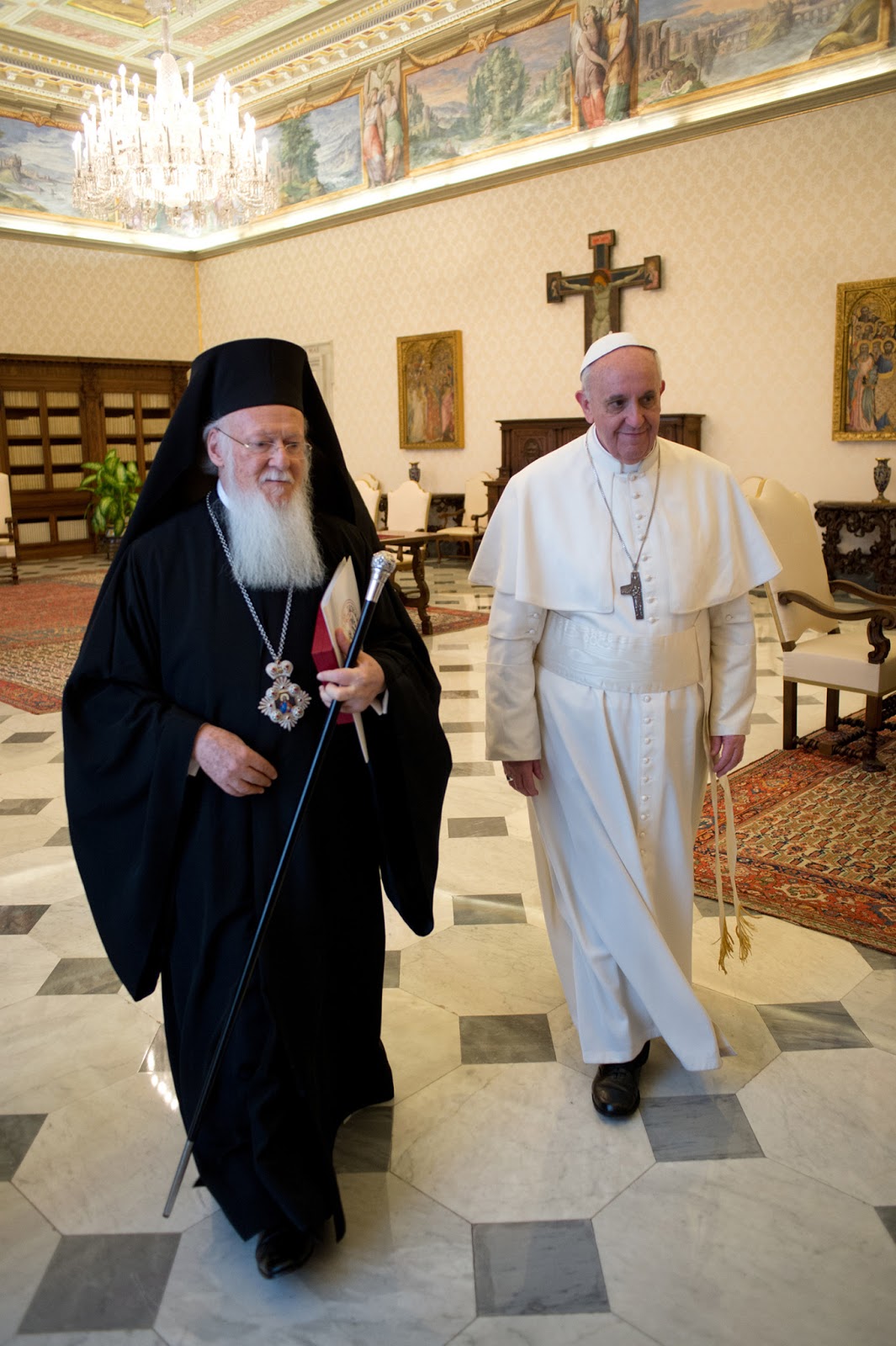
His critics are tired of hearing about his humility, and want to insist that it was fun to be Catholic before, too. Suddenly the neo-cons and radical traditionalists are vying to prove which are really, truly “more Catholic than the pope” and have discovered to their mutual horror that ultramontanism is not actually all it was cracked up to be the last twenty or thirty years. Some of the same voices shouting “santo subito” at JPII’s funeral or printing John Paul II the Great buttons before he was even dead, are suddenly warning against a papal cult of personality.
On the other hand, my students want to know why no one has ever spoken about the Church like this, and why there has never been such a popular pope before (granted, they are too young to remember John Paul II’s early years, and even I am too young to remember the excitement in the wake of Vatican II).
After I posted a link to today’s interview, a friend wrote me this message:
It has been a struggle for me, at times, to feel comfortable going to church. This is not because of the individual people at our parish, but because the structure of the church has been so dominating and exclusionary. The article you posted this morning brought tears to my eyes. If Pope Francis truly guides the Church in the direction he says he is, I am more at peace with raising my children Catholic than I ever have been.
A couple weeks ago, I naively ventured out to St. Peter’s early on a Wednesday morning, thinking I would sneak in the basilica before the crowds began to show up for the 10.30 audience. I should have known better. Already at 08.00 the piazza was full, and I overheard one tour guide complain, “What can I do? I have a group coming at 10:15! This never used to be a problem!”
This is a pope who knows how to pope. He is the bishop of Rome, the servant of the servants of God. Pray for him, because we need him. We need the vision of Vatican II to be unfettered and its reforms fully implemented, and need them to be done now, after years of discussion and debate, it is time for reception. We need the scandal of a broken, divided Body of Christ to be overcome, and we need the conversion of hearts and minds that are the first step to both reform and reconciliation. The world needs the Church, and the Church needs to be in the world…. not passively, but actively.
This is our mission and our vocation, and my bishop is asking you to embrace it. Please do.
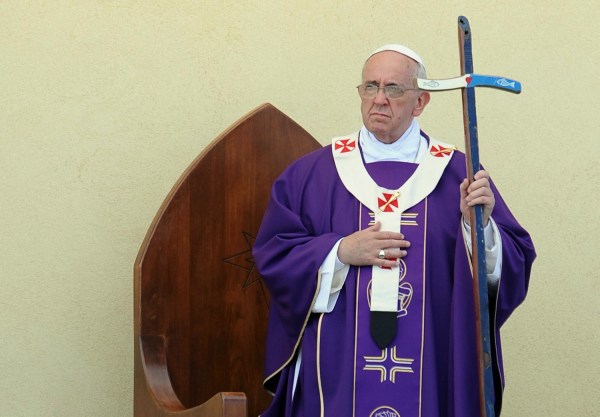
Quote of the Day: Pope Francis on clericalism, ecclesial narcissism

“You know what I think about this? Heads of the Church have often been narcissists, flattered and thrilled by their courtiers. The court is the leprosy of the papacy…. when I meet a clericalist, I suddenly become anti-clerical.”
Pope Francis, in his interview with La Repubblica, published today.
A caveat though: there are a couple places where there seems to be either less than technical translating, or some dubious editing. It was not as carefully done as the Jesuit interview, and not as in depth.
For example, in the quote above, the english “Heads of the Church” seems to imply the Head of the Church, which is Christ. Obviously not what the pope meant. In italian capi delle chiesa refers to “leaders in the church” – popes, bishops, pastors, even DREs or pastoral associates could be implicated. At one point there is reference to “religious ecumenism” (ecumenismo religioso) which makes little sense: does it mean interreligious dialogue or Christian ecumenism? Is there supposed to be some kind of ecumenism that is not religious?
Pope Francis Interview with La Repubblica – Top Seven “Quotes”
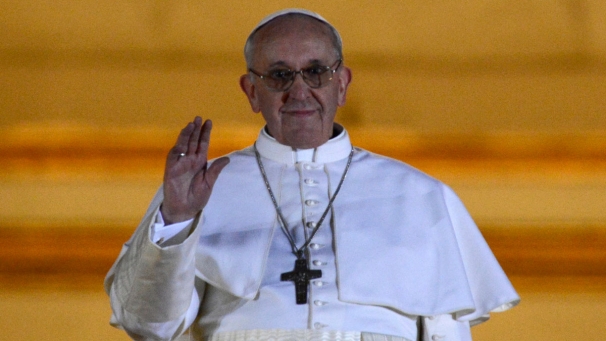
“The most serious of the evils that afflict the world these days are youth unemployment and the loneliness of the old. The old need care and companionship; the young need work and hope but have neither one nor the other, and the problem is they don’t even look for them any more. They have been crushed by the present.”
“Leaders of the Church have often been narcissists, flattered and thrilled by their courtiers. The court is the leprosy of the papacy.”
“Narcissism …indicates an excessive love for oneself and this is not good, it can produce serious damage not only to the soul of those affected but also in relationship with others, with the society in which one lives. The real trouble is that those most affected by this – which is actually a kind of mental disorder – are people who have a lot of power. Often bosses are narcissists”
“This Vatican-centric view [of the Roman Curia] neglects the world around us. I do not share this view and I’ll do everything I can to change it. The Church is or should go back to being a community of God’s people, and priests, pastors and bishops who have the care of souls, are at the service of the people of God.”
“It also happens to me that when I meet a clericalist, I suddenly become anti-clerical. Clericalism should not have anything to do with Christianity. St. Paul, who was the first to speak to the Gentiles, the pagans, to believers in other religions, was the first to teach us that.”
“A religion without mystics is a philosophy.”
“We will also discuss the role of women in the Church. Remember that the Church (la chiesa) is feminine.”
Commentary explaining problems with the interview here. Turns out the interview was not recorded or notes taken, but the result of the recollection of the 89-year old Scalfari. The tone of the text, the spirit of the interview if you will, is confirmed as accurate by the Vatican, though the details and vocabulary – and the translation- need to be taken with a grain of salt. As is to be expected with Italian journalism. The contrast in the quality of the interview with the one given to the Jesuits last week is striking. The readiness of some supposedly Catholic commentators to throw the bishop of Rome under the bus because of mistranslations or misremembered timelines – even without trying to find the original first it seems – is the most shocking aspect of all, however.
“Simple is the new chic”
So says an octogenarian cardinal usually known in Rome for his sartorial splendor, when asked upon his recent appearance in a Trastevere trattoria in simple black clerical suit.
The tale is relayed by John Allen, the well-known vaticanist at dinner, from his own experience earlier this year, at the end of one of those typical Roman days where you get nothing done that you planned, but which turns out so much more interesting for it.
During the course of the day, which started with the Divine Liturgy at the Russicum (the Russian Catholic collegio), I have broken bread with a Byzantine-rite Jesuit, the organizer of an international Vatican conference, two archbishops, the aforementioned vaticanist, a papal dame, a worker-priest, journalists and students from five continents. Before yesterday I had not expected any of it.
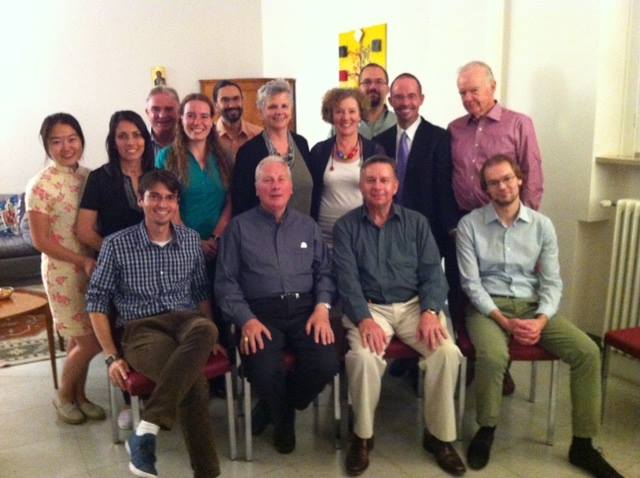
Discussion ranged to include, (somewhat predictably):
- Pope Francis’ big interview;
- Cardinal Piacenza’s perceived demotion (officially a lateral move) from Congregation for Clergy to Major Penitentiary;
- Archbishop Gus DiNoia’s unclear mandate as adjunct secretary at CDF (he had been the last ditch effort to save the talks with SSPX, after even our most traditionalist-friendly prelates assigned to the dialogue team found the task untenable);
- the situation in Egypt, including an assessment that the military coup has popular support and will let democracy happen, if a party can be found that wont prove nepotistic or despotic;
- expectation that the canonization of popes John XXIII and John Paul II will indeed be on Divine Mercy Sunday (27 April);
- another impending financial scandal that will make the Vatican bank issues look like small potatoes;
- the fears that Francis, who reminds many of John Paul I, will be the target of an assassination plot;
- one world-traveled cleric claiming that his experience of worship at Caravita last week was one of the best he’s experienced, ever, anywhere (and that Fr. Gerry’s preaching was phenomenal);
- the removal of two bishops this week for sex abuse of children (in Dominican Republic and Peru);
- the positive effects of diocesan-wide petitions against their bishops (in both Germany and Brazil);
- rumors that Pope Francis is considering strict , non-renewable, 5-year term limits for all curial posts;
- German elections, Angela Merkel, and the evening’s Roma-Lazio game;
- and whether men appreciate women who are willing to ask men out, or if they find it unappealing (2:1 in favor of women taking the initiative, for the record).
OK, the last one may not have come up with the clerical company, but it did come up during the day!
One overarching theme was that everyone I talked to, in every different setting, was positive about Pope Francis, but unsure, still, about how much hope to have.
Part of that relates to the concern exemplified by the “simple is chic” cardinal. If that’s all it is – knowing which way the wind is blowing – I think I would rather trust a priest who sticks to his French cuffs or a prelate preening in his watered silk, if that is what they really think is appropriate, rather than those who are simply dressing up or down according to the boss’ style. Because then none of the change is permanent, and it will shift with the sands. I might disagree with the capa magnas and the little fiefdoms, but I have much greater respect for the prelate princeling or the lord of the rectory manor who admits what he is than the one who plays the game just to look the part, whichever way it goes.
Now, if the bishop of Rome really wants to curtail clericalism, he might just announce that anyone working at any level in the curia or the diplomatic corps will be ordained only to the diaconate, in accordance with their original vocation, and neither to the presbyterate nor to titular dioceses long-since buried under the Sahara. Wouldn’t that be interesting?

Recall “the smiling pope”
Quote of the Day: Pope Francis on Leadership
My authoritarian and quick manner of making decisions led me to have serious problems and to be accused of being ultraconservative. I lived a time of great interior crisis when I was in Cordova. …I have never been a right-winger. It was my authoritarian way of making decisions that created problems.
But now I hear some people tell me: ‘Do not consult too much, and decide by yourself.’ Instead, I believe that consultation is very important.
Pope Francis in his interview with Antonio Spadaro of La Civiltà Cattolica, and published in Jesuit magazines around the world on 19 September.
Hope and Change in the Church
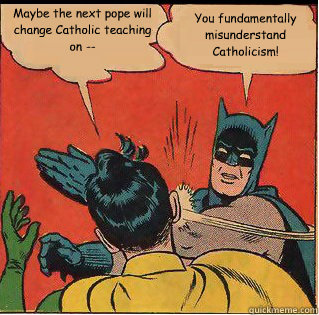
Batman the fundamentalist giving Robin the chance to turn the other cheek
A recent conversation highlights the challenge of talking about “hope” and “change” in the Church.
A few weeks ago I had a quick lunch with an old friend and a new colleague. Eventually my friend (a Notre Dame alumna, “new evangelist” and educator) and I got into a lively discussion about “change” in the Church, given all the hope that has been expressed lately about what changes Pope Francis might bring.
My position is basically this: it is naïve to think that the Church does not change, and it is unhelpful at best and dangerous at worst to suggest that the Church cannot change. The Batman meme above vividly demonstrates a misguided and wrong-headed understanding of the Church.
“The Church should change” does not mean “the truth must/can change”. It is Church discipline – and often really just Church culture – not dogma, which should change in the minds of most. Though there are always exceptions, I suspect most Catholics are not agitating for moral relativism, an end to Trinitarian theology, a return to Arianism, denial of the Resurrection or the Real Presence, promoting abortion or war, that we do away with ordained ministry or that we change the Sunday Eucharist into an hour long drum circle featuring Kumbaya in a dozen different languages.
What most Catholics mean when they say that they hope for change in the Church is ecclesiological, ecumenical, pastoral, and practical. They want a positive gospel message (“God is love” or “Love God and thy neighbor”, and all that radical wishy-washy stuff, you know); they want better preaching, better music, better liturgy; they want transparency and accountability in church decisions, participation in governance, and maybe even more married clergy and less clericalism. They want bishops (and pastors, deacons, DRE’s et al.) to be servant-leaders, not lords of their own fiefdoms. They want ecumenism and interreligious dialogue to work, and to have real effect. They want more effort spent on social justice than on ecclesiastical protocol, more money spent on education and pastoral care than on neo-Baroque bling.
But my experience of most Catholics, admittedly, is based on my experience in parish pastoral ministry and Catholic higher education. My friend has spent several years on the front lines of pre-evangelization, new evangelization, and even good old-fashioned evangelization and catechesis, often in the context of guiding groups of pilgrims and students around Rome’s most sacred sites.
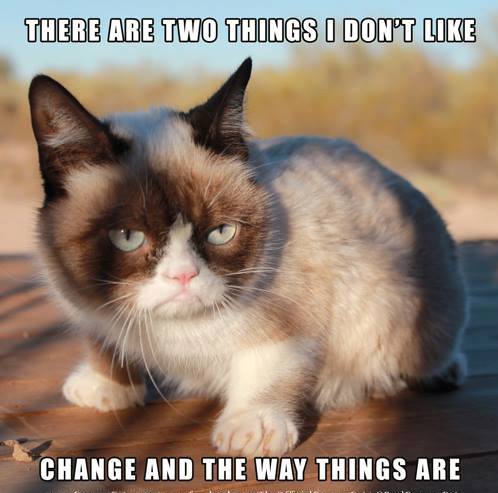
Her position was that “the church should change” is basically code for “the church’s teaching about morals should change to match the social norms of the western world.” When people say change, they mean that the church should get out of its old-fashioned rut, and embrace a woman’s right to choose, gay marriage, equal rights (and rites) for women in the ecclesiastical workforce, and so forth.
That it may be, in some cases, just as in others, “the church should change” means “the church should eliminate the novus ordo, go back to the Tridentine rite, and embrace traditional Catholic culture (circa 1940).”
The problem, though, in assuming that “the church can/must change” is code for a particular agenda is that it stymies the possibility of real conversation and dialogue. The Church is in fact always changing. All we have to do is look at the papacy of Benedict XVI to see a number of examples of change in the church. And no one can accuse Ratzinger of being radical, wishy-washy, or unorthodox.
He changed the liturgy, both in terms of the translations and in terms of the mark his own personal preferences have had. Even just during my four years in Rome, you could see lots of changes to the liturgy at St. Peter’s – longer, less participatory music; rosaries before mass begins; communion no longer offered in the hand; a crucifix and candles dominating the altar; cardinal-deacons vesting in mitre and dalmatic; etc., etc. He changed canon law to exclude deacons from acting “in persona Christi capitis,” making this phrase more about Eucharistic presidency and less about holy orders or leadership in the Church. He innovated in creating ordinariates for disenchanted Anglicans. He pushed forward reforms relating to the sex abuse crisis (at least for priests, if not bishops). He created a personnel office for the Vatican. He called in an outside audit of Vatican finances.
In short, the Church changed a lot under Pope Benedict; why would we not expect it to change with Pope Francis? The Church changes, and survives. Change simply means that things are different than they were before. It is a sign of life, and of fidelity to the principle ecclesia semper purificanda (the church must always be purified). Rather than dismissing the idea of the church changing, embrace it – critically, intelligently, and faithfully.
Remember Dante’s Divine Comedy – God is pure dynamism. The only creature which cannot change is Satan, eternally frozen in the deepest pit of hell.
 The Ecumenism Blog