The Ecumenism Blog

Home » La vita Roma (Page 9)

Category Archives: La vita Roma

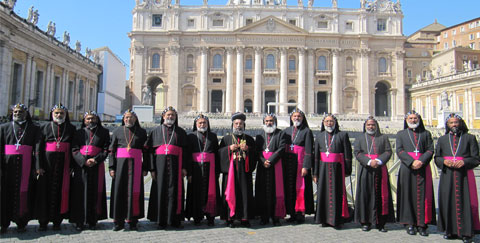
Syro-Malankara Catholic bishops at the Angelicum

The bishops of the Syro-Malankara Catholic Church were in Rome this week for their ad limina visit “to the threshold” of the shrines of Peter and Paul, and to meet with their successor, Benedict XVI. There are a total of 13 of them, including the Major Archbishop-Catholicos, symbolically representative of Christ and the Twelve. (Also symbolizing Christ and the Twelve are the distinctive headcovering with thirteen stitched crosses, one large and twelve small.)

The Syro-Malankara Catholic Church has about 500,000 members, predominately in Kerala state, India. It follows the west-Syrian Rite and the liturgy of St. James of Jerusalem, and forms part of the Thomas Christians who trace their initial evangelization to the Apostle Thomas in about the year 52 AD. From at least the 8th century, the Metropolitan of the autonomous Thomas Christian Church was a hierarch in the Assyrian Church of the East, their closest ecclesiastical neighbors. The Thomas Christians held that communion was maintained, if communication lost, with the Catholic/Orthodox world until the arrival of Tridentine-era Portuguese missionaries at the end of the 15th century, who began a program of Latinization. Resistance to the imposition of western culture and ecclesiology culminated in 1653, the symbolic date for the breaking of communion and the eventual breaking of the once-unified Christian Church in India into its current situation, divided among those in communion with the Assyrian Church of the East, the Syrian Orthodox Church, Malankara Orthodox Syrian Church, the Malankara Mar Thoma Syrian Church (Anglican), the Syro-Malabar Catholic Church and the Syro-Malankara Catholic Church. The latter traces its origin to the corporate reunion of some Malankara Orthodox Syrian bishops and faithful starting in 1930.

The bishops met with Pope Benedict XVI this morning, and this afternoon were gathered at the Angelicum for a lecture offered by one of their number, Bishop Thomas Mar Anthonios, entitled, “New Evangelization: The Mission and Role of the Syro-Malankara Catholic Church”. The text is basically a synopsis of the lineamenta prepared for the first-ever Major Archiepiscopal Assembly scheduled for later this year. Thiers will be the first episcopal conference or church sui iuris to address the theme of the New Evangelization in plenary.

Before the beginning of the lecture, His Beatitude Major Archbishop Moran Mor Baselios Cleemis greeted the assembled students and guests, and made a special point to recognize his dissertation director, Fr. Fred Bliss, SM, from his days as an Angelicum student. As I sat surrounded almost entirely by Indian Catholics, the chanted prayer that began the seminar was one of the more moving spiritual moments I’ve experienced in recent weeks (I am not even sure if it was Hindi or one of the other languages, such as Tamil or Malayalam, I should ask).

Questions and challenges to be addressed in the new evangelization noted by Bishop Thomas included the relationship of evangelization and interreligious dialogue, individualism and secular culture (referred to as a “darkness”), the success of genuine inculturation, the necessity of Christian unity for effective evangelization, and the obstacles to freedom placed before the church both by the Indian state and the Roman curia (an issue which we were assured Pope Benedict had promised this morning to take under serious consideration). Pastoral lethargy was also noted as a challenge, “Communities should be shaken from their present slumber of maintenance to a renewed consciousness of mission.”

[The text of the Holy Father’s address to the bishops can be found at Vatican Radio here]

Chanted Prayer with Syro-Malankara bishops

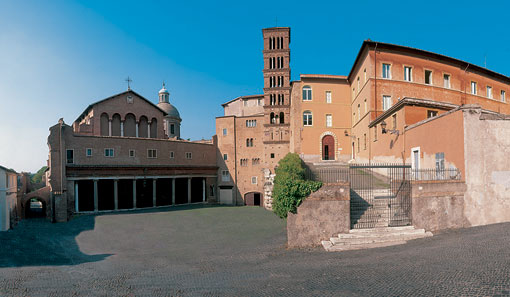
Basilica di Santi Giovanni e Paolo con Padre Augusto Martrullo, CP

Even in Rome, one can fall prey to the common experience of not checking out the treasures in one’s own backyard (or underneath one’s feet, as the case may be). Underneath the Caelian hill, starting under the basilica of John and Paul, are a labyrinth of Roman houses, tunnels and other structures dating back to the first centuries after Christ.

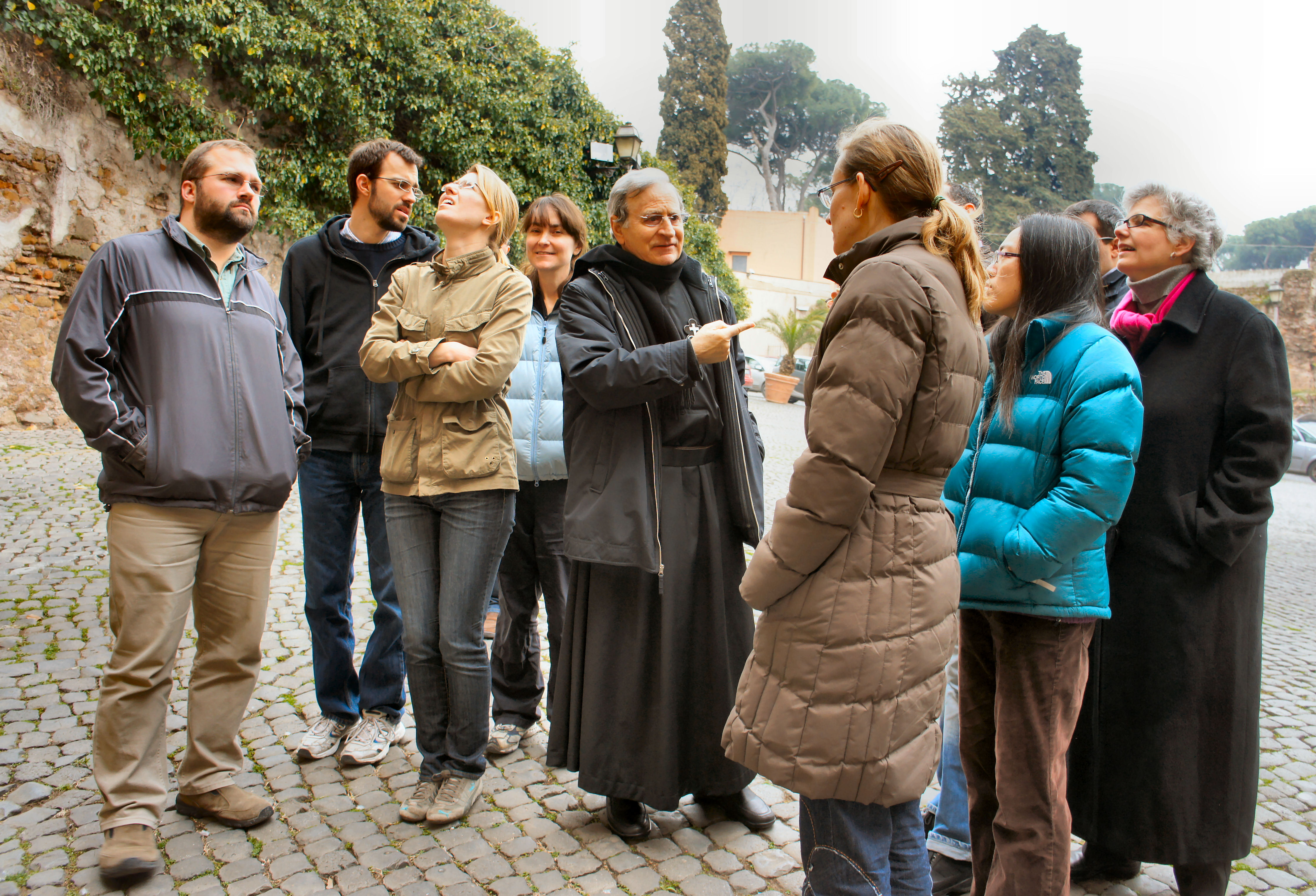
The Lay Centre residents were lead on a tour of the church itself and the Roman houses beneath by Fr. Augusto Martrullo, the Passionist priest who serves as rector of the basilica of San Giovanni e Paolo. We concluded the day with Sunday Eucharist in the chapel of the Passionist founder, St. Paul of the Cross, in honor of the Passionist Saint Gabrielle of Our Lady of Sorrows, whose feast it was.

The Caelian hill was the site of the Temple of Claudius, which was raided for Nero’s Nymphaeum, which in turn was raided for the Flavian Amphitheater (Coliseum). On the edge of the hill were several houses known as insulae – blocks of apartments for artisans. At some point several of these were combined to create a single large domus – a house for the wealthy. This was thought to have belonged to the brothers John and Paul, who served as officers in the court of Constantine (c.312-337) and who became Christians, converting part of their house to serve as a domus ecclesiae – a house for the Church. During the reign of Julian [the Apostate]  (c.361-363) they were martyred.

Basilica of Sts. Giovanni e Paolo

The original church was built over the house by St. Pammachius, a Byzantine senator. It is a church, Padre Augusto says, whos history is one of constant renovation and reconstruction, having been damaged or destroyed during the sack of Alaric and the Visigoths in 410, an earthquake in 442, and the sacking by the Normans in 1084, among others. The most recent renovation was in the early 18th century when the entire church, which had been for almost 1400 years a great example of paleo-Christian architecture, was baroquified by the cardinal-titular Fabrizio Paolucci.

Clearly considered a tragedy, this baroque “renovation” destroyed some of the ancient frescoes when a contraption was inserted that would raise and lower the monstrance during the new “forty hours devotion” that was becoming popular. It also destroyed the original design of the nave, cutting off light from the 13 high windows and turning the traditional five-aisle basilica into a single nave. It removed the altar from the center of the church (over the tomb of the martyrs) to a position in the west transept.

Later, when Cardinal Spellman became the titular of the basilica after Pius XII was elected pope (thus vacating his previous titular church), he imported 33 chandeliers from the Waldorf-Astoria in New York to decorate the church (or so I was told by one Passionist; another disputes this origin of the chandeliers). Spellman also helped restore the façade of the church to the original Paleo-Christian look. It has remained the titular for the cardinal-archbishops of the “city that never sleeps” ever since, currently held by Cardinal Egan.

The houses underneath the basilica were discovered in 1887 by a Passionist Padre Germano. At the beginning of the 21st century, under Padre Augusto’s watchful eye, they have been restored and a new museum created, which opened in 2002.

The museum now includes displays of first century amphorae as well as 12th century Arabic plates and pottery that had been used to decorate the bell tower added at that time. The rooms are in many cases well preserved, including some third or fourth century frescoes, including one that will be instantly recognizable to almost any student of church liturgy and history, a figure in the Christian orans position in a room full of pagan representations.

Though currently off-limits, one can also see the entrances to various tunnels and other chambers which are thought to have served as training and barracks for gladiators, giving them access to the coliseum from underground.

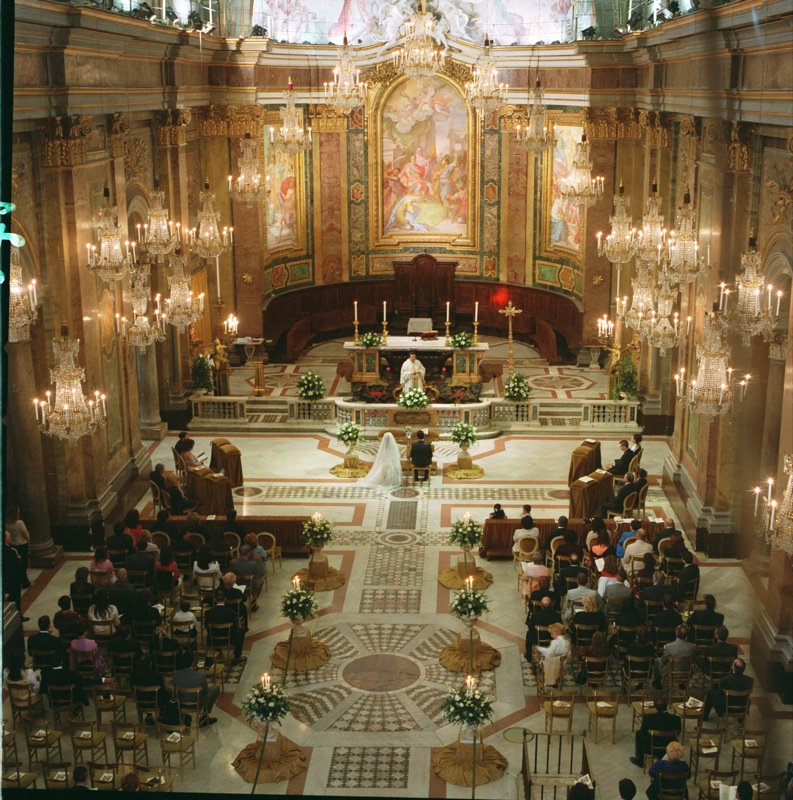
The basilica does not serve as a parish, but is a popular wedding location. The Eucharist is celebrated on Sundays by one of the Passionists in the chapel of St. Paul of the cross, with music by some of the Passionist students. The piazza in front of the church remains one of the most well-kept examples in the city of medieval Rome, and has been used as a setting for several films and television spots. A small road along the side of the church, under the flying buttresses, is thought to be one of the oldest roads in Rome in continuous use as such. 

Lay Centre residents with Basilica rector Augusto Martrullo, CP

Spring Studies

For those still keeping track, here are my courses for the coming semester, along with thesis writing and preparing for the lectio coram – comprehensive oral exams.

  • Catholicism in the Church: Anglican and Roman Catholic Perspectives
  • Does Doctrine Still Divide? (with Geoffrey Wainright)
  • Ecumenical Methodology II
  • Ecumenism and Canonical Structures
  • First-Century Judaism
  • From the Chalcedonian Formula of Faith to the Christological Agreements between the Catholic Church and the Pre-Chalcedonian Churches
  • The Messianic Idea in the Hebrew Bible and the Dead Sea Scrolls
  • Shi’ite Islam and Roman Catholicism
  • Seminar: Readings in Schillebeeckx’s Christology

Relating Random Roman Reflections and Realities

Over the course of the last three semesters in Rome, I have seen and overheard a few little things – one-liners, Roman witticisms and cynicisms, curious images – that a little taste of the Eternal City beyond the big stuff.

* * *

SPQR – ubiquitous, stamped on everything from sewer covers to the city’s coat of arms, it officially stands for Senatus PopulusQue Romanus, “Senate and People of Rome”. Unofficially, I was told by an Italian, it is also Sono Pazzi Questi Romani, “They are Crazy, These Romans!”

From a canon law professor, “In Rome, always does not always mean always, and never never means never.”

I attended a lecture given by a Grand Archdeacon last week. Possibly, THE Grand Archdeacon; I do not know if there is more than one.

To say “good luck” in Italian, you say, In boca del lupo “In the mouth of the wolf!” to which they reply, crepi! “death! [to the wolf!]”

In terms of the question “when does life begin?”, a Vatican official affirmed that the medieval view of the church and its theologians was often that life begins with “ensoulment” – the time when the human soul is infused into the body -, which happened around 40 days after conception. “The exact moment of when life begins has never been clear, though of course now we are very adamant about it.” When someone pointed out this was almost exactly what Nancy Pelosi said that got her into so much trouble a couple years ago, his response was, “Who?”

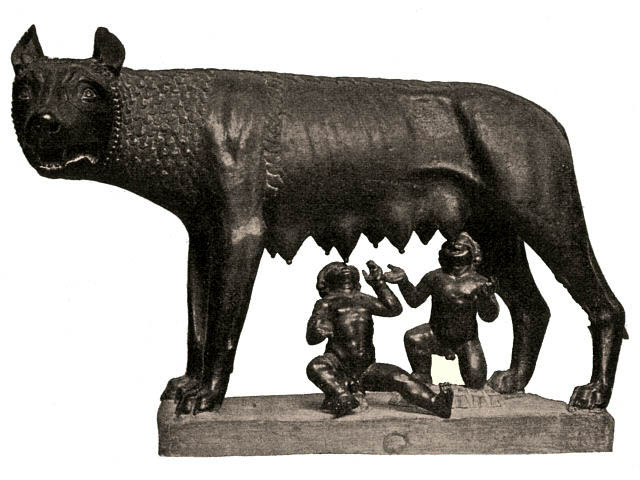
Romulus and Remus, Founders of Rome

Italians do not think right and wrong. They think bella e brutto – “beautiful and ugly”.

After one of the Italian church scandals this year, an Italian paper ran the headline, “The Vatican Denies Everything, No One Believes It”, because the Vatican took nearly three weeks to issue a statement of any kind, which was along the lines of “no comment”.

Romans hate giving change. Where an American might go to the grocery store deliberately to break a $50 bill by buying a piece of gum, one gelateria owner reached over the counter to strangle me, only half-jokingly, when i profered a 20 Euro note to pay for a 2.50 gelato.

St. James Cathedral, Seattle

While in Ancora bookstore, right in front of St. Peters, I spotted a book whose cover was a picture of the font and altar at St. James Cathedral in Seattle.

Speaking of books, I was in the working library of one of the curial dicasteries when I noticed Notre Dame Prof. Richard McBrien’s recent book, The Church. It was sitting on a shelf clearly labeled, “Orthodox”.

Public toilets in Rome usually lack a toilet seat. Apparently, this is seen as a cost-saving measure.

Another canon lawyer, a Roman: “The Law is meant to be beautiful and make people happy. That is why there are exceptions.”

Overheard: “Growing up, i always heard about first-world and third-world – but there never seemed to be a second-world. I think i know now what that is, though: Italy is a second-world country. Something you expect of a first world nation – working internet, easy access to hot water, a generaly operative government and administration, for example – seems to be there, but then sometimes acts like it belongs in the third world. You average it all out, and you get second-world!”

In my neighborhood, a block off of the traditional procession route of popes leading from St. Peters to the Lateran, very near San Clemente, is a small shrine with a very faded fresco that appears to be the Madonna and child, and almost always fresh flowers. Allegedly, this is the monument to Pope Joan, marking the place where she suddenly gave birth to her child in the middle of a Pontifical procession in 855 AD (according to the oft-repeated and equally often debunked legend).

A Roman church-person, commenting on some of the ‘newer’ movements in the church: “The Legion of Christ was founded to make Opus Dei look normal. Then, the Heralds of the Gospel were founded to make the Legion look normal.”

The Europeans understand heaven and hell: Heaven is where the cooks are French, the police are English, the engineers are German, the lovers Italian, and everything is run by the Swiss. Hell is where the cooks are English, the police are German, the engineers are French, the lovers Swiss, and everything is organized by the Italians.

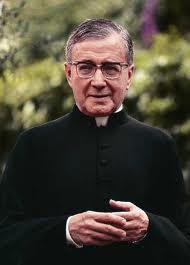
St. Josemaria Escriva, Founder of Opus Dei

.

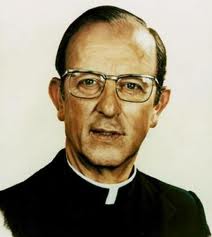
Marciel Maciel, disgraced founder of the Legion of Christ

.

Msgr. Joao Scognamiglio Cla, Founder Heralds of the Gospel

.

Highlights of the Week of Prayer

A few highlights of the week here in Rome I thought I would share. Clearly, there was too much going on for me to even make it to most of the services and events, and even those I did get to would take too long to recount in full.

St. Paul Within the Walls, Rome

The pope called ecumenism a moral imperative. That does not leave much wiggle room for the doubtful, dissenting, or disinterested. Definitely a highlight, though already mentioned here.

One of the most beautiful moments was a concert by four Roman choirs at St. Paul Within the Wall, the Episcopal Church of Rome (That is, Anglican Communion, American branch). After an ecumenical evensong that was well-attended, these four choirs provided us with a live, surround-sound rendition of Thomas Tallis’ Spem in Alium. This is a ten minute, 40-part motet from 1570, an English response to the Italian mastery of Renaissance music. Given the timing, I suppose a little ecclesiastical/nationalistic competitiveness was not surprising. In any case, what Tallis produced is moving, and though listening to it on YouTube does not do justice to the experience, the parish has kindly provided a recording of the event here.

On Sunday, I celebrated the Eucharist with the Caravita Community, which I have mentioned before, as they are one of the Anglophone locales for events ecumenical. In addition to three of the Gregorian’s Muslim students there for part of their research into Christian worship (having already been to a  mass in Italian), there were some Anglican priests present, including a visiting professor from Virginia Theological Seminary, who was the guest homilist (and whose homily he brought to the ambo on his iPad). It was a good homily, but the most striking part of the liturgy came during the communion rite. As the Anglican priests, including the Archbishop of Canterbury’s Representative to the Holy See, Canon David Richardson, came to the presider to receive communion, they inclined their heads for a blessing. After blessing each, however, the minister inclined his own head and asked for a blessing from them. A fitting sign and ecumenical gesture – we are, painfully, still divided, but equally in need of each others’ prayer and benediction, especially in the sacramental moment that lays bare the imperfect state of our communion.

I should also note that here, as everywhere else during the week, including the papal liturgy, prayers during the general intercessions were offered for the pope, the ecumenical patriarch, and the archbishop of Canterbury, something which has been a decades-old (but often ignored) recommendation of the Holy See to churches around the world – and something which ought to be practiced more often!

Canon David Richardson, Archbishop of Canterbury's Representative to the Holy See and Director of the Anglican Centre in Rome

A couple of days later, I was at the Anglican Centre, located within the Palazzo Doria Pamphilj off the Piazza Collegio Romano. Every Tuesday they offer mass and lunch for residents and visitors, Anglicans and Catholics alike. The small chapel accommodated the 30-35 people present, but snugly. Canon David was presider, and delivered what I think is the best homily of the week. Here, the intimacy, the noble simplicity of the rite, the familiarity and theology of the liturgy all coalesced to provide one of the more literally gut-wrenching moments of being unable to share communion. One of my friends who had not been to many Anglican liturgies asked me afterwards, “So… that was Anglican? But it was almost identical to [the Catholic] mass!”

About the only difference was the location of the sign of peace before the preface to the Eucharistic Prayer, a move which even our current pope has suggests we ought to emulate.

The whole point of being unable to share communion is that we are motivated by the pain of this that we work ever the harder for full unity. But if people are never in the position where they experience this, how can they be so motivated? A thought for a later post there…

Cardinal Kurt Koch

Finally, during the closing liturgy of the week, the papal vespers for the feast of the Conversion of St. Paul Outside the Walls, there was another interesting little thing. In addition to the ecumenical guests offering prayers and readings, which is quite standard, the Latin-chanted Lord’s Prayer included the doxology. There were actually audible responses from the seats around me along the lines of, “huh, that’s interesting!” – at least from the people who know enough Latin to have noticed. One of the choirs even stopped, perhaps out of habit, a line early and had to jump back in to finish the prayer. Reflecting on the addition, it occurred to me that while it could well have been an ecumenical gesture, it was also a more authentically accurate move from a purely Catholic liturgical point of view, as well. More on that below.

Oh, and i got to meet Cardinal Koch, Cardinal Kasper’s successor as President of the Pontifical Council for Promoting Christian Unity.

Papal Homily at Vespers Closing Week of Prayer


Video can be found here: http://vod.vatican.va/vespri25012011.mov 

“The path toward this unity must be seen as a moral imperative, response to a precise call of the Lord.”

ROME, JAN. 25, 2011 (Zenit.org).- Here is a translation of the homily Benedict XVI delivered today at the closing vespers of the Week of Prayer for Christian Unity, held at the Basilica of St. Paul’s Outside the Walls. Today’s feast of the Conversion of St. Paul brought the prayer week to a close. 

* * *

Brothers and Sisters,

Following the example of Jesus, who on the eve of his Passion prayed to the Father for his disciples “that they may all be one” (John 17:21), Christians continue to invoke incessantly from God the gift of this unity. This request is made more intense during the Week of Prayer, which ends today, when the Churches and ecclesial Communities meditate and pray together for the unity of all Christians.

This year the theme offered for our meditation was proposed by the Christian communities of Jerusalem, to which I would like to express by heartfelt gratitude, accompanied by the assurance of affection and prayer either on my part or on that of the whole of the Church. The Christians of the Holy City invite us to renew and reinforce our commitment for the re-establishment of full unity meditating on the model of life of the first disciples of Christ gathered in Jerusalem: “They — we read in the Acts of the Apostles (and we heard it now) — devoted themselves to the Apostles’ teaching and fellowship, to the breaking of bread and the prayers” (Acts 2:42). This is the portrait of the early community, born in Jerusalem the same day of Pentecost, aroused by the preaching of the Apostle Peter, full of the Holy Spirit, addressed to all those who had arrived in the Holy City for the feast. A community not shut-in on itself, but, from its birth, catholic, universal, capable of embracing people of different languages and cultures, as the book of the Acts of the Apostles itself testifies. A community not founded on a pact among its members, or the simple sharing of a project or an ideal, but from profound communion with God, who revealed himself in his Son, from the encounter with Christ dead and resurrected.

In a brief summary, which ends the chapter that began with the account of the descent of the Holy Spirit on the day of Pentecost, the Evangelist Luke presents synthetically the life of this first community: how many had heard the word preached by Peter and were baptized, listened to the Word of God, transmitted by the Apostles; were happily together, taking charge of the necessary services and sharing freely and generously their material goods; celebrated the sacrifice of Christ on the Cross, his mystery of Death and Resurrection, in the Eucharist, repeating the gesture of the breaking of the bread; they continually praised and thanked the Lord, invoking his help in their difficulties. This description, however, is not simply a memory of the past, and even less the presentation of an example to imitate or of an ideal goal to reach. It is rather the affirmation of the presence and action of the Holy Spirit, uniting all in Christ, who is the principle of the unity of the Church and makes believers one.

The teaching of the Apostles, fraternal communion, the breaking of the bread and prayer are the concrete ways of life of the first Christian community of Jerusalem gathered by the action of the Holy Spirit but at the same time they constitute the essential features of all Christian communities, of all times and all places. In other words, we can also say that they represent the essential dimensions of the unity of the visible Body of the Church.

We must be grateful because, in the course of the last decades, the ecumenical movement, “arising from the impulse of the grace of the Holy Spirit” (“Unitatis Redintegratio,” No. 1), has taken significant steps forward, which have made it possible to attain encouraging convergence and consent on varied points, developing between the Churches and the ecclesial communities relations of mutual esteem and respect, as well as of concrete collaboration in face of the challenges of the contemporary world. We are well aware, however, that we are still far from that unity for which Christ prayed and which we find reflected in the portrait of the first community of Jerusalem. The unity to which Christ, through his Spirit, calls the Church is not realized only on the plane of organizational structures, but is configured, at a much more profound level, as expressed “in the confession of only one faith, in the common celebration of divine worship and in the fraternal concord of the family of God” (ibid., No. 2). 

The search for the re-establishment of unity among divided Christians cannot therefore be reduced to a recognition of the reciprocal differences and to the obtaining of a peaceful coexistence: What we long for is that unity for which Christ himself prayed and which by its nature is manifested in the communion of the faith, of the sacraments, of the ministry. The path toward this unity must be seen as a moral imperative, response to a precise call of the Lord. Because of this, the temptation must be overcome to resignation and pessimism, which is lack of trust in the power of the Holy Spirit. Our duty is to continue passionately on the path towards this goal with a serious and rigorous dialogue to deepen the common theological, liturgical and spiritual patrimony; with reciprocal knowledge, with the ecumenical formation of the new generations and, above all, with conversion of heart and prayer. In fact, as Vatican Council II declared, the “holy intention to reconcile all Christians in the unity of the one Church of Christ, surpasses human forces and talents” and, because of this, our hope is placed first of all “in the prayer of Christ for the Church, in the Father’s love for us and in the power of the Holy Spirit” (ibid., No. 24).

On this path for the search of full visible unity among all Christians we are accompanied and sustained by the Apostle Paul, of whom today we celebrate solemnly the feast of his conversion. He, before the Risen One appeared to him on the road to Damascus saying to him: “I am Jesus whom you are persecuting!” (Acts 9:5), was one of the most ferocious adversaries of the early Christian communities. The evangelist Luke describes Saul among those who approved the killing of Stephen, in the days when a violent persecution broke out against Christians of Jerusalem (cf. Acts 8:1). He left from the Holy City to extend the persecution of Christians to Syria and, after his conversion, he returned to be introduced to the Apostles of Barnabas, who made himself guarantor of the authenticity of his encounter with the Lord. From then on Paul was admitted not only as a member of the Church but also as preacher of the Gospel together with the other Apostles, having received, as them, the manifestation of the Risen Lord and the special call to be “chosen instrument” to carry his name before the Gentiles (cf. Acts 9:15).

In his long missionary journeys, Paul, journeying through different cities and regions, never forgot the bond of communion with the Church of Jerusalem. The collection in favor of Christians of that community, who, very soon, had need of being helped (cf. 1 Corinthians 16:1), occupied an important place in Paul’s concerns, which he considered not only a work of charity, but the sign and the guarantee of the unity and the communion between the Churches founded by him and the early community of the Holy City, as sign of the one Church of Christ.

In this climate of intense prayer, I wish to address my cordial greeting to all those present: to Cardinal Francesco Monterisi, archpriest of this Basilica, to Cardinal Kurt Koch, president of the Pontifical Council for Promoting Christian Unity, to the other cardinals and brothers in the episcopate and priesthood, to the abbot and to the Benedictine monks of this ancient community, to men and women religious, to the laity that represent the entire diocesan community of Rome. In a special way, I would like to greet the brothers and sisters of the other Churches and ecclesial communities represented here this evening. Among them, it is particularly gratifying to me to address my greeting to the members of the International Mixed Commission for Theological Dialogue between the Catholic Church and the Ancient Eastern Churches, whose meeting will take place here in Rome in the next few days. Let us entrust to the Lord the good outcome of your meeting, so that it can represent a step forward toward the much hoped for unity.

[…]

Dear brothers and sisters, trusting in the intercession of the Virgin Mary, Mother of Christ and Mother of the Church, we invoke, therefore, the gift of unity. United to Mary, who on the day of Pentecost was present in the Cenacle together with the Apostles, we turn to God source of every gift to have renewed for us today the miracle of Pentecost and, guided by the Holy Spirit, may all Christians re-establish full unity in Christ. Amen.

Lay Centre Online

The Lay Centre is expanding its web-presence, on the occasion of its 25th year. Part of the reason for my relative dearth of posts in the last weeks is that I have been preparing some for publication on the official site, which can be found here: http://www.laycentre.org/blog/ They will be appearing as soon as we upload the relevant pictures!

While I will continue to include some reflections on Lay Centre events here on my own personal blog – along with what I hope to be an increasing share of time on theological, pastoral, and ecumenical entries – this new blog will serve as the official venue for “what’s going on in the life of the Lay Centre” and will be a joint project of various contributors, including Donna, Robert, and myself on a regular basis.

You may note the new look and feel of the Lay Centre website, and other additions, including a new forum for students, alumni, and friends to share messages and information. You will also find links to news and events, even a Vatican Radio feature on the Lay Centre (including a brief interview with yours truly). There is now also a Lay Centre Facebook page. Friends and alumni are invited to join us there, if you are a denizen of the social network.

Papal Angelus Address on Christian Unity Sunday

“Conversion to Christ Is the Way That Will Lead … to Full Visible Unity”

* * *

Dear Brothers and Sisters!

During these days, Jan. 18-25, the Week of Prayer for Christians Unity is being observed. This year it has as its theme a passage from the book of the Acts of the Apostles, that sums up in a few words the life of the first Christian community in Jerusalem: “They persevered in the teaching of the apostles, in communion, in the breaking of the bread and prayer” (Acts 2:42). It is very significant that this [year’s] theme was proposed by the Churches and Christian communities in Jerusalem, gathered together in an ecumenical spirit. We know how many trials the brothers and sisters in the Holy Land and the Middle East have to face. Their service is thus still more precious, confirmed by the witness that, in certain cases, has ended in the sacrifice of life. So, while we welcome with joy the points of reflection offered by the communities that live in Jerusalem, we join with them and may this become for everyone a further builder of communion.

Today too, to be a sign and instrument in the world of intimate union with God and of unity among men, we Christians must base our life on these four cardinal principles: life founded on the faith of the Apostles transmitted in the living Tradition of the Church, fraternal communion, the Eucharist and prayer. Only in this way, being closely united to Christ, can the Church effectively accomplish her mission, despite the limits and failures of her members, despite the divisions, which the apostle Paul already had to confront in the community of Corinth, as the second biblical reading for this Sunday recalled: “I exhort you brothers to be united in what you say so that there are not divisions among you, but be in perfect union of thought and feeling” (1:10). The Apostle, in fact, knew that in the Christian community of Corinth discord and division had sprung up; thus, with great firmness he adds: “Is Christ divided?” (1:13). Speaking in this way he acknowledges that every division in the Church is an offense to Christ; and, at the same time, that it is always in him, the one Head and Lord, that we can find unity among ourselves, by the inexhaustible power of his grace.

This is why the Gospel’s summons is always relevant today: “Convert, because the kingdom of heaven is near” (Matthew 4:17). The serious commitment to conversion to Christ is the way that will lead the Church, in the times disposed by God, to full visible unity. The ecumenical encounters that are increasing throughout the world are a sign of this. Here in Rome, besides various ecumenical delegations being present, tomorrow will begin a session of the Commission for Dialogue Between the Catholic Church and the Ancient Eastern Churches. And the day after tomorrow, the Week of Prayer for Unity Among Christians will conclude with the solemn celebration of the vespers of the feast of the Conversion of St. Paul. May the Virgin Mary, Mother of the Church, always accompany us along this path.

[Translation by Joseph G. Trabbic]
© Copyright 2011 — Libreria Editrice Vaticana

The Week of Prayer in Rome

Earlier in the year, a couple fellow classmates and I quipped that ecumenical progress in Rome meant that after centuries of bitter division, competitiveness and even occasional “sheep-stealing”, now the students from the Dominican-run Angelicum are allowed to attend lectures at the Jesuit-staffed Gregorian University, (which is located a short five-minute walk from the Angelicum).

The reality is a little more encouraging, however. The packed schedule of the Week of Prayer for Christian Unity is just one example that ecumenism, which lay at the heart of the Church’s mission, is really present in the City at the heart of the Catholic Church.

It even goes beyond that, in fact. 17 January, the day before the Week of Prayer begins is devoted, in Italy and other European nations, to a day of Dialogue between Christians and Jews. A celebration in Assisi on that date every year is one of the oldest and best known, and regularly includes Angelicum professor Rabbi Jack Bemporad on the agenda.

It is true that it is difficult, though not impossible, to find non-Catholics in the theology and philosophy departments of the Pontifical Universities. Honestly, it is still hard to find non-clerics or religious in some! But, for all that, the capital of the Church has a lot going on during this 2011 Week of Prayer for Christian Unity.

(Being as it is Rome, however, nobody coordinates these events into a single calendar. I had to put together five different sources to get these. Most of which arrived after the week had started!):

Sunday, 16 January

+        18.30 In anticipation of the Week of Prayer, Ecumenical Evensong at the Anglican Church of All Saints, organized by Churches Together in Rome.

Monday, 17 January

+        20.00 Lecture, “The Path Ahead for the Ecumenical Movement in the 21st Century” with Rev. Andrea Joos at Santa Maria del Silenzio. Sponsored by the Daughters of the Church.

 Tuesday, 18 January:

+        12.45 Eucharist celebrated at the Anglican Centre in Rome (Palazzo Doria Pamphilj)

+        15.30 Lecture, “Orthodox Ecclesiology and Postmodernity with Grand Archdeacon Maximos of the Ecumenical Patriarchate at the Pontifical Gregorian University

+        19.00 Worship service at the Italian Methodist Church, sponsored by the Consultation of Evangelical Churches of Rome (Via XX Settembre)

+        20.00 Divine Liturgy in the Byzantine Rite (Ukranian Catholic Church) at Santa Maria in Via Lata (Via del Corso 306)

+        20.00 Lecture, “The Fifth Commandment: Honor Your Father and Mother” with Rabbi Jack Bemporad at Santa Maria del Silenzio.

Wednesday, 19 January

+        10.30 General Audience with Pope Benedict XVI “Prayer is the center of the journey to unity

+        20.00 Divine Liturgy in the Armenian Rite (Armenian Catholic Church) at Sta Maria in Via Lata

Thursday, 20 January

+        16.30 Lecture, “Renewed Mission of the World Council of Churches in the Search for Christian Unity” with Rev. Dr. Olav Fyske Tveit, General Secretary of the WCC. Followed by an Ecumenical Celebration of the Word, presided over by Rev. Trevor Hoggard, Methodist Representative to the Holy See and pastor of Ponte Sant’Angelo Methodist Church, and preaching by Very Rev. Mark Francis, CSV, of the Pontifical Liturgical Institute and the Caravita community. Sponsored by the Lay Centre at Foyer Unitas, the Centro Pro Unione, and the Vincent Pallotti Institute.

+        19.00 Ecumenical Vigil at the parish Gesù Divino Maestro, sponsored by the Diocese of Rome.

+        20.00 Divine Liturgy in the Byzantine Rite (Romanian Catholic Church) at Sta Maria in Via Lata

Friday, 21 January

+        20.00 Divine Liturgy in the Antiochene/West Syrian Rite (Maronite Catholic Church) at Sta Maria in Via Lata

Saturday, 22 January

+        20.00 Divine Liturgy in the Chaldean/East Syrian Rite (Syro-Malabar Catholic Church) at Sta Maria in Via Lata

Sunday, 23 January – Christian Unity Sunday

+        11.00 Eucharist at the Caravita Community with ecumenical guest preacher, Rev. Dr. Roger Ferlo, Director of the Institute for Christian Formation and Leadership at Virginia Theological Seminary.

+        17.00 Ecumenical Evensong at the Episcopal Church of St. Paul “Within the Walls”. Bishop Richard Garrard, presiding. Followed by a presentation of Thomas Tallis’ anthem “Spem in Alium” rendered by four choirs from an ecumenical gathering of churches in Rome

+        18.00 Ecumenical prayer and “fraternal encounter” at the Waldensian Church on Piazza Cavour, sponsored by the Segretariato Attività Ecumeniche – an Italian ecumenical lay movement.

+        20.00 Divine Liturgy in the Roman Rite (Roman Catholic Church) at Sta. Maria in Via Lata. Most Rev. Ernesto Mandara, Auxiliary Bishop of Rome for the Central Sector, presiding.

Monday, 24 January

+        20.00 Divine Liturgy in the Byzantine Rite (Greek Catholic Church) at Santa Maria in Via Lata

Tuesday, 25 January

+        12.45 Eucharist celebrated at the Anglican Centre (Palazzo Doria Pamphili). Reception following.

+        17.30 Solemn Vespers concluding the Week of Prayer for Chrisitan Unity at the Basilica of Saint Paul’s Outside the Walls. His Holiness Pope Benedict XVI will preside and preach. 

+        20.00 Divine Liturgy in the Alexandrian Rite (Ethiopian Catholic Church) at Santa Maria in Via Lata

Pope Benedict XVI: Praying for Christian Unity

The Vatican Website only has the audience text in Italian….

VATICAN CITY, JAN. 19, 2011 (Zenit.org).- Here is a translation of the address Benedict XVI gave today during the general audience in Paul VI Hall. In his address, the Pope centered his meditation on the Week of Prayer for Christian Unity, which is being held these days with the theme “They devoted themselves to the Apostles’ teaching and fellowship, to the breaking of bread and the prayers” (Acts 2:42).

* * *

Dear Brothers and Sisters,

We are celebrating the Week of Prayer for Christian Unity, in which all believers in Christ are invited to join in prayer to witness the profound bond that exists among them and to invoke the gift of full communion. Providential is the fact that prayer is placed at the center of the path to build unity: this reminds us, once again, that unity cannot be a simple product of human action; it is above all a gift of God, which entails growth in communion with the Father, the Son and the Holy Spirit. Vatican Council II states “[t]hese prayers in communion are, without a doubt, a very effective means to implore the grace of unity and constitute a genuine manifestation of the bonds with which Catholics remain united with the separated brethren: ‘For where two or three are gathered in my name, there am I in the midst of them’ (Matthew18:20)” (“Decree Unitatis Redintegratio,” No. 8). The path to visible unity among all Christians resides in prayer, because fundamentally we do not “build” unity, but it is “built” by God, it comes from Him, from the Trinitarian Mystery, from the unity of the Father with the Son in the dialogue of love which is the Holy Spirit and our ecumenical effort should be open to divine action, it must be a daily invocation of God’s help. The Church is His and not ours.

The theme chosen this year for the Week of Prayer makes reference to the experience of the early Christian community of Jerusalem, just as it is described in the Acts of the Apostles (we have heard the text): “And they devoted themselves to the Apostles’ teaching and fellowship, to the breaking of bread and the prayers” (Acts 2:42). We must consider that already at the moment of Pentecost the Holy Spirit descended on persons of different language and culture: this means that the Church embraces from the beginning people of different origins and, yet, precisely from these differences the Spirit creates one body. Pentecost, as the beginning of the Church, marks the enlargement of God’s Covenant with all creatures, with all peoples at all times, so that the whole of creation will walk towards its true objective: to be a place of unity and love.

In the passage quoted from the Acts of the Apostles, four characteristics define the early Christian community of Jerusalem as a place of unity and love, and St. Luke does not wish to describe only an event of the past. He offers it to us as model, as norm for the present Church, because these four characteristics must always constitute the life of the Church. The first characteristic is to be united in listening to the teachings of the Apostles, in fraternal communion, in the breaking of the bread and in prayer. As I already mentioned, these four elements are still today the pillars of the life of every Christian community and constitute just one solid foundation on which to base our search for the visible unity of the Church.

First of all we have listening to the teaching of the Apostles, that is, listening to the testimony that they give of the mission, life, death and resurrection of the Lord Jesus. It is what Paul calls simply the “Gospel.” The first Christians received the Gospel from the mouth of the Apostles, they were united to hear it and to proclaim it, since the Gospel, as Saint Paul affirms, “is the power of God for salvation to every one who has faith” (Romans 1:16). Still today, the community of believers recognizes, in the reference to the teaching of the Apostles, their own norm of faith: every effort made for the building of unity between Christians passes through the deepening of fidelity to the depositum fidei which the Apostles transmit to us. Firmness in the faith is the basis of our communion, it is the basis of Christian unity.

The second element is fraternal communion. In the times of the early Christian community, as also in our days, this is the most tangible expression, above all for the outside world, of the unity among the disciples of the Lord. We read in the Acts of the Apostles — we have heard it — that the first Christians held everything in common and that those who had properties and goods sold them to distribute to the needy (cf. Acts 2:44-45). This communion of their goods has found, in the history of the Church, new forms of expression. One of these, in particular, is that of the fraternal relationship and friendship built between Christians of different confessions. The history of the ecumenical movement is marked by difficulties and uncertainties, but it is also a history of fraternity, of cooperation and of human and spiritual communion, which has changed in a significant way the relations between believers in the Lord Jesus: we are all committed to continue on this path. Hence, the second element is communion which is, first of all, communion with God through faith, but communion with God creates communion among ourselves and is translated necessarily into the concrete communion of which the Acts of the Apostles speak, that is, full communion. No one should be hungry in the Christian community, no one should be poor: it is a fundamental obligation. Communion with God, made flesh in fraternal communion, is translated, concretely, in social effort, in Christian charity, in justice.

Third element. Essential also in the life of the early community of Jerusalem was the moment of the breaking of the bread, in which the Lord himself makes himself present with the only sacrifice of the Cross in his giving himself completely for the life of his friends: “This is my Body given in sacrifice for you … this is the chalice of my Blood … shed for you.” “The Church lives from the Eucharist. This truth does not express only a daily experience of faith, but encloses in synthesis the nucleus of the mystery of the Church” (Encyclical “Ecclesia de Eucharistia,” No. 1). Communion in Christ’s sacrifice is the culmination of our union with God and therefore also represents the plenitude of the unity of the disciples of Christ, full communion. During this Week of Prayer for Unity the lament is particularly alive due to the impossibility of sharing the same Eucharistic table, sign that we are still far from the realization of that unity for which Christ prayed. This painful experience, which confers a penitential dimension to our prayer, must become the motive for a still more generous effort, on the part of all, in order that, eliminating all the obstacles for full communion, the day will come in which it will be possible to gather around the table of the Lord, to break the Eucharistic bread together and all drink from the same chalice.

Finally, prayer, or as St. Luke says, “the prayers,” is the fourth characteristic of the early Church of Jerusalem described in the book of the Acts of the Apostles. Prayer has always been the constant attitude of the disciples of Christ, what supports their daily lives in obedience to the will of God, as attested to us also by the words of the Apostle Paul, who writes to the Thessalonians in his first letter “[r]ejoice always, pray constantly, give thanks in all circumstances; for this is the will of God in Christ Jesus for you” (1 Thessalonians 5:16-18; Ephesians 6:18). Christian prayer, participation in Jesus’ prayer is par excellence a filial experience, as attested to us in the words of the Our Father, prayer of the family — the “we” of the children of God, of the brothers and sisters — that speaks to a common Father. To be in an attitude of prayer, hence, implies being open to fraternity. Only in the “we” can we say the Our Father. Let us open ourselves to fraternity which stems from being children of the one heavenly Father and hence disposed to forgiveness and reconciliation.

Dear brothers and sisters, as disciples of the Lord we have a common responsibility to the world, we must carry out a common service: as the first Christian community of Jerusalem, beginning from what we already share, we must give a strong witness, founded spiritually and supported by reason, of the only God who has revealed Himself and who speaks to us in Christ, to be bearers of a message that directs and illumines the path of the man of our time, often deprived of clear and valid points of reference. Hence, it is important to grow each day in mutual love, committing ourselves to overcome those barriers that still exist among Christians; to feel that a true interior unity exists among all those who follow the Lord; to collaborate as much as possible, working together on the questions that are still open; and above all, to be conscious that in this itinerary the Lord must assist us, he still has to help us much because, without Him, alone, without “abiding in Him,” we can do nothing (cf. John 15:5).

Dear friends, once again it is in prayer where we find ourselves gathered — particularly during this week — together with all those who confess their faith in Jesus Christ, Son of God: let us persevere in it, let us be people of prayer, imploring from God the gift of unity, so that his plan of salvation and reconciliation will be fulfilled in the whole world. Thank you!

[The Holy Father then greeted pilgrims in several languages. In English, he said:]

Dear Brothers and Sisters,

During the Week of Prayer for Christian Unity, all the Lord’s followers are asked to implore the gift of full communion. This year’s theme — “They devoted themselves to the Apostles’ teaching and fellowship, to the breaking of bread and the prayers” (Acts 2:42) — invites us to reflect on four pillars of unity found in the life of the early Church. The first is fidelity to the Gospel of Jesus Christ proclaimed by the Apostles. The second is fraternal communion, a contemporary expression of which is seen in the growing ecumenical friendship among Christians. The third is the breaking of the bread; although the inability of separated Christians to share the same Eucharistic table is a reminder that we are still far from the unity which Christ wills for his disciples, it is also an incentive to greater efforts to remove every obstacle to that unity. Finally, prayer itself helps us realize that we are children of the one heavenly Father, called to forgiveness and reconciliation. During this Week, let us pray that all Christians will grow in fidelity to the Gospel, in fraternal unity and in missionary zeal, in order to draw all men and women into the saving unity of Christ’s Church.

I offer a warm welcome to the students and staff of the Bossey Graduate School of Ecumenical Studies. I thank the choir from Finland for their praise of God in song. To all the English-speaking pilgrims present at today’s Audience, including those from Australia, Canada and the United States, I invoke an abundance of joy and peace in the Lord.

[In Italian, he greeted the youth, sick and newlyweds present:]

I now greet young people, the sick and newlyweds. Dear friends, I invite you to pray for Christian unity. All of you who, with youthful freshness, or with endured self-giving, or with happy spousal love are committed to love the Lord in the daily fulfillment of your duty, contribute to the building of the Church and her evangelizing work. Pray, therefore, so that all Christians will accept the Lord’s call to the unity of the faith in his one Church.

Copyright 2011 — Libreria Editrice Vaticana [Translation by ZENIT]