
Home » La vita Roma (Page 3)
Category Archives: La vita Roma
The Pacific Northwest Presence in Rome

St. James Cathedral, Seattle
The last month has confirmed that there is a greater presence of the pacific northwest in Rome (Churchy Rome, that is) than there has been for a very long time.
Earlier this month, Archbishop Sartain of Seattle passed through Rome, mostly on business with the LCWR, it seems. Though there was no time on his busy schedule to meet with us all, it gave an opportunity to reflect on the presence of people from the Emerald City and environs here in the Eternal City. An almost overlapping visit from the Laughlin sisters of St. James Cathedral fame made for a more enjoyable Northwest night out.
We have a record number of students from the Archdiocese, two seminarians and two graduate students. Then, there are a couple of professionals at work around the Vatican.
Michael Dion is a second-year seminarian and from Sacred Heart Parish, Enumclaw. He is studying for a bachelor of sacred theology at the Pontifical Gregorian University.
Kyle Mangloña is another second-year seminarian from Our Lady, Queen of Heaven, Tacoma. He is likewise studying for a bachelor of sacred theology at the Pontifical Gregorian University.
Derek Farmer is a US Navy veteran and former Seattle city hall employee who just finished his MA in Pastoral Studies at Seattle University and was accepted for the Russell Berrie Fellowship in Interreligious Studies. His Certificate program is equivalent to the first year of the license in sacred theology, at the Angelicum. He is from Christ our Hope Parish in Belltown, Seattle, and married to his wife Katy for just over a year.
Cindy Wooden is the senior correspondent of the Catholic News Service Rome Bureau, and she has been here about 20 years. Her previous employer? The Catholic Northwest Progress, the newspaper of the Archdiocese of Seattle. And she’s a Seattle U. grad whose roommate was a parishioner of mine at St. Brendan.
Fr. Steve Bossi, CSP, is the new vice-rector of Santa Susanna, the American parish in Rome, and a Seattle native and still has family in the area. He too is a Seattle U. alumnus.
Msgr. John Cihak from Portland, OR, is a Notre Dame grad, working for the Congregation for Bishops, and the only diocesan priest from the northwest anywhere in the curia, as far as we can tell.
Finally, A.J. Boyd (your humble scribe), a doctoral student in ecumenism at the Angelicum, adjunct theology professor, and graduate assistant at the John Paul II Center for Interreligious Dialogue. A native of North Bend, WA, and former lay ecclesial minister for the Archdiocese of Seattle, I also spent a year in a post-grad program at Seattle U, after studies at Notre Dame and CUA.
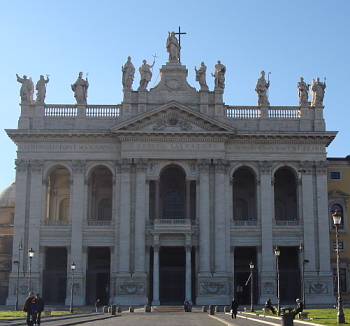
Cathedral of Christ the Savior, Sts. John the Baptist and the Evangelist, Rome
What a week! From Francis to Francis with Francis…
I was privileged to spend yesterday, the Feast of St. Francis of Assisi, in Assisi with Pope Francis. With him came the Council of Cardinals, or group of eight, which held their first meeting this week. It was an overcast, pleasant day, the predicted thunderstorms holding off until last night.
His entire itinerary is here, and text of speeches and addresses. There is also a good commentary by a friar i met last year in Assisi at a conference, Daniel Horan, at America Magazine.

The last papal event I attended in Assisi was the 25th anniversary of the first interreligious day of prayer for peace with Pope Benedict XVI, which was dubbed ”Pilgrims of Truth, Pilgrims of Peace.” Two cornerstone pieces of the original event were missing however – prayer, and the Sant’Egidio community who organize the annual prayers for peace in the spirit of Assisi. Subsequently, perhaps, attendance was surprisingly low.
Yesterday was a different story. The Eucharistic celebration in the lower piazza of San Francesco was witnessed not only by a full piazza there, but also in the upper piazza, all the side streets, and in the other major piazzas of Assisi (Santa Chiara, San Rufino, Piazza del Commune) where jumbotron screens were set up. It was an almost all-Italian gathering, and there is no question of the broad appeal of this reforming pontiff.
It came at the end of an amazing week in terms of Church news – especially with regard to Church reform. I commented already on some of them, but there has been so much, it has been hard to keep up. Thankfully, there are professionals to do that for us: John Allen summarizes this week in Vatican and Church news, in what he contends to be the biggest week outside of a conclave in his nearly 20 years of Vatican reporting.
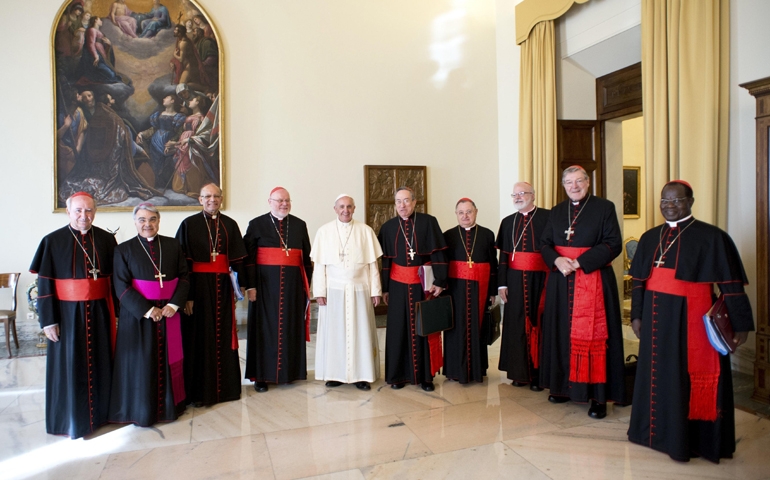
The biggest news is probably the meeting this week of the Council of Cardinals, dubbed in some circles the G-8. They have discussed the ecclesiology of Vatican II, the reform of the Synod of Bishops into a more permanent exercise of synodality and collegiality, the reform of the Roman curia to such an extent as to require a new constitution emphasizing decentralization and service to the local churches, changes to the Secretariat of State that might remove it from its current role as über-dicastery, and serious questions on the role of the laity in the church, including the role of the laity inside the curia itself. Their second meeting is set for just two months from now. They seem to really be addressing the half-finished business of Vatican II, or at least getting started on it.
When my students asked me last week why no pope or bishop has ever talked about the Church in the way that Francis has, and why there’s never been so much energy in the church, I was reminded of my own experience as a university sophomore, in my own 200-level theology class (on Vatican II) asking a similar question, “why are we still waiting for the changes promised by the Council? How can 35 years have passed and we are still waiting [on things like decentralization, synodality and collegiality, the role of the laity, the full restoration of the diaconate, overcoming clericalism, etc]?” – I had no idea 15 years later I would be the one trying to answer these questions, and under what different circumstances!
Two highlights of John Allen’s highlights, aside from the meeting of the Council of Cardinals, worth particular notice:
Allen reports that
“Von Freyberg told me recently it’s his ambition to put gossipy newspaper reports out of business by making it so easy to get information directly from him that journalists don’t have to rely on whispers in Roman bars.”
If that is not argument enough for getting more lay people in positions of responsibility of the Roman Curia, i do not know what is. When was the last time you heard any cleric tackle communication and transparency issues so directly? Well, before this one…
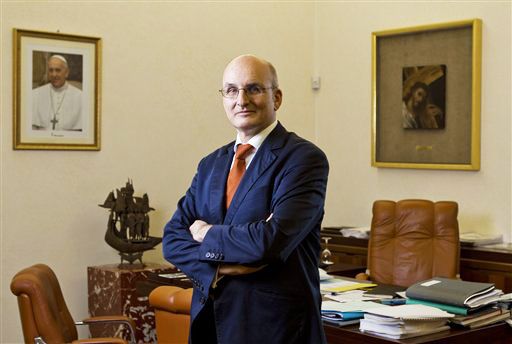
Ernst Von Fryberg, cleaning up the Vatican Bank. He really should be a deacon!
The second point is less about this week in particular, but about Allen’s comments about his own book on religious persecution around the world, after talking about the killing of about 500 Christians in India during 2008 riots:
Not to put too fine a point on it, but that’s what a real “war on religion” looks like. One aim of the book is to reframe the conversation over religious freedom among Western Christians so we don’t allow our metaphorical battles at home to obscure the literal, and often lethal, war on Christians being waged in other parts of the world.
In the view from Rome, there was a bit of discomfiture last year with the whole tone and tenor of the ‘fortnight for freedom’ in the U.S., because it seemed to ignore the real problems of religious freedom. Officially, of course, the Vatican backs its bishops, but, unofficially (and remember this was still under Pope Benedict) there seemed to be a current of thought around the Vatican and in Rome that there was a little too much partisan politicking, and not enough focus on the fact that there are more Christian martyrs around the world today than at any point in history. It is hard to be quite so concerned about contraceptive funding when there are Christians dying at the hands of radical elements in Buddhism, Hinduism, Islam, and secular Atheism – especially when it is part of a universal health care plan that the Church supports in principle, if not in every detail.
This is, of course, not to say to ignore the small problems before they become big ones, but to keep everything in perspective. That is something we Americans have a hard enough time doing when it comes to global events, but for which membership in a Church so universally oriented that it is called Catholic ought to be a corrective.
****
For the full run-down of the week, read Allen’s article here.
In brief, what happened this week:
- Monday:
- Canonization of Popes John XXIII and John Paul II set for April 27
- Discussion of regional tribunals to adjudicate clerical sex abuse cases
- G-8 formal established as a permanent Council of Cardinals
- Tuesday:
- A “stunning Q&A with the pope” published in La Repubblica
- The Vatican Bank (IOR) released its first-ever annual report and its lay president demonstrates the kind of transparency attitude needed all over the Church
- The Vatican Bank announced the closure of 900 accounts for dubious activity
- The Council of Cardinals began its first meeting, as mentioned above
- Thursday
- 50th anniversary of Pacem in Terris, organized by Sant’Egidio Community
- “Monsignor 500” (as in Fortune 500), Nunzio Scarano, under investigation for embezzlement and money laundering, airs some dirty laundry about further financial scandals (alluded to last week)
- Friday
- Feast of Francis of Assisi . Francis took aim at the ‘right’ by calling on the Church to “strip itself of the cancer of worldliness”, and took aim at the ‘left’ by asserting that the peace of Francis is not a ‘kind of pantheistic harmony with the forces of the cosmos’, but a Christ-centered peace.
Dinner with Ambassador Ken Hackett
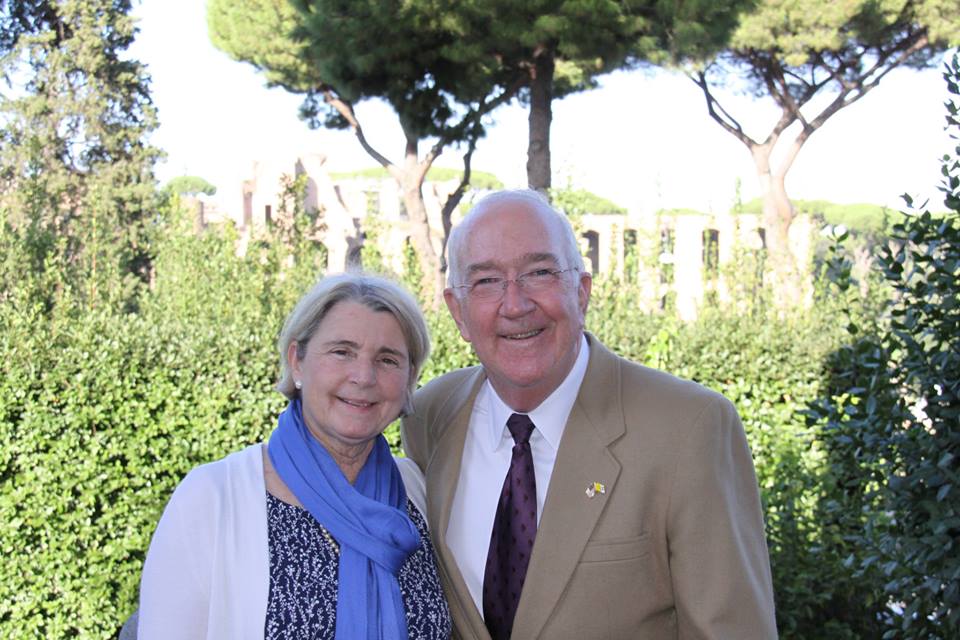
Ambassador Ken Hackett with his wife, Joan
This talk lately reminds me i forgot to post about my first meeting with Ambassador Ken Hackett, back in early October:
On Thursday night [Oct.3], my past and present Rome worlds met one another when the entire Rome program of the Catholic University of America and Loyola University Maryland descended upon the Lay Centre at Foyer Unitas to welcome U.S. Ambassador to the Holy See Ken Hackett and his wife, Joan, on their twelfth day in Rome.
His predecessor, Prof. Miguel Diaz, was a theologian serving as the link between the U.S. government and the theologian-pope Ratzinger. Now we have the recently retired head of caritas in the U.S. representing the government to the very service-oriented successor of Peter.
Whatever else one can say about President Obama, his picks for US Ambassador to the Holy See have been more spot-on as genuinely Catholic picks than any president in our history – judged on pastoral and theological, rather than political, qualifications. If that were the only criterion (it is not, to be sure) he would be the most Catholic president we have ever had. Reflect on that for a moment…!
If I were to sum up the Ambassador’s approach, it is that he intends to have fun the next three years. Not, “fun”, as in he’s going to spend his entire assignment on a yacht in the Mediterranean or something. But, fun, as in, here is someone who has lived the “poor church for the poor” after 40 years in Catholic Relief Services, and is coming to Rome just as we have a bishop imbued deeply in the spirit of the poverello of Assisi.
***
An interesting historical note: Ambassador Hackett is recipient of the 2012 Laetare Medal, the same honor which the shortest-serving US Ambassador to the Holy See, Mary Ann Glendon, a Harvard law professor, refused in 2009 so that she would not have to share the platform with President Obama, who was receiving an honorary doctorate that year – as have all U.S. presidents since Eisenhower. Brutta figura or principled stand? A bit of each, I think.
Francis the Reformer: Some Reflections
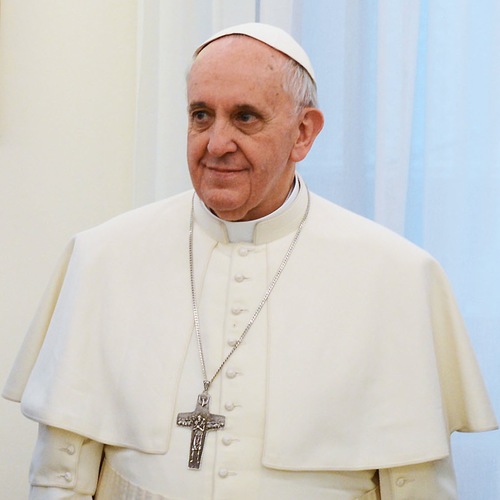
In his latest bombshell interview – this time with the left-leaning, secular La Repubblica – Pope Francis shows again that he really is a pope who gets it: Most of the Church – indeed, most of the world – is not much interested in the crimson and lace of renaissance papal pageantry, or the single-issue heterodoxy of even the most well-meaning culture warriors.
Instead, we are yearning, thirsting, starving for the Gospel, and for the reforms necessary to move the Light of the Nations out from under the bushel basket and back onto the lamp-stand. Let the world see, and the world will believe. The only way to focus on the Big Thing is to clear out the little things that, by justice, need changing. Tinkering is not enough, and prayer without action is merely piety.
In the last six months, I have seen and heard the bishop of Rome take on clericalism, careerism, triumphalism, and narcissism in ecclesial leadership – the root causes of the sexual abuse crisis, the financial crisis, and the vocations crisis, to name a few. He has touted a hermeneutic of mercy, and condemned the selfish materialism of the world. He desires a poor church for the poor, and is willing to actually do something about it. He has promised discussion on the role of women in the Church (though, to be fair, so did Popes John Paul II and Benedict), and there is reason to believe it might actually happen. He proposes reforming the curia, the synod of bishops, and the attitude of princely prelates.
In his first interview, with La Civiltà Cattolica, he talked about the importance of dialogue, discernment, and the frontier. When asked about reforming the Roman Curia, he talked about ecumenism and the need for ecumenical reception, especially from the Christian East, in the areas of synodality and collegiality. He talked about the Jesuit gift for being centered on Christ and the Church while reaching out to the borders, to the people on the fringe, most in need of Mother Church’s warm embrace and, sadly, mostly likely to have experienced a clerical cold shoulder. Previously, when asked for advice for leadership in any field, his said his advice is always the same: “Dialogue, dialogue, dialogue!”
Today he referred twice to the late Cardinal Carlo Martini, archbishop of Milan and perennial papabile for the moderates in the college of cardinals. In his first angelus, he cited Cardinal Walter Kasper, the brilliant theologian and chief ecumenist under Pope Benedict. He also made a few remarks that seem to have been lost in translation, so we shall see!
The bishop of Rome is called, in canon law, the Roman Pontiff. Sometimes he is given the imperial title of pontifex maximus. These are, truly, ecumenical titles that literally mean “bridge-builder”. The bishop of Rome, as successor of Peter, has as his unique vocation to build up unity between divided Christians and churches. Like his predecessors in the last fifty years, Pope Francis is clearly dedicated to this. Nearly twenty years after Pope John Paul II asked for input on how to reform the Petrine Ministry for the sake of Christian Unity, Pope Francis seems ready to start implementing some of the recommended changes.
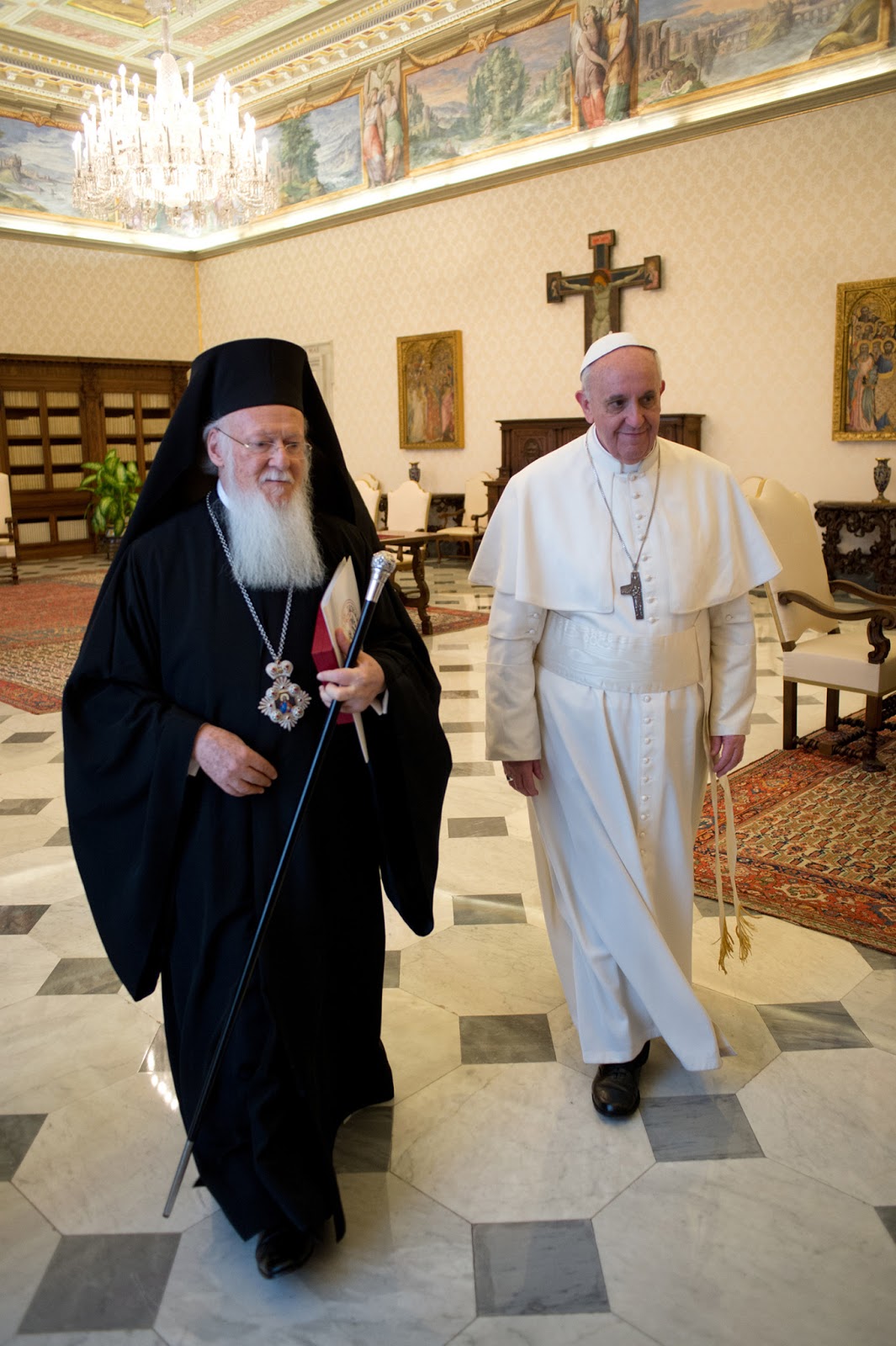
His critics are tired of hearing about his humility, and want to insist that it was fun to be Catholic before, too. Suddenly the neo-cons and radical traditionalists are vying to prove which are really, truly “more Catholic than the pope” and have discovered to their mutual horror that ultramontanism is not actually all it was cracked up to be the last twenty or thirty years. Some of the same voices shouting “santo subito” at JPII’s funeral or printing John Paul II the Great buttons before he was even dead, are suddenly warning against a papal cult of personality.
On the other hand, my students want to know why no one has ever spoken about the Church like this, and why there has never been such a popular pope before (granted, they are too young to remember John Paul II’s early years, and even I am too young to remember the excitement in the wake of Vatican II).
After I posted a link to today’s interview, a friend wrote me this message:
It has been a struggle for me, at times, to feel comfortable going to church. This is not because of the individual people at our parish, but because the structure of the church has been so dominating and exclusionary. The article you posted this morning brought tears to my eyes. If Pope Francis truly guides the Church in the direction he says he is, I am more at peace with raising my children Catholic than I ever have been.
A couple weeks ago, I naively ventured out to St. Peter’s early on a Wednesday morning, thinking I would sneak in the basilica before the crowds began to show up for the 10.30 audience. I should have known better. Already at 08.00 the piazza was full, and I overheard one tour guide complain, “What can I do? I have a group coming at 10:15! This never used to be a problem!”
This is a pope who knows how to pope. He is the bishop of Rome, the servant of the servants of God. Pray for him, because we need him. We need the vision of Vatican II to be unfettered and its reforms fully implemented, and need them to be done now, after years of discussion and debate, it is time for reception. We need the scandal of a broken, divided Body of Christ to be overcome, and we need the conversion of hearts and minds that are the first step to both reform and reconciliation. The world needs the Church, and the Church needs to be in the world…. not passively, but actively.
This is our mission and our vocation, and my bishop is asking you to embrace it. Please do.
Quote of the Day: Pope Francis on clericalism, ecclesial narcissism

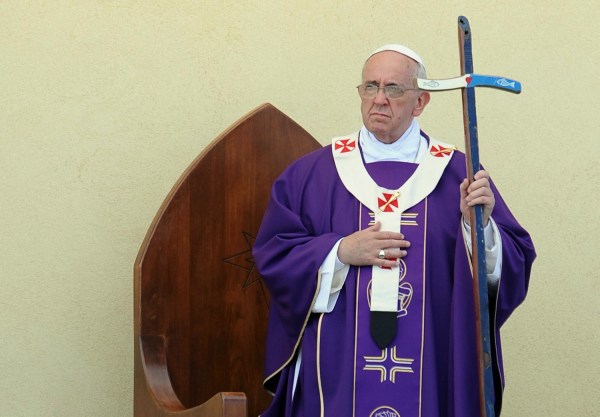
“You know what I think about this? Heads of the Church have often been narcissists, flattered and thrilled by their courtiers. The court is the leprosy of the papacy…. when I meet a clericalist, I suddenly become anti-clerical.”
Pope Francis, in his interview with La Repubblica, published today.
A caveat though: there are a couple places where there seems to be either less than technical translating, or some dubious editing. It was not as carefully done as the Jesuit interview, and not as in depth.
For example, in the quote above, the english “Heads of the Church” seems to imply the Head of the Church, which is Christ. Obviously not what the pope meant. In italian capi delle chiesa refers to “leaders in the church” – popes, bishops, pastors, even DREs or pastoral associates could be implicated. At one point there is reference to “religious ecumenism” (ecumenismo religioso) which makes little sense: does it mean interreligious dialogue or Christian ecumenism? Is there supposed to be some kind of ecumenism that is not religious?
Pope Francis Interview with La Repubblica – Top Seven “Quotes”
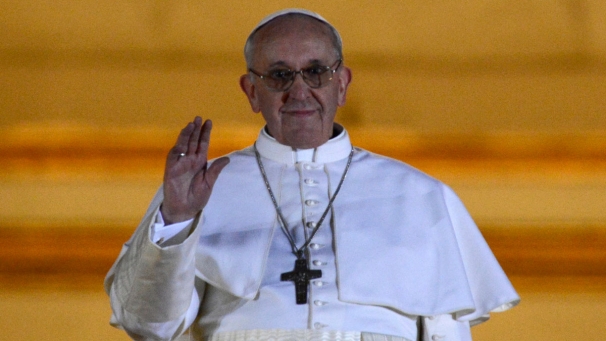
“The most serious of the evils that afflict the world these days are youth unemployment and the loneliness of the old. The old need care and companionship; the young need work and hope but have neither one nor the other, and the problem is they don’t even look for them any more. They have been crushed by the present.”
“Leaders of the Church have often been narcissists, flattered and thrilled by their courtiers. The court is the leprosy of the papacy.”
“Narcissism …indicates an excessive love for oneself and this is not good, it can produce serious damage not only to the soul of those affected but also in relationship with others, with the society in which one lives. The real trouble is that those most affected by this – which is actually a kind of mental disorder – are people who have a lot of power. Often bosses are narcissists”
“This Vatican-centric view [of the Roman Curia] neglects the world around us. I do not share this view and I’ll do everything I can to change it. The Church is or should go back to being a community of God’s people, and priests, pastors and bishops who have the care of souls, are at the service of the people of God.”
“It also happens to me that when I meet a clericalist, I suddenly become anti-clerical. Clericalism should not have anything to do with Christianity. St. Paul, who was the first to speak to the Gentiles, the pagans, to believers in other religions, was the first to teach us that.”
“A religion without mystics is a philosophy.”
“We will also discuss the role of women in the Church. Remember that the Church (la chiesa) is feminine.”
Commentary explaining problems with the interview here. Turns out the interview was not recorded or notes taken, but the result of the recollection of the 89-year old Scalfari. The tone of the text, the spirit of the interview if you will, is confirmed as accurate by the Vatican, though the details and vocabulary – and the translation- need to be taken with a grain of salt. As is to be expected with Italian journalism. The contrast in the quality of the interview with the one given to the Jesuits last week is striking. The readiness of some supposedly Catholic commentators to throw the bishop of Rome under the bus because of mistranslations or misremembered timelines – even without trying to find the original first it seems – is the most shocking aspect of all, however.
Just another Saturday night in Rome
What does one do on a saturday evening in Rome if you are not tied to your desk writing for a blog, a dissertation, or grading papers? You might join us for a tour of the Palazzo Farnese, home of the French Embassy to Italy, because it was open to the public in honor of the International European Day of Culture, and see something like this:

And the, you might head over the the cathedral of Rome, San Giovanni in Laterano, to listen to the choir of the Church of Rome present the Divine Comedy of Dante, in concert. I wish there were a video to share. Maybe YouTube will get something soon…

And then end it with a late-night Tirolese dinner.
And if you missed it, at least there is a Church of Rome blog now, where you can find out about goings on here: http://chiesadiroma.blogspot.it/
“Simple is the new chic”
So says an octogenarian cardinal usually known in Rome for his sartorial splendor, when asked upon his recent appearance in a Trastevere trattoria in simple black clerical suit.
The tale is relayed by John Allen, the well-known vaticanist at dinner, from his own experience earlier this year, at the end of one of those typical Roman days where you get nothing done that you planned, but which turns out so much more interesting for it.
During the course of the day, which started with the Divine Liturgy at the Russicum (the Russian Catholic collegio), I have broken bread with a Byzantine-rite Jesuit, the organizer of an international Vatican conference, two archbishops, the aforementioned vaticanist, a papal dame, a worker-priest, journalists and students from five continents. Before yesterday I had not expected any of it.
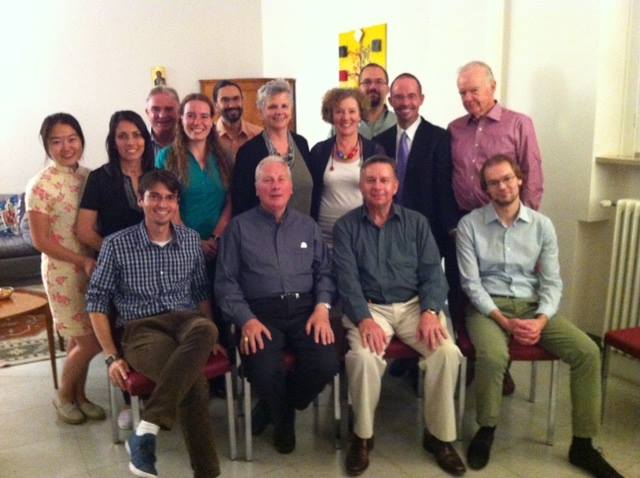
Discussion ranged to include, (somewhat predictably):
- Pope Francis’ big interview;
- Cardinal Piacenza’s perceived demotion (officially a lateral move) from Congregation for Clergy to Major Penitentiary;
- Archbishop Gus DiNoia’s unclear mandate as adjunct secretary at CDF (he had been the last ditch effort to save the talks with SSPX, after even our most traditionalist-friendly prelates assigned to the dialogue team found the task untenable);
- the situation in Egypt, including an assessment that the military coup has popular support and will let democracy happen, if a party can be found that wont prove nepotistic or despotic;
- expectation that the canonization of popes John XXIII and John Paul II will indeed be on Divine Mercy Sunday (27 April);
- another impending financial scandal that will make the Vatican bank issues look like small potatoes;
- the fears that Francis, who reminds many of John Paul I, will be the target of an assassination plot;
- one world-traveled cleric claiming that his experience of worship at Caravita last week was one of the best he’s experienced, ever, anywhere (and that Fr. Gerry’s preaching was phenomenal);
- the removal of two bishops this week for sex abuse of children (in Dominican Republic and Peru);
- the positive effects of diocesan-wide petitions against their bishops (in both Germany and Brazil);
- rumors that Pope Francis is considering strict , non-renewable, 5-year term limits for all curial posts;
- German elections, Angela Merkel, and the evening’s Roma-Lazio game;
- and whether men appreciate women who are willing to ask men out, or if they find it unappealing (2:1 in favor of women taking the initiative, for the record).
OK, the last one may not have come up with the clerical company, but it did come up during the day!
One overarching theme was that everyone I talked to, in every different setting, was positive about Pope Francis, but unsure, still, about how much hope to have.
Part of that relates to the concern exemplified by the “simple is chic” cardinal. If that’s all it is – knowing which way the wind is blowing – I think I would rather trust a priest who sticks to his French cuffs or a prelate preening in his watered silk, if that is what they really think is appropriate, rather than those who are simply dressing up or down according to the boss’ style. Because then none of the change is permanent, and it will shift with the sands. I might disagree with the capa magnas and the little fiefdoms, but I have much greater respect for the prelate princeling or the lord of the rectory manor who admits what he is than the one who plays the game just to look the part, whichever way it goes.
Now, if the bishop of Rome really wants to curtail clericalism, he might just announce that anyone working at any level in the curia or the diplomatic corps will be ordained only to the diaconate, in accordance with their original vocation, and neither to the presbyterate nor to titular dioceses long-since buried under the Sahara. Wouldn’t that be interesting?

Recall “the smiling pope”
Quote of the Day: Pope Francis on Leadership
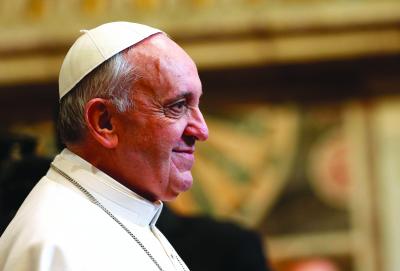
My authoritarian and quick manner of making decisions led me to have serious problems and to be accused of being ultraconservative. I lived a time of great interior crisis when I was in Cordova. …I have never been a right-winger. It was my authoritarian way of making decisions that created problems.
But now I hear some people tell me: ‘Do not consult too much, and decide by yourself.’ Instead, I believe that consultation is very important.
Pope Francis in his interview with Antonio Spadaro of La Civiltà Cattolica, and published in Jesuit magazines around the world on 19 September.
Two new Notre Dame – er, U.S. – Ambassadors in Rome
In recent weeks, two of the three U.S. Ambassadors present in Rome arrived to take up their new posts. (David Lane, U.S. Ambassador to the UN Agencies in Rome, has been on post for about 18 months).
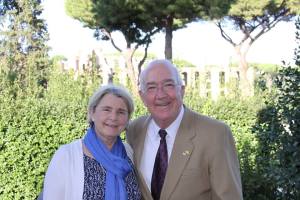
U.S. Ambassador to the Holy See, Ken Hackett and his wife Joan arrived on 19 September to take up residence at Villa Richardson. Ambassador Hackett may be a Boston College grad originally, but in 2007 he was awarded a Doctorate of Human Letters, honoris causa, by the University of Notre Dame, for his extensive work on behalf of the world’s neediest, in his 40 years at Catholic Relief Services (the U.S. affiliate of Caritas Internationalis). In 2012, he was awarded the U.S. Catholic Church’s highest honor, the Laetare Medal.
He succeeds Ambassador Miguel Díaz, who earned a Ph.D. in Theology from Notre Dame in 2000 (the same commencement ceremony as your humble scribe, but for the BA). His wife, Dr. Marian Díaz, was ND class of 1991.

U.S. Ambassador to the Italian Republic and the Republic of San Marino, John R. Phillips, earned a Bachelor of Arts from the University of Notre Dame in 1966, before going on to Law School. He and his wife Linda arrived just a week earlier, to take residence at Villa Taverna. Third-generation Italian-American, Ambassador Phillips has made fifty visits to Italy in the last decade alone! It is probably a good thing he gets a chance to settle in for a while.
Needless to say, the Notre Dame Club of Italy is thrilled to welcome both to its membership!
 The Ecumenism Blog