
Home » Posts tagged 'Rome' (Page 5)
Tag Archives: Rome
Benedict Resigns – Not exactly ‘unprecedented’
Popes have resigned in the past, and more than once, despite popular mythology to the contrary, at least including:
- Pope St. Pontian in 235
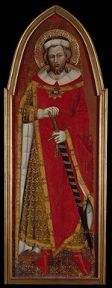
Pope St. Pontian, resigned in 235 AD
- Pope Silverius in 537
- Pope John XVIII in 1009
- Pope Benedict IX in 1045
- Pope Gregory VI in 1046
- Pope Celestine V in 1294
- Pope Gregory XII in 1415

Several others are not entirely clear whether it was resignation or deposition, including at least Pope Marcellinus in 308 and Pope Liberius in 366.
Plus there were others who are now considered antipopes who resigned, but at the time may not have been so clear who was the legitimate bishop of Rome. Some popes were deposed, others excommunicated. What I remember from history courses was that about 10% did not serve until death (and not all who did died of natural causes).
Modern popes have considered resignation as an option, most famously:
- Pius VII in 1804 prepared a letter of resignation, to be put into effect if he was captured and imprisoned
- Pius XII in 1943, for the same reason
- Paul VI considered retiring at the age of 75, in 1972, to conform to the law that asked the same of all other bishops
- John Paul II said in 1979 that he was open to the same idea, and it is said that he had a conditional document prepared as early as 1989, and again in 2000.
- Benedict XVI told the cardinals in the days after he was elected that he would resign if necessary, and addressed it again in 2010 in his interview with Peter Seewald, Light of the World
Back in 2000, ecclesiologist Fr. Richard McBrien penned an article for the Tablet, asking the question of resignation with respect to the pontificate of John Paul II. His book, Lives of the Popes: The Pontiffs from St. Peter to Benedict XVI, is one of a handful of good, contemporary resources on the topic.
We need to think more broadly than the bishop of Rome. We have seen other patriarchs and heads of churches resign, both within the Catholic Church, and in broader Christendom. All of them in positions that, in virtually all cases, were also considered normally held until death.
Consider just recently:
- The Catholic Coptic Patriarch Antonios I Naguib resigned in January 2013, at age 77.
- The Catholic Chaldean Patriarch Emmanuel III Delly resigned in December 2012, at age 85.
- The Catholic Maronite Patrairch Nasrallah P. Sfeir resigned in March 2011, at age 90.
- Archbishop Rowan Williams of Canterbury resigned, effective December 2012, at age 62.
- Metropolitan Jonah of the Orthodox Church in America resigned in July 2012, at age 53.
So, while it has been almost 600 years since the last bishop of Rome willingly retired, we can and will get used to the idea. It takes remarkable integrity to lead by such strong example.

Retired professors retire for second time
Benedict Resigns – Press office update
Some helpful reminders from the Vatican Press Office:
- Pope Benedict XVI has given his resignation freely, in accordance with Canon 332 §2 of the Code of Canon Law.
- Pope Benedict XVI will not take part in the Conclave for the election of his successor.
- Pope Benedict XVI will move to the Papal residence in Castel Gandolfo when his resignation shall become effective.
- When renovation work on the monastery of cloistered nuns inside the Vatican is complete, the Holy Father will move there for a period of prayer and reflection.
Benedict Resigns – Why are you surprised?
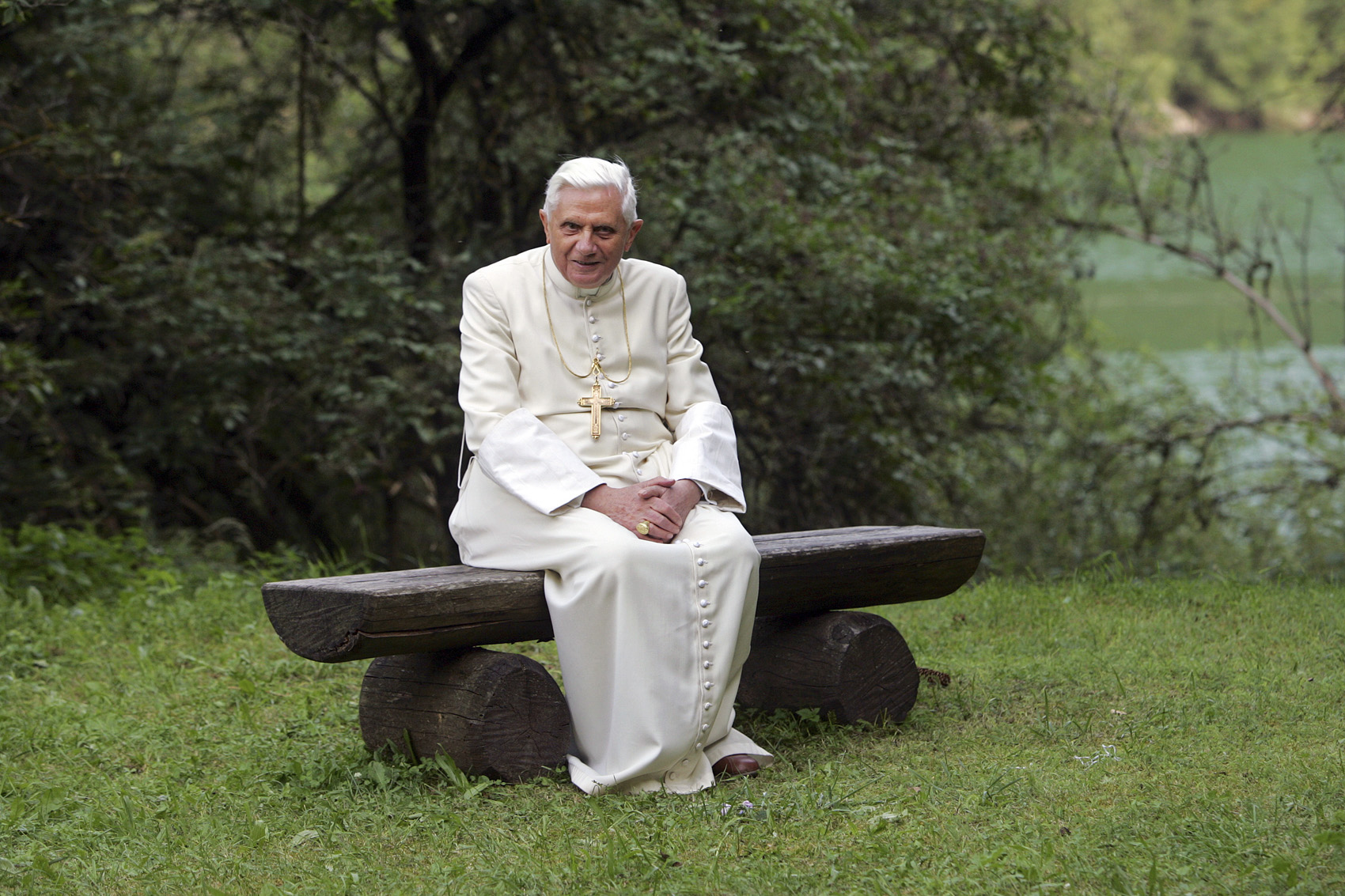 I saw the facebook comments first, before the news: “wow,” “unexpected,” “shocked,” “surprised.” One priest went so far as to say the pope had broken his heart.
Why are you surprised?
He told us he was going to resign if his health or abilities failed, when he was elected, and again just a couple years ago:
‘‘If a pope clearly realizes that he is no longer physically, psychologically and spiritually capable of handling the duties of his office, then he has a right, and under some circumstances, also an obligation to resign,’’ Pope Benedict XVI, Light of the World, 2010
He, better than most, knows the effect on the church and the Roman curia by the long, lingering illness of a bishop of Rome.
He is 85, and his pontificate has been nearly 8 years – almost exactly the length of the average pontificate over the last 2000 years.
He is a better theologian than any pope we have had in centuries, and knows well that, like all bishops, he can resign. And like all bishops, you do the same thing with a retired pope that you do with a retired bishop – it is not such a problem.
He knows the history of the papacy, that includes some obvious cases of papal resignation (St. Pontian, Benedict IX, Gregory VI, Clement V, Gregory XII), and several others who have been removed. Nearly 10% of all popes did not serve until death, if I remember correctly.
He is also an unquestionable champion of Catholic identity, culture and orthodoxy, so no one can claim that only a “liberal” or “reformer” pope would do this, as Paul VI had contemplated doing during his pontificate.
And above all he is a man of integrity and courage, who has done what is right in the face of pressure to simply conform to unrealistic expectations. He is not resigning because of disgrace or failure, he is retiring because it is the right thing to do for the Church, and for himself.
I think I have never been so proud of a pope in a lifetime of loving the Church.
Pope Benedict Resigns
Pope Benedict XVI on Monday said he plans on resigning the papal office on February 28th. Below please find his announcement.
Dear Brothers,
I have convoked you to this Consistory, not only for the three canonizations, but also to communicate to you a decision of great importance for the life of the Church. After having repeatedly examined my conscience before God, I have come to the certainty that my strengths, due to an advanced age, are no longer suited to an adequate exercise of the Petrine ministry. I am well aware that this ministry, due to its essential spiritual nature, must be carried out not only with words and deeds, but no less with prayer and suffering.
However, in today’s world, subject to so many rapid changes and shaken by questions of deep relevance for the life of faith, in order to govern the bark of Saint Peter and proclaim the Gospel, both strength of mind and body are necessary, strength which in the last few months, has deteriorated in me to the extent that I have had to recognize my incapacity to adequately fulfill the ministry entrusted to me.
For this reason, and well aware of the seriousness of this act, with full freedom I declare that I renounce the ministry of Bishop of Rome, Successor of Saint Peter, entrusted to me by the Cardinals on 19 April 2005, in such a way, that as from 28 February 2013, at 20:00 hours, the See of Rome, the See of Saint Peter, will be vacant and a Conclave to elect the new Supreme Pontiff will have to be convoked by those whose competence it is.
Dear Brothers, I thank you most sincerely for all the love and work with which you have supported me in my ministry and I ask pardon for all my defects. And now, let us entrust the Holy Church to the care of Our Supreme Pastor, Our Lord Jesus Christ, and implore his holy Mother Mary, so that she may assist the Cardinal Fathers with her maternal solicitude, in electing a new Supreme Pontiff. With regard to myself, I wish to also devotedly serve the Holy Church of God in the future through a life dedicated to prayer.
From the Vatican, 10 February 2013
BENEDICTUS PP XVI
Lay Centre on EWTN
In other news… The Lay Centre at Foyer Unitas appears on the 4 February, EWTN “Vaticano” feature. The Lay Centre at Foyer Unitas is Rome’s premier collegio for lay students at the pontifical universities, institutes, and athenae.
The whole clip is only 27.00 long, and the section on the Lay Centre begins at 21.00
[embedding is not functioning at the moment, but you can go to the link here:]
Week of Prayer for Christian Unity 2013 – Rome
[From the archives, published for record only]
A list of events in Rome for the WPCU 2013:
Thursday, 17 January: Giornata di Riflessione Ebraico-Cristiana
17:30 – Pontificia Università Lateranense, Aula Pio XI –
Non commettere adulterio
– Rabbino capo della Comunità ebraica di Roma, Riccardo Di Segni;
– Padre Reinhard Neudecker sj., professore emerito del Pontificio Istituto Biblico;
– Rettore Magnifico dell’Università Lateranense, S.E. Monsignor Enrico Dal Covolo.
Friday, 18 January
07:45 – Pont. Univ. Gregoriana, Cappella Comunitaria –
Santa Messa Presiede: P. Adrien Lentiampa
17:30 – Cappella di Santa Brigida –
Celebrazione ecumenica dei Vespri
- S.E. Cardinal Kurt Koch
- S.E. Kari Mäkinen, Arcivescovo della Chiesa evangelico-luterana di Finlandia
19:00 – Chiesa Valdese di Via IV Novembre 107 –
celebrazione ecumenica in apertura della settimana di preghiera
organizzata dalla consulta delle chiese evangeliche di Roma
19:00 – Parrocchia di S. Gioacchino in Prati, Piazza dei Quiriti, 17 –
celebrazione ecumenica di preghiera e inaugurazione della mostra biblica ecumenica
19:30 – Lay Centre at Foyer Unitas –
Vespers with Rev. Milan Žust, SJ,
Pontifical Council for Promoting Christian Unity
Presentation on the Week of Prayer by Prof. Teresa Francesca Rossi, Centro Pro Unione
And students of The Catholic University of America (Washington, DC)
Saturday, 19 January
16:00 – Basilica di Santa Maria sopra Minerva –
Celebrazione ecumenica finlandese della festa di S. Enrico di Finlandia
– Sua Eccelenza Kari Mäkinen, arcivescovo della chiesa evangelica-luterana di Finlandia
– S.E.R. Mons. Teemu Sippo, SCI, vescovo della diocesi cattolica di Helsinki
– Sua Eminenza Leo, arcivescovo della chiesa ortodossa in Finlandia
I canti saranno eseguiti dai cori giovanili della Cattedrale di Turku.
Dopo la celebrazione ci sarà un rinfresco nella casa di Santa Brigida, piazza Farnese 96.
18:00 – Pontificio Collegio Beda, Viale San Paolo 18 –
Celebrazione per la Settimana di preghiera per l’unità
Sunday, 20 January
10:00 – Christus Kirche, Chiesa evangelica luterana, Via Toscana –
Eucaristia presieduta dall’Arcivescovo Kari Mäkinen (Turku, Finlandia),
11:00 – Caravita Community at Oratorio San Francesco Saverio, Via del Caravita –
Sunday Eucharist with Ecumenical Guest Preacher
Very Rev. Canon David Richardson, ChStJ, Preaching
16:30 – Chiesa battista, Via della Bella Villa, 31 (Centocelle) –
pomeriggio ecumenico di fraternità e preghiera, organizzato dal gruppo romano del SAE e dalla Chiesa battista di Centocelle presso i locali della
18:00 – Chiesa metodista, Via Firenze 38 –
celebrazione per la Settimana di preghiera per l’unità
Churches Together in Rome
Monday, 21 January
12.25 – Cappella Universitaria, Pont. Univ. Gregoriana –
Momenti di Preghiera Ecumenica (Ortodossa): Ivan Plavsic
Tuesday, 22 January
11:00 – Parrocchia della Trasfigurazione, Piazza della Trasfigurazione (Monteverde Nuovo) –
Incontro e Agape fraterna con la Chiesa copto-ortodossa,
12.25 – Cappella Universitaria, Pont. Univ. Gregoriana –
Momenti di Preghiera Ecumenica (Protestante): Taneli Ala-Opas
12:45 – Anglican Centre of Rome –
Eucharist for the Week of Prayer for Christian Unity, Lunch following
18:30 – Parrocchia di San Barnaba –
Veglia Ecumenica Diocesana
Preside: Cardinale Agostino Vallini, Vicario Generale di Roma
Wednesday, 23 January
12.25 – Cappella Universitaria, Pont. Univ. Gregoriana –
Momenti di Preghiera Ecumenica (Cattolica): Michel e Deema
19:00 – Lay Centre at Foyer Unitas –
Community Evening and Eucharist with Rev. Prof. Frederick Bliss, SM,
Professor of Ecumenism and Dialogue, Pontifical University of St. Thomas Aquinas
(residents only)
Thursday, 24 January
12:30 – Pont. Univ. Gregoriana, Aula Magna
Film sull’ecumenismo “Bells of Europe”
16:30 – Centro Pro Unione –
Cosponsored by the Centro Pro Unione and the Lay Centre at Foyer Unitas
Dignitatis Humanae: What has it given to the Church and the World?
Lecture by Rev. Prof. Ladislas Orsy, SJ
Visiting Professor of Law, Georgetown University
Followed by an Ecumenical Celebration of the Word
Presider: Very Rev. Canon David Richardson, ChStJ, Archbishop of Canterbury’s Representative to the Holy See
Preacher: Rev. Austin K. Rios, Rector of St. Paul within the Walls
Friday, 25 January
07:45 – Pont. Univ. Gregoriana, Cappella Universitaria –
Santa Messa conclusiva, presiede: P. JÁN ĎAČOK
17:30 – Basilica of St. Paul outside the Walls –
Solemn Vespers with Pope Benedict XVI
Closing of the Week of Prayer for Christian Unity and the Feast of the Conversion of Paul
18.30 – Oratorio San Francesco Saverio del Caravita –
Free Organ recital and dedication of newly restored 1790 Priori Organ,
RSVP
19:00 – Pontifical Gregorian University, Aula F007 –
Dialogue and Reconciliation Today: The Irish Process
Mary McAleese, President emeritus of the Republic of Ireland
Sunday, 27 January
10:00 – Parrocchia della Trasfigurazione, Piazza della Trasfigurazione (Monteverde Nuovo) –
Santa Messa presieduta dal Cardinale Walter Kasper, Presidente emerito del Pontificio Consiglio per la promozione dell’unità dei cristiani, con la partecipazione dell’Istituto Ecumenico di Bossey (Svizzera),
Divina Liturgia nei vari riti cattolici
dei giorni di Settimana di Preghiera per l’unita dei Cristiani
– Basilica Di Santa Maria in Via Lata –
alle ore 20:00
– Venerdì, 18 Rito Armeno Pont. Collegio Armeno
– Sabato, 19 Rito Siro-maronita Ordine Maronita della B.M.V.
– Domenica, 20 Rito Romano Presiede: Mons. Matteo Zuppi
– Lunedì, 21 Rito Siro-malabarese Pont. Collegio Damasceno Venerdì
– Martedì, 22 Rito Bizantino-romeno Pont. Collegio Romeno
– Mercoledì, 23 Rito Bizantino-greco Pont. Collegio Greco
– Giovedì, 24 Rito Bizantino-ucraino Padri Basiliani di S. Giosafat
– Venerdì, 25 Rito Etiopico Pont. Collegio Etiopico
Capo d’anno – Looking back, looking ahead
Every year I find that I had many more ideas for my blog than I actually had time to post. The irony, of course, is that the busier and more interesting life gets, the less time to chronicle it.
Perhaps the biggest ‘distraction’ was a push to finish my License in Sacred Theology. I submitted my thesis in mid-September, at twice its intended length, and passed my oral comprehensive exams in early October, being awarded an S.T.L. in Ecumenism and Dialogue magna cum laude. I am now dedicated to finishing the doctorate – with the dubiously honorific postnominal initials of S.T.D. – in the next 18 months or so. (“Or so” indicating about a half year of flexibility for editing, revising, and Roman beaurocracy).
On paper, the S.T.L. seems to require only 20 lecture courses, 4 seminars, a thesis and oral comprehensive exams, and could be completed normally in two years. In fact, owing to extra requirements of my particular discipline, I completed 31 courses for credit and audited three others (including one with Cardinal Walter Kasper). … and that was with credit for seven courses walking in the door, owing to previous academic and pastoral work.
Translating American and Pontifical degrees is tricky, because each system inherently thinks itself superior to the other. Roughly, the STL is equivalent to being ABD in the U.S. PhD system, though certain elements simply do not translate: There are no teaching assistants or lecture opportunities for anyone without a doctorate in hand, in the Roman system, for example. It is still a good indicator of where I am in my studies.
Certainly the biggest encounter, and one of the nicest surprises of the year, was a little one on one time with His Grace, The Most Rev. Dr. Rowan Williams, now retired Archbishop of Canterbury. On the day of his address to the Synod of Bishops in October, he came to the Caelian hill for a short tour, and I was invited to be his local guide and ecumenical host for the encounter. As we walked through the basilica of Ss. Giovanni e Paolo, the ruins of the Temple of Claudius, and onto the grounds the Lay Centre shares with the Passionists, we were able to talk briefly about the state of the church and the churches, and his upcoming remarks. Seeing his ‘entourage’ it was like a reunion of friends and respected colleagues, people I admire for their dedicated service to the Church and ecumenism from both communions.
The year began on an ecumenical note, as I traveled in January to Norway to celebrate the ordination of a friend and former housemate of mine as a pastor in the (Lutheran) Church of Norway, which took place in Nidaros Cathedral, in Trondheim, just a couple degrees south of the arctic circle.
January of course also sees the Week of Prayer for Christian Unity, always a busy time in Rome. This year included, in January and February, a course at the Angelicum taught by Cardinal Walter Kasper on ecclesiological ecumenical themes.
During the spring semester, President Mary McAleese of Ireland, recently retired, moved to Rome to finish a License in Canon Law, and spent the spring semester in residence at the Lay Centre. She brought a wealth of knowledge of the church, experience in politics, and stories told with the kind of skill and humor that made the Irish famous as bards. She has been a great gift to the community.
March witnessed the first of two visits this year by Archbishop Rowan Williams, including a joint vespers service with Pope Benedict, on the occasion of the Camaldoli celebrating their millennial anniversary, at the Church of St. Gregory the Great, our next door neighbors on the Caelian hill, and the installation of an Anglican priest as the Catholic prior of the order’s chapter in Rome. (He was received into Catholic orders after his election as prior.)
In April, I was able to head up to Assisi for a conference sponsored by the Ecclesiological Investigations Network, and included several U.S. graduate students and theologians. Cardinal Koch gave a significant lecture on fifty years of Jewish-Catholic dialogue as this year’s annual John Paul II Lecture on Interreligious Understanding, sponsored by the office I work for, the John Paul Center for Interreligious Dialogue.
In June, I was invited by the Holy See’s Commission for Religious Relations with the Jews to be a plenary speaker from the Catholic side at a Jewish-Catholic dialogue in New York, with a focus on emerging leadership in this oldest and closest interreligious dialogue.
I spent the summer in Rome, practicing Italian and learning first-hand why anyone who can, leaves. It is impossible to think in that kind of heat and humidity, the universities and libraries close, and there is virtually nowhere in the city with air conditioning. I did get a trip to Germany and the Netherlands at the end of the summer to cool down a little. September included a working visit to Budapest.
October was a busy month, with the synod for bishops, the 50th anniversary of Vatican II opening, visits by the Archbishop of Canterbury and the Patriarch of Constantinople, an international conference at the Lay Centre, the orientation of a new cohort of Russell Berrie Fellows, and of course the comprehensive exams for my license.
November took an eastern focus, with conferences on Eastern Catholicism, and Middle Eastern Christianity. December was about wrapping up the year and getting ready to head home for my first Christmas holiday in the States since 2008.
Jean Vanier
[From the archives of half finished posts]
Jean Vanier, founder of L’Arche, spoke to a crowded aula magna at the Pontifical Gregorian University in mid-November [2012].
Advertised on the university homepage only three days in advance, perhaps it is not a surprise that the organizers at the Greg initially put us into a smaller aula across the hall. And arriving twenty minutes early, it seemed they might be right – there were so few people in the aula we felt we had time to get coffee. At just five minutes to starting time, however, the place was packed to overflowing, and we were moved to the largest room at the Jesuit university, and still had standing room only, when the towering 84-year old arrived a few minutes later.
L’Arche is one of the “new movements” in the Church that is particularly characteristic of the Italian and Latin American churches, but originated with Vanier in French Canada. A philosopher and author of at least 30 books, he co-founded L’Arche in 1964, which is now present in 40 countries and 150 different communities.
The purpose of the community is friendship with people with disabilities – much like the commitment of Sant’Egidio to befriend the poor. The idea is about relationship more than about service. Of the people without disabilities who enter into the community and its projects, Vanier said,
“The mystery is that many people come to L’Arche, assistants, wanting to do good. But then they discover something, that they are not there just to do good to people, but to enter into relationship with them. And then many of them discover their difficulty in relating, They don’t know how to love. They have difficulty in accepting their difficulties.”
L’Arche, he says, “is a place of transformation for people with disabilities, but also a place of transformation for the assistants, who become more human. And many of them really discover the whole mystery of the Gospels.”
Few people could have earned such a response from the Roman university crowd: An ovation on arrival, rapt attention, and a room-busting crowd on short notice and minimal advertising.

Students listen attentively to Jean Vanier’s presentation (in French)
Cantaur comes to the Lay Centre
The voicemail was indistinct there almost too much distortion to hear the speaker at the other end. Only after a third attempt could I recognize the familiar Australian accent of Dr. Margie Richardson, wife of Canon David Richardson of the Anglican Centre in Rome.
So I resorted to checking my personal email at work to see if there was news:
“The Archbishop of Canterbury may want to stop by tomorrow morning to see the garden and say hello. A.J., would you please welcome him and show him around?”
Even in Rome, that does not happen every day! How could I say no?
His Grace started this morning at San Gregorio Magno, the point from which Gregory the Great sent Augustine to Canterbury to evangelize more of the British Isles, and where the Archbishop and the Pope Benedict celebrated a solemn vespers together earlier this year to mark the 1000th anniversary of the Camaldoli community there.
Then, with the Richardsons, Msgr. Mark Langham of the Pontifical Council for Promoting Christian Unity, and Canon Jonathan Goodall, theologian-ecumenist of Lambeth Palace, the Archbishop toured the Passionist-operated Basilica of San Giovanni e Paolo, and received a brief tour of the Lay Centre and Passionist gardens, including the remains of the Temple of Divine Claudius.
After admiring our view and a few moments of gracious conversation, they were whisked away in Vatican state cars to the Anglican Centre for lunch and preparation for the Archbishop’s address to the Synod of Bishops this evening.
Lectio Coram or bust
 Friends, my lectio coram – my comprehensive exams – have been scheduled for this Friday at 16.50 Rome time.
The thesis was submitted two weeks ago and is being evaluated, though as soon as i got the printed version back i even noticed a spelling error on the front page. The first word, no less. Still, after this weekend, i hope to have my License in hand and be on the final stage of the doctorate: all research and writing, all the time.
The thesis title was “The Diaconate in Ecumenical Context” and my major presentation for the lectio coram is on “Ecumenical Development on the theme of Apostolicity” followed by questions covering the whole range of my studies here. Prayers are appreciated!
Then, i hope, i will be back to my normal volume of posts: this is going to be an exciting year!
 The Ecumenism Blog