
Home » Posts tagged 'Rome' (Page 13)
Tag Archives: Rome
Roman Weather, Translated
I had to share the following email from a friend and fellow Lay Centre resident. Just another sign of the cultural encounter living in Rome:
Our local weather forecast from the American “weather.com”:
Rome: Windy, rain.
But when you click on the Rome weather forecast from the big Italian weather website, they say that the forecast is:
PEGGIORAMENTO, marcata fase perturbata e ventosa per Capodanno.
LAZIO PROSSIMI GIORNI: Il vento di Ponente sarà il vero protagonista dell’avvio del 2010 e sono attese mareggiate piuttosto consistenti sulle zone costiere esposte. Si avrà un calo termico, che potrà favorire qualche nevicata sui monti appenninici. Il freddo diverrà maggiore nel week-end, quando tuttavia si attende un temporaneo miglioramento con ampi rasserenamenti.Which roughly means:
A WORSENING, with markedly disrupted (perturbed) phases and windiness for the New Year.
LAZIO in the coming days: The West Wind will be the real protagonist of the start of 2010, and expectations are for quite large storm surges on exposed coastal areas. There will be a thermal drop, which may encourage some snow on the Apennines. The cold will become even greater during the weekend, however, when a temporary improvement is expected, with ample clearing (literally: ample re-serenity-making).
PS: I am way behind on updating posts, so you’ll get most of the Christmas holiday updates in one fell swoop when i edit and upload pictures; we are off to Assisi tomorrow for a couple days so it will be after that! Do not forget to look for “older” posts that might show up later!
New Year’s in Rome: Best View in the City!
It rained, it poured; God provided his own fireworks display. So, we stayed indoors with a simple dinner and watched Angels and Demons to identify landmarks and pull apart Dan Brown’s ignorance of conclave procedures! Just in time for the display at the Colosseo though, the rain let up and we went up to the terrace. It is as if they planned them just for us!
Here are a couple clips that Nancy filmed from my window – the show starts about 20 seconds into the first one. They are literally firing them off just at the edge of our gardens; no zoom necessary.
[OK, it seems i cannot embed videos without an upgrade. I will load them to YouTube, which you can access here.]
Christmas Day at the Lay Centre
We slept. Instead of venturing back to Piazza San Pietro, we decided to sleep in and watch the Urbi et Orbi on TV – a better view, and with no public transit running, we would have spent half a day just getting there and back.
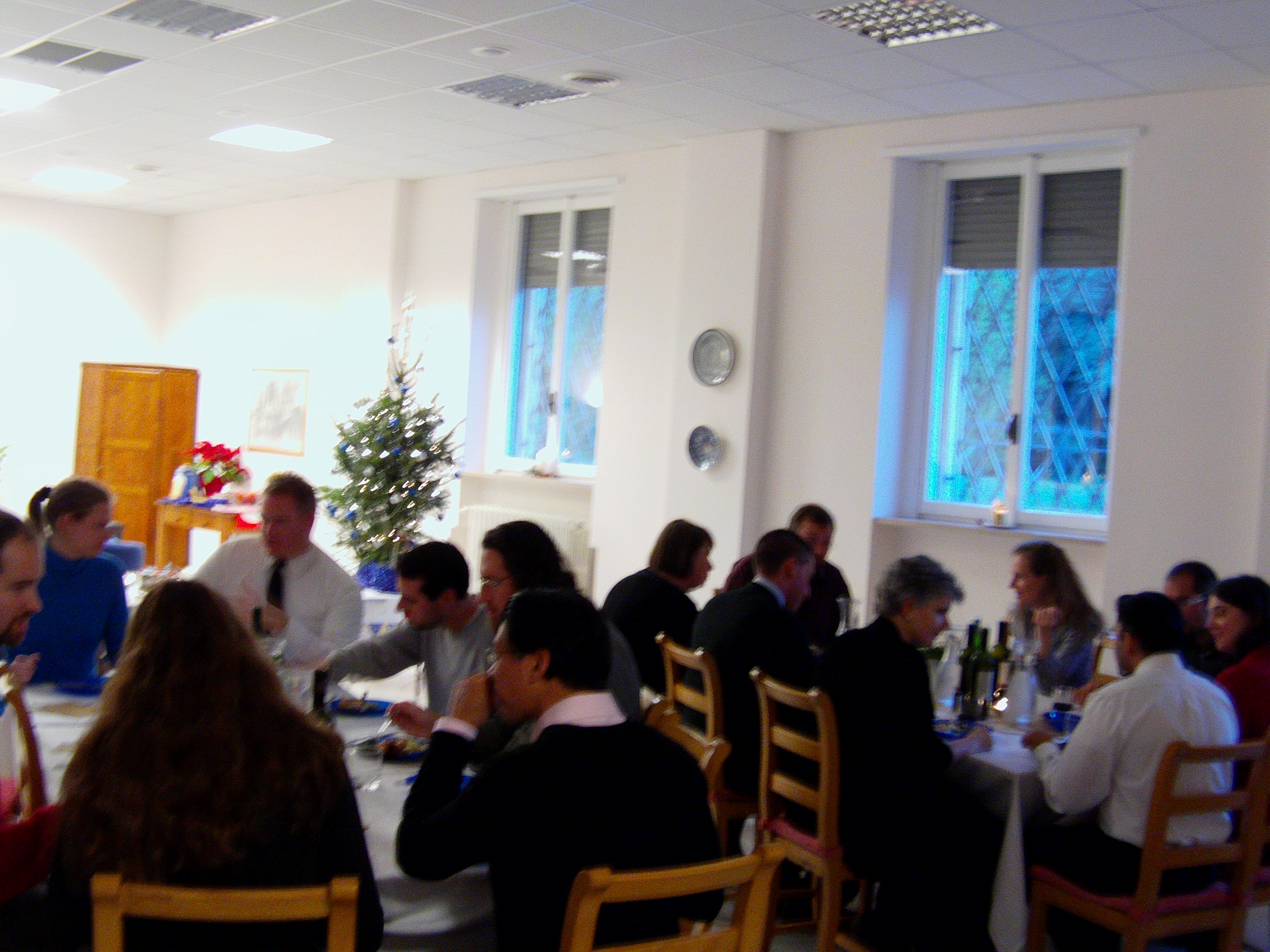
Christmas dinner
In the afternoon, the seven of us staying at the Lay Centre were joined by twice as many guests for a Christmas dinner prepared by Donna with a little help from Nancy and me. As with Thanksgiving, it was nice to offer hospitality to friends and colleagues here in Rome, separated from home and family. We entertained guests from the U.S. and U.K., Ukraine, Uzbekistan, and a few countries that do not start with the letter “U”.

Colosseum "crown of light"
David had spent a day or two preparing a piñata, a custom which only three or four of us were familiar with, and he and I got to torment the blindfolded volunteers with our maneuverings. The measures of success for a piñata: several people tried (and failed), lots of laughter, and lots of candy!
As we were getting ready to head back in for dessert, the Colosseum lit up the sky with a “crown of light” in honor of the coming of the Christ-light into the world. Not as busy as yesterday, but a welcome celebration!
Scavi San Pietro
If you ever come to Rome, go on the “Scavi” tour of the excavations under St. Peter’s. You may have to reserve a spot several weeks or months in advance, but it is well worth it.
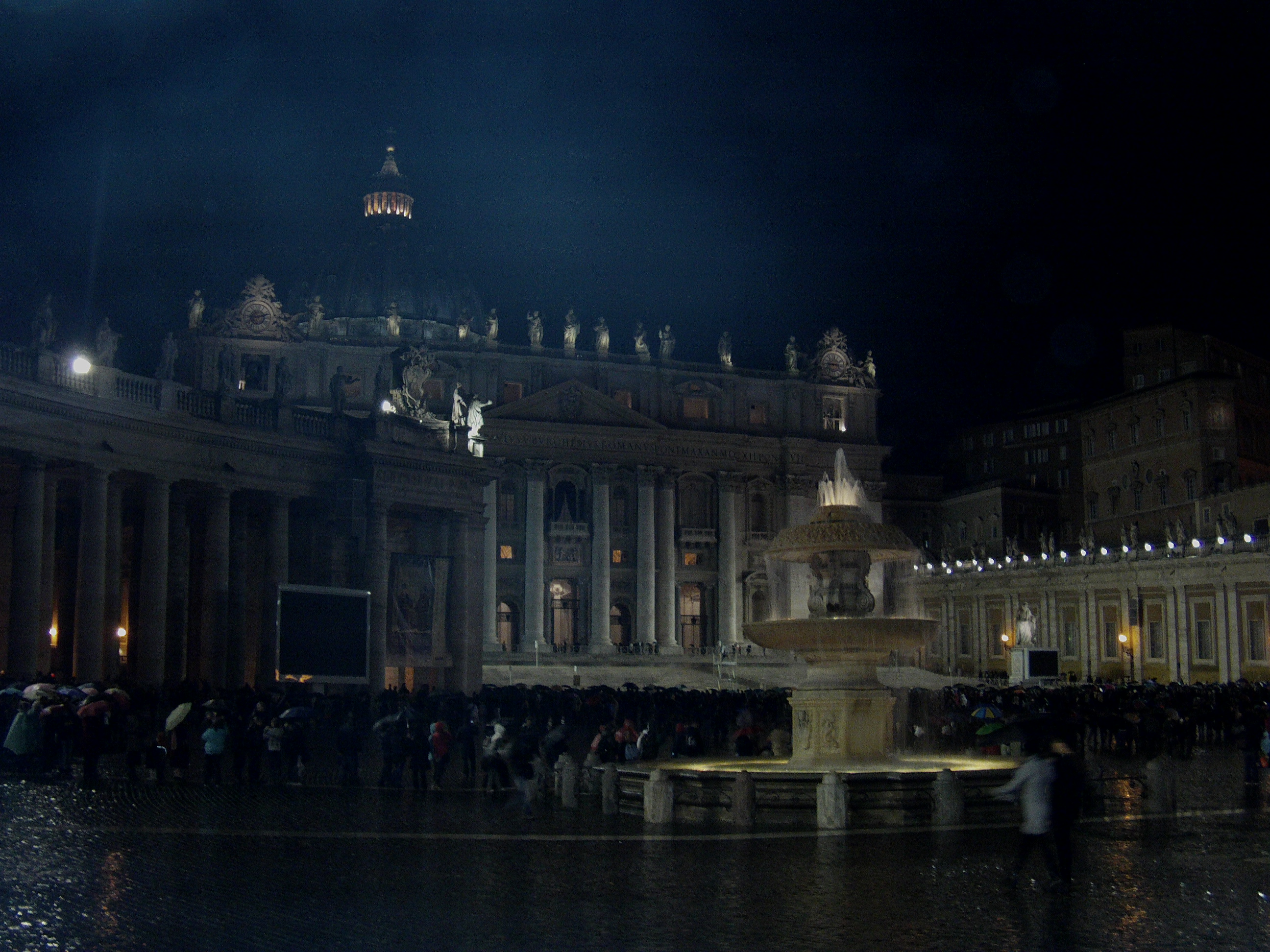
St. Peter's on Christmas Eve
Rome is history built upon layers of older history. It is easy to forget that much of the great sites, churches especially, have been built or entirely reconstructed as recently as the renaissance and baroque periods. The massive St. Peter’s Basilica that we see now was built over a 120 year period, throughout the 16th and early 17th centuries.
Like the Lateran palace of the popes and a number of other buildings in Rome, the original Basilica of St. Peter had been left largely in neglect during the Avignon papacy and the papal schisms of the 14th and 15th century, and was in need of repair and restoration. Pope Julius II ordered the demolition of the Basilica, which had been built by Constantine more than a millennium before. The new would be built on the site of the old, with the altar as the center point and locus of continuity.
[For a great read on the history and the personalities of popes and architects involved in the building of the new St. Peter’s, I highly recommend R. A. Scotti’s Basilica: Splendor and the Scandal – Building St. Peter’s . It was given to me as a gift from a good friend, a priest with whom I worked closely while we were planning to build a church for the parish we were serving.]
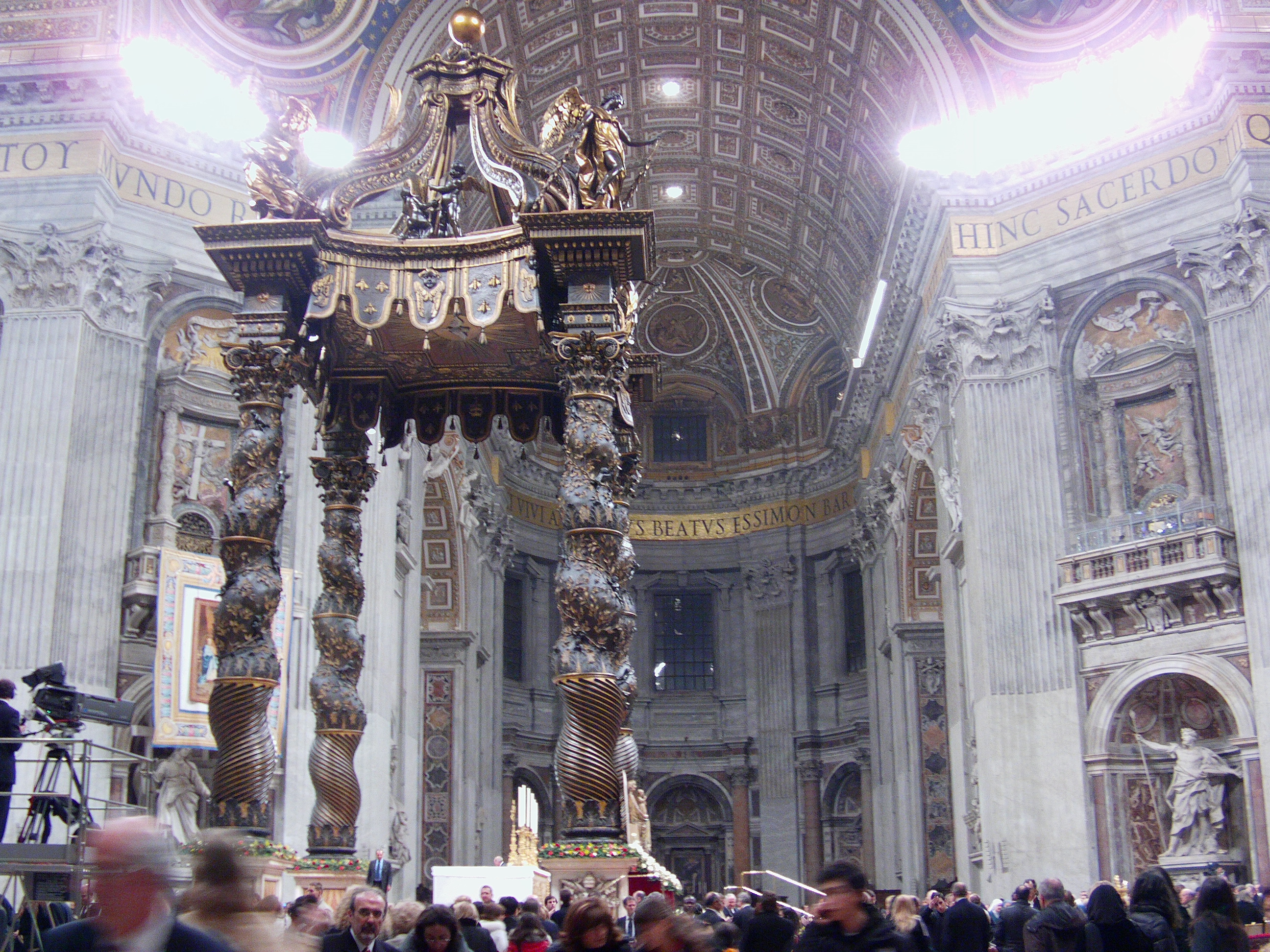
Baldachino and high altar
Visitors to the Basilica today can tour the main level, designed largely by Michaelangelo, Raphael, Bramante and others, and then can go down to the “Tomb of the Popes” on the level of the old, Constantinian basilica for free and without tickets. If you did not know about the Scavi, you might think this level of the Vatican Grottoes was the lowest. But even Constantine built upon an older layer of history.
Before Constantine legalized Christianity in the Roman empire and began to build imperial unity by building churches, the Vatican was a hill, on the slopes of which was a Necropolis – a city of the dead. Mausoleums constructed literally as houses for the dead, pagan and Christian side by side (or on top of each other) in family plots clustered around the area. In order to build his massive basilica, Constanitne ordered the hill leveled and the slopes filled in, up to about the roofline of many of the houses of the dead, which were then filled with rubble and debris to make room for the basilica platform.
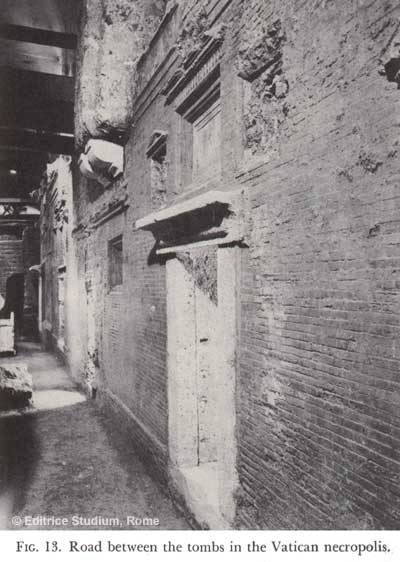
Vatican Necropolis under St. Peter's
It was in the midst of this necropolis that a small shrine was built up against a red wall. Over the few hundred years between the construction of the shrine and its being covered by Constantines basilica, more and more Christians were found to be buried as close as possible to the shrine, often without care for previous graves so that several layers of graves were found right on top of one another radiationg out fromthis shrine. But the shrine itself remained undisturbed.
It was this Necropolis that was excavated under the orders of Pius XII between 1939-1949. The remnants of the shrine was found, as described by ancient sources (in 160 AD, Gaius described the Trophy of St. Peter) – the tomb of Peter had been discovered!
Unfortunately, it was discovered to be empty.
During the course of excavations, other graves were found, and in one of the walls adjacent to the tomb, some human remains were discovered. In 1942 the rector of the basilica took it upon himself to move these without going through the archaeologists working in the area, to preserve these possible relics of some unknown saint. Years later they were “rediscovered” by one of those working on the excavations, and testing confirmed they fit the demographic profile of St. Peter at the time of his death and are presumed to be his remains, moved from the original grave to the adjacent ossuary in the wall for veneration, perhaps.
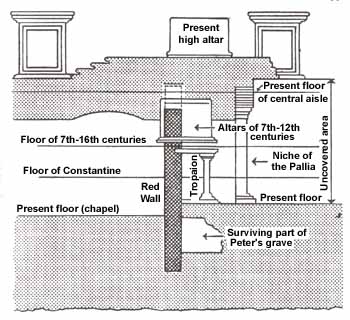
The various altars of St. Peter's
Talk about innovation and continuity, the story of the Church! Consider the layers built one on top of another to mark the apostle’s martyrdom:
- A first century grave (c.70AD)
- A second century shrine, the “Trophy” of St. Peter (before c. 160AD)
- Constantine’s monument then basilica (c.315)
- The altar of Gregory the Great (c.600)
- The altar of Callistus II (c.1120)
- The altar of Clement VIII (c.1600) – the current high altar
- Bernini’s Baldachino
- Michaelangelo’s Dome
Nancy and i were fortunate enough to find space on a tour just a few days ahead, and joined two families (one from Portland!) who had reserved their tours weeks in advance.
Fourth Sunday of Advent

St. Francis Xavier del Caravita
So much for a day of rest! After a couple of those, it was time to spend Sunday on passagata – walking around the major piazzas and sites at the heart of Rome. We started with the celebration of the Eucharist at the Oratory of St. Francis Xavier, on the Via del Caravita. The road is fairly short, but if you asked most Romans about the Oratory of St. Francis Xavier, they would have no idea what you were talking about. Tell them it’s the church “del Caravita” and then, everyone knows where it is.
[An oratory, by the way, is the name for a church which is semi-private in nature, similar to a chapel. It is the place of worship of a specific community, like a religious order, but can be opened for public worship at the discretion of the order.]
The oratory is staffed by priests from four different religious orders (Jesuits, Montfort Missionaries, Crosiers, Viatorians) and offered as “An International Catholic Community in Rome”. It is not a parish church, but serves as a community especially targeting sojourners, many o its members have spent their lives travelling internationally, and the typical Sunday Eucharist includes people from as many as 20 countries. The liturgy is in English, with a Spanish mass offered monthly.
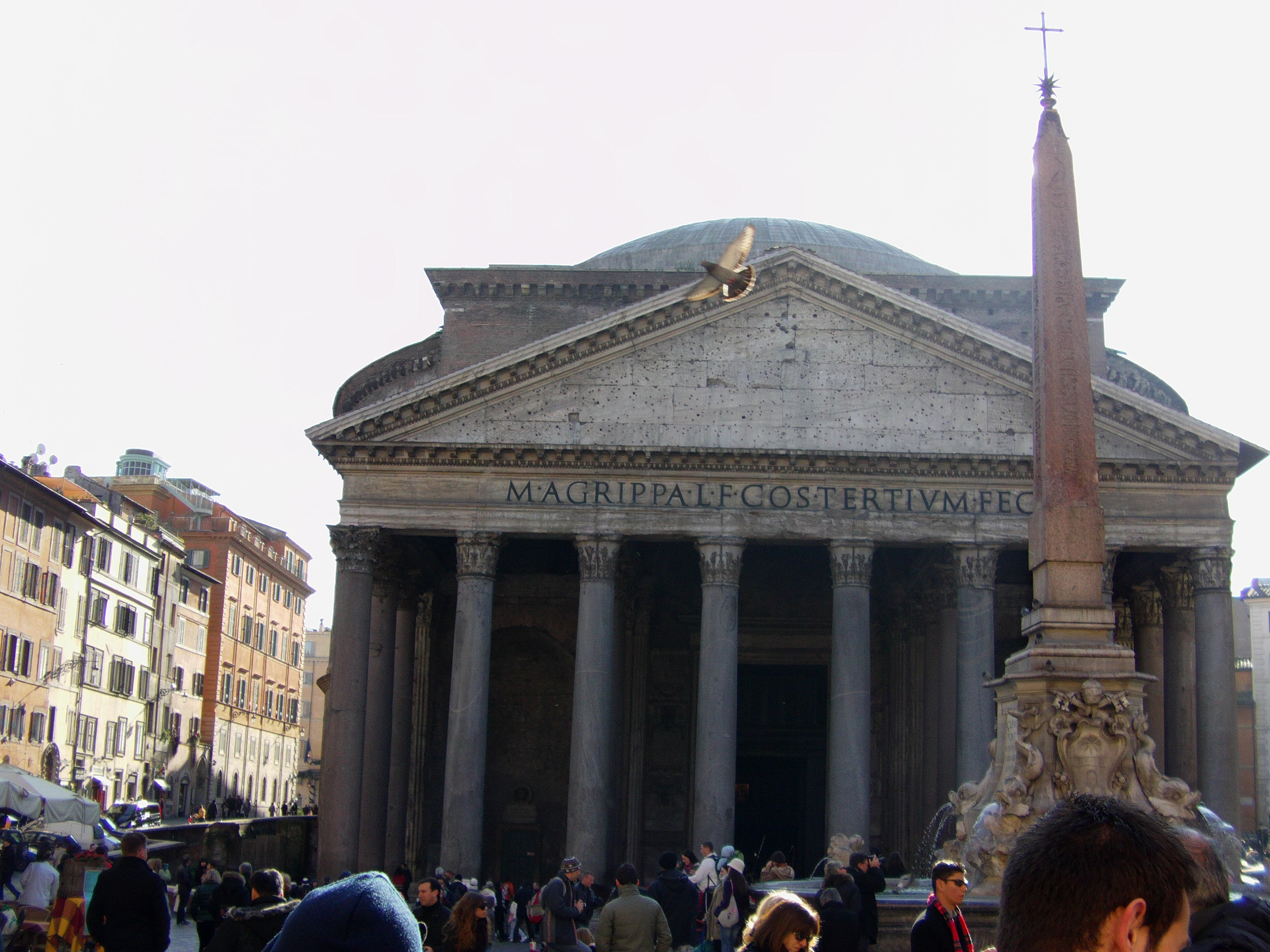
Pantheon
I was introduced to del Caravita during the vespers service with Cardinal Kasper and Archbishop Rowan Williams in late November. (In fact, if you go to the Caravita website http://caravita.org/ and look at the pictures, you can see Stian and I sitting behind Archbishop Williams while he is preaching). After mass, we met the academic director of Notre Dame’s Rome program for the Architecture school, Steven Semes.
Then time for the touring! The Pantheon, Santa Maria Sopra Minerva, and Piazza Navona are not far, and it was a pleasure to introduce Nancy to these sites at the heart of Rome. There’s often a street performer of some kind at the Pantheon busking for tips, but this was the first time i had seen a whole flock of art students with their pads out sketching the place.

Christmas Bazaar at Piazza Navona
The Christmas bazaar at the Piazza Navona gives the place a different feel – its packed! We stopped in a the famous Tre Scalini on Piazza Navona for cappuccino and their Tartufo gelato – at €5, a treat I had been saving for a special occasion! After picnicking at the foot of Bernini’s Fountain of the Four Rivers, we decided to head back to the Lay Centre briefly, then were off again to All Saints for Lessons and Carols. From there we walked through the Spanish Steps and to Piazza del Popolo looking for the display of Nativity scenes, but to no avail (I found out later they were located above the Piazza, not in it).
A long day, and there’s still so much to see!
Nancy’s Roman Holiday
Nancy arrived for her three-week visit on Thursday, and after a 24-hour transit seem ready and raring to go – until about 2pm when she fell asleep and only woke up briefly for dinner before sleeping through the night until about 8am Friday morning!
Nancy on the monastery Gardens, Colosseo beyond
For her first real day in Rome, we did some initial planning and I showed her around the Lay Centre and the monastery grounds. Then, we set off across town for an initial visit to St. Peter’s – just a quick couple of hours since I had an evening class. We actually started at the Tomb of the Popes, on the level of the old Constantinan Basilica, and then went up to the Renaissance level. I realized I have not been over there as often as I would like to be these last couple months, and it is a real treat to show the place to someone on their first visit!
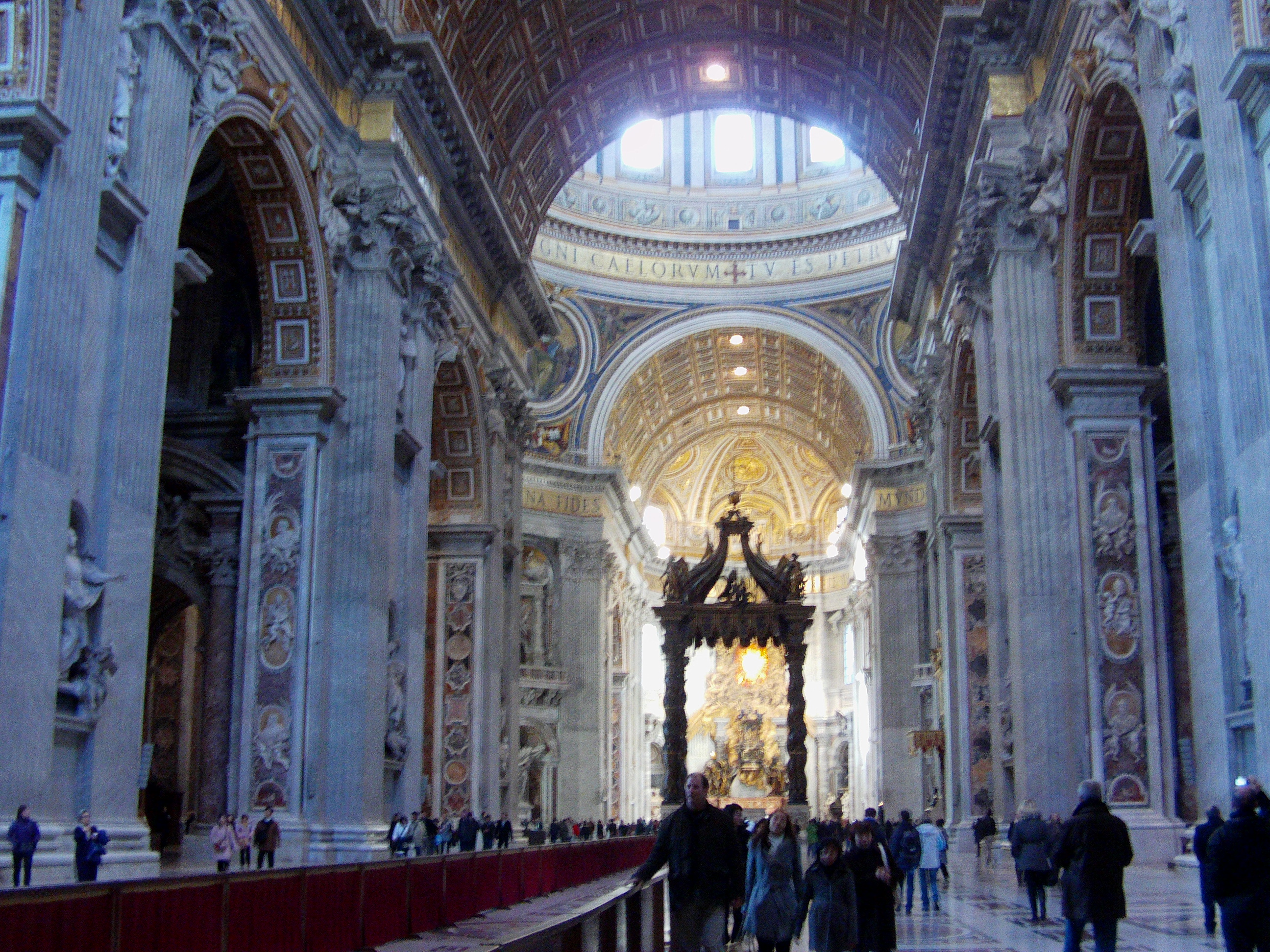
St. Peter's interior, upper level
Nancy’s real intro to Rome came Friday night when she got to sit in on my 5:30-7:15pm class on Methodism and its Dialogue with the Catholic Church! OK, so maybe she’s not as enthused as I am about the topic, but the lecturer, Rev. Trevor Hoggard (the Methodist Delegate to the Holy See) is engaging and it really is a good course. And it is nice to share a taste of “real life” here as well, beyond the touristy and the pilgrimage sites.

Cathedral of Rome, Archbasilica San Giovanni in Laterno
Saturday we took a leisurely stroll over to the Cathedral of Rome, the Archbasilica of San Giovanni Laterno. The nice thing about an extended visit is there is no pressure to see so much in each day. The down side is that by the time you sleep in, have a caffe, make plans, and decide to go out, everything closes for pranzo and you’ve lost almost all the daylight by the time they open again!
Archbishop Michael L. Fitzgerald, M.Afr.
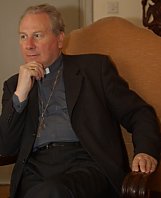
Most Rev. Michael L. Fitzgerald, M. Afr.
Papal Nuncio to Egypt and the Arab League since 2006, Archbishop Fitzgerald had succeeded Cardinal Francis Arinze as president of the Pontifical Council for Interreligious Dialogue in 2002 and has served as secretary of the same Council since 1987. A graduate student in Rome during the Second Vatican Council, he was a student of Bernard Lonergan and had the privilege of attending lectures by Council peritii Karl Rahner, Yves Congar, and others. A student of Arabic and Islam since those early days, he returned to Rome in 1971 as director of the Pontifical Institute for Arabic and Islamic Studies and as a consultor to the Council he would later lead. He was ordained a bishop by Pope John Paul II on the feast of the Epiphany, 1992.
He returned to Rome this week at the invitation of the Centro Pro Unione to deliver a lecture on the role of religious communities in Interreligious Dialogue. The evening before the lecture, he joined us at the Lay Centre to preside at our Eucharistic celebration, and offer a few thoughts about his ministry.
Vespers and hot chocolate
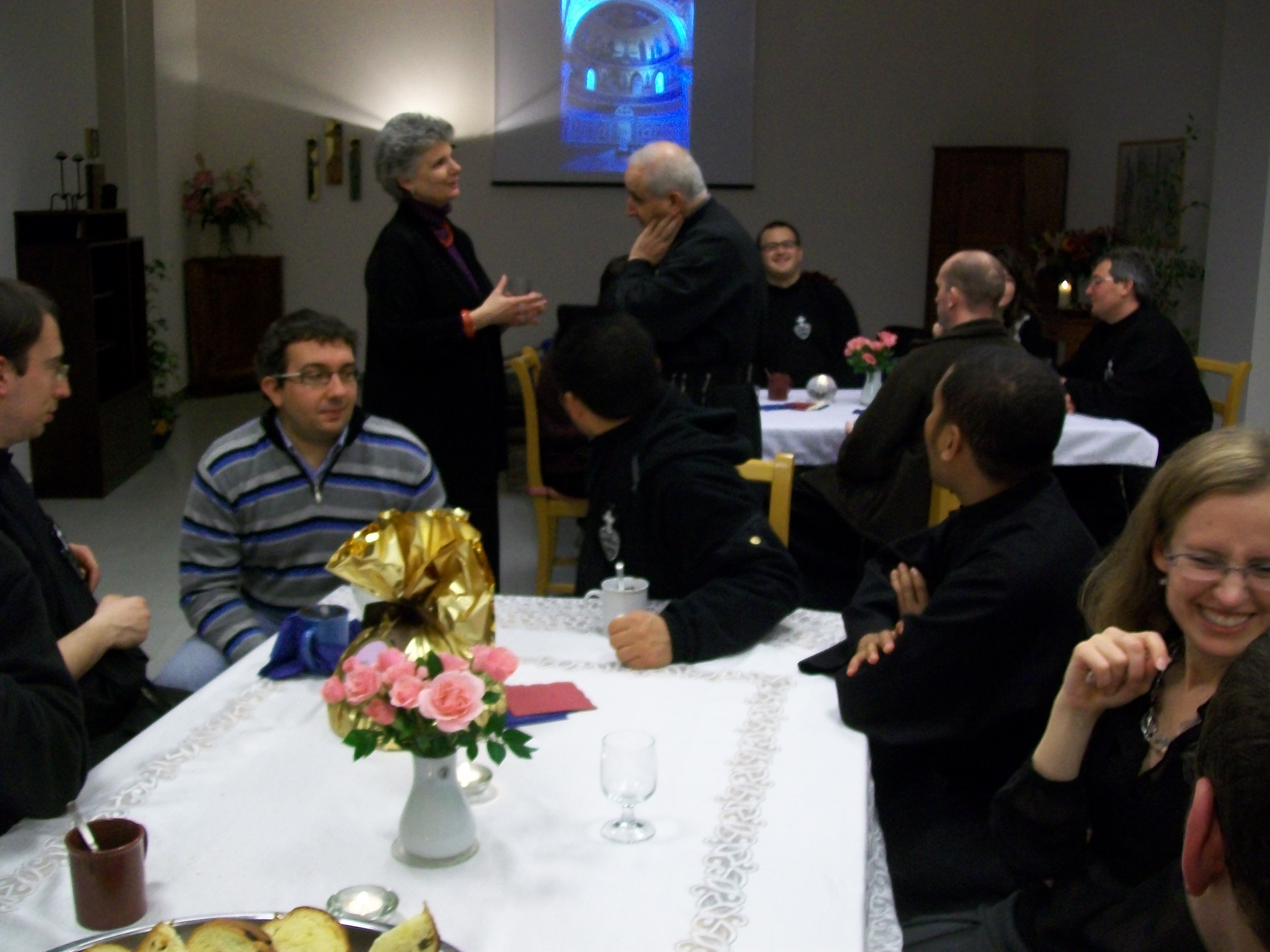
Student mixer, monastic style
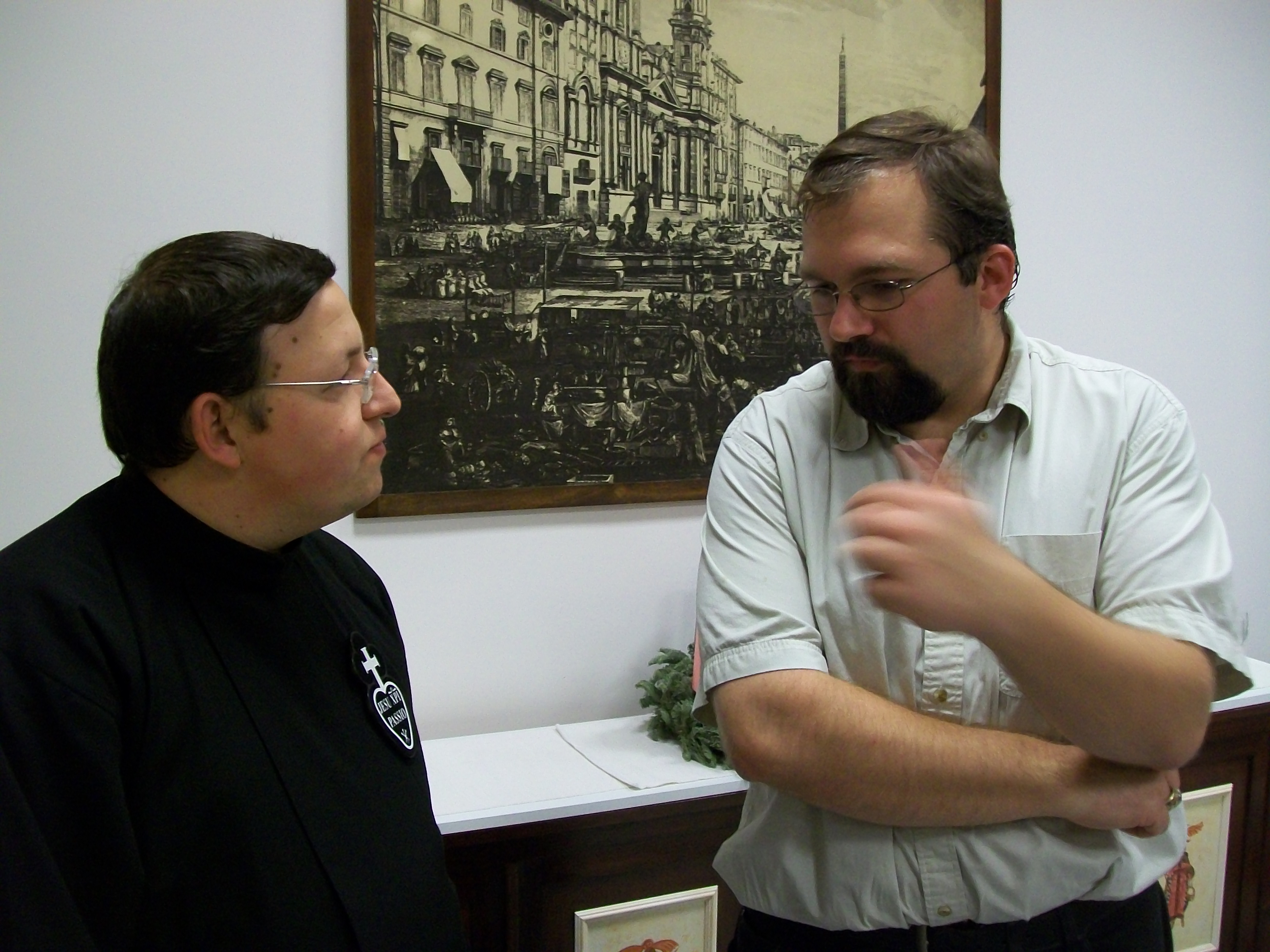
- Practicing my Italian (note the hand motions)
Friday, we met with the Father General of the Passionists and his General Council. Tonight we had the privilege to pray with the Passionist students and invite them over for Italian cioccolate caldo – something more akin to hot chocolate pudding than the kind of drinking hot chocolate I’m used to in the states.
About twenty of their students, most Italians, joined about half the Lay Centre residents in the evening after to get to know one another. It was our first opportunity to put names to the faces we’ve seen here and in the universities. It was also a test of my very minimal Italian, as the brothers I spent most of the night speaking with had virtually no English!

Superior conversation
Padre Generale di Passionisti
The Lay Centre at Foyer Unitas is no longer at Foyer Unitas in the Palazzo Doria Pamphilj on Piazza Navonna. I have mentioned before that the lay Centre moved just this summer to the Passionist Monastery of Sts. John and Paul on Monte Celio, just south of the coliseum, on the site of what once served as the Temple of Claudius, Nero’s Nymphaeum, and childhood playground for Pope Gregory I the Great.

Father Ottaviani D'Egidio and the General Council of the Passionist Fathers
We met tonight with the men who made such a move possible, Father General Ottaviano D’Egidio and his general council – four Passionist priests who advise the Father General and represent different quarters of the world’s 2200 passionisiti: Fathers Denis Travers (Australia), Clemente Barrón (Texas), Luis Alberto Cano (Spain) and Luigi Vaninetti (Italy). It all started a little over two years ago with an email from Passionist Father and renowned Scripture scholar Donald Senior to members of the General Council suggesting such a move. From there, Fr. Denis met with Donna and conversation commenced. Two years later, we were able to welcome the Passionist general council to dinner as a small sign of thanks to our landlords, and to get to know the community a little better.
Passionists take the traditional three solemn vows of any monastic community – Poverty, Chastity, and Obedience – then add a fourth: to spend his energies in promoting remembrance of the sufferings of Jesus, to keep deep in our hearts the memory of the cross and to do what is in our power to remind others of it. This vow defines the purpose of the Passionist community, and the ubiquitous “Sign” of the order, designed by founder Paul of the Cross, reminds them at every moment of this vow. Likewise, the black habit, which is worn in mourning for the passion and death of Christ on the cross.
The Passionist Sign
Though not the original house of the order, the monastery that the Lay Centre now calls home is the ‘mother house’, and several other groups are present: the Father General and his general curia, the students of the order studying at the Pontifical universities in Rome, the staff of the retreat house and of the Basilica of John and Paul, and sisters who serve as the cooks for the monks – about 80 people in all.
The Father General’s opening remarks noted that at first, some of the order were unsure about admitting a lay community into the monastic grounds – and a coeducational, ecumenical, and interreligious community at that! But after a few weeks, he began to wonder if we had indeed moved in – barely seen or heard, we were like ghosts! I think that’s a compliment coming from someone whose day begins in the early hours before God Himself is stirring from slumber!
For our part, I think we were just grateful for the opportunity to express gratitude at living in the most beautiful compound in the City, second only to the Vatican Gardens themselves.
Carmelite General
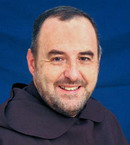
Father Fernando Millan Romeral, Prior General of the Carmelites
Father Fernando Millán Romeral is the Prior General of the Ordo Fratrum Beatissimae Virginis Mariae de Monte Carmelo, better known as the Carmelites. He is an expert on reconciliation, both in its sacramental form and its theological context, and was a professor of sacramental theology. He is also involved in Jewish-Christian dialogue, and has published half dozen books and numerous articles, mostly in his native Spanish. He was elected superior of the order in September 2007, and was the Lay Centre’s guest presider and presenter this evening.
The Carmelites ‘boast’ 17 Saints, 45 Blessed, and over 100 others whose causes have been started and are classed as Venerable or Servants of God. Some of the most well known include St. John of the Cross, and Doctors of the Church St. Therésè of Liseux and St. Teresa of Avila. Carmelite spirituality is one of the most widely practiced and deeply respected in the Church. Unlike so many religious orders which owe their charism and founding to the vision of a saintly founder, the Carmelites have their origin with a community of pilgrim-penitents who lived as hermits near the “spring of Elijah” on Mount Carmel, in Palestine near the end of the 12th century. Their charism is fraternity, service, and contemplation.
Father Fernando’s comments during and after dinner focused on the Sacrament of Reconciliation, and the need for its renewal in the life of the church. Just the name itself, he said, is one indicator of the challenges facing the sacrament. Four different variations are common, each with their own emphasis and champions: Reconciliation, Penance, Confession, and the sacrament of Forgiveness. Though the theology of Vatican II documents clearly prefers Reconciliation, post-Conciliar texts such as the Code of Canon Law use other names. Pope John Paul II was always careful to use the four terms equitably so as not to give favor for one over the other.
One of the first aspects to know with regard to the sacrament is that in response to the call of Sacrosanctum Concilium for the renewal of the liturgy and the revision of the sacramental texts, the work on the sacrament of Reconciliation took the longest. When it was finally completed, in 1984, the most common response was, “well, what changed”? With some exceptions, this sacrament is celebrated in essentially the same form as it was before the revisions (numbers of penitents notwithstanding). Perhaps this indicates that the real renewal of the sacrament has yet to take place.
In anticipation of that renewal, the Carmelite General made several observations. It is a sacrament, therefore it is a liturgy, and should always be celebrated as a liturgy – in community. It should always be celebrated with the Liturgy of the Word. The current Form II – Communal celebration with individual absolution – is really the normative form, the others being exceptions as necessary (either completely individual, or completely communal).
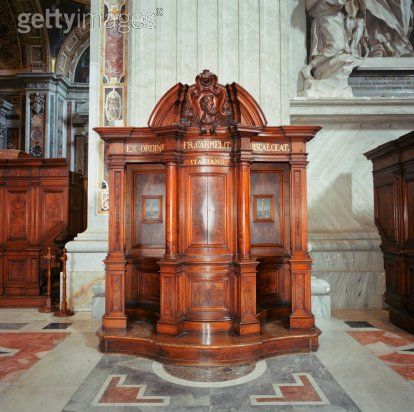
Typical "open" confessional in Rome
Even in Rome, though, it is hard to change the momentum. The prior general told us of how, in his first year as bishop of Rome, Pope Benedict XVI intended to have the sacrament celebrated according to Form II in St. Peters; he ‘was not allowed’ (“Perhaps this is not the best way to say it, but basically, that is what happened!”). The logistics of the normative form were too overwhelming in a culture where you can still find (very beautiful) 18th century wooden confessionals scattered throughout the papal basilicas for penitents to confess their sins to waiting priests in a variety of languages – in some places even while the Eucharist is being celebrated.
 The Ecumenism Blog