
Home » Posts tagged 'Rome' (Page 11)
Tag Archives: Rome
Angelicum Quote of the Day
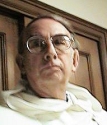
Thomas F. O'Meara, OP
One of my favorite professors from Notre Dame, an owlish Dominican ecclesiolgist named Tom O’Meara, published an autobiography a few years ago. I had noticed a copy for sale at the Angelicum bookstore the last couple weeks, but have not been inclined to buy too many extra books while here in Rome. Today, however, I discovered an entire table full of clearance priced texts as they get ready to wind down the academic year, including this paperback at about 85% off the previous price.
Randomly flipping through the book as I logged it into my library inventory, I came across this page describing his first days in Europe in the late summer of 1963:
“I spent my first days in Europe at the Angelicum, the Dominican graduate theological school and seminary. It was named after Thomas Aquinas but called the Angelicum because Aquinas’s theological acumen had resembled that of an angel. With a few eccentric scholars, some inedible meals, primitive toilets, officious porters and sacristans, the “Ange” lived up to what I had heard of it from my teachers who had studied there. A year or two before it had been an almost obligatory school to which Dominicans came from all over the world to gain expeditiously a doctorate. The study of dogmatic theology rarely ranged far from collecting passages from Aquinas on some major or minor topic and ignored other theologians from Origen to Maurice Blondel. Historical contexts and contemporary problems were neglected, for this was a citadel of a strict neo-Thomism where the salvation of Jesuit Suarezians was in only a little less doubt than that of Protestant Hussites. On the eve of the Council, one of the Dominican professors at a meeting of advisors to the Vatican had bemoaned the variety and looseness of theological opinions tolerated by the church, views held even in Rome, views such as those of the Redemptorists in moral theology or the Jesuits in the psychology of grace. He devoutly hoped that the Council would proclaim lists of clear positions on canon law and doctrine so that those vagaries opposed to the Dominican school of Thomism would end. Most of my teachers in the Midwest had received their doctorates from the Angelicum in philosophy, theology, and canon law. What soon amazed me was that American Dominicans had lived in Rome without becoming interested in history or art. Their graduate studies had been repetitive, boring, more memorized scholasticism, and the two years were physically and psychologically difficult, the life of prisoners whose goal was survival. Sadly, poverty, isolation, and rigidity of daily schedule – even in a cloister arranged around a fountain and palm trees and perched above the Roman forum- had for most blocked out the history and beauty around them.”
Thomas F. O’Meara, OP, A Theologian’s Journey, 70.
Fighting Irish in Rome; Vatican Communications
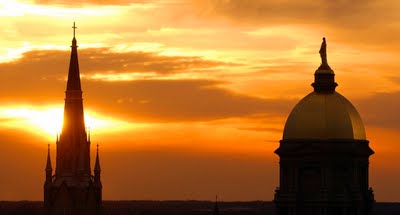
Sacred Heart Basilica and Main Building at Notre Dame
The Notre Dame Alumni Club of Italy is not particularly large, there are only about 60 people on the mailing list, and most are clustered around Rome or Milan. We had our first club gathering that I was able to attend tonight at the Holy Cross generalate, an apartment building owned by the order in a residential neighborhood just a few bus stops from the west end of the metro A line. There were about a dozen of us, a few Holy Cross priests including the superior general, Fr. Hugh Cleary, a couple of fellow Angelicum students, a couple of curial staff , and a young couple teaching at the American International School of Rome.
Conversation ranged from the usual introductions and getting to know you chatter to the challenges of life in Rome and obtaining the fabled Permesso di soggiorno or even Italian citizenship or a driver license. Given the state of the Church these days, however, one of the interesting topics was the clergy sex abuse/cover up scandal, the Holy Father’s role in cleaning up the Church, and mostly, the Church’s communication challenges.
Much has improved in the last decade, on one hand. You need only compare the responses of the curial leadership to the crisis in Europe in the last few months with the responses to the crisis in America in 2002 to see that Pope Ratzinger has had a positive effect on dealing with the problem realistically, but there is still a lot of work to be done – not just in the substance of solutions, but even more in the Vatican’s communication’s organs and “getting the word out” of the good work already done.
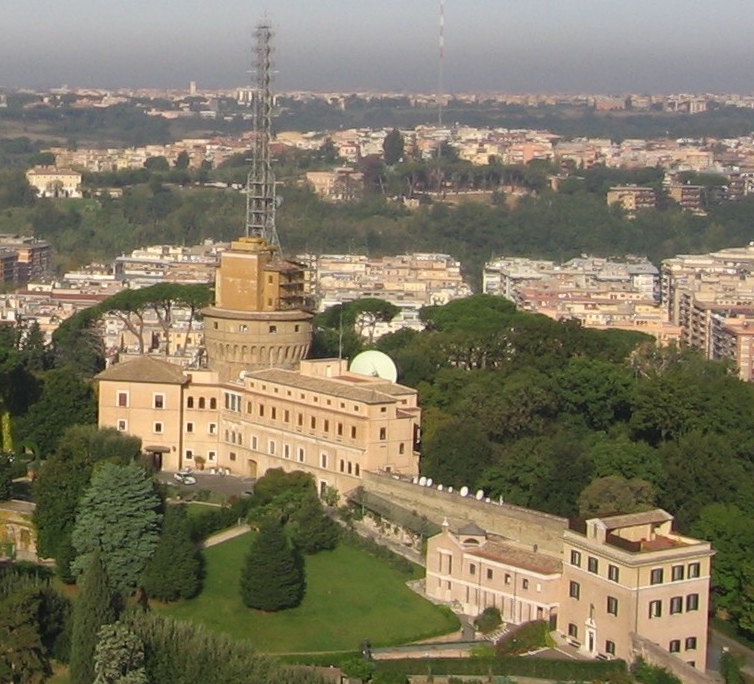
Vatican Radio building
Few people realize just how disjointed the Holy See’s communications systems really are, though that has been made painfully clear with some of the well-intentioned but misguided attempts to “defend” the pope by some church leaders recently. There is no Vatican communication plan, no central organizing body. Each was set up in response to the development of a new media. Guttenburg comes along and we get the Vatican press; then Marconi and Vatican Radio; TV, a web page, etc, etc.
There is a Pontifical Council for Social Communications, but without the juridical authority of a Congregation, they can only make suggestions and maintain good working relations with the other communications apparatus’, which include:
- Vatican Information Service
- L’Osservatore Romano (The Vatican Newspaper)
- The Vatican Publishing House
- Sala Stampa della Santa Sede (The Vatican Press Office)
- Centro Televisivo Vaticano (Vatican TV)
- Radio Vaticana
- The Holy See’s Web page www.vatican.va
Not only are each of these separate, but most are in different buildings, some in several (Vatican Radio, for instance, has three different locations, I believe). Moreover, some have their own web-presence that does not go directly through the Vatican web page. Some dicasteries have their own information services and bulletins, from the Acta Apostolica Sedes to the PCPCU Information Service, which are not always available electronically or in translation.
It seems like the time is ripe for a major restructuring. It would not be easy, no doubt, and the directive has to come from the top, but there is no shortage of skilled lay people in the Church who could create a more effective communications strategy. In fact, they do not have to look further than the sons and daughters of Our Lady’s University to find a gold mine of resources right here in the Eternal City!
SCA, Roman Style
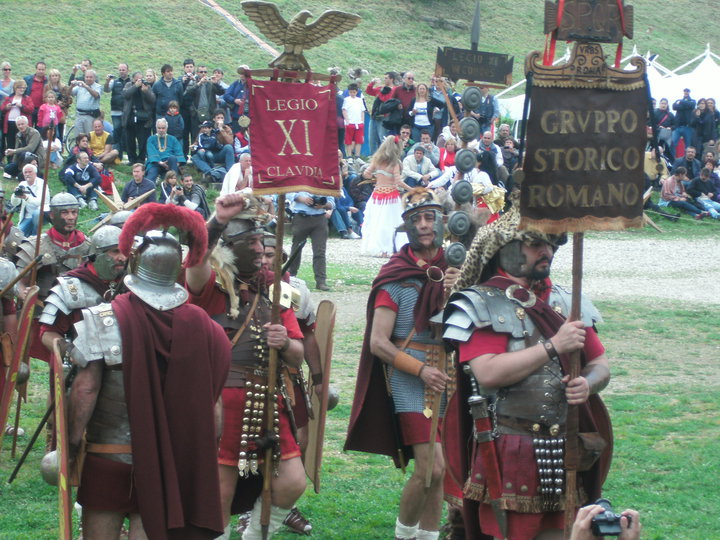
Legions of Rome march again!
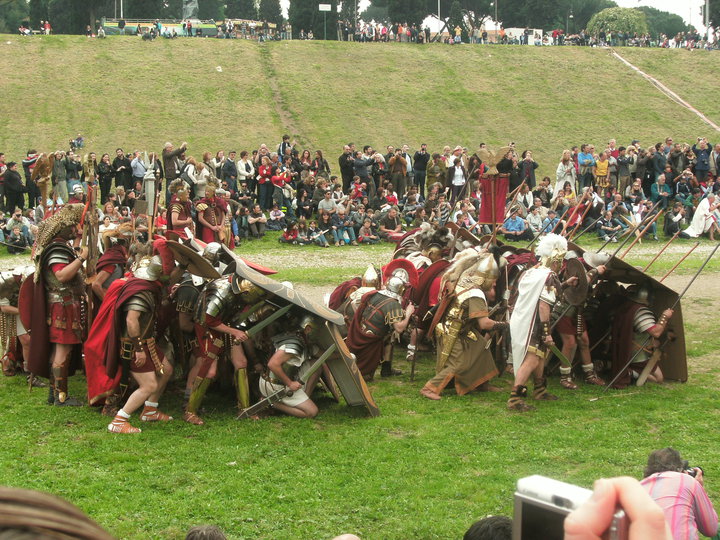
Apparently there is a lot going on in Rome this week. Every year there is a “culture week” in which the national museums and sites like the forum and coliseum are open for free. Also, in and around the forum, there was apparently a re-enactment honoring the birthday of Rome, officially celebrated later this week, on 21 April. We missed most of that, but heard about some goings on down at the circus maximus. So, in true Roman fashion, instead of writing a paper I went to go watch the barbarians battle it out with the legions, some gladiator duels, and even some belly-dancing Imperial cheerleaders. You never know what will happen in Rome!
Lay Centre Inaugurates New Home
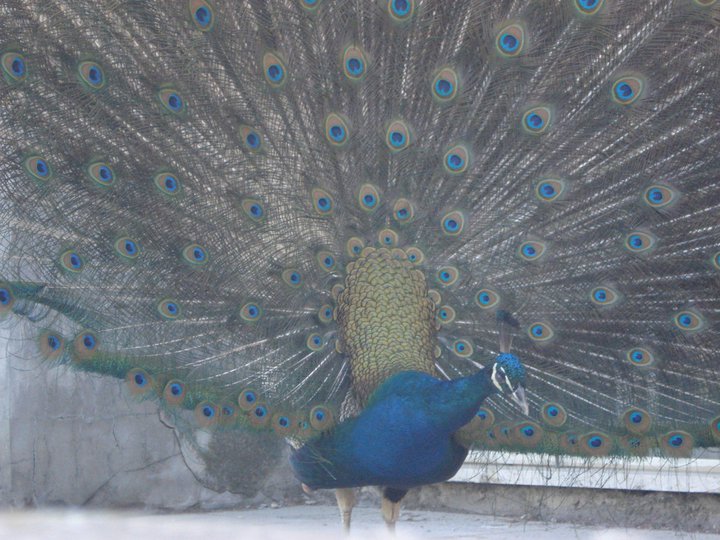
Lay Centre's other Guardian
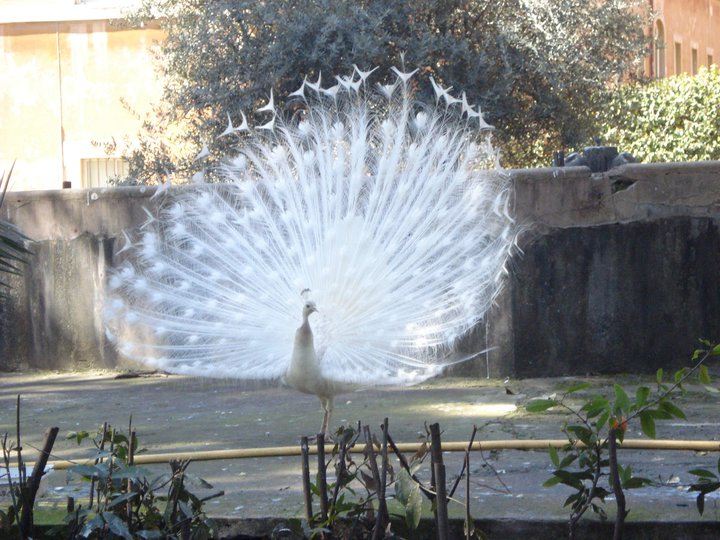
- Lay Centre’s Albino Guardian
Foyer Unitas was a ministry of hospitality operated by the Ladies of Bethany in Rome for nearly 35 years – just above the Centro Pro Unione and overlooking Piazza Navona. Asked by Pope Paul VI to provide lodging for the ecumenical observers at Vatican II, and then for other ecumenical and interfaith pilgrims to Rome, Foyer Unitas saw its share of Council fathers and peritii, from Cardinal Bea to young theologians Walter Kasper and Joseph Ratzinger.
When the decision was made for Foyer Unitas to close its doors in the mid-1980’s, two women who had been student employees assisting the Ladies developed the idea for a lay student residence to meet the obvious need for something like the Roman Colleges for the growing number of non-ordained, non-religious students at the Pontifical Universities. In 1986, co-founders Donna Orsuto and Riekie van Velzen opened the doors to the Lay Centre at Foyer Unitas.
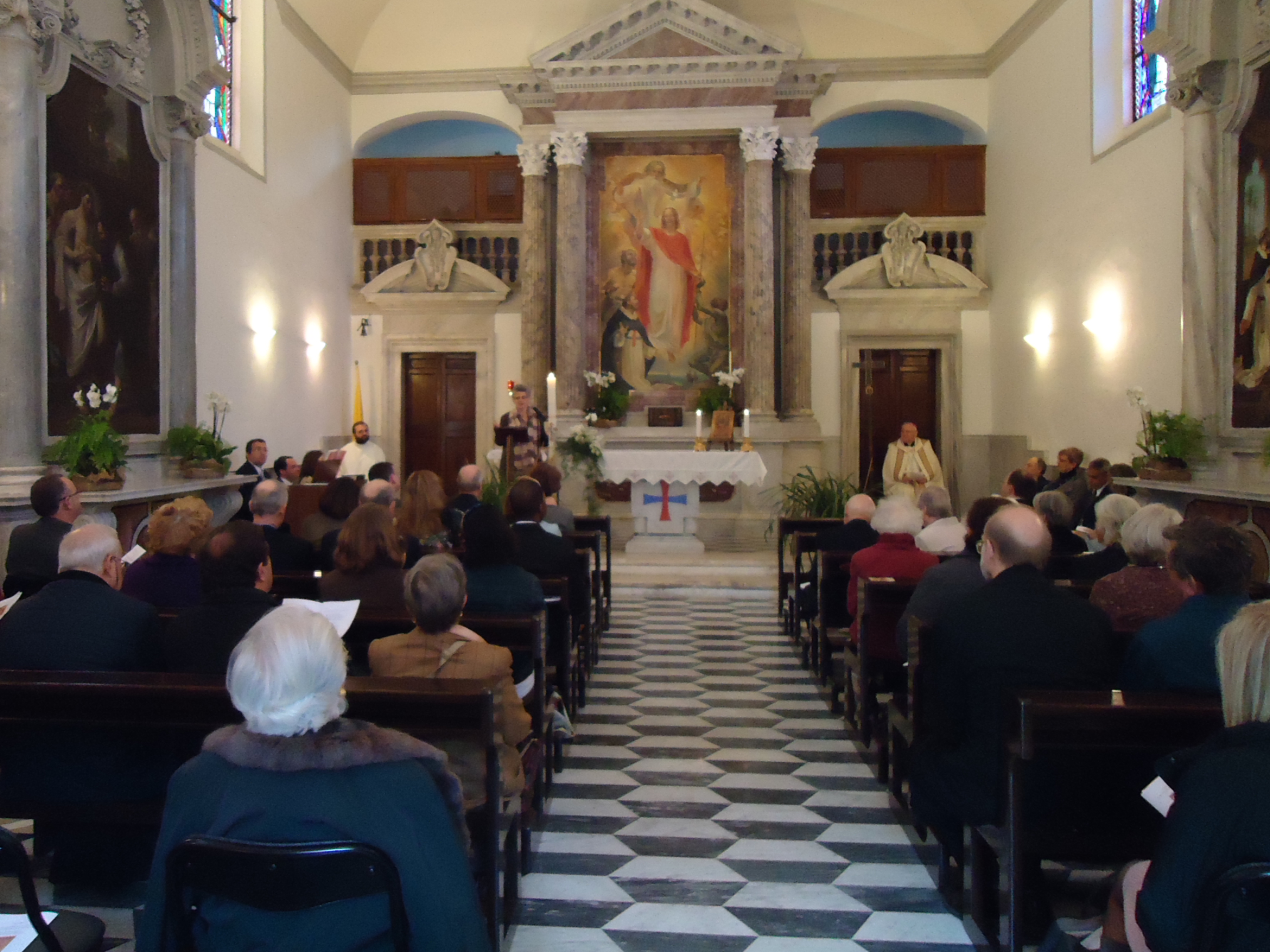
Vespers, with Bishop Farrell and Dr. Donna Orsuto
Tonight we celebrated the dedication and official inauguration of the new site of the Lay Centre, now located within part of the Passionist Retreat of Sts. John and Paul on the Caelian hill. With private gardens overlooking the Coliseum that had once been site to the Temple of Divine Claudius and Nero’s Nymphaeum, the remains of a 1st century aqueduct, and views of the Roman Forum and Palatine Hill, it is hard to imagine a better setting for prayer, study, and life in common.
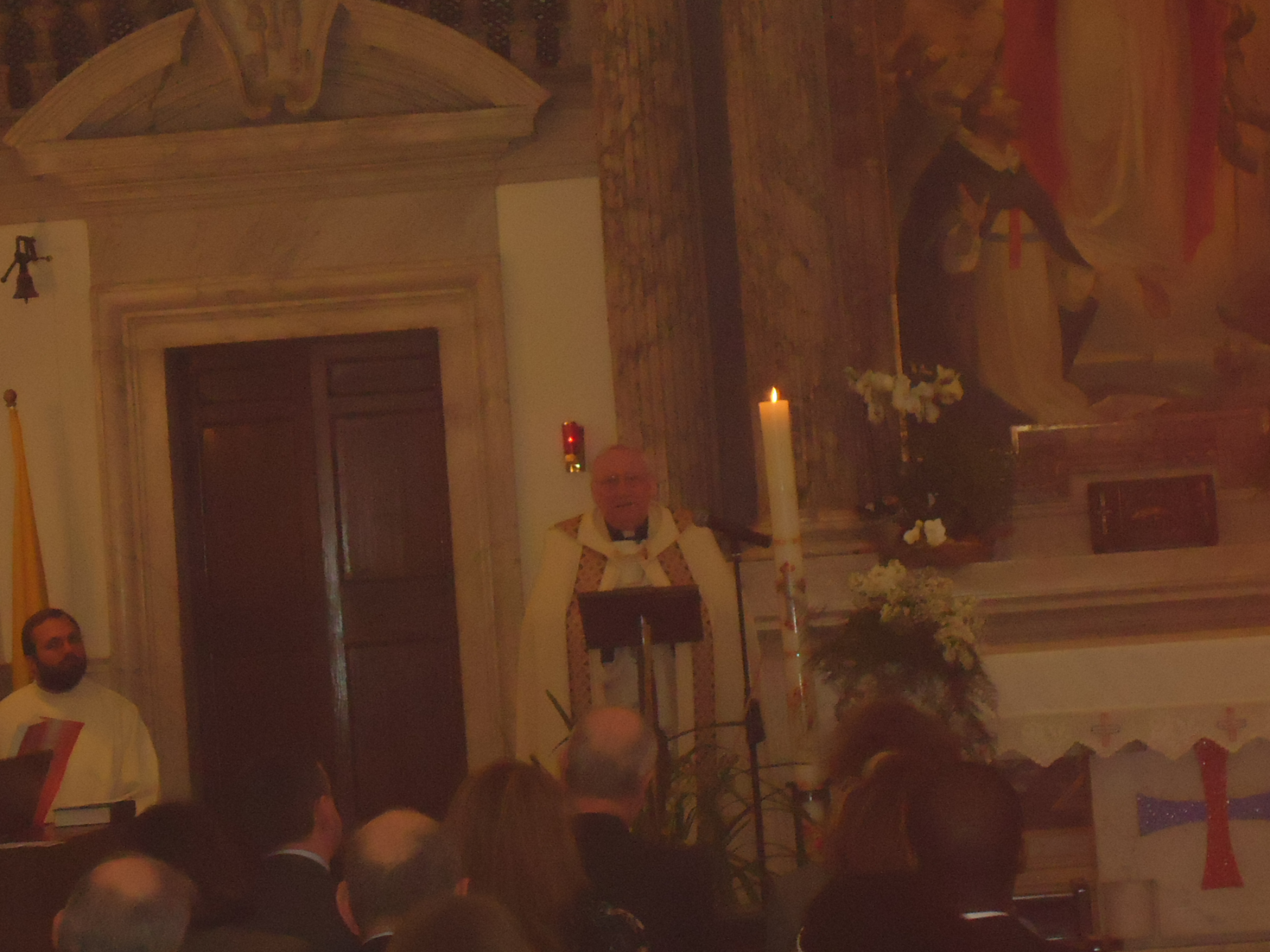
Bishop Brian Farrell delivers the homily
Nestled in the Villa Celimontana next door is a small church San Tommaso in Formis (St. Thomas in Chains), served by the Trinitarian Fathers on the site of what was once a monastery and hospital operated by the order. (The original complex dates back 800 years, but the current church is early 20th century). This was the venue for our vespers, presided by the Most Rev. Brian Farrell, LC, Secretary of the Pontifical Council for Promoting Christian Unity.

Procession begins down Via Santi Giovanni e Paolo
The site was chosen to celebrate the Trinitarian theme. The chapel of Foyer Unitas, dedicated on 7 October 1962, was dedicated to the Holy Trinity, as is the chapel at the new Lay Centre, dedicated on 7 October 2009. The Lay Centre’s Icon of the Holy Trinity, written in imitation of a XVII century icon, was originally blessed by Cardinal Bea along with the Foyer Unitas chapel and was prominent this evening during the celebration of the liturgy.

Procession enters Passionist Retreat grounds
Bishop Farrell’s presence and preaching was particularly significant given the long history and relationship between the Pontifical Council for Promoting Christian Unity and both the Lay Centre and Foyer Unitas. Bishop Farrell himself is a generous and patient man, the kind it is always a delight to serve with, liturgically. He lifelong commitment to ecumenism and support for the lay centre were also evident throughout the evening. Bishop Giorgio Corbellini, of the governorate of the Vatican City State also made a typically low-key entrance. Dressed only in a simple clerical suit (sans pectoral cross), he came back to the sacristy while Bishop Farrell and I were waiting for things to get started and I would not have recognized him without the introductions.
U.S. Ambassador to the Holy See Dr. Miguel Diaz and his wife, Dr. Marian Diaz, were guests of honor, as the former theology professor made a brief address at the end of vespers on hospitality and dialogue (full text to follow). In addition, nine other ambassadors were present, as well as three deputy chiefs of mission, including:
- US Ambassador to the Holy See His Excellency Miguel Diaz & Dr. Marian Diaz
- Canadian Ambassador to the Holy See Her Excellency Anne Leahy
- British Ambassador to the Holy See His Excellency Francis Campbell
- Irish Ambassador to the Holy See His Excellency Noel Fahey
- Egyptian Ambassador to the Holy See Her Excellency Lamia Mekhekar
- Dutch Ambassador to the Holy See Baroness Henriette van Lynden-Leijten
- Australian Ambassador to the Holy See His Excellency Tim Fischer
Several Lay Centre Board members and honorary board members made the trip from the United States and elsewhere. Board Chair Nancy Lindsay, retired senior counsel of the World Bank, had been here in the fall with her nephew, Andrew, and is probably the most faithful reader of this blog! Ralph and Mary Dwan are a lovely couple from the D.C. area, where he is retired as an attorney and she as an educator. Joseph Lynaugh was in from New Jersey where he has served as CEO of a couple of companies.
The honorary board members included the English-speaking world’s most well-known Vaticanist, John Allen, Jr. of the National Catholic Reporter; Sr. Leideke Galema, 90, of the Ladies of Bethany who moved to Rome in 1960 to spend the next forty years of her life here; Retired U.S. Ambassador to the Holy See and former RNC chairman James Nicholson and his wife Suzanne.
Following vespers, the assembly processed from the Church of St. Thomas through the gardens of the Passionist Retreat to the courtyard at the entrance to the Lay Centre where Bishop Farrell concluded the rites with a blessing of the entry and the people. A reception followed, generously provided by Peggy Brennan Hassett and Jack Kehoe and wine donated by a Roman enoteca owned by Claudio and Silvia DiRollo.
The official dedication celebration continues this week with a special two-part Vincent Palotti Institute presentation by Dr. Aurelie Hagstrom, chair of theology at Providence College in Rhode Island, and Robert White, Assistant director of the Lay Centre, on “The Hidden Treasures of the Caelian Hill”. Fr. Donald Senior, CP, President of Catholic Theological Union in Chicago will preside at a liturgy in the rooms of Passionist founder St. Paul of the Cross on Friday evening. Residents and board members will join the Passionist community for Sunday Eucharist in the chapel of St. Paul of the Cross in the Basilica of Sts. John and Paul, followed by our closing lunch.
Whether Mt. Eyjafjallajokull will let anyone leave Rome is another question, however! We may have to continue celebrations into next week!
There’s a new doc’ in town
My fellow Russell Berrie Fellow Matthew John Paul Tan was celebrated for two significant milestones at Rome’s most famous Austrian restaurant today. My Singaporean-Aussie classmate was officially awarded his Ph.D. in theology from the Australian Catholic University on Friday, just two days before his 30th birthday today.
Though he put in several years of effort toward the first achievement, credit is largely due elsewhere for the second. Nevertheless we threw him a party for both.
Actually, he invited us. So it is not so much that we threw a party for him as that we showed up for his party. But we brought gifts!
Well, a gift, anyway. Moving on…
Cantina Tirolese is famous, at least among Vatican-watching theology nerds, as the favorite haunt of the former prefect of the Congregation for the Doctrine of the Faith, Cardinal Ratzinger, whose presence was frequent enough that he had a perpetually reserved booth. I do not know if he has been back since his election five years ago, though. Maybe they deliver?
Congrats again to Matthew!
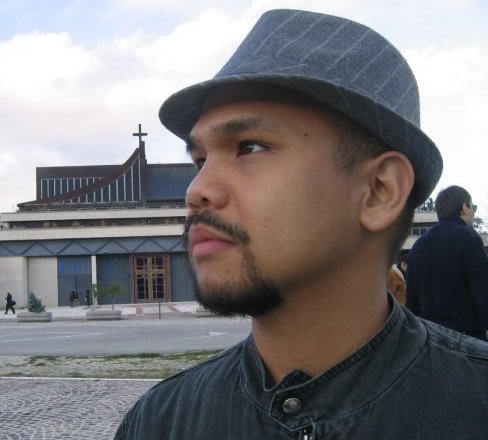
Dr. Matthew John Paul Tan
St. Patrick’s in Roma
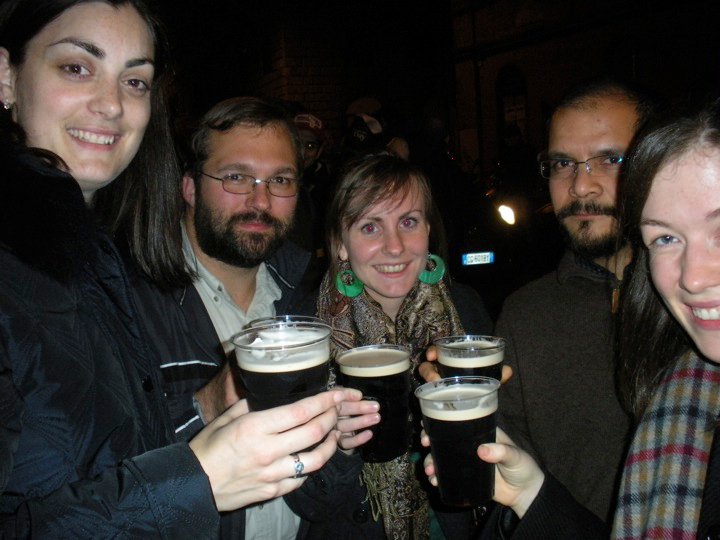 I never knew there would be so many Irish pubs in Rome. The last time I was in Europe, I discovered that almost every city on the continent of any decent size includes three requisite cuisine options beyond the local fare: an Irish pub, a Chinese restaurant, and a McDonald’s. But I read recently that there were nearly 100 Irish pubs in the greater Rome area, and I even encounter a group of American undergrads making their best effort to visit all of them today.
Thankfully, there’s one just across the park from the front gates, complete with Guinness on tap. Less thankfully, everyone in the Celio neighborhood decided it would be a good idea to celebrate St. Patrick’s Day there. So a contingent of us ventured over after our community night for a pint. One pint, only, mind you. Nevertheless, that was enough to induce an impromptu lesson in Irish dancing for some of my companions…
But, back to our community evening: these are, I may have said, one of the greatest aspects of formation in Rome, the opportunity to meet with curial officials and other church leaders on a weekly basis, celebrating the liturgy with them and hearing a little of their thoughts, their stories, and their insights.
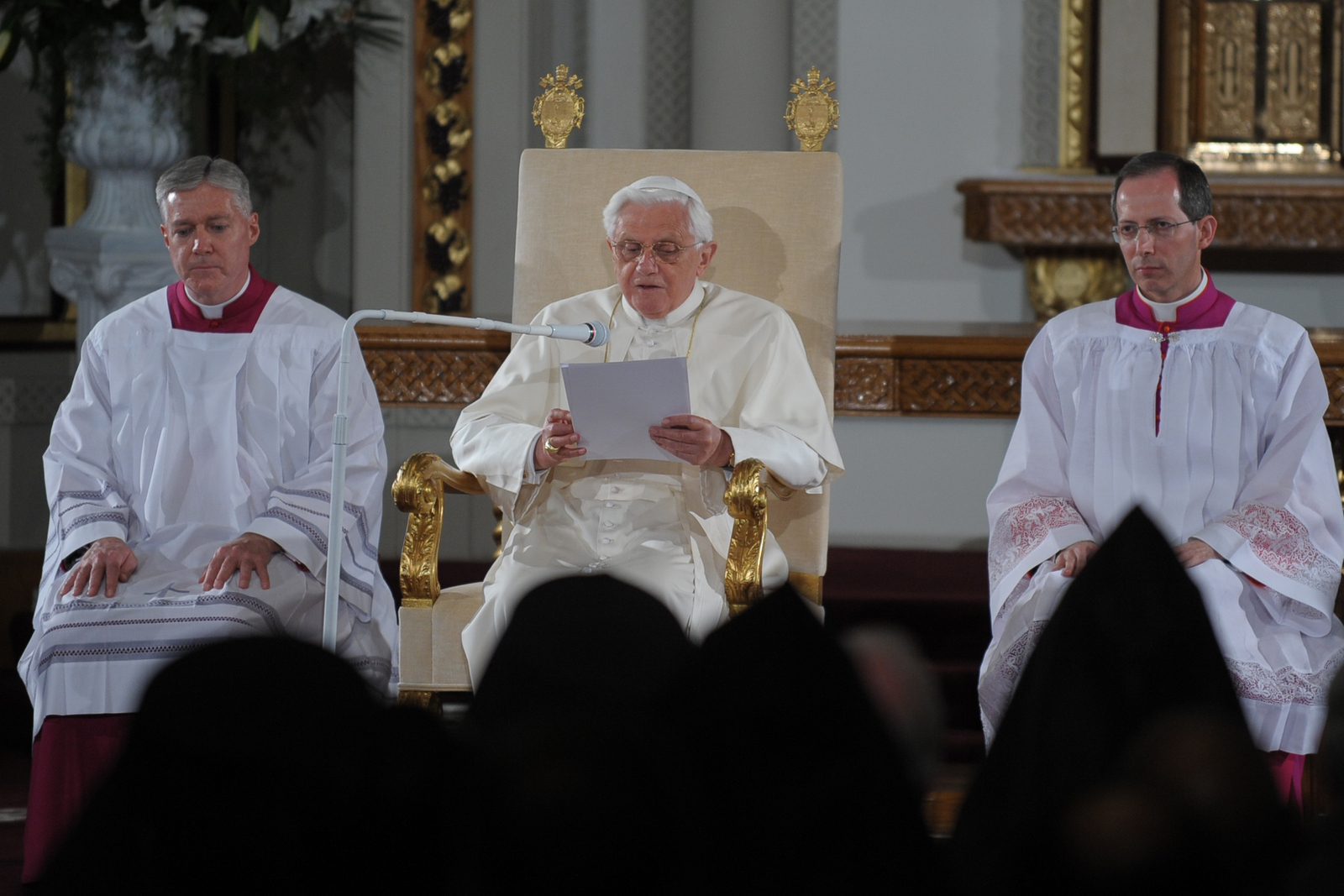
Msgr. Millea, Pope Benedict, Msgr. Marini
Tonight we were pleased to welcome Monsignor William Millea, an American who works in the Secretariat of State, General Affairs Section. This is the section that might parallel white house staff, in the sense that they handle appointments to curial offices, translations and publication of official texts and speeches, etc. An additional duty Father Millea has had is serving as one of the masters of ceremonies for the pope, and can often be seen with the papal master of liturgical celebrations, Monsignor Marini, alongside the Holy Father. This was the case throughout the pope’s pastoral visit to the Unites States a couple years ago. (At which point, as the token American in the Vatican retinue, it was to Millea that Pope Benedict turned after the big Eucharist at Yankee Stadium: “That’s what the liturgy is supposed to be!”)
Like so many we have talked to, he came to Rome for a year, and then came back for more and never left. His love of Latin and things classical certainly helped land him in a position to do much of the translating and interactions with things American and Anglophone for the Secretariat.
The Ides of March

Julius Caesar's Pyre & Temple
I remember being told by some middle school science teacher that each of us probably had two molecules of Caesar’s last breath in our biological makeup. Naturally, given my birth on the anniversary of his assassination, I have always had an interest – I do not think I would go so far as to say a connection – with the Roman Dictator.
I also cannot tell you how many times in my life I have heard the phrase uttered, “Beware the Ides of March” instead of the usual “Happy Birthday!”
With March being full of intensive courses, I was not able to get the full effect of Rome’s celebration honoring its first leader to be officially deified. The site of his funeral pyre, in the heart of the ancient Foro Romano, is modest by comparison to some of the temples around it, but is still adorned with fresh flowers almost daily by Roman devotees. Near the statue of Julius on the Via Forii Imperialli we witnessed a troop of costumed youth re-enacting the story of Caesar and his assassination in 44 B.C.

Julius Caesar statue on Fori Imperiali
While the Roman Senate house is still visible on the Roman forum, it was not in this building where as many as 60 senators participated in his assassination. Instead, meetings were taking place across town, near the Area Sacra at Largo Argentina, in the Theatre of Pompey. There is a restaurant, I’m told, where you can access the basement and eat in part of what was the building in which Caesar was killed. I did not get around to making reservations this year, but maybe next!
Instead, we had a typically great meal at the Lay Centre, and thanks to the intervention of my favorite Dutch theologian-diplomat, Feda baked a delicious flourless chocolate cake popular in Italy known as Torta della Nonna (Grandmother’s Cake).
Lay Centre Featured on Rome Reports
Rome Reports, an English-language news agency that broadcasts to several countries, did a feature about the Lay Centre at Foyer Unitas that aired last week:
Angelicum Leads the Way in Rome for Eucharistic Adoration
Rome Reports is an English-language news program based in Rome, and broadcasting to several countries. They recently did a feature of the Angelicum, apparently the only Pontifical Univeristy in Rome with daily Eucharistic Adoration, including interviews with familiar faces: Benedict Croell, OP; Matthew John Paul Tan, PhD (another Russell Berrie Fellow); and Jill Alexy, M.Div. (fellow Notre Dame alumn).
You can watch the clip here: http://www.youtube.com/watch?v=z8Wh3YqLOoU
Roman Forum, Palatine Hill, and il Colosseo
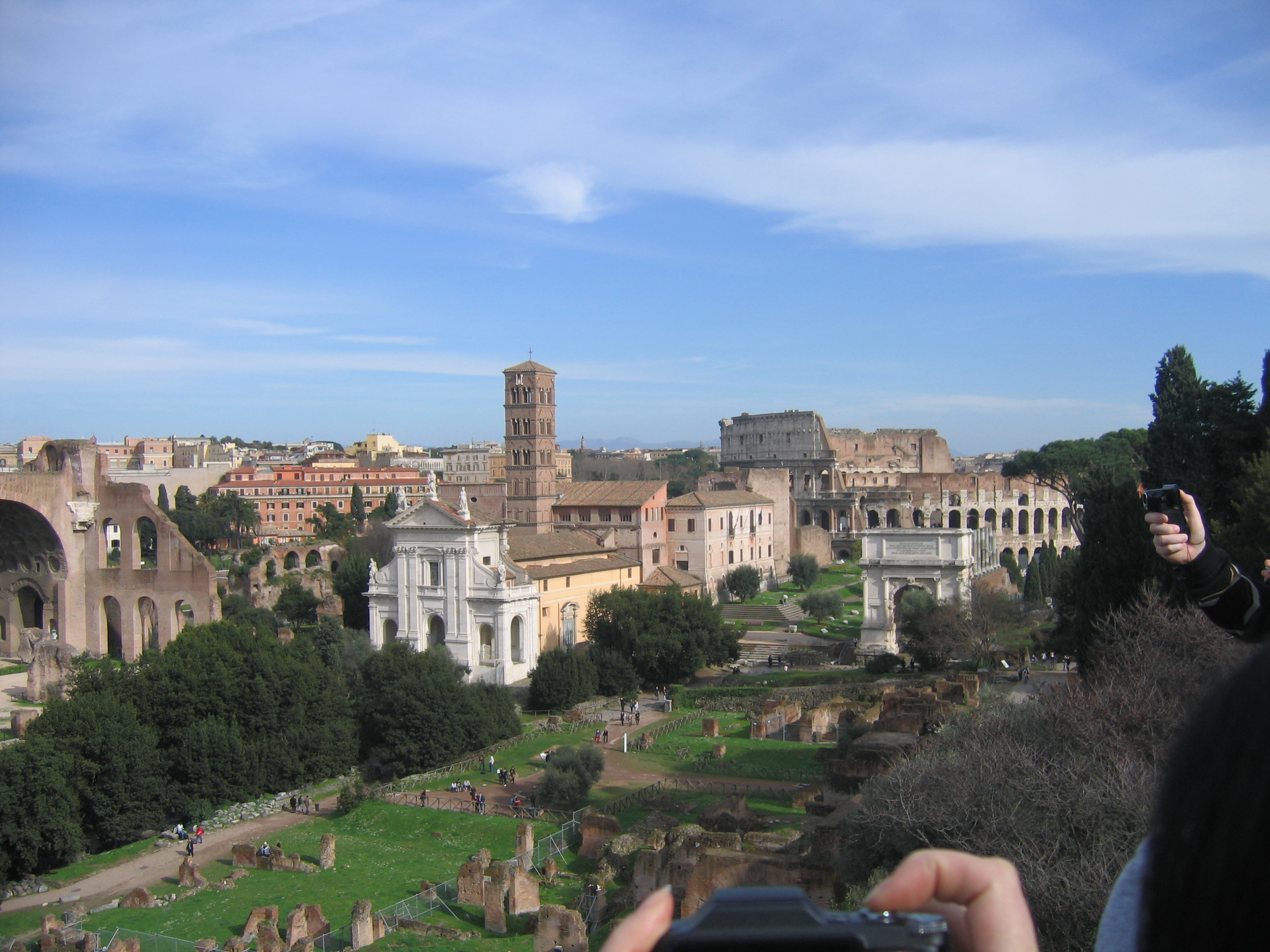
Via Sacra in Roman Forum
There is a bit of social wisdom that notes that we tend to forget to be tourists in our own backyard. When you visit somewhere, you make sure to see all the ‘sights’ – the places that make the place what it is, whether natural beauty, historic memorials, art or architecture or some other human achievement. But when you live there you can just get used to the routine and forget to explore.
This is how I spent the first five months in Rome, with the Roman Forum visible from my window, but had not made it into the ruins. Even with Nancy’s visit, some of the tourist activities got dropped from the agenda due to rain or just too many to do. So, finally I had the time and the timing to spend part of this beautiful weekend exploring the Palatine Hill, Colosseo and the Foro Romano.

Frescoes from the house of Caesar Octavius Augustus
On the Palatine hill, which is visible from our terrace, you can see iron-age huts, honored even in Imperial times as the house of Remus and Romulus, founder of Rome. The house of Augustus Caesar and his wife, Livia – strikingly humble in comparison to the other palaces (especially Nero’s!) The entire complex, the Palatine and the Forum, are connected and in some ways are like a giant park – just that the benches you picnic on are likely fallen columns two millennia old.
The forum is in fact the old city centre. IN the middle of it is the original forum, a small piazza surrounded by temples and government buildings, and the rest now included is a network of roads, buildings, and monuments. The Via Sacra runs through the middle from the Colosseo to the Capitoline hill, passing through the arch of Titus commemorating the victorious conquest of the Jewish Rebellion in 70 AD on one end, and the arch of Septimus Severus on the other, commemorating his victories a century and a half later in Mesopotamia.
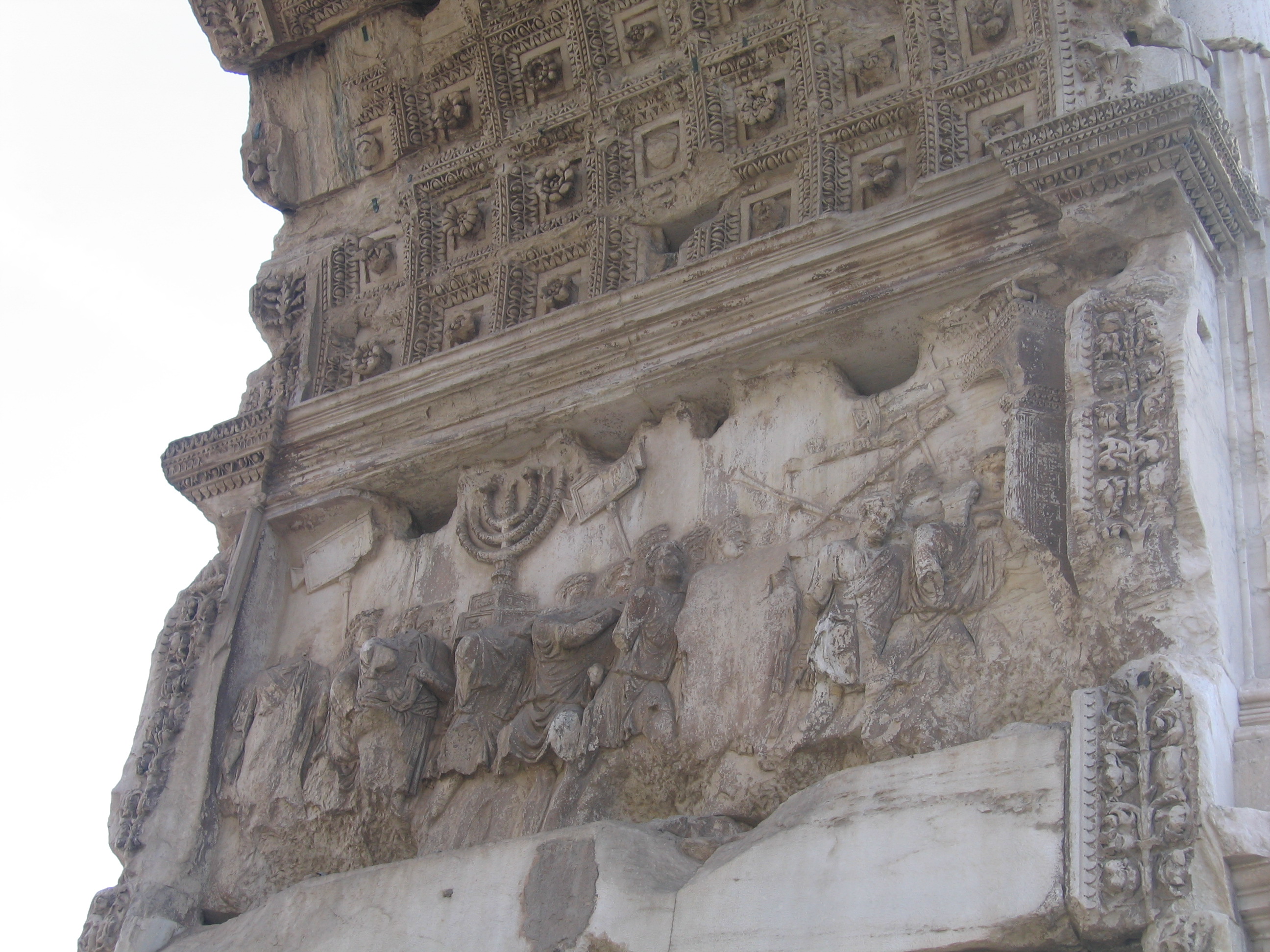
Arch of Titus, depicting the looting of the Temple of Jerusalem
After a week in Jerusalem and seeing the Temple Mount, with the juxtaposition of the Western Wall and the Dome of the Rock, to come back to Rome and see the Titus arch commemorating the looting of the Temple gives some interesting perspective of that episode in history which influences the stability of peace in the middle east even today!
Emperor-cult temples line the road, including a spot close to my heart, the temple dedicating the site of Julius Caesar’s funeral pyre – the first temple built for an Emperor promoted to deity in the Roman pantheon. What is left of it is neither large, nor particularly attractive, but given that I was born on the anniversary of his assassination, I have to admit I have always felt some kind of connection. Perhaps that is why I liked playing Risk so much…
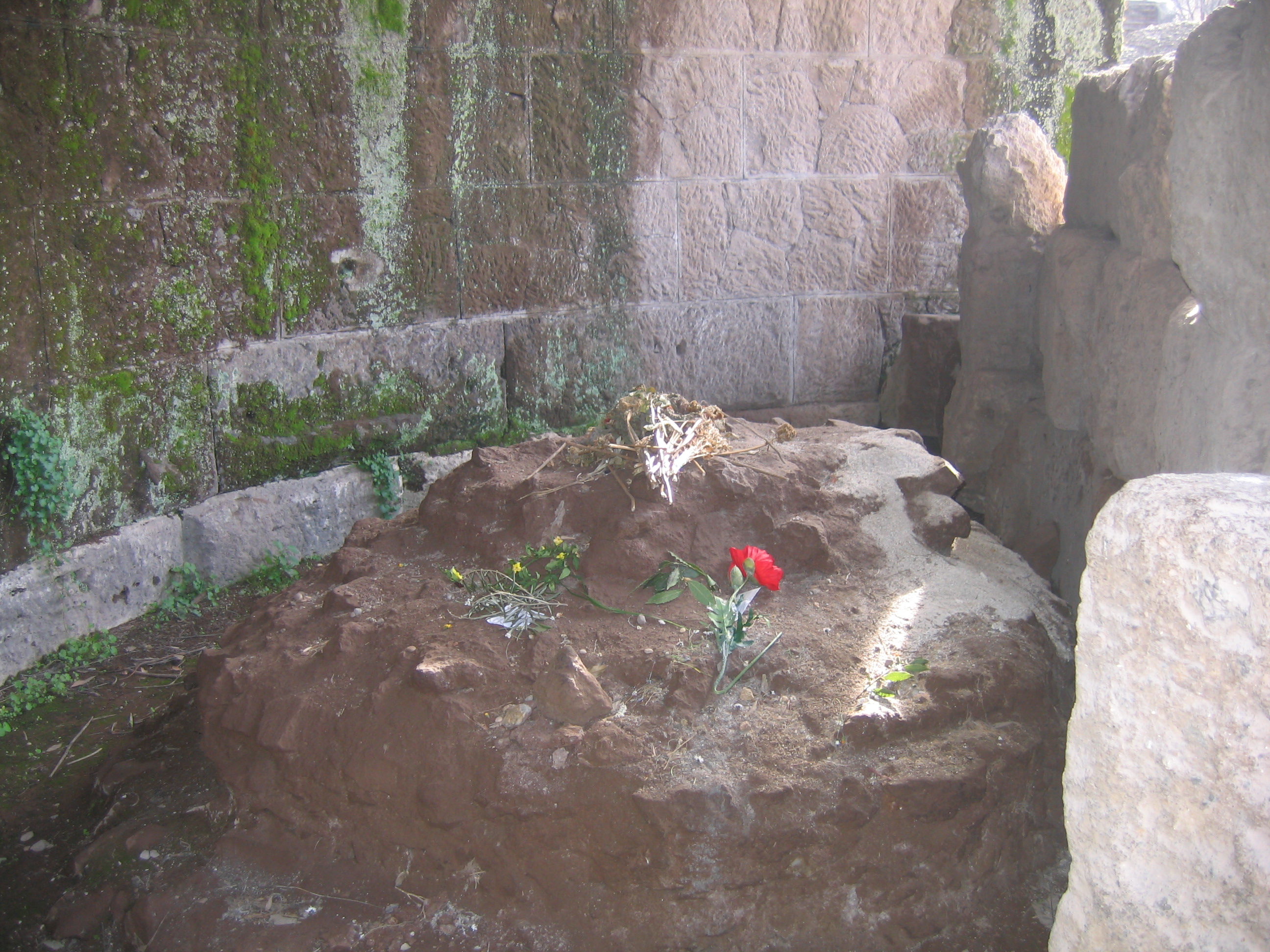
Julius Caesar's "Grave" - Temple on the site of his funeral pyre
The house of the vestal virgins and the Temple of Vesta is nearby. Charged with keeping the City’s eternal flame going inside the Temple, the Virgins were consecrated to service and honored among Romes citizens – they even had box seats at the Coliseum rivaling the Emperors! The six Vestal Virgins were chosen from noble families at a young age, and commissioned to serve for 30 years. At the age of 40 they could retire with a respectable dowry, marry, raise a family, etc. On the other hand, the punishment for violating the vow of chastity during the 30 years was a pretty chilling death – sealed alive in a crypt with a single loaf of bread and a lamp.
The massive basilica of Constantine sits on the edge of the forum, visible from the Via dei Fori Imperiali, as is the ancient Roman curia house and senate building.

Flavian Amphitheatre (Colisseum)
On the closer end of the forum is the Flavian Amphitheatre (the Colosseo), our next-door neighbor. It could seat almost as many fans as Notre Dame Stadium, complete with retractable awning. It was built on the site of a private lake built by Nero for his sprawling palace complex, as one of the efforts for the Emperor to regain the popular support lost by Nero’s cruel insanities. Admission was free, and included food and wine for spectators.
Apparently, the name Colosseo was a medieval one. Nero had had a 100’ statue of himself built at the entrance to his estate. When Flavius and company demolished his residence and built the amphitheatre, the statue remained. Centuries latter, the colossal statue influence the name of the even more impressive building next to it…
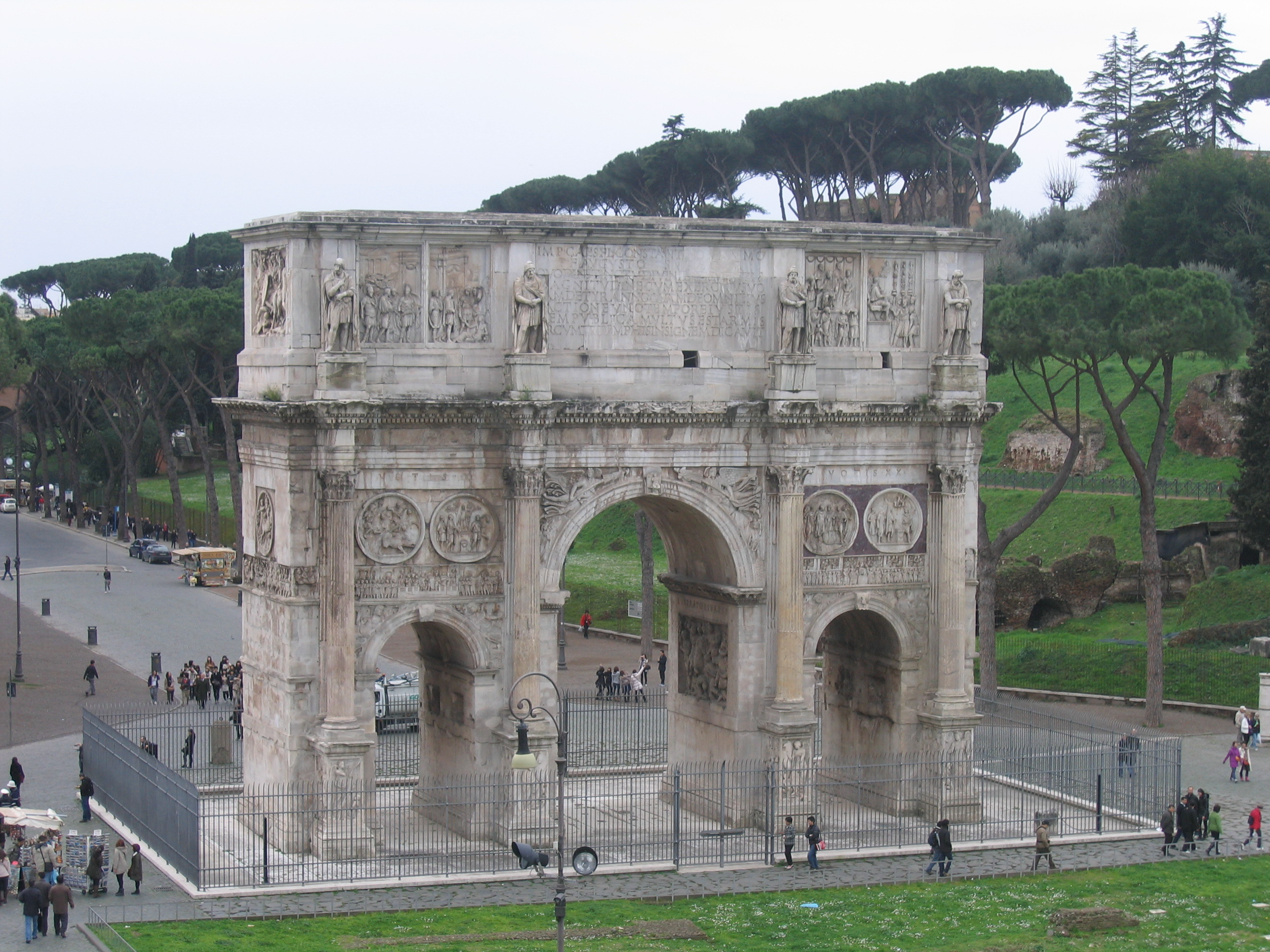
Arch of Constantine, taken from upper level of Colisseum
[Update 3.7.10 – I did not get a picture, but for the last week there have been protesters literally camping out in external alcoves on the second story of the Colosseo, about 30 feet above ground, in tents with banners and bullhorns, protesting immigration and housing issues.]
On the plaza between the coliseum and the Via Sacra is another triumphal arch, built by Constantine honoring the triumph of Christianity in the Empire – but using images and statues borrowed from other memorials and palaces around Rome.
 The Ecumenism Blog