Home » Posts tagged 'interreligious dialogue' (Page 3)
Tag Archives: interreligious dialogue
John Allen, Jr. on Pope Benedict and Islam
Appropos of conversation this week during the conference in Sarajevo, Fundamentalist or Responsible Citizen? The Contribution of Religious Communities to the Formation of European Citizens, here is an exceprt of Jon Allen, Jr.’s blog All Things Catholic today concerning the pope’s take on Islam. The entire post can be read here.
In the political argot of our time, Pope Benedict XVI is unquestionably a “conservative.” A core aim of his papacy is to revive a strong sense of traditional Catholic identity over against radical secularism, a classically conservative agenda.
Precisely because of those credentials, however, the old American axiom that “only Nixon could go to China” fits Benedict XVI like a glove. Because of who Benedict is and what he represents, every once in a while he can do things a more “liberal” pontiff either wouldn’t dare or couldn’t pull off without splitting the church apart.
That point has been brought home anew due to Benedict’s new book-length interview with German journalist Peter Seewald, titled in English Light of the World, which featured some surprising comments on condoms.
Consider the following defining traits of cultural conservatives these days:
- A hawkish line on Islam
- Eco-skepticism
- Unyielding pro-life advocacy
Here’s the irony, one which is often underappreciated: While Benedict XVI is obviously sympathetic with all three concerns, in some ways he’s also taken the legs out from under the extremists in each camp.
Islam
On any list of improbable recent papal moments, the site of Benedict standing alongside a mufti in Istanbul’s Blue Mosque in 2006, facing the mihrab in a moment of silent prayer, would have to figure near the top.
As a theologian, Benedict expressed doubts about the very possibility of inter-religious prayer. The fact that he stepped outside his own skin, so to speak, on such a high-profile occasion, offered a clear signal of his commitment to reconciliation with the Muslim world.
When Benedict was elected, many observers prophesied he would be the pope of Samuel Huntington’s “Clash of Civilizations,” rallying the Christian West against an Islamic threat. His Regensburg lecture in September 2006 seemed to cut in that direction, igniting protest across the Islamic world by appearing to link Muhammad with violence. (In his new book, Benedict admits he failed to realize that people would take his academic address as a political statement.)
Yet since Regensburg, Benedict instead has emerged as a great friend of Islam, albeit without pulling any punches on terrorism and religious freedom. He’s met with Muslims on scores of occasions, opened up new dialogues, and pulled off highly successful trips to Muslim nations. Today, it’s abundantly clear that détente with Islam is the top inter-faith priority of this papacy.
At the core of Benedict’s vision is what he described during a May 2009 journey to Jordan as an “Alliance of Civilizations” – a phrase obviously crafted as an alternative to the “Clash of Civilizations.” The idea is that Christians and Muslims should stand shoulder-to-shoulder in defense of shared values such as the right to life, care of the poor, opposition to war and corruption, and a robust role for religion in public life. (The pope calls that “inter-cultural,” as opposed to “inter-religious,” dialogue.)
In Light of the World, Benedict is asked if he has abandoned the medieval notion that popes are supposed to save the West from Islamization.
“Today we are living in a completely different world, in which the battle lines are drawn differently,” Benedict says. “In this world, radical secularism stands on one side, and the question of God, in its various forms, stands on the other.”
In that struggle, Benedict sees Christians and Muslims as natural allies.
Bottom line: The only crusade Benedict is interested in leading is against a “dictatorship of relativism,” not against Islam. If only Nixon could go to China, maybe only Benedict XVI can go to Mecca.
Oy, Advent! quote of the day…
Attributed to Rabbi Hayyim of Volozhin (d.1821) founder of the Lithuanian yeshivot:
“Thus will be the advent of the Messiah: you will be sitting in your room alone studying, and your wife will suddenly enter and say, ‘Oy, Hayyim! You are sitting here studying? Don’t you know the Messiah has come?’ Startled, you will sputter three times and say to her, ‘Who told you?’ and she will say to you, ‘Go outside and see for yourself: not a soul is left in the city, not even the babes in their cradles, for everyone has gone out to greet [him].’”
Aviezer Ravitzky, Messianism, Zionism, and Orthodoxy: Historical and Conceptual Background, p. 22
Building Bridges of Hope: Success Stories and Strategies for Interfaith Action
Past the Ambassador and Dr. Diaz, in the white...
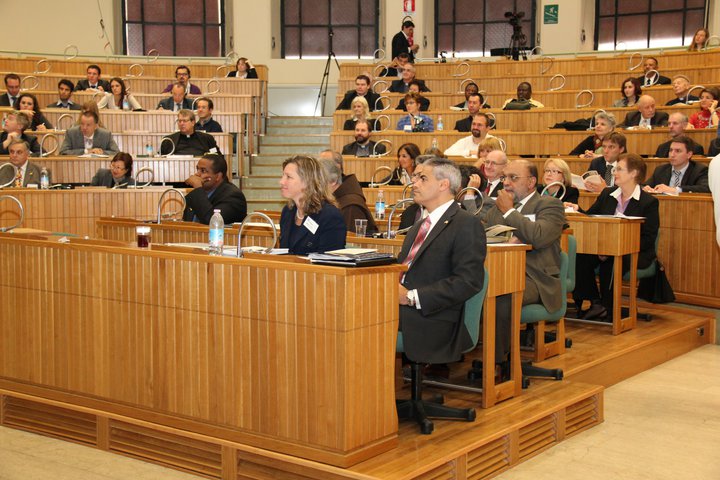
On October 12, 2010, the U.S. Embassy to the Holy See and the Pontifical Gregorian University sponsored a conference entitled “Building Bridges of Hope: Success Stories and Strategies for Interfaith Action.” The purpose of the conference was to discuss how people of different faiths could work together to address global problems. Nine panelists from different faiths spoke on the topics of environmental protection, equitable development, and conflict resolution, sharing their religion’s perspective on their panel theme plus concrete examples of interreligious cooperation in that field. The White House sent a keynote speaker, Dr. Joshua DuBois, to the event to emphasize the U.S. Government’s senior-level support for the initiative.
[Taken from the conferences wikisite, which includes full transcripts of presentations: http://bridgebuilders.wikispaces.com/]
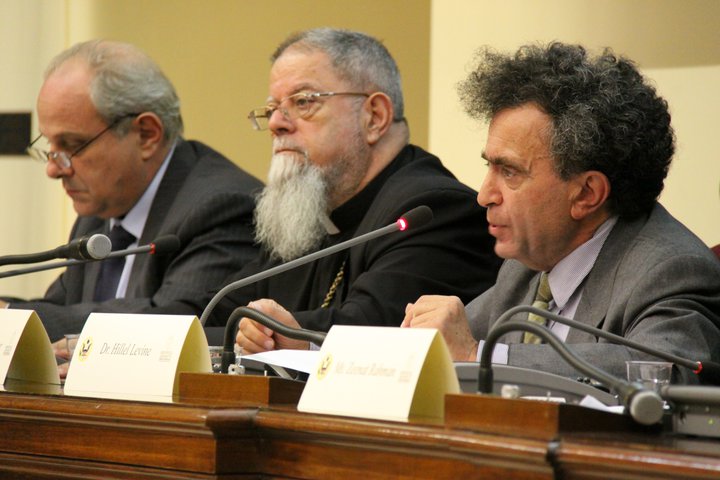
Foclare Representative; Melkite Archbishop Elias Chacour; Dr. Hillel Levine
The Environment, Ethical Development, and Conflict Prevention were the three panel themes of the conference, each addressed by three panellists from each of the three Abrahamic faiths: Judaism, Christianity, and Islam. Not all were academics. Business and NGO leaders, clergy and politicians were among the presenters, providing for an even greater variety of approaches to the questions of interfaith dialogue and action.
Take a few minutes to peruse the conference on the link above!
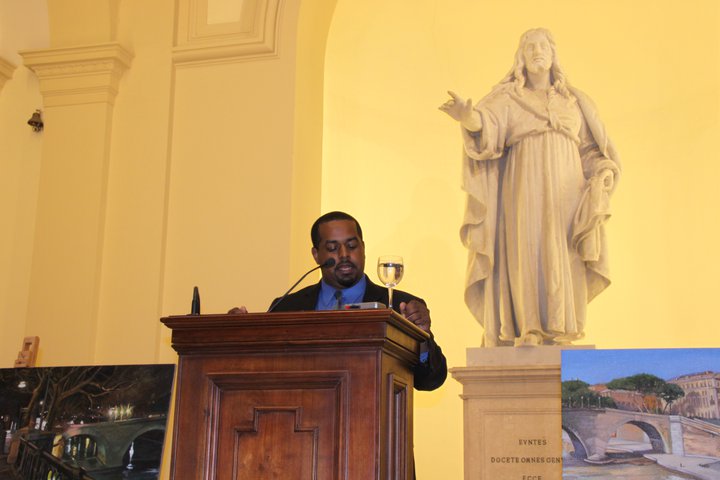
Dr. Joshua DuBois, Director, White House Office of Faith-Based and Neighborhood Partnerships
Teaching in New Orleans
What does a humanities graduate student do for summer work in this economy? “Not much” is the punch line most are looking for, but I have had a few rewarding opportunities for which I am grateful.
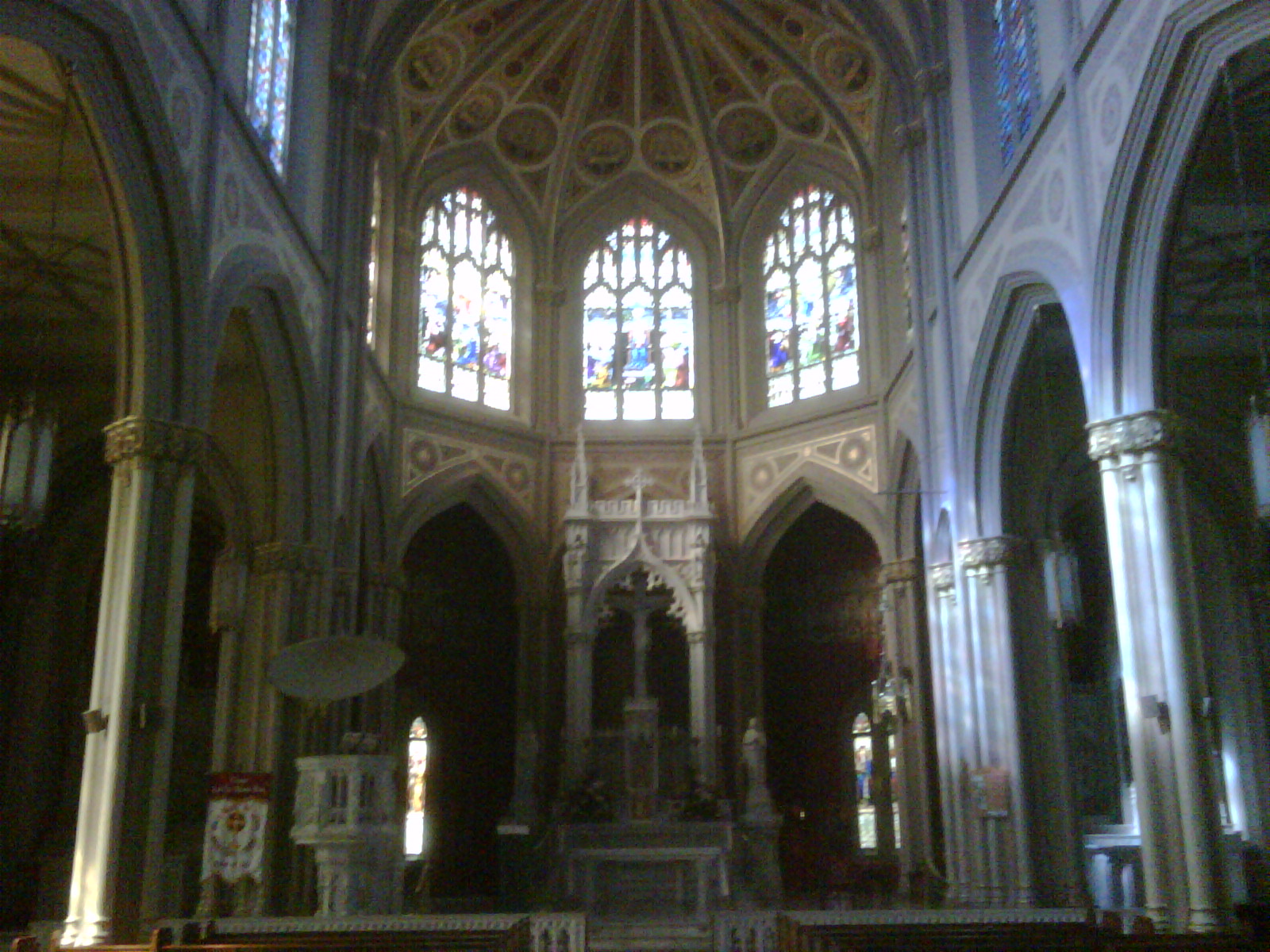
Holy Name of Jesus Parish Church, Loyola Unviersity New Orleans
There is still some room on my schedule for some others, if you know of any! Some of my usual work was not available – I have served as faculty or field staff for the Vicar for Clergy, the Faith Formation, Liturgy, and Youth & Young Adult Ministry offices in the past, but several budgets have been cut, and other classes were booked as early as January, and I only started looking in February!
I will be teaching two courses on the Eucharist for our Liturgy Ministers Institute, and working with a couple parishes on leadership development and reorganizational processes, but the most interesting offer was a 10-hour course for the Archdiocese of New Orleans’ Institute for Catechetics and Spirituality, which I taught this week. “An Introduction to Ecumenism and Interreligious Dialogue” – ten hours is nowhere near enough, but sadly more than most in ministry get!
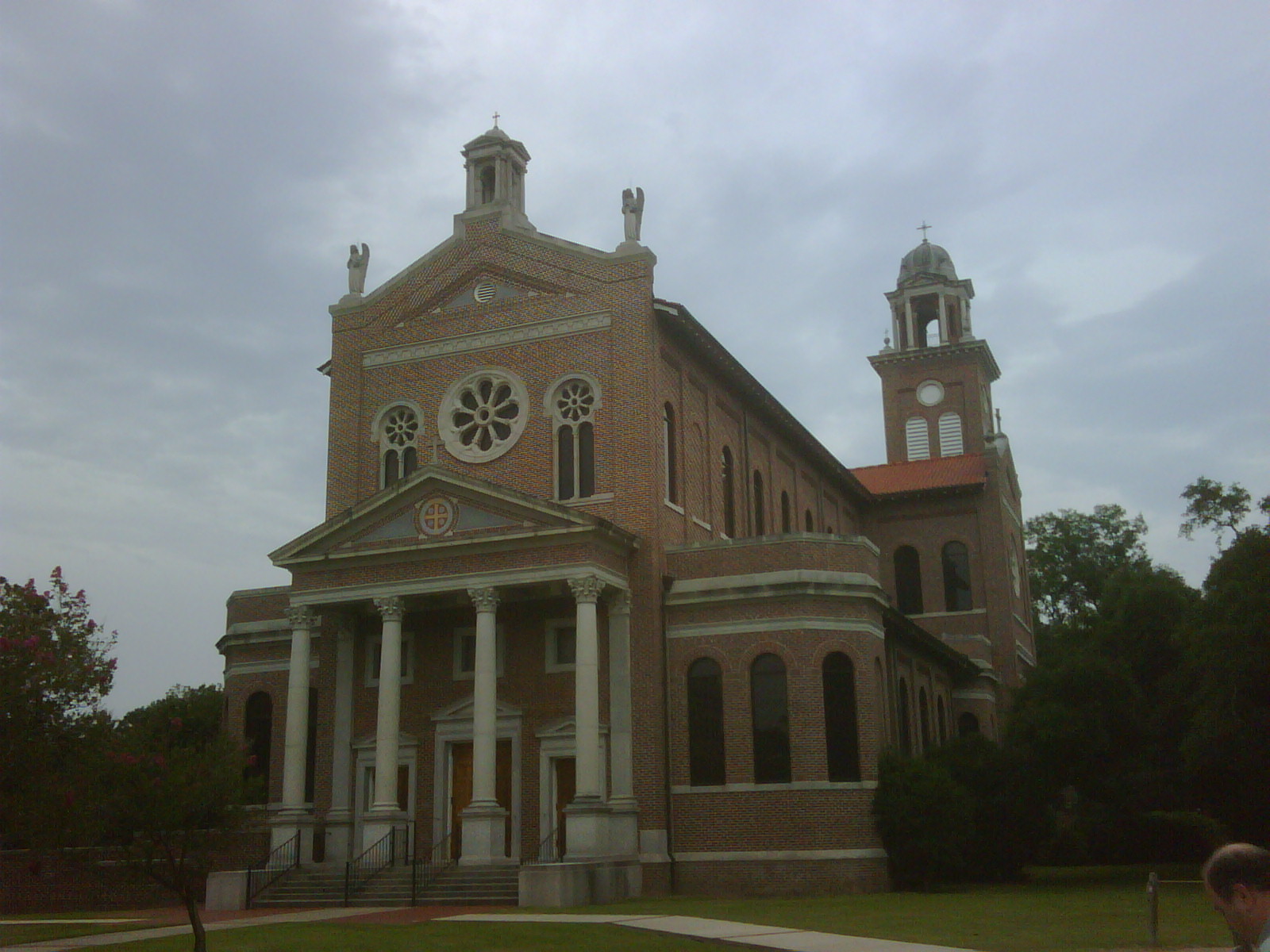
St. Joseph Abbey Church
The Big Easy was hot and humid, but a year and Rome had prepared me. I was only stateside for a few days and just about recovered from jetlag when I left back across the country on a flight almost as long as the one that brought me home from the Netherlands – a reminder that Euclidean geometry does not apply when making flight plans!
My host for the week was a friend and fellow ecumenist/lay ecclesial minister, Buddy Noel. My first moments in New Orleans provided an opportunity for prayer. On his way to the airport to pick me up, Buddy was caught in one of the South’s infamous downpours, and his car hydroplaned into the one in front of him in a backup on the Interstate. At least 12 cars were involved in a number of different collisions in the same area at the same time. His car totaled, Buddy was able to walk away with only bruises from the seatbelt and airbag. As he was making calls from the side of the road, his phone died. Long story short, he got a ride to the airport and had to have them page me, just a couple hours after his accident. I have been given great hospitality before, but this takes things to the extreme!
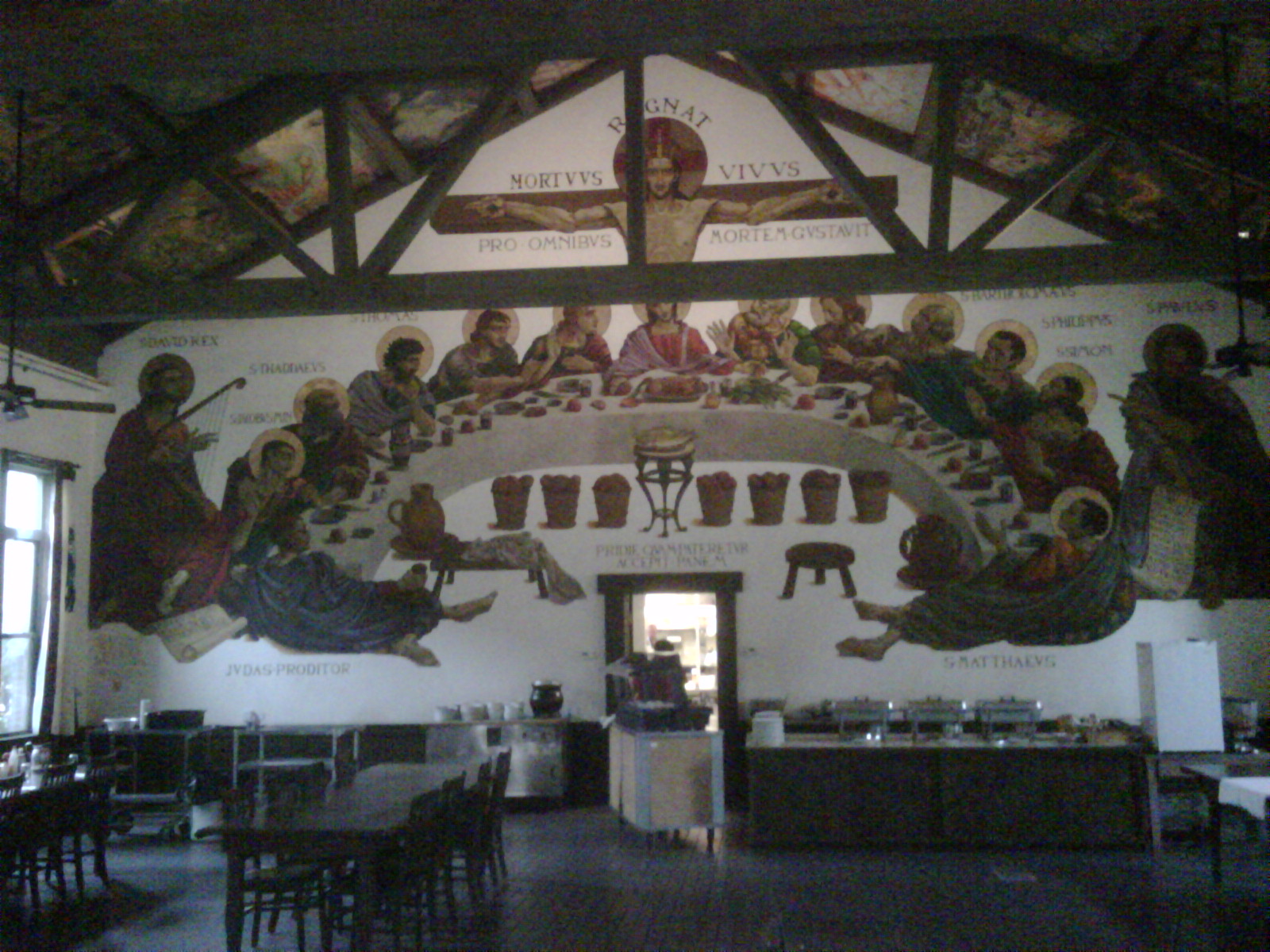
Last Supper, Refectory of St. Joseph Abbey
With a small group for the class, I was able to tailor much of it to some of the questions and expectations of the students, who were a mix of parochial school teachers, parish staff, and interested lay people. And nothing reinforces one’s own studies like teaching a topic, especially when you have to distill the highlights of a dozen years of study into a few hours. It also gave me plenty of time to talk with people and find out a little about the state of the church in one of the Catholic culture centers of the U.S. It was also only my second time to New Orleans, the last being just before Katrina; this time, they were just fitting the well with the new device to see if they could finally stop the largest oil disaster in history.
Last Supper (detail): Salt and pepper shakers, eh?
Archbishop Gregory Aymond has been the Ordinary there for just about a year, the first native of the diocese to serve as its bishop. Everyone I spoke with was positive about his appointment, with sentiments ranging from pride for a home-town boy done well to enthusiasm for his ecclesiology – and apropos to my visit – his commitment to local ecumenism.
The city has recovered its population and most of its infrastructure from Katrina, which hit nearly five years ago, but there have been changes. The Lower Ninth Ward looked like a field with a few funky, new houses scattered throughout – you would never know it had been a crowded urban neighborhood until the storm surge. There were still signs of the Katrina, a few gutted and abandoned houses throughout the city, a few roads sinking into the silt, but these were the exception rather than the rule. One of my students had been involved in a Chinese Catholic community that had been fairly active before the storm, whose members are now in diaspora around the country; A similar story with some of the small Eastern Catholic parishes in the diocese. Several people have simply moved to the other side of Lake Pontchartrain.
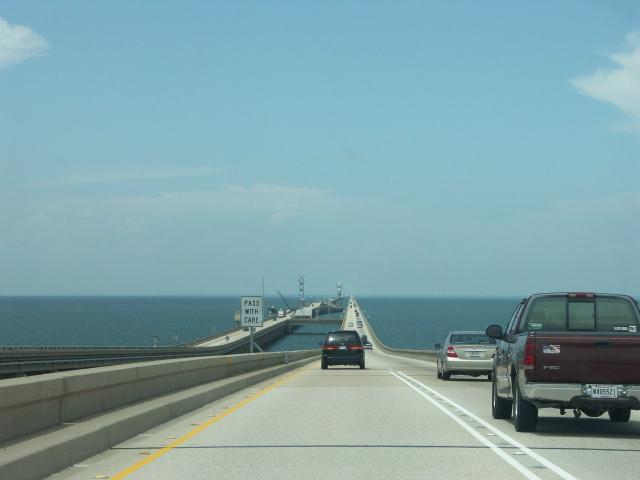
Lake Pontchartrain Causeway
The hospitality was generous and the food was excellent; the company was both! I was blessed to talk with new people each night, sample my first Po’Boys and some Gulf Coast seafood (sans oil), and wander the French Quarter, complete with obligatory beignet and Café au Lait. We prayed evening prayer with the Benedictines at St. Joseph Abbey, and I rode across the longest bridge in the world. Imagine driving onto a bridge and not being able to see land at the far side! The Lake Pontchartrain Causeway is about 24 miles (38.5km) from one shore to the other.
One little tidbit I picked up that fellow pastors and pastoral workers would find interesting, as well as the discussions around parish closings and reconfigurations after Katrina, was the relationship of parish and parochial school. Unlike the northwest, where a fractional minority of Catholic students attend Catholic schools, most in New Orleans do so. The relationship is a little better developed in some respects, as well – for example, the parish Director of Religious Education oversees the curriculum and instruction in both the parish religious education and youth ministry programs as well as the parish school classrooms.
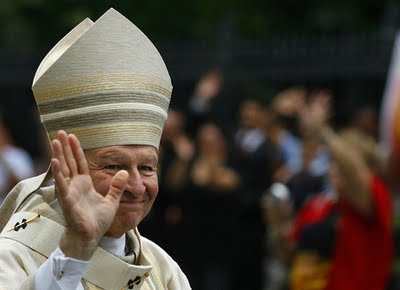
Archbishop Gregory Aymond of New Orleans
The Dialogue of Life in Rome
A former student-resident of the Lay Centre returned this semester as a visiting professor at the Pontifical University Gregoriana (the Jesuit university down the road). Dr. Esra Göezler is a Turkish Muslim who had studied in Rome and returned to co-teach a course with Christian and Jewish scholars, and as a scholar-in-residence at the Lay Centre.
Near the end of the semester Esra sat in a panel presentation at the Lay Centre with a German Jesuit and an Italian Jewish reporter titled “Abrahamaic Religions in the Dialogue of Life in Rome” in which each participant shared their experience of living in the Eternal City in the daily life dialogue with the other Abrahamic faiths. The Lay Centre and PISAI – the Pontifical Institute for the Study of Arabic and Islam, another Jesuit faculty in the City – featured prominently in the discussion.
Over the next few days, Esra provided further opportunity for dialogue and encounter, as the Lay Centre hosted the (brand new) Turkish Ambassador to the Holy See, Professor Kenan Gürsoy and his wife for dinner on 25 May. The following evening Padre Miguel Ayuso-Guixot, director of PISAI presided at our final mass and community night of the academic year. We were honored by the presence and insights of all three distinguished guests by Esra’s initiative.
At around the same time we heard good news about our housemate, another extraordinary Muslim scholar, Rezart Beka of Albania. Rezart has been in Rome this year on scholarship from the Nostra Aetate Foundation, set up in 1990 by Pope John Paul II for non-Christians to study Christianity at the pontifical universities in Rome. Scholars usually stay for one semester, and Rezart was already granted an extension. Facing the possibility of losing him as a student next year as the scholarship came to an end, a donor has set up an entirely new scholarship for Muslims to study at PISAI and Rezart is the inaugural recipient!
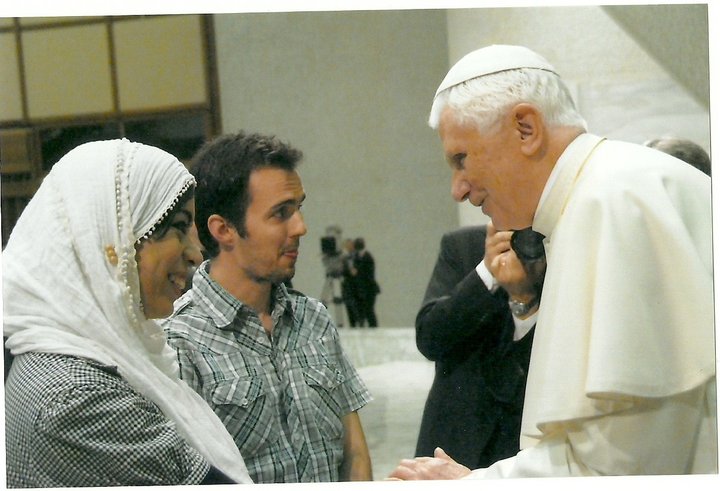
Lay Centre residents Nagwa Zarkaa Elymama (Egypt) and Rezart Beka (Albania) are presented to Pope Benedict XVI
Mary in Islam
 Dr. Mona Siddiqui presaged tomorrow’s Annual John Paul II Lecture on Interreligious Dialogue with a visit to the seminar Fr. Fred Bliss has been conducting on Mary in Ecumenical Dialogue (which incidentally, uses the Seattle Statement as its primary text). This is my summary of her presentation, with a little reflection.
One of the few things most (western) Christians would know about Islam is that Jesus is respected as a prophet and messenger of God – though not as God himself. Less well known is that Mary is also mentioned from the Qur’an, and considered by some also as a prophet (though not a Messenger). She is, in fact, referenced more frequently in the pages of the Qur’an than in the New Testament. Instead of Mary, Mother of God, the reference is almost always to ‘Isâ, son of Miryam. Mary’s elevation to a place of respect is owing to her being mother of one of the great prophets. There are 114 suras (chapters) in the Muslim holy book, eight of which are devoted to, or named for, a person. One of these is Mary of Nazareth, to whom the 19th sura is dedicated.
Islam does not hold a view of original sin and the need for salvation from sin that dominates Augustinian-influenced Christianity. Adam’s first act of sin was also his first act of the will, and was apparently a part of the divine plan from the beginning that he would populate the Earth (which is part of the result of his choice). We are not born into a state of sin so much as we are inclined to commit particular sins. Nevertheless there is a sort of myth that sometime before birth, we are each of us ‘pricked’ by the devil, which has a similar effect. Mary and Jesus were spared this pricking for much the same reason that the doctrine of the Immaculate Conception was developed, to recognize Mary’s holiness and purity as a worthy mother of a great prophet and Messenger.
ARCIC II Seattle Statement: Mary, Grace and Hope in Christ
The virgin birth of Jesus is affirmed, though the Qur’an and its commentators never focus as much on the physicality of all this, as in some of the extreme Christian views. For Islam, Mary’s purity was ethical and spiritual rather than physical. And nothing about a perpetual virginity.
She is a popular person of devotion, especially for Muslim women. Her role is perhaps not as prominent as Fatima, the daughter of the prophet, who is especially revered among Shi’ah Muslims as the mother of successors to the Prophet Mohammad.
Vatican Radio Feature: Haven of Hospitality
Vatican Radio featured the Lay Centre today, after the celebration dedicating our new site yesterday evening. The twenty-minute interview features co-founder and director Dr. Donna Orsuto, assistant director Robert White, Dr. Aurelie Hagstrom of Providence College, and this humble scribe.
Click here to listen. (You may need RealPlayer)
Holy Land Seminar Day #6
This morning’s program featured orthodox Professor Menachem Fisch, examining the topic, “Beyond Mere Tolerance – Jewish Resources for a Genuine Religious Pluralism” using Nostra Aetate and Dignitatis Humanae as starting points, noting that neither Judaism nor Islam has adequately responded to these 50 year old documents.
Then post-modern Jewish scholar Micha Goodman, who is what we would call a lay ecclesial minister, offered an overview of Anti-Semitism, its causes and the realities of the current situation.
For our afternoon excursion, we went to the village of Ein Karem, which is believed to be the village where Zachariah and Elizabeth raised John the Baptizer, and also includes the church of the Visitation and Mary’s Well, two locations vying for the role of memorial to the meeting of Mary’s visit to her elder relative.
For dinner guests, we had recent graduates of the first cohort of law students at Ono Academic College, bringing together the Christian, Jewish and Muslim judges responsible for the religious laws in Israel. Unlike most countries, Israel has no civil marriage. If you want to get married you have to do so through your religious authorities; therefore also divorce and custody issues are handled by religious law. This program took the people responsible for these decisions and put them through a three-year degree in civil law together, creating interreligious dialogue along the way. Our able included a Haredi Jewish Rabbi, an Islamic Judge from Jaffa, and a Melkite Catholic priest.
Holy Land Seminar Day #5
The Shalom Hartman Institute, which is serving as our academic centre for the morning sessions of our seminar in the Holy Land, was founded by Orthodox Rabbi and Professor David Hartman in the 1970’s and named for his father. It serves as what we (Christians) would call an ecumenical centre of education, bringing together Jews from almost the entire range of thought and life – Modern Orthodox, Traditional, Reform, Liberal, Secular, and a few that defy customary categories. It serves as a centre for the continuing education of Rabbis, has two high schools (boys and girls separate), and several research fellows and innovative education programs, including the intensive week seminar that serves as part of my Russell Berrie Fellowship in Interreligious Studies.
This morning’s first session was with the founder’s son, Rabbi Donniel Hartman, continuing the themes of membership and identity, the differences between these questions being addressed in Israel and in North America (where the largest population of Jews live). We then engaged the question of feminism in Judaism, especially as it is being dealt with in Orthodox Jewish congregations, and how it relates to other movements.
An example: There is a mitzvot, one of the religious laws, that 10 men are required for liturgical prayer. This is traditionally interpreted such that it does not matter how many women are present, one or a hundred, you cannot begin until you have at least ten men. A Reform synagogue might say, “this is an unjust law – women are people too!” and dispense with the rule, or amend it so that ten people of either gender is sufficient for the liturgy to begin. One Orthodox congregation, by contrast, has decided instead of breaking or ignoring the law, they will honor it but add one of their own, requiring also ten women to be present before the liturgy can begin. (I would be interested to hear thoughts on this, to me, the Reform response seems more masculine, and the Orthodox more feminine!)
The afternoon we spent in the neighborhood of our hotel, known as Mt. Zion (though historically, the original reference to Zion was probably the temple mount in the City of David, and this Mt. Zion took the name later). We started at a holy site that is simultaneously holy to all three major monotheistic religions, including the Last Supper Room and Pentecost shrine, which was at one time converted to a mosque, and the Tomb of David.
Nearby we stopped by the Church of the Dormition of Mary and the Church of St. Peter Gallicantu (the rooster sings), commemorating the denial of Christ by Peter and including what is thought to be Caiphas’ house. The organ at the church of the dormition was being tuned while we were there, adding an eerie tune to the background while meditating on the mystery of the resurrection of the body.
My courses…
Allora… people have asked, and I keep forgetting to answer. This is my fall semester lineup:
The Catholic Church in Ecumenical Dialogue
Rev. Dr. Frederick Bliss, SM, Professor incaricatus from New Zealand
Hebrew Bible, Human Rights, and Interreligious Dialogue
Rabbi Jack Bemporad, visiting professor from the Center for Interreligious Studies, USA
Knowing the Christian East: Encounter and Experience
Rev. Dr. Joseph Ellul, OP, professor incaricatus from Malta
Methodism and its Dialogue with the Catholic Church
Rev. Dr. Trevor Hoggard, Methodist Representative to the Holy See, from U.K.
Monsignor Donald Bolen, former staff of Pontifical Council for Promoting Christian Unity, from U.K.
Philo of Alexandria and his Influence on Early Christianity
Dr. Adam Afterman, visiting professor from Hebrew University, Jerusalem
Prophecy and Wisdom
Rabbi Jack Bemporad, visiting professor from the Center for Interreligious Studies, USA
Reception and Receptive Ecumenism
Rev. Dr. Frederick Bliss, SM, Professor incaricatus from New Zealand
Russell Berrie Fellowship Seminar in Jerusalem (Feb 5-13)
Various lecturers, coordinator: Dr. Adam Afterman of Shalom Hartman Center and Hebrew University
Social Teaching in Pope John Paul II
Various Lecturers, coordinator: Sr. Dr. Helen Alford, OP, Dean of the faculty of Social Sciences, from U.K.
Sociologia della Conoscenza (Sociology of Knowledge, in Italian)
Dr. Bennie Callebaut, visiting professor from Katholieke Universiteit Leuven, Belgium
 The Ecumenism Blog