
Home » Theology and Ecumenism (Page 5)
Category Archives: Theology and Ecumenism
Cantaur comes to the Lay Centre
The voicemail was indistinct there almost too much distortion to hear the speaker at the other end. Only after a third attempt could I recognize the familiar Australian accent of Dr. Margie Richardson, wife of Canon David Richardson of the Anglican Centre in Rome.
So I resorted to checking my personal email at work to see if there was news:
“The Archbishop of Canterbury may want to stop by tomorrow morning to see the garden and say hello. A.J., would you please welcome him and show him around?”
Even in Rome, that does not happen every day! How could I say no?
His Grace started this morning at San Gregorio Magno, the point from which Gregory the Great sent Augustine to Canterbury to evangelize more of the British Isles, and where the Archbishop and the Pope Benedict celebrated a solemn vespers together earlier this year to mark the 1000th anniversary of the Camaldoli community there.
Then, with the Richardsons, Msgr. Mark Langham of the Pontifical Council for Promoting Christian Unity, and Canon Jonathan Goodall, theologian-ecumenist of Lambeth Palace, the Archbishop toured the Passionist-operated Basilica of San Giovanni e Paolo, and received a brief tour of the Lay Centre and Passionist gardens, including the remains of the Temple of Divine Claudius.
After admiring our view and a few moments of gracious conversation, they were whisked away in Vatican state cars to the Anglican Centre for lunch and preparation for the Archbishop’s address to the Synod of Bishops this evening.
Vocations and Ministries
Behold, I stand at the door and knock.
If anyone hears My voice, and opens the door,
I will come unto him and dine with him and him with me.
Revelation 3:20
Pulled from the archives, i found this file on vocations, created for one of scouting’s religious emblems programs. I cannot for the life of me find the original attribution, if there was one, but we made several adaptations anyway. This version was prepared by me, for the Archdiocesan Committee on Catholic Scouting in Seattle, several years ago. Still worth a reminder: there’s more to vocation than priests and nuns.

There was a time when, if somebody said the word “vocation”, people would think mainly of “priests and nuns”. However, the Catechism of the Catholic Church defines vocation as “The calling or destiny we have in this life and hereafter.” Today the church clearly uses the term to refer to the calling each of us has to use our God-given gifts to participate in the mission and ministry of the Church: All Christians have a vocation.
Each person’s vocation has three components: The first part is the call to faith. The second is the call to relationship. The third is the call to ministry.
The call to faith is sometimes referred to as the ‘universal call to holiness’: “All Christians in any state or walk of life are called to the fullness of Christian life and to the perfection of charity.” (Lumen Gentium 40 §2). We are all called to be the best Christians we can be, with the help of the gifts God has given us. We are called to love one another, to practice justice and charity, to help those most in need, and to transform ourselves and the world around us to be more like Christ. This is more than asking ourselves, “What would Jesus do?” It involves asking “Who does Jesus want me to be?”
The call to relationship is sometimes referred to as your ‘state of life’. Each of us is called to love everyone around us. But, we obviously do not love everyone in the same way. The call to relationship is about how we love the people around us, how we are in relationship with other people. Some people are called to marry and raise a family. Some are called to take vows and live in a religious community with other people who make the same vows. Some are called to remain single for life and not get married (this is called celibacy). Most people spend several years as single persons before committing to marriage, religious life, or celibacy.
The call to ministry is probably what most people mean when they talk about vocations. This is about what you do as a member of the church, and how you participate in the mission of the Church. The Church’s mission is to carry on the mission of Christ: Proclaim the good news of God’s saving love for all people; to establish a prayerful community of believers; and to serve the needs others, especially the poor and marginalized. Through our initiation by Baptism, Confirmation, and Eucharist, each member of the church takes responsibility to carry out this mission of Christ in partnership with other church members.While everyone is called to contribute to the common mission of the church, not everyone is called in the same way. After all, we each have different gifts and talents.
Within the call to ministry there are two essential groups:Lay ministries and ecclesial ministries.
Lay ministries are sometimes called ‘the lay vocation’ or ‘the lay apostolate’. The word “lay” comes from the Greek term laos theon (People of God). The people whose calling is to lay ministry are called “the laity” or “lay people”. They are the people chiefly responsible for the mission of the Church in the world. This includes evangelizing (bringing non-believers into relationship with Jesus), doing works of charity for the poor, advocating for justice to eradicate poverty, and transforming the world so it is more like Christ. With such a big job, it’s a good thing that 99.7% of all Catholic Christians are called to lay ministry!
Ecclesial ministries get their name from the Greek word ekklesia which means ‘assembly’ or ‘church’. It basically means official church ministries. Ecclesial ministers serve the pastoral and spiritual needs of the Church members by preaching, teaching, and sanctifying (inspiring others to holiness). They are often, but not always, the most visible leaders within the church and most are employed full-time by the church. Some are ordained (Bishops, Presbyters, and Deacons) but others are not (Theologians and Lay Ecclesial Ministers). They make up the remaining 0.3% of the Church’s members.
It is always important to remember that “there is a variety of gifts but always the same Spirit; there are many types of service to be done, but always the same Lord, working in many different kinds of people; it is the same God who is working in all of them.” (1 Corinthians 12.4-6) In other words, each vocation is different, but they are all equal.
This section lists a variety of currently recognized ministries in the Catholic Church in Western Washington. It is not complete: New ways of serving God’s people are constantly developing as needs are identified and awareness is sharpened. Traditional church roles can take on new characteristics as the culture and social climate changes.
Ecclesial Ministries (ordained)
- Bishop
- Archbishop; Auxiliary Bishop; Retired Archbishop
- Presbyter (Priest)
- Vicar General; Episcopal Vicar; Dean; Pastor; Priest Moderator; Priest Administrator; Parochial Vicar; Chaplain
- Deacon
- Archdeacon, Protodeacon, Pastoral Coordinator; Pastoral Associate; Pastoral Assistant
Ecclesial Ministries (non-ordained)
- Theologian
- University/College Theology Professor; Archdiocesan Theological Consultant; Author (of theological books/articles)
- Lay Ecclesial Minister
- Archbishop’s Delegate; Chancellor, Ecumenical Officer, Pastoral Life Director; Pastoral Coordinator; Pastoral Associate; Pastoral Assistant; Catholic School Principal; Youth Ministry Coordinator; Campus Minister; Prison Minister; Hospital Minister; Missionary; High School Religion Teacher; Catholic Elementary School Teacher; Lay Presider; Lay Preacher
Lay Ministries (Instituted)
- Acolyte
- Reader
Lay Ministries
- Liturgy ministers
- Altar Server; Cantor; Choir; Eucharistic Minister (Extraordinary Minister of Communion; Lector; Master of Ceremonies; Musician; Sacristan;
- Catechists
- Baptism preparation; Bible Study leader; Catholic media (journalists, bloggers, etc); Faith Formation/CCD teacher; Confirmation preparation; CYO camp staff; Engaged Encounter team; Evangelization team; First Communion preparation; First Reconciliation preparation; Religious emblems facilitator; RCIA team; SALT; Scout leader; Young adult ministry; youth ministry
- Consultative Leadership
- Diocesan Synod, Pastoral Council, Finance Council, Liturgy Commission, Ecumenical Commission, Faith Formation Commission, Social Justice/Outreach Commission, Parish School Board/Commission
- Social Justice and Pastoral Care ministries
- Annulment Advocate; Cabrini Ministry; Catholic Community Services worker; Catholic Relief Services worker; Catholic Worker member; Food Bank volunteer; Grief minister; Hospice minister; Hospitality minister; Jesuit Volunteer Corps; Just-Faith/Justice Walking; L’Arch Community; Mission trip; Parish Nurse; Parish Counselor; Peer Minister; Pro-Life advocate; Sant’Egidio, St. Joseph’s Helpers; St. Vincent de Paul; Visitor to sick and elderly;
- Spirituality and Devotions
- Communion and Liberation; Cursillo; Faith Sharing group leader; Focolare, Marriage Encounter; Retreat leader; Returning Catholics team; Spiritual Director; Spiritual Coach; Stephen’s Ministry
States of Life/Call to Relationship
- Vowed Life
- Marriage
- Religious vows (monastics [monks, nuns], mendicants)
- Consecrated Life
- Consecrated Virgin, Hermit, Opus Dei Numerary, “Brothers”, “Sisters”, members of some lay movements
- Promised Life
- Celibacy
- Engaged/Betrothed persons
On the Spirit of the Council
“The only spirit or ghost of a Council is the one called Holy — exorcising that from the hermeneutic is the problem, not the solution. There is no hermeneutic of reform without the Spirit of the Council; only rupture and the pride of men.”
In other words, if you reject the Spirit of Vatican II, you are rejecting the Holy Spirit. Plain and simple. Now, there are legitamate criticisms of some usages of this phrase, or some actions made on its behalf, particularly way back in the 60s, but that is not the same as throwing out the baby with the bath water.
Put another way, the so-called “hermeneutic of discontinuity” or “hermeneutic of rupture” – the idea that Vatican II created something entirely new- is the error of the traditionalists, schismatics, and sedevacantists who reject the Council, or who seek to undermine its genuine authority. (Usually with some argument that a “pastoral” council is not a “dogmatic” council. As if the Church makes any such distinction.)
The big supporters of Vatican II as a Church-changing event, as a “new pentecost” are best described as “hermeneutic of reform” or of “reform in continuity”.
Then those who say that nothing really happened at all, that really Vatican II intended no changes, are simply exercising a “hermeneutic of continuity”.
That’s my nutshell take; Would appreciate serious discussion.
Bishop Gerhard Müller to CDF
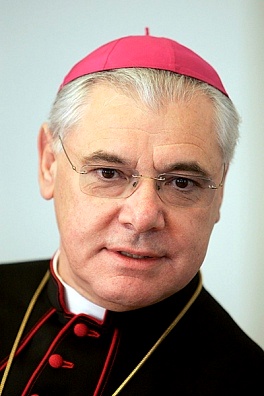 The rumor has been floating around for some months, and this week it was announced that Cardinal Levada has retired as prefect of the Congregation of the Doctrine of the Faith, and the bishop of Regensburg, Gerhard Müller, has been appointed to take his place.
His official biography and extensive information can be found in English at his diocesan website.
The two NCRs cover the story here:
- National Catholic Register (moderately conservative)
- National Catholic Reporter (moderately liberal)
Talking with one of my German colleagues in Rome, she was complaining how the German press has continued to remind people that this was once the office of the Universal Inquisition. That, and that Müller has been widely painted as an archconservative and favoring the current trend towards traditionalism.
I chuckled and pointed out that most of the English-language blogosophere seems to focus on his connection to Liberation Theology, and that if anything, the traditionalists have protested because he is “heretic” and a “modernist” – terms almost inevitably misused, but that is nothing new.
I have read only one of Müller ’s books, and that is his Priesthood and Diaconate, which I have used for my License thesis. He writes to counter the arguments made by some German feminist theologians that women have been and ought to be ordained to the diaconate. The major argument he sets out to counter is that, although the question of ordination to the priesthood – understood as the presbyterate and the episcopate in this case – has been closed since John Paul II’s 1994 Apostolic Letter Ordinatio Sacerdotalis, the question of the ordination of women to the diaconate remains (ostensibly) open.
First, it is interesting to note that in the translation, there are a couple of humorous editorial notes attached to his text. This same German friend keeps remarking that the problem with German theologians, ministers and ecclesiastics is that they all think that “the German Church is the center of the Catholic Church”- or whatever issues are big in the German world must be the main issues for the universal church. Not unlike the American/anglo-phone phenomenon, actually.
At various points in his book, Müller demonstrates this by saying something like “theologians in the whole world are asking this question” or “everyone seems to think this is an inevitability”. But after the translator and editor have their input, it looks like this: “theologians in the whole [German-speaking] world are asking this question” or “everyone [in Germany] seems to think this is an inevitability.”
More substantially, I was struck that he seemed not to address the most fundamental ecclesiological point of the argument he was trying to counter and correct. The argument for the ordination of women to the diaconate, in the current context, is that, if you maintain that within the one sacrament of holy orders there are not only three orders, but two distinct classes of orders – one to the priesthood and one to ministry/diakonia – then you can argue that a prohibition of ordaining women to priesthood does not necessarily dictate a prohibition to the ordination of women to diaconate.
However, if you argue that the three distinct orders within the one sacrament are modeled in a Trinitarian concept, then this argument might collapse, and if women cannot be ordained to one order or another it can be argued that they cannot be ordained to all of them. Müller’s strongest move, it seems, if his intent is to demonstrate that women cannot be ordained even to the diaconate, would have been to argue the unity of the sacrament. Instead, he maintains throughout his text this scholastic division between priesthood and other, the very point that the target of his investigation needs to retain in order to make her argument.
It is also interesting to note is that Bishop Müller was heavily involved in the International Theological Commission’s Report on the Diaconate, From the Diakonia of Christ to the Diakonia of the Apostles, which itself does not close the door on the question of ordaining women to the diaconate.
All in all, he seems an accomplished theologian, interested in ecclesiology and ecumenism, with a healthy ability not to get stuck in some of the old images and models of theology; he is able to judge aspects of liberation theology on its merits, rather than treat it like a bad word, as so many in the anglophone world are sadly wont to do. On the other hand, it seems that the question of women in the diaconate may be closed soon, before the non-German speaking world even had a chance to realize it was open.
I am looking forward to reading more, and seeing what the future brings.
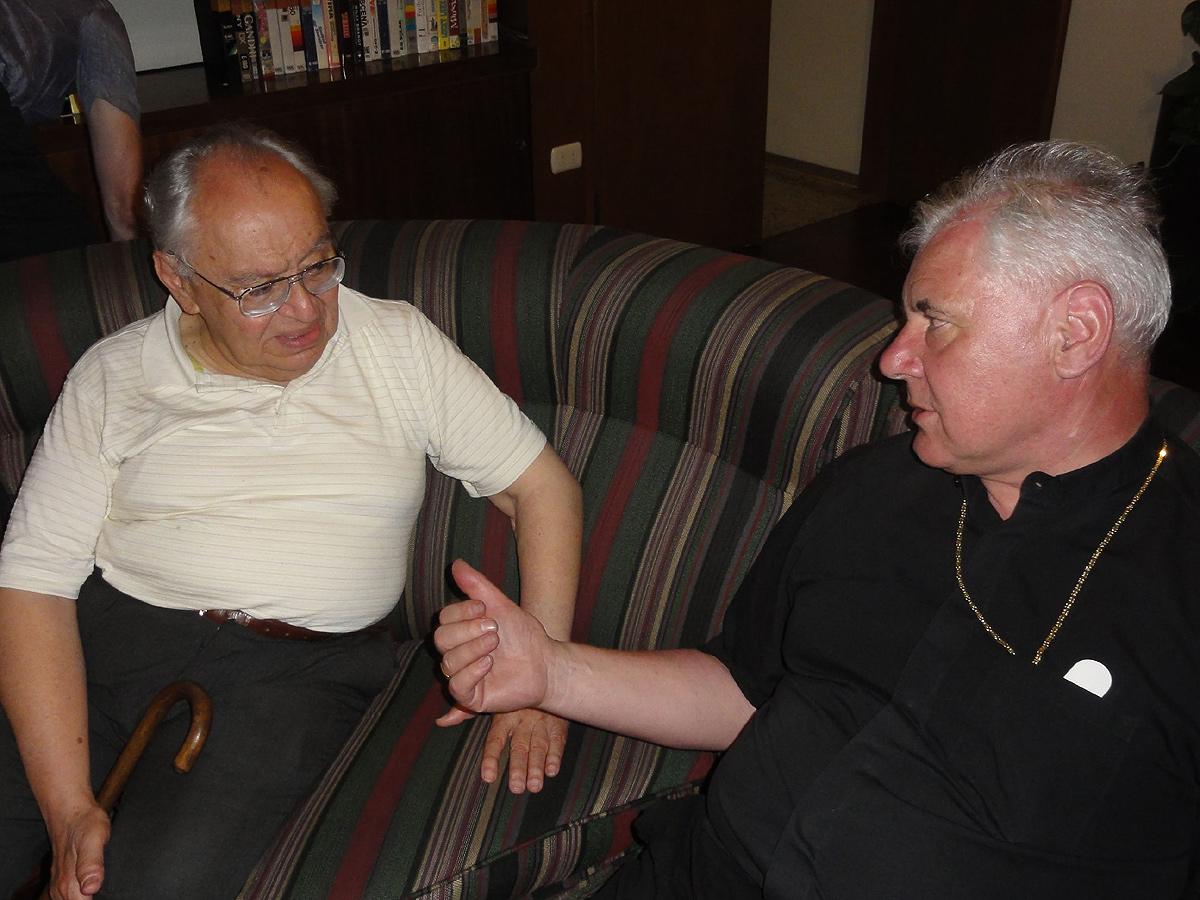
Gustavo Gutierrez, father of liberation theology, and Gerhard Muller, at one of their annual sessions.
Quote of the Day
Speaking at a meeting of Austrian Catholic newsmen, Cardinal Koenig said:
“Do not wait for the bishop or for a report from Rome, if you have something to say about the Council. Sound a warning whenever you feel that you ought to. Urge, when you feel urging is necessary… Report everything that the people and the Catholics expect concerning the Council.”
Taken from Conciliaria: Fifty Years Ago Today at the Second Vatican Council. If you have not discovered this gem of a blog yet, you ought to.
Can you imagine many people still having that same fearless confidence in the Holy Spirit speaking through the people of God, today? “Don’t wait for us, speak up!” Not exactly the dominant ecclesiastical paradigm half a century later!
The Camaldoli at 1000… più o meno.
The Lay Centre enjoyed the opportunity to host some of Rome’s most well-respected ecumenical leaders for lunch today, offering an oasis in time and space to what is already a busy and historic week for all involved.
Some will have heard already that the Archbishop of Canterbury is coming to the neighborhood next weekend to celebrate the Camaldolese community at San Gregorio Magno al Celio on the occasion of their millennial anniversary. It was Gregory the Great that sent Augustine to Canterbury to convert the Angles, famously quipping how they better resembled angles, after all, and the connection between the local churches of Rome and England has a long history. That history is tied to this very spot, and the relationship with the Camaldolese at the site of Gregory’s family estate has its own long history – with a recent twist noted below.
The bishop of Rome has decided to join him for vespers next Saturday at San Gregorio marking the occasion. As it is a small church, I have been assured the only way I will get a ticket is if I poison some monsignor and take his – and since all things baroque seem to be in vogue just now, it might be socially acceptable if I did just that!
Alas, I am too much stuck in the ways of my youth, and will just pray for intervention from Sts. Gregory, George, and Jude, instead.
Nevertheless, the Archbishop will be presiding and preaching at St. Paul’s Within the Walls, the Episcopalian (read: American Anglican) Church of Rome on Sunday morning, and offering a conference on monasticism and ecumenism with the prior of the Camaldolese monastery in California at San Gregorio in the afternoon. No tickets (and thus no poisons) are necessary.
All of this is to celebrate the 1000 year anniversary of the Camaldoli community, a Benedictine offshoot that uniquely comprises both monastics and hermits in lives of contemplation. But, in fact, it seems that historians have dated the actual establishment about 12 years later… the event being predated for political reasons at an early stage. Nevertheless we know the community was founded by St. Romuald, a monk in the abbey of St. Apollinaris in Classe at Ravenna, who “reproposed the original call of believers to a radical faithfulness to the gospel and interior freedom, guaranteed not by human power or strict disciplinary norms, but by faithfulness to the Spirit of God.”
The community’s website can be found here: http://www.camaldoli.it/en_index.htm
Ecumenical witness in the life of Camaldoli
This is not all that has been going on, and not all we were celebrating, however, for this Benedictine offshoot congregation on the Caelian hill. Several weeks ago, they elected a new prior: Dom Peter John Hughes. Dom Peter has been an Anglican priest for a number of years, and a Camaldolese monk for fifteen. How fitting, that on the eve of their millennial anniversary, the community living in the house that was that of the pope who sent the Apostle of England would choose as their Roman prior a priest of the Communion born from the Church of England?
After fifteen years of ecumenical witness as an Anglican priest active in a Catholic order, the election presented a crossroads. Clearly, the prior must be in full communion with the Catholic Church – and there is no personal Ordinariate established in Italy. Therefore, Dom Peter was brought into full communion and welcomed into the Catholic presbyterate at a quiet liturgy presided by Archbishop Bruno Forte of Chieti-Vasto, “Italy’s most famous theologian”. Forte has been rumored as a possible successor to Cardinal Levada in the CDF, and was one of the first appointees to the Council on the New Evangelization.
Below is a selection of his homily:
My dear Peter! In order to become a monk in the community at Camaldoli, you were required first to become a member of the Catholic Church. While you understood and accepted this, you felt it paradoxical that, in order to embrace monasticism as a sign of an ecclesial mystery larger than that of each single tradition and of the unity which lies beyond all divisions, a decision was required which seemed to point in the opposite direction. Despite the consequences of disunion, we can nevertheless recognise and celebrate gifts of grace and continuity. Where there was discontinuity because of the non-recognition of your Anglican Orders, the continuity was maintained in your decision to live the monastic life, in the light of the understanding of Camaldoli, as an ecumenical witness, with its goal of full visible unity in faith and sacraments. When you were recently appointed to lead the Camaldoli monastic community in Rome, you were also invited to consider receiving Holy Orders in the Catholic Church.
After much thought and prayer, you have come to see this as a response to a call, an invitation to exercise to the full the service of leadership now asked of you, and an opportunity to offer a fuller witness within the Catholic Church. By giving such a response, you do not deny your origins or identity or the value of your long and fruitful ministry in the Anglican communion, and you do not intend to break this communion. On the contrary, your ordination to-day opens the way for you to continue your service to the unity for which Jesus prayed, liberating it for a fuller realisation within the Catholic Church that has received you as a member and has called you to exercise this ministry. Our sincere wish is that this act today might also be celebrated as expression of this deeper Christian fellowship we already share in Christ, and linked as it is with the monastic witness, may be welcomed as a positive and constructive contribution to the ecumenical journey.
By all accounts of those present, every effort was made to recognize the value of Peter’s entire ministry and his dedication to the community, and there was not a drop of Roman triumphalism, much to the credit of Archbishop Forte and the curial offices involved. One can be received into Catholic orders in a way that does not invalidate the ongoing participation in the priesthood of Christ, that someone such as Dom Peter so clearly exemplifies. We must continue to pray for the day when such steps are no longer necessary.
Catholic or Roman Catholic? – Kasper on Ratzinger
“It is the Catholic Church, not the Roman Catholic Church. I know Pope Benedict is strongly against using ‘Roman Catholic’ [to describe the whole Catholic Church] because like me he lived through the Nazis. The Nazis called us römisch-katholisch to emphasize the Roman and downplay the Catholic. No German Catholic theologian would use ‘Roman Catholic’ in that way.”
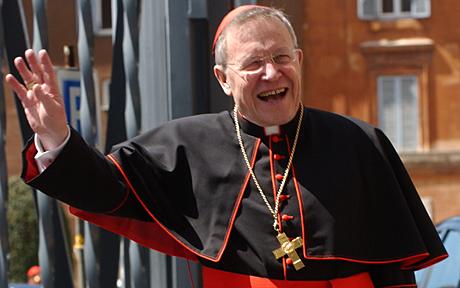 Cardinal Walter Kasper, during a lecture in a course offered at the Angelicum this semester, “Ecclesiological Themes in Ecumenical Dialogue: Catholicity, Apostolicity, Unity”
“We Will All Be Changed By the Victory of Our Lord Jesus Christ”
ROME, JAN. 26, 2012 (Zenit.org).- Here is a translation of the homily Benedict XVI gave Wednesday evening at Vespers on the feast of the Conversion of St. Paul. The celebration closed the annual Week of Prayer for Christian Unity.

* * *
Dear brothers and sisters!
It is with great joy that I address a warm greeting to all of you who are gathered in this basilica on the liturgical fest of the Conversion of St. Paul to conclude the Week of Prayer for Christian Unity in this year in which we celebrate the 50th anniversary of the opening of Vatican Council II, which Blessed John XXIII announced here in this basilica on Jan. 25, 1959. The theme offered for our meditation during the Week of Prayer that we are concluding today is: “We Will All Be Changed By the Victory of Our Lord Jesus Christ” (cf. 1 Corinthians 15:51-58).
The meaning of this mysterious transformation, of which the second short reading this evening speaks, is marvelously shown in the event of St. Paul. Following the extraordinary happening on the road to Damascus, Saul, who distinguished himself by the zeal with which he persecuted the young Church, was transformed into an indefatigable apostle of the Gospel of Jesus Christ. In the event of this extraordinary evangelizer it is clear that such a change is not the result of a long interior reflection nor the fruit of a personal effort. It is first of all the work of the grace of God operating in its inscrutable way. This is why Paul, writing to Corinth some years after his conversion, states, as we heard in the first reading of these vespers: “By the grace of God … I am what I am, and his grace in me has not been ineffective” (1 Corinthians 15:10). Moreover, considering the event of St. Paul we understand that the transformation that he experienced in his existence was not limited to the ethical dimension — as a conversion from immorality to morality — nor to the intellectual dimension — as change in his way of seeing reality — but it is a matter rather of a radical renewal in his own being, similar in many aspects to a rebirth. Such a transformation has its foundation in the participation in the mystery of the death and resurrection of Jesus Christ, and it is delineated as a gradual journey of conformation to Christ. In light of this awareness, St. Paul, when he will later be called to defend the legitimacy of his apostolic vocation and the Gospel that he proclaimed, will say: “It is no longer I who live but Christ who lives in me. And this life that I live in the body I live in the faith of the Son of God, who loved me and gave himself up for me” (Galatians 2:20).
The personal experience lived by St. Paul allowed him to await with a reasonable hope for the fulfillment of this mystery of transformation, which will affect all those who have believed in Jesus Christ and all humanity and the whole of creation as well. In the second short reading that was proclaimed this evening, St. Paul, after having developed a long argument aimed at reinforcing hope of the resurrection in the faithful, using the traditional images of the contemporary apocalyptic literature, describes in a few lines the great day of the final judgment in which the destiny of humanity is met: “In an instant, the twinkling of an eye, at the sound of the last trumpet … the dead will rise uncorrupted and we will be transformed” (1 Corinthians 15:52). On that day, all believers will be conformed to Christ and all that is mortal will be transformed by his glory: “It is necessary, in fact,” says St. Paul, “that this corruptible body be clothed in incorruptibility and that this mortal body be clothed in immortality” (15:53). Then the triumph of Christ will finally be complete, because, St. Paul continues, showing how the ancient prophecies of the Scriptures will be realized, death will be definitively vanquished and, with it, sin that brought death into the world and the Law that determines sin without giving the power to overcome it: “Death has been swallowed up in victory. Where, O death, is your victory? Where, O death, is your sting? Death is the sting of sin and the Law is the power of sin” (15:54-56). St. Paul tells us, thus, that every man, through baptism in the death and resurrection of Christ, participates in the victory of him who first defeated death, opening a path of transformation that is manifested from thence in a newness of life and that will reach its goal in the fullness of time.
It is quite significant that the passage concludes with a thanksgiving: “May thanks be given to God who gives us the victory through our Lord Jesus Christ” (15:57). The canticle of victory over death becomes a canticle of gratitude lifted up to the Victor. We too this evening, celebrating the evening praises of God, would like to join our voices, our minds and our hearts to this hymn of thanksgiving for what divine grace has worked in the Apostle of the Gentiles and through the wondrous salvific design of God the Father has accomplished in us through the Lord Jesus Christ. As we lift up our prayer, we are confident that we too will be transformed and conformed to Christ’s image. This is particularly true for the prayer for the unity of Christians. When we in fact implore the gift of unity of Christ’s disciples, we make our own the desire expressed by Jesus Christ in the prayer to the Father on the eve of his passion and death: “that all may be one” (John 17:21). For this reason, the prayer for the unity of Christians is nothing other than a participation in the realization of the divine plan for the Church, and the active commitment to the re-establishment of unity is a duty and a great responsibility for all.
Despite experiencing in our days the painful situation of division, we Christians can and must look to the future with hope insofar as the victory of Christ means the overcoming of all that prevents us from sharing the fullness of life with him and with others. Jesus Christ’s resurrection confirms that the goodness of God defeats evil; love overcomes death. He accompanies us in the struggle against the destructive force of sin that damages humanity and the entire creation of God. The presence of the risen Christ calls all of us Christians to act together in the cause of the good. United to Christ we are called to share his mission, which is that of bringing hope where injustice, hatred and desperation dominate. Our divisions dim the luminousness of our witness to Christ. The goal of complete unity that we await in active hope and that we pray for with confidence, is not a secondary victory but has importance for the good of the human family.
In today’s dominant culture the idea of victory is often associated with an immediate success. In the Christian perspective, however, victory is a long — and in the eyes of us men — not an always linear process of transformation and growth in the good. It happens in God’s timeframes, not ours, and it demands of us a profound faith and patient perseverance. If it is true that the Kingdom of God definitively irrupts in history in the resurrection of Jesus, it is still not fully realized. The final victory will happen only with the Lord’s second coming, which we await with patient hope. Even our expectation of the Church’s visible unity must be patient and confident. Our daily prayer and efforts for the unity of Christians have their meaning only in such a disposition. The attitude of patient waiting does not entail passivity or resignation but a prompt and attentive response to every possibility of communion and fraternity that the Lord grants us.
In this spiritual climate I would like to offer some special greetings, in the first place to Cardinal Monterisi, archpriest of this basilica, to the abbot and the community of Benedictine monks who host us. I greet Cardinal Koch, president of the Pontifical Council for Promoting Christian Unity, and to all the members of this dicastery. I offer my cordial and fraternal greetings to his Eminence the Metropolitan Gennadios, representative of the Ecumenical Patriarch, and the Reverend Canon Richardson, personal representative in Rome of the Archbishop of Canterbury, and to all the representatives of the various Churches and ecclesial Communities gathered here this evening.
I entrust to the intercession of St. Paul all of those who with their prayer and their work commit themselves to the cause of the unity of Christians. Even if we can at times have the impression that the road toward complete re-establishment of communion is still very long and full of obstacles, I invite everyone to renew their determination to continue, with courage and generosity, the unity willed by God, following St. Paul’s example, who, in the face of difficulties of every sort always maintained firm confidence in God, who brings his work to completion. After all, along this journey there are not lacking positive signs of a rediscovered fraternity and of a shared sense of responsibility before the great problems that afflict humanity. All of this is reason for joy and great hope and must encourage us to continue our commitment to arrive together at the final goal, knowing that our toil is not in vain in the Lord (cf. 1 Corinthians 15:58). Amen.
Pope Benedict Angelus address for WPCU
Every Sunday noon when he is in Rome, the pope prays the Angelus with pilgrims in the Piazza San Pietro, and gives a short address. This week’s focused on the annual Week of Prayer for Christian Unity…
Dear Brothers and Sisters,
This Sunday falls in the middle of the Week of Prayer for Christian Unity which is celebrated from 18 to 25 January. I cordially invite everyone to join in the prayer that Jesus addressed to the Father on the eve of his Passion: “that they may all be one… so that the world may believe” (Jn 17:21). This year in particular our meditation during the Week of Prayer for Unity refers to a passage of St Paul’s First Letter to the Corinthians, from which the theme was formulated: “We will all be changed by the victory of our Lord Jesus Christ” (cf. 1 Cor 15:51-58). We are called to contemplate Christ’s victory over sin and death, that is, his Resurrection, as an event that radically transforms all who believe in him and gives them access to incorruptible and immortal life. In addition, recognizing and accepting the transforming power of faith in Jesus Christ sustains Christians in the search for full unity among themselves.
This year the resource material for the Week of Prayer for Unity has been prepared by a Polish group. Indeed Poland has lived through a long history of courageously fighting various adversities and time and again has given proof of great determination, motivated by faith. For this reason the words of the above-mentioned theme have special resonance and effectiveness in Poland. Down the centuries Polish Christians have spontaneously perceived a spiritual dimension in their desire for freedom and have understood that true victory can only be achieved if it is accompanied by a profound inner transformation. They remind us that our quest for unity can be realistically conducted if the change takes place within us first of all and if we let God act, if we let ourselves be transformed into the image of Christ, if we enter into new life in Christ who is the true victory.
The visible unity of all Christians is always a task that comes from on high, from God, a task that demands the humility of recognizing our weakness and of receiving the gift. However, to use a phrase which Bl. John Paul II liked to repeat, every gift also becomes a commitment. The unity that comes from God therefore demands of us the daily commitment to open ourselves to each other in charity.
The Week of Prayer for Christian Unity has been a central feature in the Church’s ecumenical activity for many decades. The time that we devote to prayer for the full communion of Christ’s disciples will enable us to understand more deeply that we will be transformed by his victory, by the power of his Resurrection.
Next Wednesday, as is the custom, we shall conclude the Week of Prayer with the solemn celebration of Vespers on the Feast of the Conversion of St Paul, in the Basilica of St Paul Outside-the-Walls at which representatives of other Churches and Christian Communities will also be present. I expect many of you to come to this liturgical encounter to renew together our prayer to the Lord, the source of unity, with filial trust, to the intercession of the Blessed Virgin Mary, Mother of the Church.
After the Angelus:
Dear Brothers and Sisters,
In these days, various countries in the Far East are joyfully celebrating the lunar New Year. In the present global situation of economic and social crisis I express to all those peoples the hope that the New Year will be concretely marked by justice and peace, that it will bring relief to the suffering and, especially, that young people will offer new hope to the world with their enthusiasm and their idealism.
I greet all the English-speaking pilgrims and visitors present at today’s Angelus. This week, Christians throughout the world mark the Week of Prayer for Christian Unity. We are confident that, as St Paul says, “We will all be changed by the victory of our Lord Jesus Christ” (cf. 1 Cor 15:51-58). Let us renew our prayer for the unity of all of Christ’s followers, and deepen our resolve to be one in him. Upon each of you and your loved ones at home, I invoke God’s blessings of peace and joy.
I address a cordial greeting to the Italian-speaking pilgrims, in a special way to the parish groups and families, and I wish everyone a good Sunday. A good Sunday, a good week to you all!
 The Ecumenism Blog