
Home » La vita Roma (Page 13)
Category Archives: La vita Roma
St. Catherine of Siena and Cardinal Cláudio Hummes
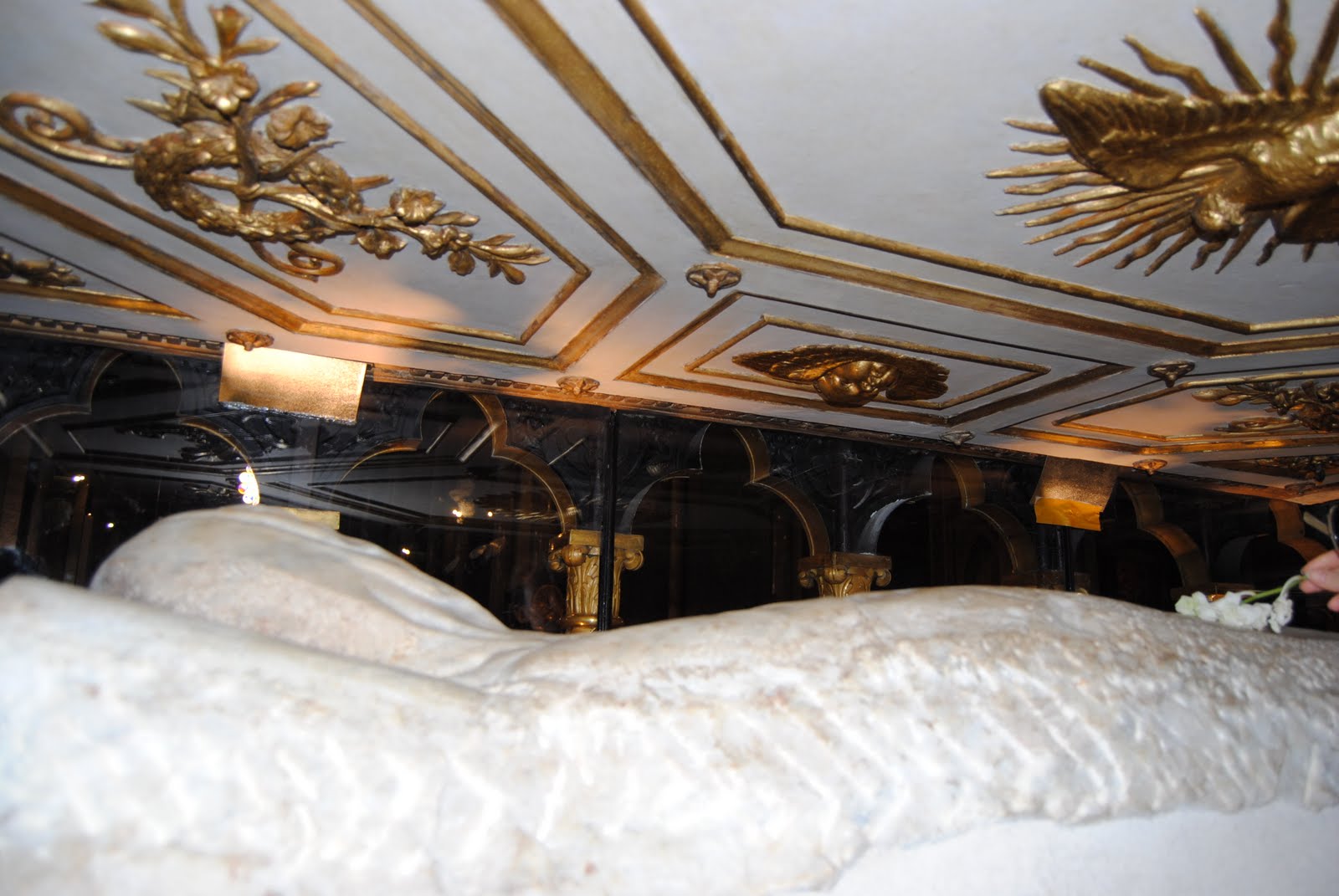
Tomb of St. Catherine of Siena
Today is the feast of one of the most popular saints around here, St. Catherine of Siena. Lay woman, Dominican tertiary, ecclesial reformer and gifted with a charism that allowed her to put popes and antipopes in their proper place and get away with it, she serves as the patron saint of the caribinieri, Italy, Europe, and was the first woman named a Doctor of the Church.
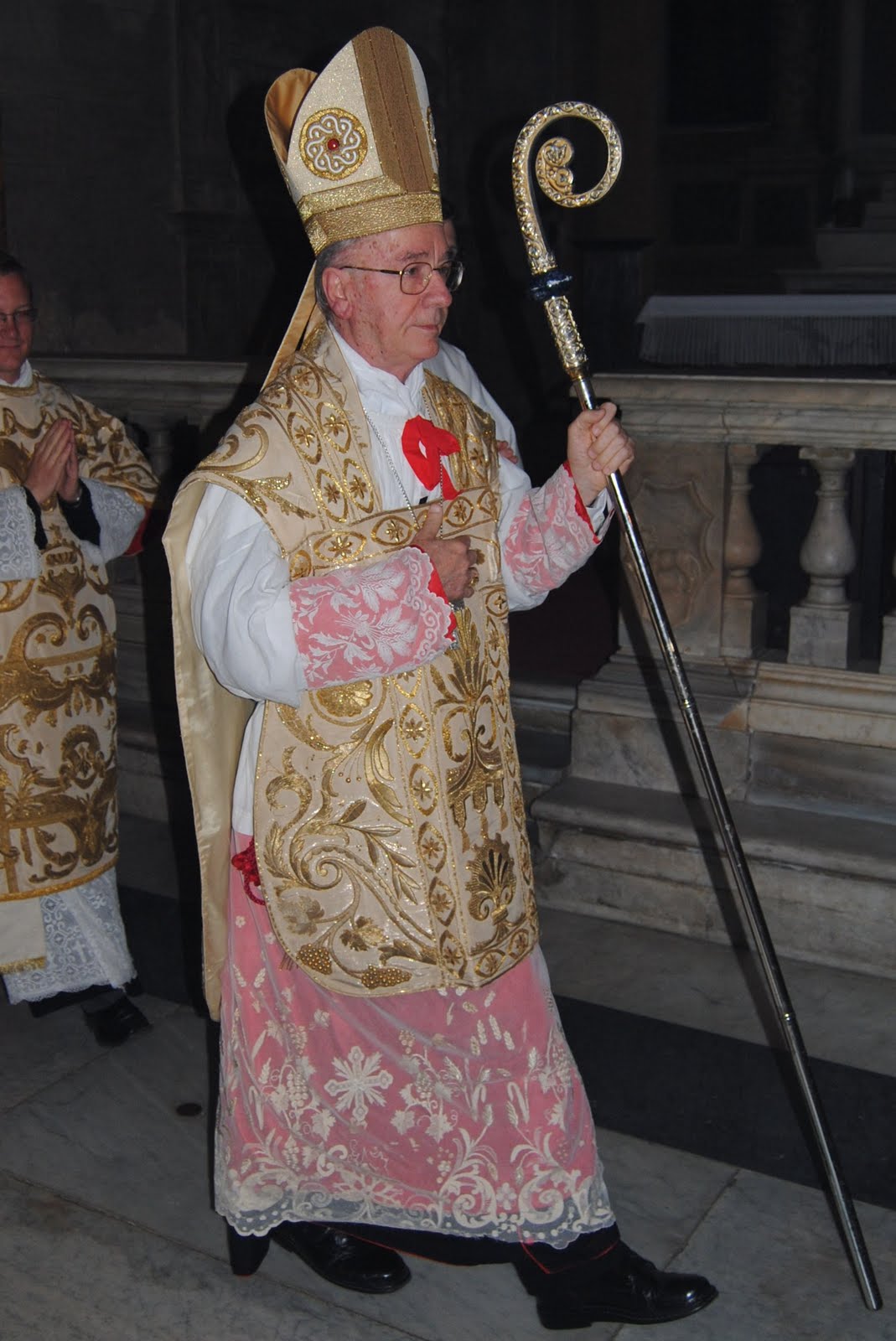
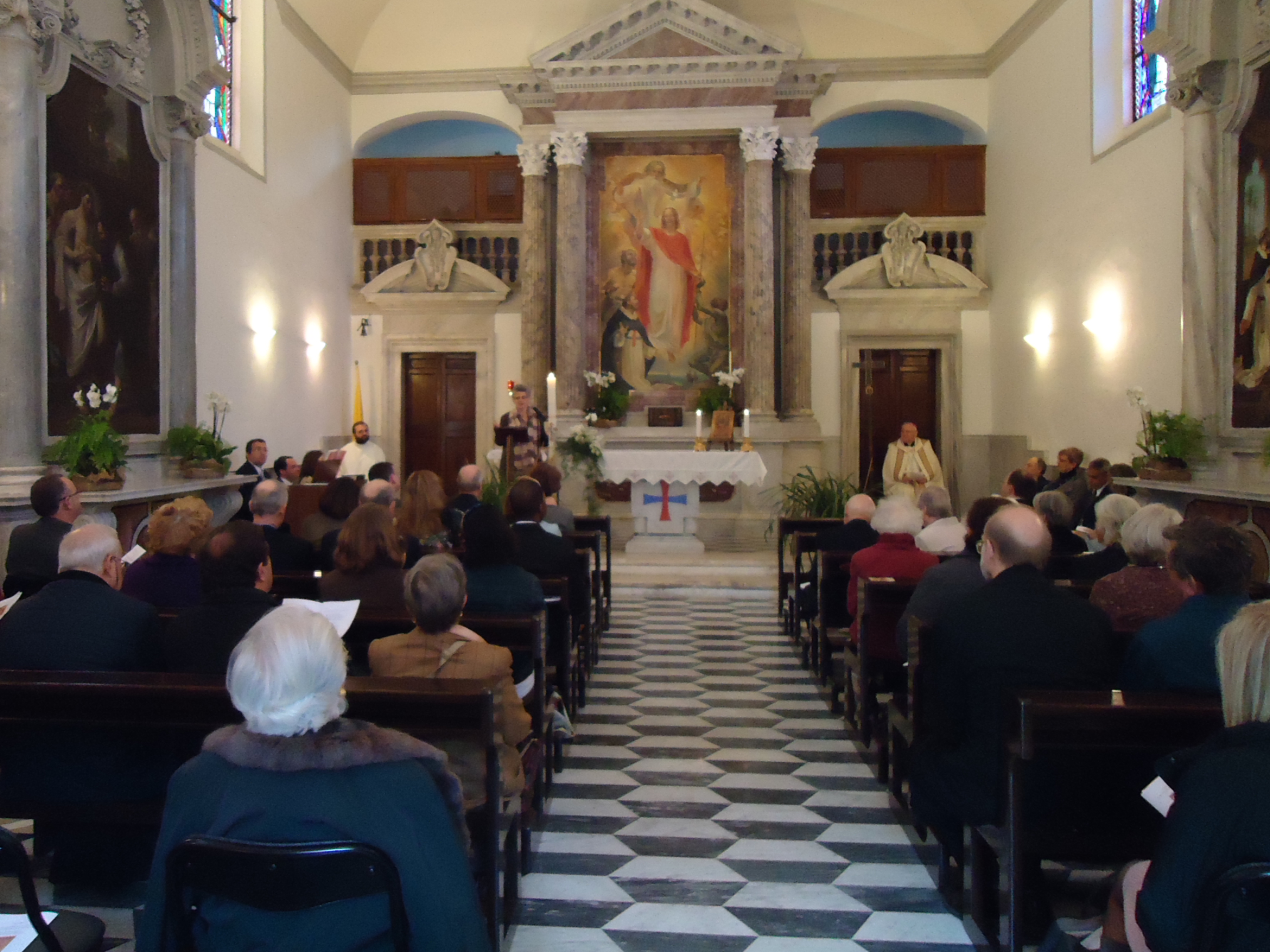
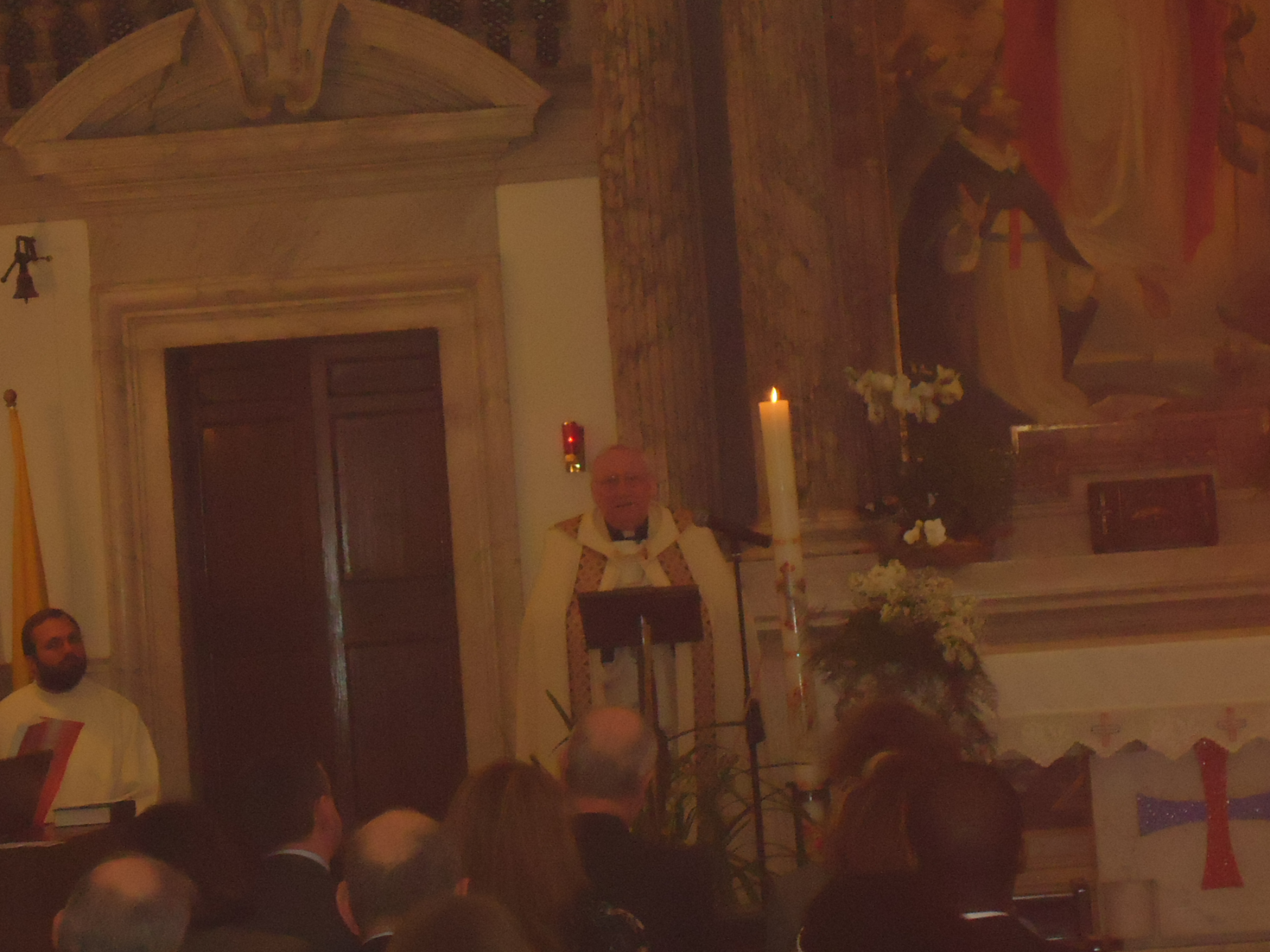
Cardinal Hummes presiding at the Solemnity of St. Catherine of Siena
It was only at the end of my class day, just before 6pm, that I was able to run over to the church where she died, and where most of her remains remain, Chiesa Santa Maria Sopra Minerve, near the Pantheon. On her feast day every year they open the small doors under the high altar to allow devotees to access her marble tomb directly. After the liturgy, we were also able to get into the chapel built from the rooms in which St. Catherine lived her last years. (I ran into a couple friends at the church, one of whom, John Paul, took the photos I used for this blog. More can be found at his, Orbis Catholicvs Secvndvs)
Cardinal Claudio Hummes, the Brazilian Prefect of the Congregation for the Clergy presided at a solemn vespers and Eucharist to commemorate the saint, with about forty Dominican friars, an equal number of sisters, and a handful of tertiaries, in attendance. It was an interesting liturgical experience in the fact that we started with the procession, went into the first half of vespers, after the psalms came the Gloria and the penitential rite followed by the rest of the Eucharist, only to return to the vespers canticle and the rest of that liturgy following the final blessing of the mass.

Vimpere (left), Deacons (center)
Cardinal Hummes presents a good example of the way lines are drawn differently in Rome than it often seems in the States, and a reminder not to judge a book by its cover, or too quickly, if at all. Vested in scarlet, lace and a heavily embroidered Baroque “fiddleback” chasuble he was the very image of the popular style of the Tridentine era and the “extraordinary form” movement of today. Dual deacons with matching Baroque dalmatics and vimpere donned in vimp veils embroidered with the cardinalatial coat of arms reinforced the image of a very Roman prince of the church.
Cardinal Hummes is not his predecessor, however. Ordained a presbyter before the Council, he finished a doctorate in philosophy, in Rome, just as Vatican II was getting interesting. A Franciscan, he continued studies at the Ecumenical Institute in Bossey and has been known for his support of social justice, liberation theology, and being open about the theoretical possibility of doing away with mandatory clerical celibacy.
This is not the combination that comes easily to mind for most of my fellow North American Catholics, I think it is safe to say: “traditional” liturgical garb and “progressive” theological/ecclesiological tendencies!
The homily, I am sure, would be interesting… but I have not found a translation yet. In the mean time, blessed feast of Catherine to you!
Dinner with our parish priest
The Lay Centre is located within the V prefecture (deanery) of the diocese of Rome. There are 8 parishes and 18 other churches that offer liturgies weekly, if not daily, making no less than 88 Sunday liturgies within a 20-minute walk of our front gate. The closest church may be the Trinitarian Church of San Tommaso in Formis where we celebrated our inaugural vespers a couple weeks ago, but the parish church is just a few yards further, the Basilica of Santa Maria in Domnica, also known as Santa Maria Navicella.
The pastor of the parish, and prefect of the V prefecture (the dean, or vicar forane), is Don Sergio Ghio, a presbyter of the Priestly Fraternity of St. Charles Borromeo and native of Milan.
[Interesting aside, as I was looking up how to spell Don Sergio’s last name on the diocesan webpage, I noticed that the diocesan pastoral council includes lay representatives of each prefecture/deanery, who are also listed on the site.]
It was our first opportunity to meet with Don Sergio, though most of us had been to the Navicella a couple of times at least, and some have made it their regular Sunday home. Instead of a more formal presentation, we opted for basic introductions and sharing. Father Ghio seemed either surprised or impressed with the international character of the community living just down the street. When Donna asked about what kind of relationship the parish and the Lay Centre could have, and what we could do for the parish, his response was basically this (in Italian):
“I will tell you what I told the Missionaries of Charity [whose Rome house is also in the parish] when they came and offered to help in the parish. Hopefully you will not be as scandalized as they were. I told them, ‘nothing’. There is nothing you should do for the parish. What is your charism, your vocation? Is it parish ministry? No… it is gift enough for the parish that you are here following your vocation. The question is, what can the parish do for you? So, I am telling you the same thing. If some of you get more involved individually, great, but the fact that you are living out your vocation [as lay pontifical students] is gift enough for the parish. What can the parish do for you?”
Angelicum Quote of the Day
Thomas F. O'Meara, OP
One of my favorite professors from Notre Dame, an owlish Dominican ecclesiolgist named Tom O’Meara, published an autobiography a few years ago. I had noticed a copy for sale at the Angelicum bookstore the last couple weeks, but have not been inclined to buy too many extra books while here in Rome. Today, however, I discovered an entire table full of clearance priced texts as they get ready to wind down the academic year, including this paperback at about 85% off the previous price.
Randomly flipping through the book as I logged it into my library inventory, I came across this page describing his first days in Europe in the late summer of 1963:
“I spent my first days in Europe at the Angelicum, the Dominican graduate theological school and seminary. It was named after Thomas Aquinas but called the Angelicum because Aquinas’s theological acumen had resembled that of an angel. With a few eccentric scholars, some inedible meals, primitive toilets, officious porters and sacristans, the “Ange” lived up to what I had heard of it from my teachers who had studied there. A year or two before it had been an almost obligatory school to which Dominicans came from all over the world to gain expeditiously a doctorate. The study of dogmatic theology rarely ranged far from collecting passages from Aquinas on some major or minor topic and ignored other theologians from Origen to Maurice Blondel. Historical contexts and contemporary problems were neglected, for this was a citadel of a strict neo-Thomism where the salvation of Jesuit Suarezians was in only a little less doubt than that of Protestant Hussites. On the eve of the Council, one of the Dominican professors at a meeting of advisors to the Vatican had bemoaned the variety and looseness of theological opinions tolerated by the church, views held even in Rome, views such as those of the Redemptorists in moral theology or the Jesuits in the psychology of grace. He devoutly hoped that the Council would proclaim lists of clear positions on canon law and doctrine so that those vagaries opposed to the Dominican school of Thomism would end. Most of my teachers in the Midwest had received their doctorates from the Angelicum in philosophy, theology, and canon law. What soon amazed me was that American Dominicans had lived in Rome without becoming interested in history or art. Their graduate studies had been repetitive, boring, more memorized scholasticism, and the two years were physically and psychologically difficult, the life of prisoners whose goal was survival. Sadly, poverty, isolation, and rigidity of daily schedule – even in a cloister arranged around a fountain and palm trees and perched above the Roman forum- had for most blocked out the history and beauty around them.”
Thomas F. O’Meara, OP, A Theologian’s Journey, 70.
Fighting Irish in Rome; Vatican Communications
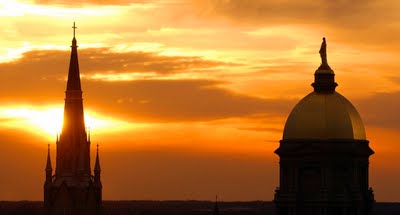
Sacred Heart Basilica and Main Building at Notre Dame
The Notre Dame Alumni Club of Italy is not particularly large, there are only about 60 people on the mailing list, and most are clustered around Rome or Milan. We had our first club gathering that I was able to attend tonight at the Holy Cross generalate, an apartment building owned by the order in a residential neighborhood just a few bus stops from the west end of the metro A line. There were about a dozen of us, a few Holy Cross priests including the superior general, Fr. Hugh Cleary, a couple of fellow Angelicum students, a couple of curial staff , and a young couple teaching at the American International School of Rome.
Conversation ranged from the usual introductions and getting to know you chatter to the challenges of life in Rome and obtaining the fabled Permesso di soggiorno or even Italian citizenship or a driver license. Given the state of the Church these days, however, one of the interesting topics was the clergy sex abuse/cover up scandal, the Holy Father’s role in cleaning up the Church, and mostly, the Church’s communication challenges.
Much has improved in the last decade, on one hand. You need only compare the responses of the curial leadership to the crisis in Europe in the last few months with the responses to the crisis in America in 2002 to see that Pope Ratzinger has had a positive effect on dealing with the problem realistically, but there is still a lot of work to be done – not just in the substance of solutions, but even more in the Vatican’s communication’s organs and “getting the word out” of the good work already done.
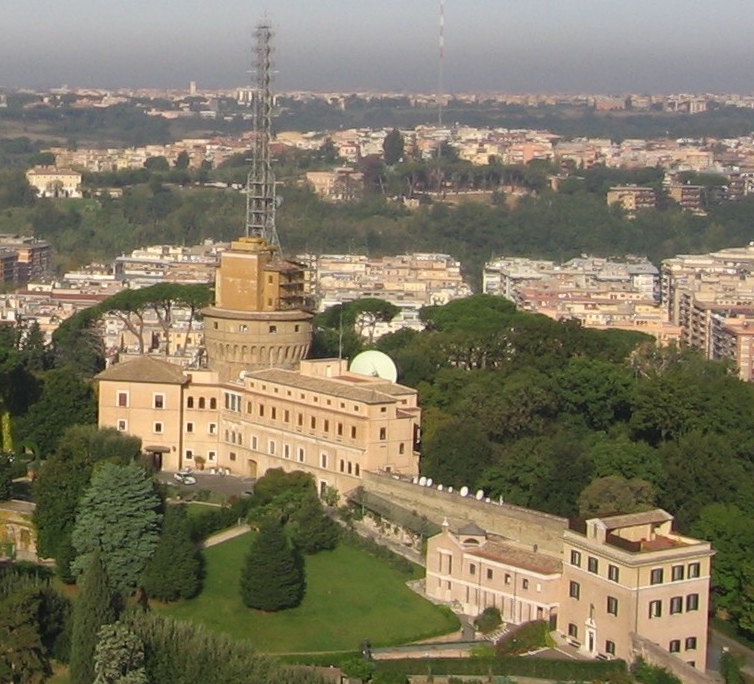
Vatican Radio building
Few people realize just how disjointed the Holy See’s communications systems really are, though that has been made painfully clear with some of the well-intentioned but misguided attempts to “defend” the pope by some church leaders recently. There is no Vatican communication plan, no central organizing body. Each was set up in response to the development of a new media. Guttenburg comes along and we get the Vatican press; then Marconi and Vatican Radio; TV, a web page, etc, etc.
There is a Pontifical Council for Social Communications, but without the juridical authority of a Congregation, they can only make suggestions and maintain good working relations with the other communications apparatus’, which include:
- Vatican Information Service
- L’Osservatore Romano (The Vatican Newspaper)
- The Vatican Publishing House
- Sala Stampa della Santa Sede (The Vatican Press Office)
- Centro Televisivo Vaticano (Vatican TV)
- Radio Vaticana
- The Holy See’s Web page www.vatican.va
Not only are each of these separate, but most are in different buildings, some in several (Vatican Radio, for instance, has three different locations, I believe). Moreover, some have their own web-presence that does not go directly through the Vatican web page. Some dicasteries have their own information services and bulletins, from the Acta Apostolica Sedes to the PCPCU Information Service, which are not always available electronically or in translation.
It seems like the time is ripe for a major restructuring. It would not be easy, no doubt, and the directive has to come from the top, but there is no shortage of skilled lay people in the Church who could create a more effective communications strategy. In fact, they do not have to look further than the sons and daughters of Our Lady’s University to find a gold mine of resources right here in the Eternal City!
SCA, Roman Style
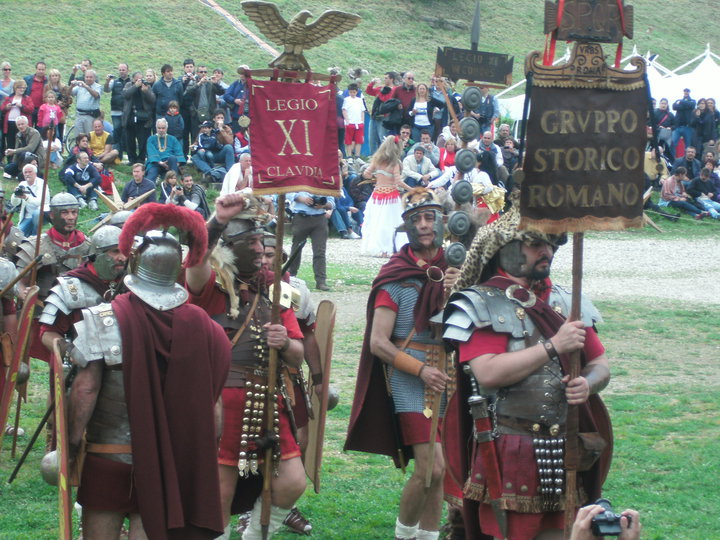
Legions of Rome march again!
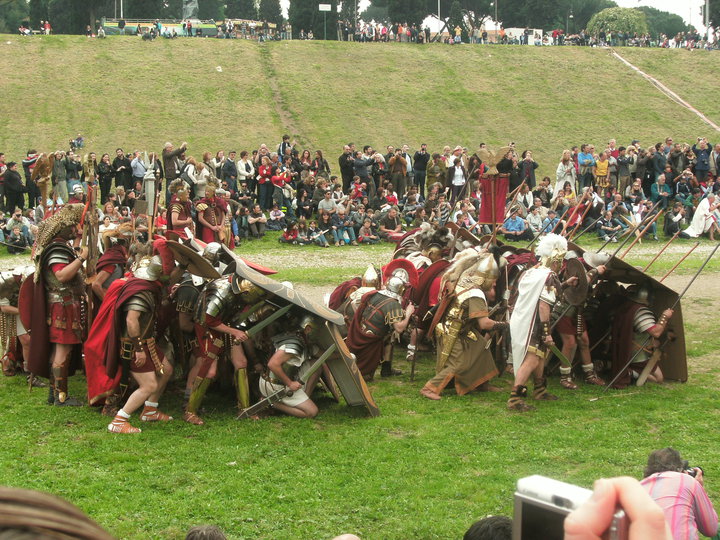
Apparently there is a lot going on in Rome this week. Every year there is a “culture week” in which the national museums and sites like the forum and coliseum are open for free. Also, in and around the forum, there was apparently a re-enactment honoring the birthday of Rome, officially celebrated later this week, on 21 April. We missed most of that, but heard about some goings on down at the circus maximus. So, in true Roman fashion, instead of writing a paper I went to go watch the barbarians battle it out with the legions, some gladiator duels, and even some belly-dancing Imperial cheerleaders. You never know what will happen in Rome!
Rev. Donald Senior, CP and St. Paul of the Cross

Rev. Donald Senior, CP, STD
As part of our week of events celebrating the official Inauguration of the new site of the Lay Centre at Foyer Unitas, a number of our board members and residents gathered for a celebration of the Eucharist in the rooms of St. Paul of the Cross, founder of the Passionists, presided by Father Donald Senior, CP.
Fr. Senior celebrates 50 years as a Passionist this year, is a renowned New Testament scholar and president of Catholic Theological Union in Chicago, the largest graduate school of ministry formation in the United States. He also serves on the Pontifical Biblical Commission and concelebrated mass with the Holy Father on Thursday morning (the unscripted homily for which made headlines).
As a member of the Lay Centre Board for several years, Fr. Senior was a key figure in bringing the Passionists and the Lay Centre together, making this new home a possibility,something for which the entire student community is deeply grateful!
Conveniently, the proper of saints includes settings for St. Paul of the Cross’ feast day (Oct 19) which we used, along with the daily readings for Friday. The reading from Acts 5 recounted the ‘prophecy’ or judgement of Gamaliel to the Sanhedrin concerning the Apostles:
“For if this endeavor or this activity is of human origin, it will destroy itself. But if it comes from God, you will not be able to destroy them; you may even find yourselves fighting against God.”
(Timely, as the last few weeks have shown the human elements of the Church all too clearly.)

St. Paul of the Cross, with the crucifix he would take to parish missions
Paul Francesco Danei was born into a wealthy merchant family in 1694 near Genoa, Italy. With over 2000 extant letters from his lifetime, we know a lot about his struggles and spirituality, and his intentions for what would eventually become the Congregation of the Passion of Jesus Christ. When he came to Rome originally, it was not to found a religious order but something more like one of today’s lay movements – he did not seek ordination, and did not want a monastic or mendicant order. He and his brother sought jobs in one of the hospitals in Trastevere, still in operation today, as what we would know of as orderlies.
The 18th century Roman curia was not yet ready for something this ‘outside the box’ however, and his request for permission for a society of non-ordained, non-religious ministers was rejected, and he was moved into a more familiar model, eventually being ordained at St. Peter’s in 1727 by Pope Benedict XIII. His vision remained for a mission to those who were in closest solidarity to Christ’s passion – the poor, marginalized, the migrant workers – and he continued to resist classical definitions of religious life. Instead of a monastery, the houses are “Retreats”, implying a place of solitary refuge to replenish the soul and then go back into apostolic ministry, rather than to remain cloistered and focused only on the community. Their ministry was preaching, giving retreats and parish missions, but not commonly in education or staffing parishes directly.
St. Paul also did not seek leadership in his own order, but was elected superior for life. Possibly unrelated, he recounts nearly 50 years of spiritual aridity, a time without emotional, visceral faith to reflect his intellectual assent. That blessing only came near the end of his life, which he spent in the rooms in which we celebrated the Eucharist today, wandering the garden of the Retreat we now call home.

Retreat of Sts. John and Paul
This Retreat had belonged to another religious order, a Congregation of Jesus, which had been around for centuries but diminished by the time of Paul. Probably because of his reputation for compassion, St. Paul became confessor to many people, including a couple of popes. It serves as both glory and shame to the order today – as I have said before, it is a beautiful place, a genuine retreat, an Oasis in the City of Rome. It is also more than was ever needed, and has never been filled by the Passionists, and too easy a temptation to adapt models of monastic life never intended by the original charism of the Founder and the Congregation.
The Passionists are in the midst of a paradigmatic shift, the ongoing reception of the Second Vatican Council’s mandate to orders to rediscover their distinct and varied charisms. They are becoming less national and more globalized – though relatively small in numbers (about 2100) they are in almost 60 countries. Inviting the Lay Centre into the Retreat that houses the Generalate, we see a move to underline the founder’s original ideal of lay community and ministry, and the building up of spiritual ‘alliances’ with partners in the ministry of the Passion.
Vatican Radio Feature: Haven of Hospitality
Vatican Radio featured the Lay Centre today, after the celebration dedicating our new site yesterday evening. The twenty-minute interview features co-founder and director Dr. Donna Orsuto, assistant director Robert White, Dr. Aurelie Hagstrom of Providence College, and this humble scribe.
Click here to listen. (You may need RealPlayer)
Address of U.S. Ambassador Miguel Diaz for the Lay Centre Dedication
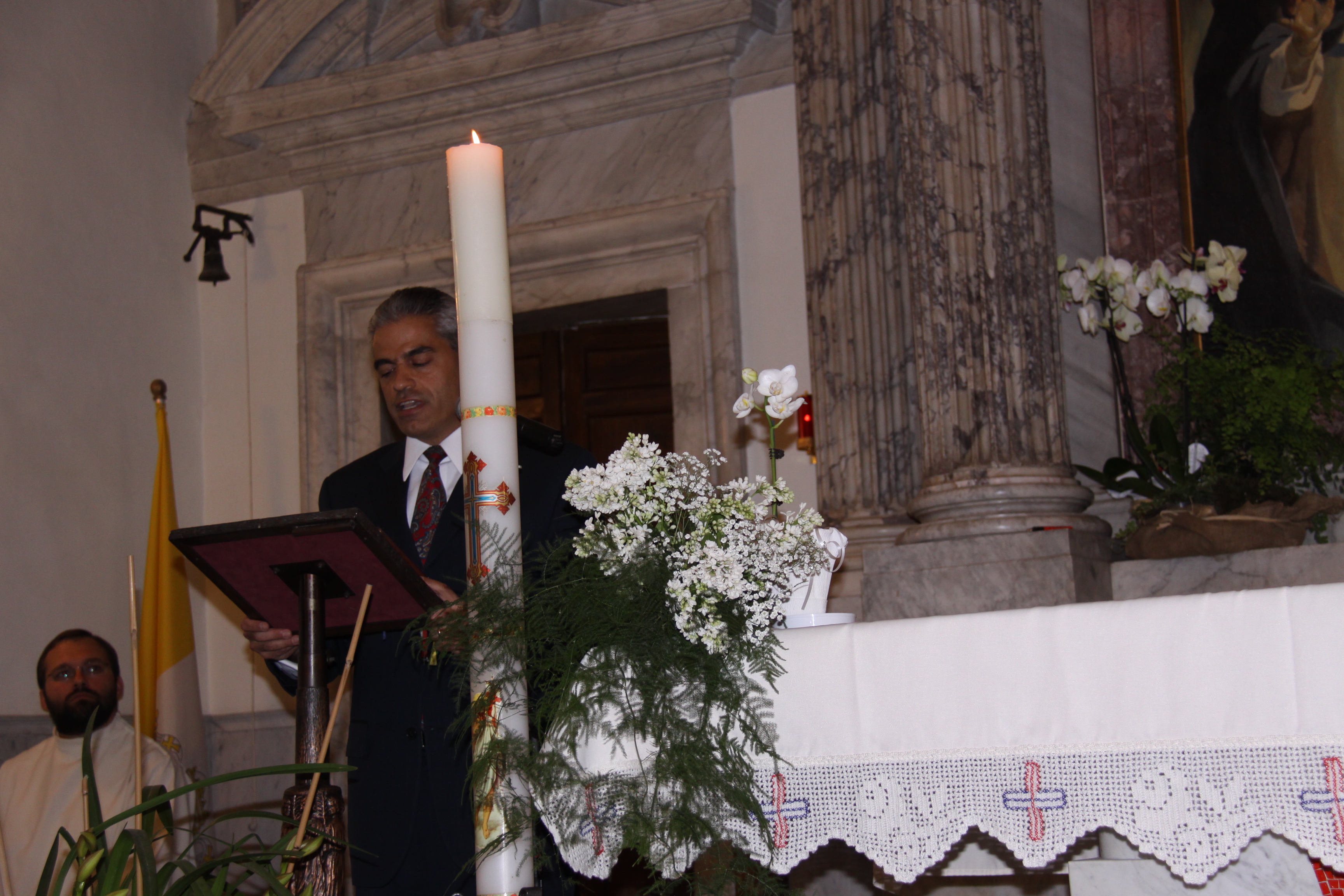
Ambassador Miguel Diaz
The story of the hospitality of Abraham and Sarah in Gen 18 has inspired countless icons, including the Trinitarian icon that appears on the front page of our prayer programs and on the altar tonight. Of course, the most famous of these Trinitarian icons is Andrei Rublev’s fifteenth century icon of the Trinity. I was first introduced to this icon back when I was a doctoral student at the University of Notre Dame by one of my mentors and now deceased Roman Catholic theologian, Catherine M. LaCugna. After making the transatlantic trip all the way from Minnesota, a 4’ by 5’ copy of this icon, which has been hanging in of our family’s dining room for over ten years, now hangs at Villa Richardson. Throughout my life journey, I have drawn much personal inspiration from this icon. In several of my scholarly publications, I have underscored the icon’s ability to suggest the values of familial and communal living, the affirmation of human differences, creaturely interdependence, the sharing of resources, and above all, the practice of hospitality.
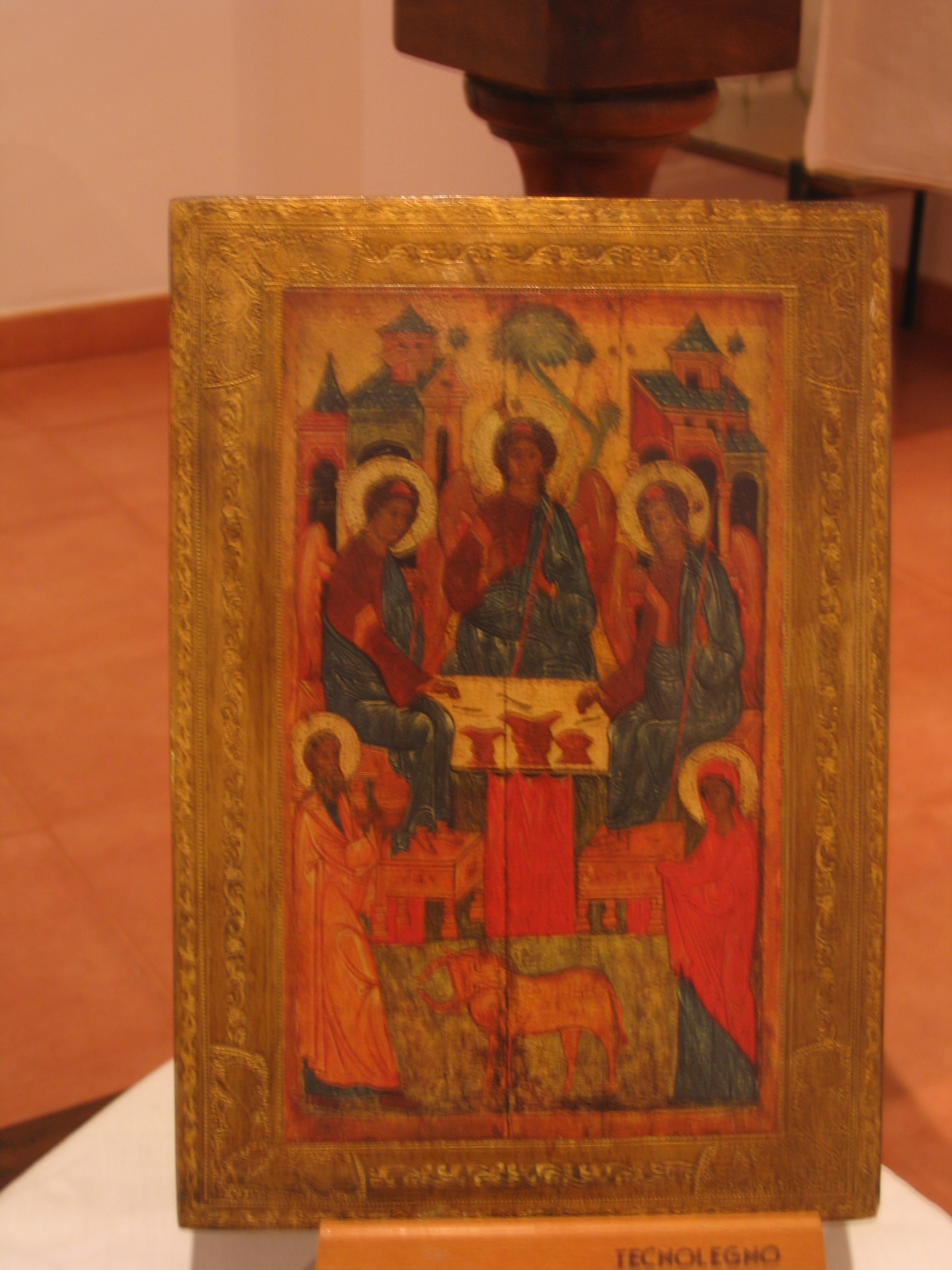
Icon of the Holy Trinity at the Lay Centre
How fitting it is to have this icon remind us of these values as we gather here today to celebrate the official opening of the Lay Centre at its new home on the Caelian Hill! In a world plagued by violence, prejudice, and religious intolerance, this Lay Centre offers an oasis for persons of faith to come together, set aside divisions, and engage in mutual and transformative actions. In giving to and receiving from each other, especially with respect to the exchange of theological ideas that will occur in this centre, human lives will be changed. This is a place where minds will be challenged to advance human understanding and hearts opened to serve one’s neighbor. As persons from very diverse backgrounds come together, cultural and intellectual resources will be shared. And as is often the case in educational settings, this sharing will birth again and again, a vibrant community of learners.
President Obama has invited the human family to build bridges and turn dialogue into interfaith service for the sake of the common good. In this place, interfaith dialogue will lead to and flow from interfaith service, as students who live in community and come here from various religious backgrounds accompany one another, learn from one another, and help each other translate and integrate what they have learned into a life of service.
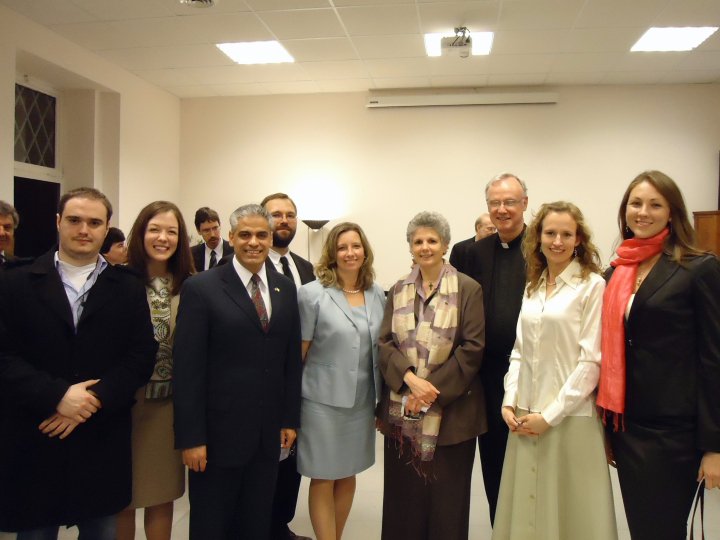
Radmilo, Amanda, Ambassador Diaz, AJ, Dr. Marian Diaz, Dr. Donna Orsuto, Fr. Donald Senior, Natalie, Karina
In its Pastoral Constitution of the Church in the Modern World, Gaudium et Spes, the Second Vatican Council invites women and men of faith to understand the aspirations, the yearnings, and the often dramatic features of the world in which we live” (GS, 4). May this Lay Centre, situated at the heart of the eternal city of Rome, cultivate minds and hearts willing to turn to others and to the world that surrounds us in order to better read and respond to the signs of our time. May this international community yield much fruit relative to new ideas embraced and actions undertaken for the sake of the common good. And may the practice of hospitality in this centre turn hosts into guests and strangers into friends. Perhaps, somewhere in this learning and living community, in simple acts of sharing material and spiritual resources, the words in the letter to the Hebrews will become palpable: “Do not neglect to show hospitality to strangers, for by doing that some have entertained angels without knowing it” (Heb 13:2).
Lay Centre Inaugurates New Home
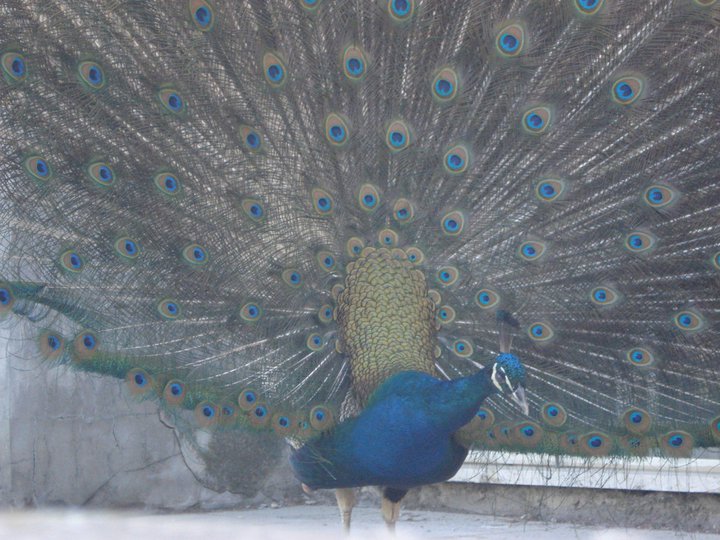
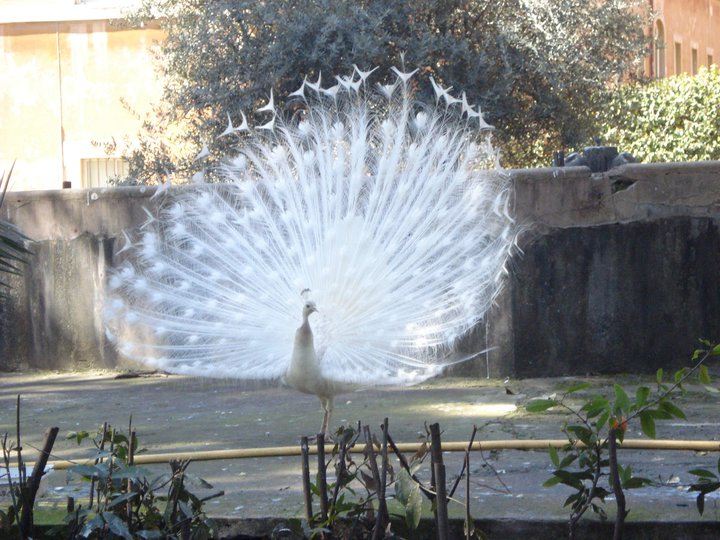
Lay Centre's other Guardian
- Lay Centre’s Albino Guardian
Foyer Unitas was a ministry of hospitality operated by the Ladies of Bethany in Rome for nearly 35 years – just above the Centro Pro Unione and overlooking Piazza Navona. Asked by Pope Paul VI to provide lodging for the ecumenical observers at Vatican II, and then for other ecumenical and interfaith pilgrims to Rome, Foyer Unitas saw its share of Council fathers and peritii, from Cardinal Bea to young theologians Walter Kasper and Joseph Ratzinger.
When the decision was made for Foyer Unitas to close its doors in the mid-1980’s, two women who had been student employees assisting the Ladies developed the idea for a lay student residence to meet the obvious need for something like the Roman Colleges for the growing number of non-ordained, non-religious students at the Pontifical Universities. In 1986, co-founders Donna Orsuto and Riekie van Velzen opened the doors to the Lay Centre at Foyer Unitas.
Vespers, with Bishop Farrell and Dr. Donna Orsuto
Tonight we celebrated the dedication and official inauguration of the new site of the Lay Centre, now located within part of the Passionist Retreat of Sts. John and Paul on the Caelian hill. With private gardens overlooking the Coliseum that had once been site to the Temple of Divine Claudius and Nero’s Nymphaeum, the remains of a 1st century aqueduct, and views of the Roman Forum and Palatine Hill, it is hard to imagine a better setting for prayer, study, and life in common.
Bishop Brian Farrell delivers the homily
Nestled in the Villa Celimontana next door is a small church San Tommaso in Formis (St. Thomas in Chains), served by the Trinitarian Fathers on the site of what was once a monastery and hospital operated by the order. (The original complex dates back 800 years, but the current church is early 20th century). This was the venue for our vespers, presided by the Most Rev. Brian Farrell, LC, Secretary of the Pontifical Council for Promoting Christian Unity.

Procession begins down Via Santi Giovanni e Paolo
The site was chosen to celebrate the Trinitarian theme. The chapel of Foyer Unitas, dedicated on 7 October 1962, was dedicated to the Holy Trinity, as is the chapel at the new Lay Centre, dedicated on 7 October 2009. The Lay Centre’s Icon of the Holy Trinity, written in imitation of a XVII century icon, was originally blessed by Cardinal Bea along with the Foyer Unitas chapel and was prominent this evening during the celebration of the liturgy.

Procession enters Passionist Retreat grounds
Bishop Farrell’s presence and preaching was particularly significant given the long history and relationship between the Pontifical Council for Promoting Christian Unity and both the Lay Centre and Foyer Unitas. Bishop Farrell himself is a generous and patient man, the kind it is always a delight to serve with, liturgically. He lifelong commitment to ecumenism and support for the lay centre were also evident throughout the evening. Bishop Giorgio Corbellini, of the governorate of the Vatican City State also made a typically low-key entrance. Dressed only in a simple clerical suit (sans pectoral cross), he came back to the sacristy while Bishop Farrell and I were waiting for things to get started and I would not have recognized him without the introductions.
U.S. Ambassador to the Holy See Dr. Miguel Diaz and his wife, Dr. Marian Diaz, were guests of honor, as the former theology professor made a brief address at the end of vespers on hospitality and dialogue (full text to follow). In addition, nine other ambassadors were present, as well as three deputy chiefs of mission, including:
- US Ambassador to the Holy See His Excellency Miguel Diaz & Dr. Marian Diaz
- Canadian Ambassador to the Holy See Her Excellency Anne Leahy
- British Ambassador to the Holy See His Excellency Francis Campbell
- Irish Ambassador to the Holy See His Excellency Noel Fahey
- Egyptian Ambassador to the Holy See Her Excellency Lamia Mekhekar
- Dutch Ambassador to the Holy See Baroness Henriette van Lynden-Leijten
- Australian Ambassador to the Holy See His Excellency Tim Fischer
Several Lay Centre Board members and honorary board members made the trip from the United States and elsewhere. Board Chair Nancy Lindsay, retired senior counsel of the World Bank, had been here in the fall with her nephew, Andrew, and is probably the most faithful reader of this blog! Ralph and Mary Dwan are a lovely couple from the D.C. area, where he is retired as an attorney and she as an educator. Joseph Lynaugh was in from New Jersey where he has served as CEO of a couple of companies.
The honorary board members included the English-speaking world’s most well-known Vaticanist, John Allen, Jr. of the National Catholic Reporter; Sr. Leideke Galema, 90, of the Ladies of Bethany who moved to Rome in 1960 to spend the next forty years of her life here; Retired U.S. Ambassador to the Holy See and former RNC chairman James Nicholson and his wife Suzanne.
Following vespers, the assembly processed from the Church of St. Thomas through the gardens of the Passionist Retreat to the courtyard at the entrance to the Lay Centre where Bishop Farrell concluded the rites with a blessing of the entry and the people. A reception followed, generously provided by Peggy Brennan Hassett and Jack Kehoe and wine donated by a Roman enoteca owned by Claudio and Silvia DiRollo.
The official dedication celebration continues this week with a special two-part Vincent Palotti Institute presentation by Dr. Aurelie Hagstrom, chair of theology at Providence College in Rhode Island, and Robert White, Assistant director of the Lay Centre, on “The Hidden Treasures of the Caelian Hill”. Fr. Donald Senior, CP, President of Catholic Theological Union in Chicago will preside at a liturgy in the rooms of Passionist founder St. Paul of the Cross on Friday evening. Residents and board members will join the Passionist community for Sunday Eucharist in the chapel of St. Paul of the Cross in the Basilica of Sts. John and Paul, followed by our closing lunch.
Whether Mt. Eyjafjallajokull will let anyone leave Rome is another question, however! We may have to continue celebrations into next week!
Vatican Radio: Rome’s Lay Centre Inaugurates New Location
From Vatican Radio, a brief teaser about the dedication of the Lay Centre at its new site. Click here to listen (you will need RealPlayer it seems):
Rome’s Lay Centre or ‘Foyer Unitas’ as it’s also known [sic] is officially inaugurating its new premises close to the Colosseum today.
Founded nearly a quarter of a century ago to provide hospitality with an emphasis on ecumenical and interfaith dialogue, the centre currently hosts students from many different countries and from diverse Christian, Muslim and Jewish traditions.
It also runs a packed programme of lectures and courses on church history, spirituality and dialogue.
The co-founder and director of the Centre is Dr Donna Orsuto, a professor at Rome’s Gregorian University and former consulter with the Pontifical Council for Inter-religious Dialogue.
She spoke with Philippa Hitchen about the centre’s work and its new location…
 The Ecumenism Blog