
Teaching in New Orleans
What does a humanities graduate student do for summer work in this economy? “Not much” is the punch line most are looking for, but I have had a few rewarding opportunities for which I am grateful.
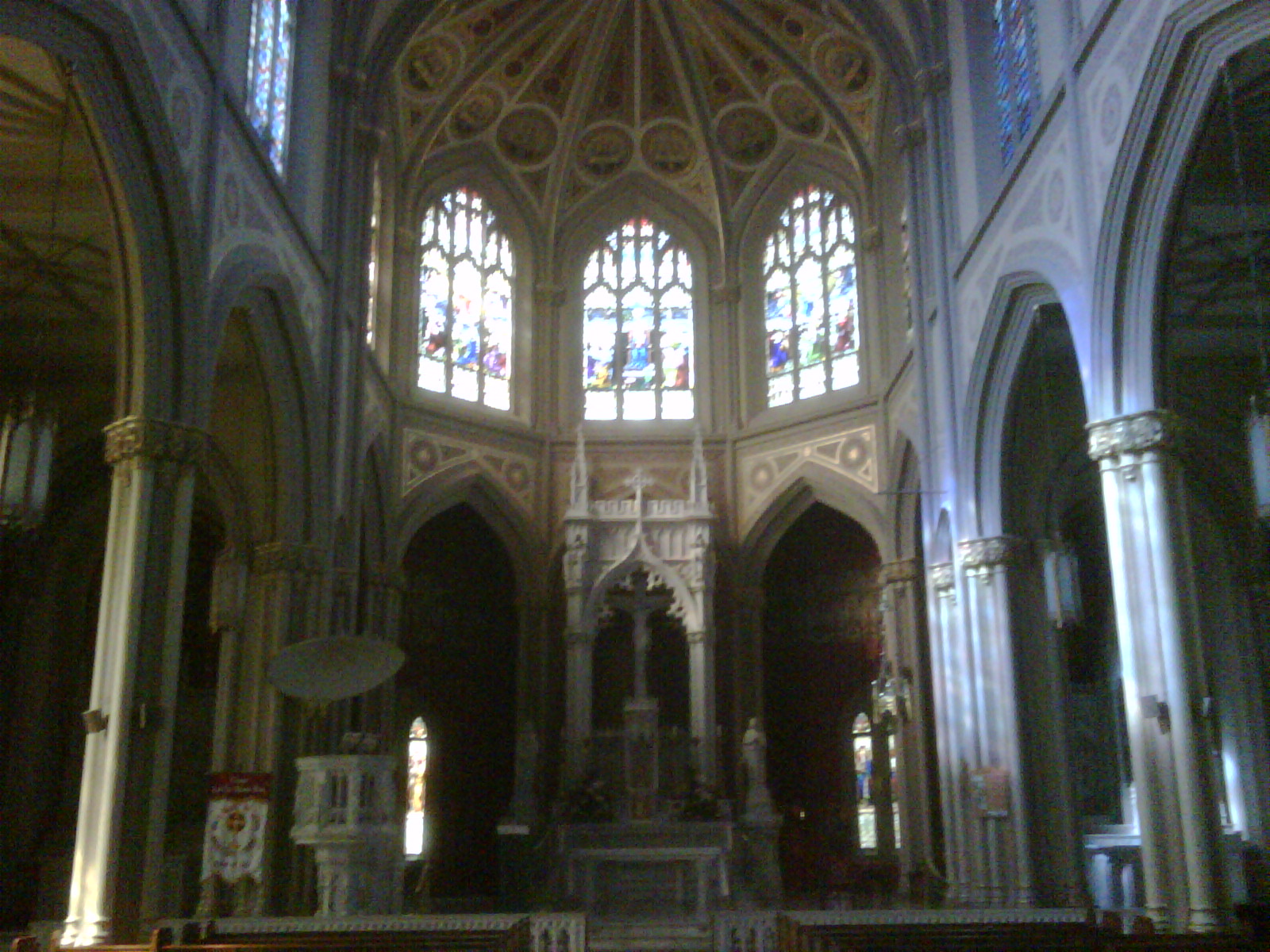
Holy Name of Jesus Parish Church, Loyola Unviersity New Orleans
There is still some room on my schedule for some others, if you know of any! Some of my usual work was not available – I have served as faculty or field staff for the Vicar for Clergy, the Faith Formation, Liturgy, and Youth & Young Adult Ministry offices in the past, but several budgets have been cut, and other classes were booked as early as January, and I only started looking in February!
I will be teaching two courses on the Eucharist for our Liturgy Ministers Institute, and working with a couple parishes on leadership development and reorganizational processes, but the most interesting offer was a 10-hour course for the Archdiocese of New Orleans’ Institute for Catechetics and Spirituality, which I taught this week. “An Introduction to Ecumenism and Interreligious Dialogue” – ten hours is nowhere near enough, but sadly more than most in ministry get!
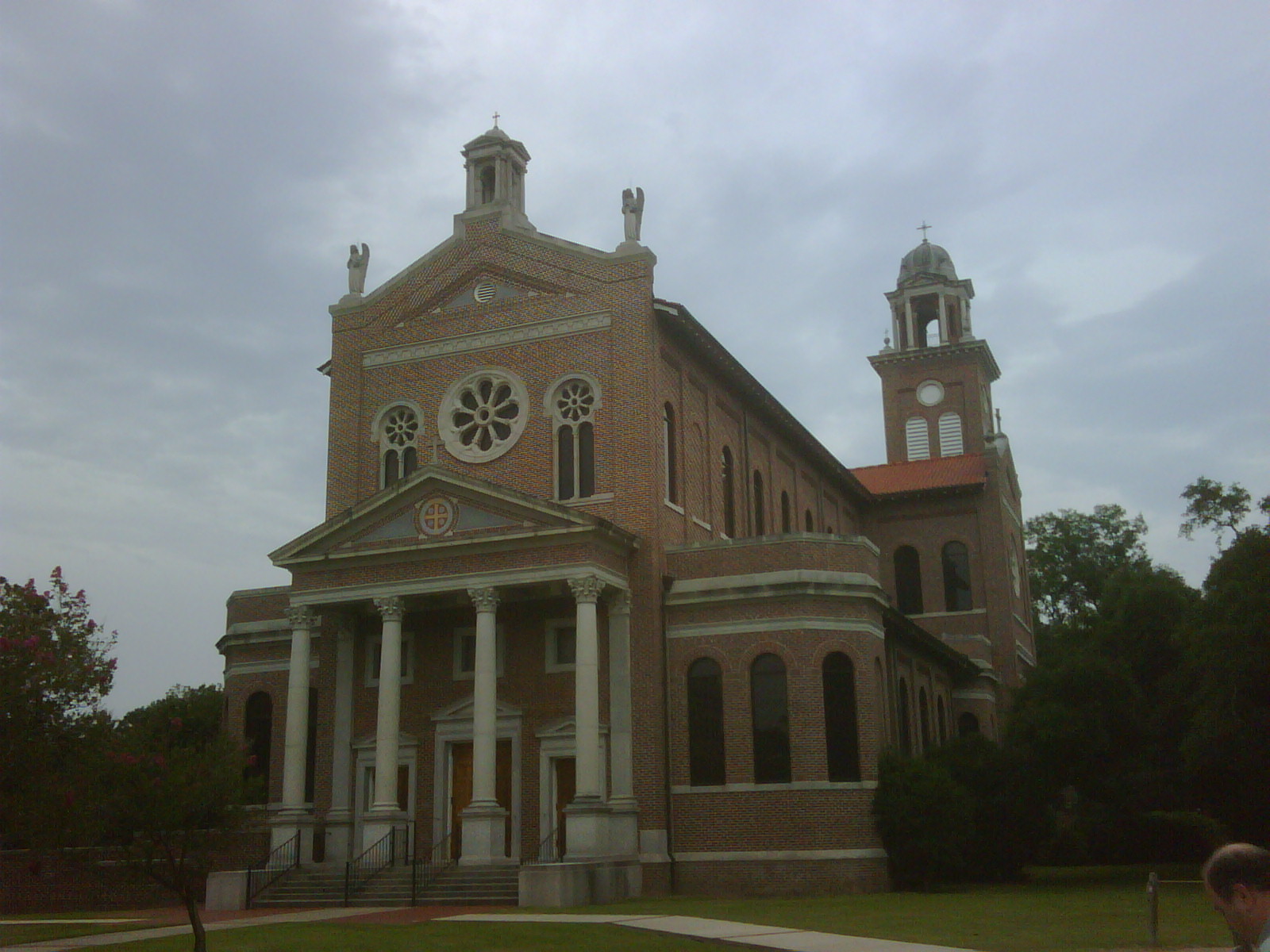
St. Joseph Abbey Church
The Big Easy was hot and humid, but a year and Rome had prepared me. I was only stateside for a few days and just about recovered from jetlag when I left back across the country on a flight almost as long as the one that brought me home from the Netherlands – a reminder that Euclidean geometry does not apply when making flight plans!
My host for the week was a friend and fellow ecumenist/lay ecclesial minister, Buddy Noel. My first moments in New Orleans provided an opportunity for prayer. On his way to the airport to pick me up, Buddy was caught in one of the South’s infamous downpours, and his car hydroplaned into the one in front of him in a backup on the Interstate. At least 12 cars were involved in a number of different collisions in the same area at the same time. His car totaled, Buddy was able to walk away with only bruises from the seatbelt and airbag. As he was making calls from the side of the road, his phone died. Long story short, he got a ride to the airport and had to have them page me, just a couple hours after his accident. I have been given great hospitality before, but this takes things to the extreme!
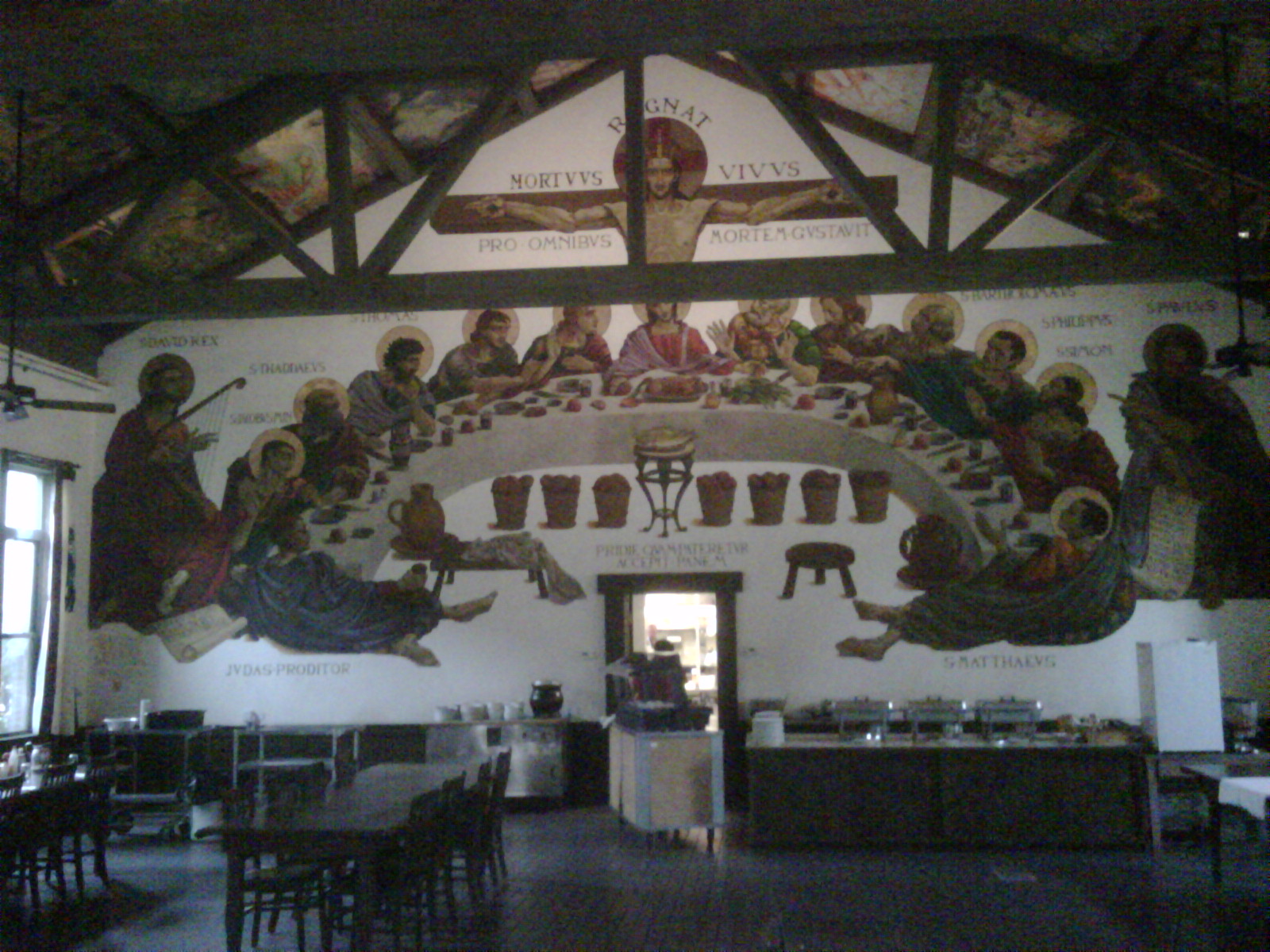
Last Supper, Refectory of St. Joseph Abbey
With a small group for the class, I was able to tailor much of it to some of the questions and expectations of the students, who were a mix of parochial school teachers, parish staff, and interested lay people. And nothing reinforces one’s own studies like teaching a topic, especially when you have to distill the highlights of a dozen years of study into a few hours. It also gave me plenty of time to talk with people and find out a little about the state of the church in one of the Catholic culture centers of the U.S. It was also only my second time to New Orleans, the last being just before Katrina; this time, they were just fitting the well with the new device to see if they could finally stop the largest oil disaster in history.
Last Supper (detail): Salt and pepper shakers, eh?
Archbishop Gregory Aymond has been the Ordinary there for just about a year, the first native of the diocese to serve as its bishop. Everyone I spoke with was positive about his appointment, with sentiments ranging from pride for a home-town boy done well to enthusiasm for his ecclesiology – and apropos to my visit – his commitment to local ecumenism.
The city has recovered its population and most of its infrastructure from Katrina, which hit nearly five years ago, but there have been changes. The Lower Ninth Ward looked like a field with a few funky, new houses scattered throughout – you would never know it had been a crowded urban neighborhood until the storm surge. There were still signs of the Katrina, a few gutted and abandoned houses throughout the city, a few roads sinking into the silt, but these were the exception rather than the rule. One of my students had been involved in a Chinese Catholic community that had been fairly active before the storm, whose members are now in diaspora around the country; A similar story with some of the small Eastern Catholic parishes in the diocese. Several people have simply moved to the other side of Lake Pontchartrain.
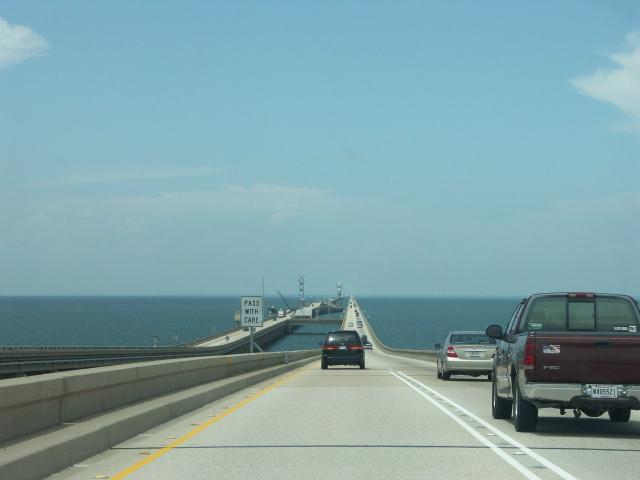
Lake Pontchartrain Causeway
The hospitality was generous and the food was excellent; the company was both! I was blessed to talk with new people each night, sample my first Po’Boys and some Gulf Coast seafood (sans oil), and wander the French Quarter, complete with obligatory beignet and Café au Lait. We prayed evening prayer with the Benedictines at St. Joseph Abbey, and I rode across the longest bridge in the world. Imagine driving onto a bridge and not being able to see land at the far side! The Lake Pontchartrain Causeway is about 24 miles (38.5km) from one shore to the other.
One little tidbit I picked up that fellow pastors and pastoral workers would find interesting, as well as the discussions around parish closings and reconfigurations after Katrina, was the relationship of parish and parochial school. Unlike the northwest, where a fractional minority of Catholic students attend Catholic schools, most in New Orleans do so. The relationship is a little better developed in some respects, as well – for example, the parish Director of Religious Education oversees the curriculum and instruction in both the parish religious education and youth ministry programs as well as the parish school classrooms.
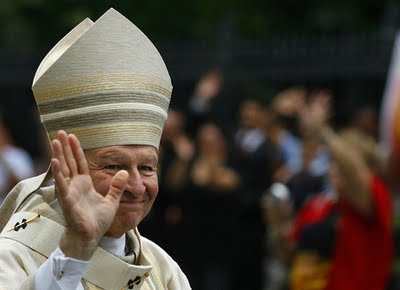
Archbishop Gregory Aymond of New Orleans
The Dutch, I Presume?
Holland and Netherlands are not the same thing, and the people and language are Dutch (though Flemish works, too). It does not help the rest of us, I suppose, that the Dutch national team was competing in the World Cup as Holland, though it was in fact the whole of the Netherlands represented. Holland is the western part of the Netherlands, one of the regions and once-independent states that combined to form the Netherlands, which itself is part of the region known variously as the Low Countries and the Benelux region (Belgium-Netherlands-Luxembourg).
In fact, while Eveline and I were touring the canals of Den Bosch, the volunteer tour boat captain asked the 20 people on board how many were from Holland. Considering I was the only person not speaking Dutch, I was surprised when Eveline was the only one to raise her hand – the rest were from elsewhere in the Netherlands: Friesland, Zeeland, Gelderland et al.
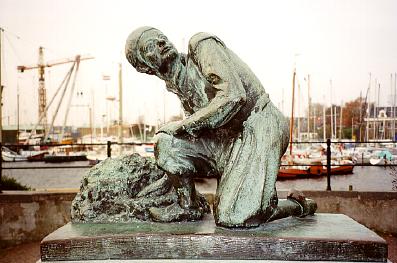
Hans Brinker, the boy everyone knows about for sticking his finger in the dyke to keep it from flooding. Everyone but the Dutch, that is.
A few people asked what my impressions of the Netherlands were, and what my expectations had been. Everyone seemed genuinely surprised that growing up on the far end of America, I had even heard about their country as a child. When visiting Kinderdyke, a picturesque concentration of nearly 20 windmills, we saw a notation in the guestbook reading, “It is a childhood dream come true to see these! Thank you!” The mild scoffing by the natives at the remark earned an explanation from me that indeed the mills and dykes of the Netherlands are known to us since childhood. Who knew that most Dutch have never heard of Hans Brinker?
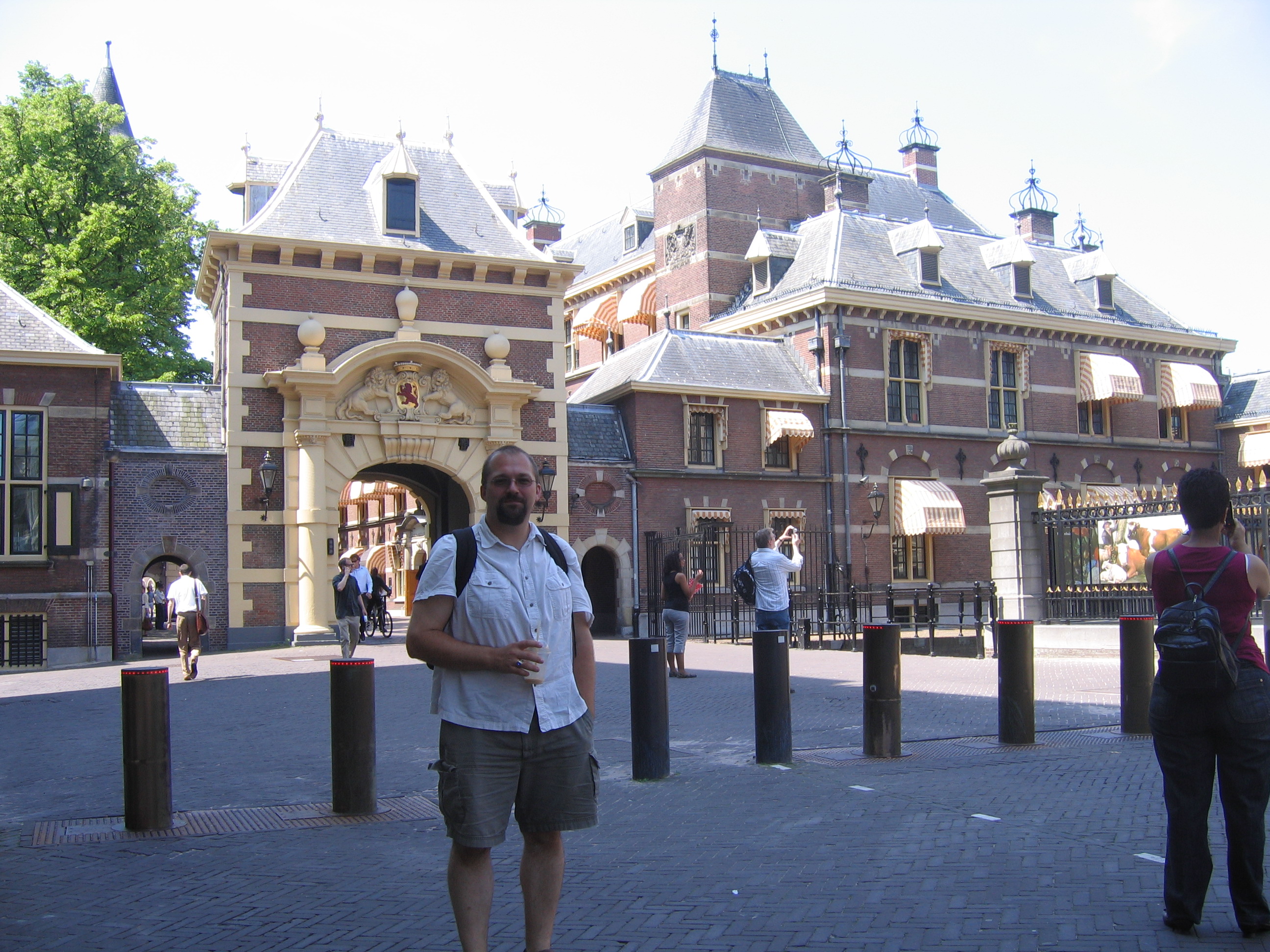
In front of the Binnenhof, home of the Dutch States-General (parliament)
A few words to describe my impressions? Fiets (bicycles)! Windmills, dykes, canals, and polders. Skating. Decorated bread! Drop (liquorice). Small country and houses. Friendly people, hospitality. Stroopwafels and Gouda (‘how-da’) cheese. [The Netherlands is about 16000 square miles – roughly 2/3 the size of Western Washington; the size of Massachusetts and Connecticut combined.]
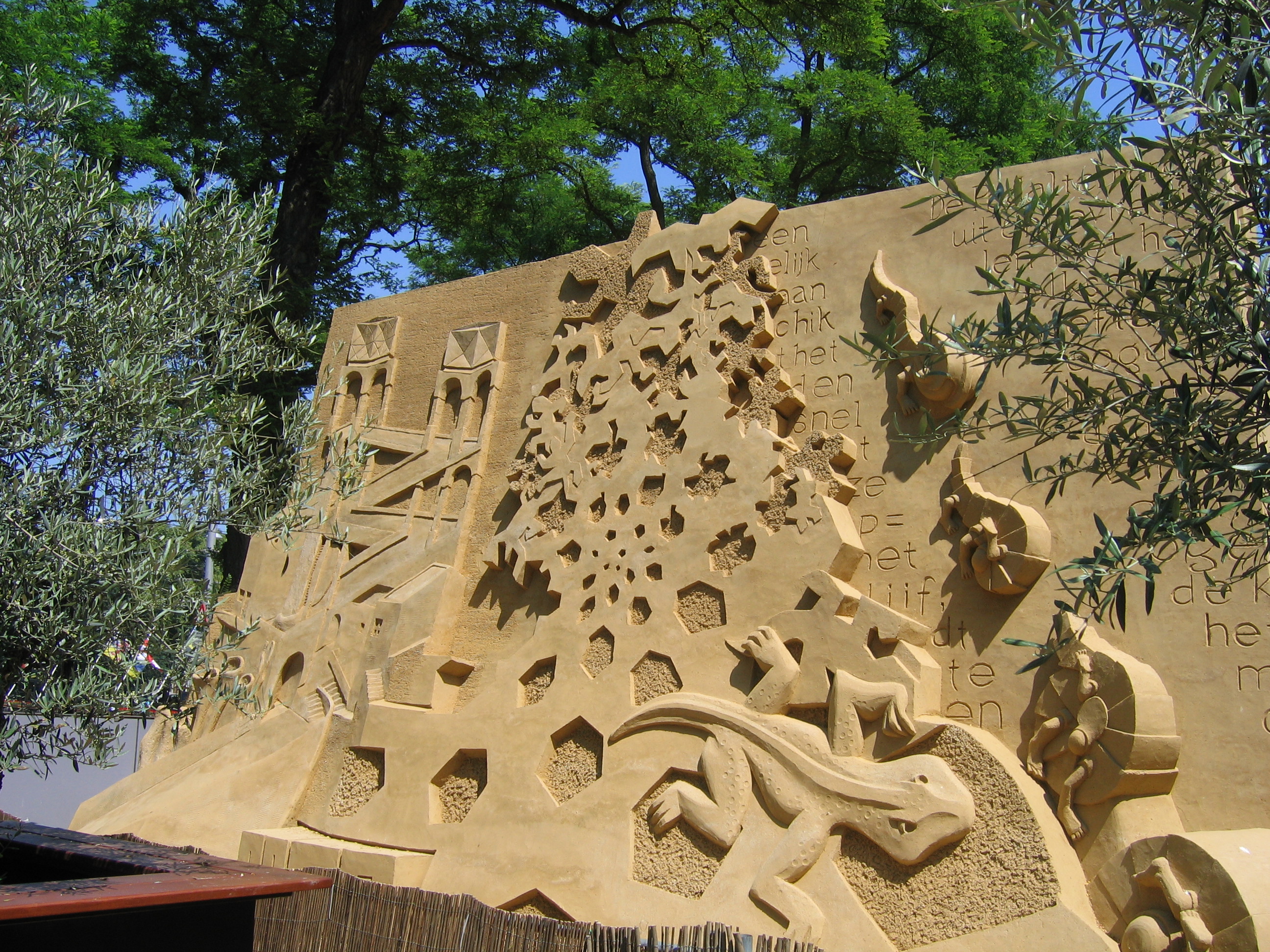
M.C. Escher tribute in sand
During a game of Dutchopoly, which was lost to the aforementioned theologian-diplomat, I got a pop quiz from her mom: “Do Americans know any [contemporary] famous Dutch people?” Schillebeecx, of course! And Visser t’Hooft. (Pronounced tohft, not tooft, I discover after the laughter subsides…) M.C. Escher is well known, but I doubt many know he was Dutch. Historical figures are more likely: Spinoza, Erasmus, Van Gogh. I had already mentioned Hans Brinker to mostly blank stares. But actors, musicians, athletes? Not so sure…
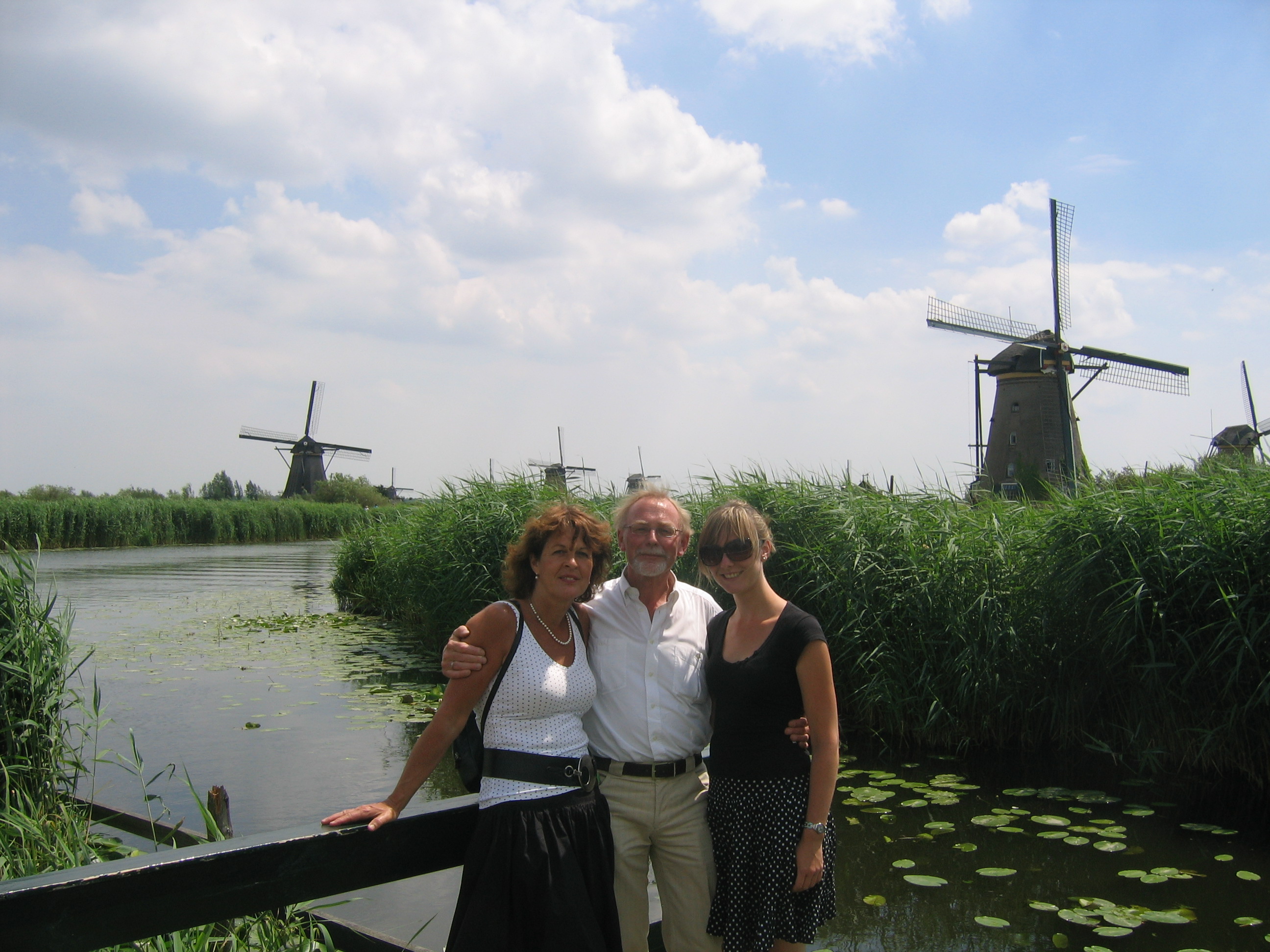
My generous hosts
After Amsterdam, I got a full day to explore the university town of Tilburg, Eveline’s college home for the last five years. Big, beautiful, rarely visited churches; bicycles in the tens of thousands parked at the train station; a large outdoor shopping district. I discovered almost immediately that the Dutch do not anticipate size-13 American feet when designing stairs.
Amsterdam may be the capital, but the seat of government is Den Haag (The Hague), which is where the Queen, parliament, and the embassies cluster, not to mention the international criminal courts. Like Amsterdam it dates from about the 13th century, and retains a great deal of European charm. A little less so, Rotterdam, which we visited next. Though an older city, its historic center was all but completely demolished during WWII. Definitely something to be in the midst of The Hague and the sea of orange as Holland won its way to the World Cup finals!
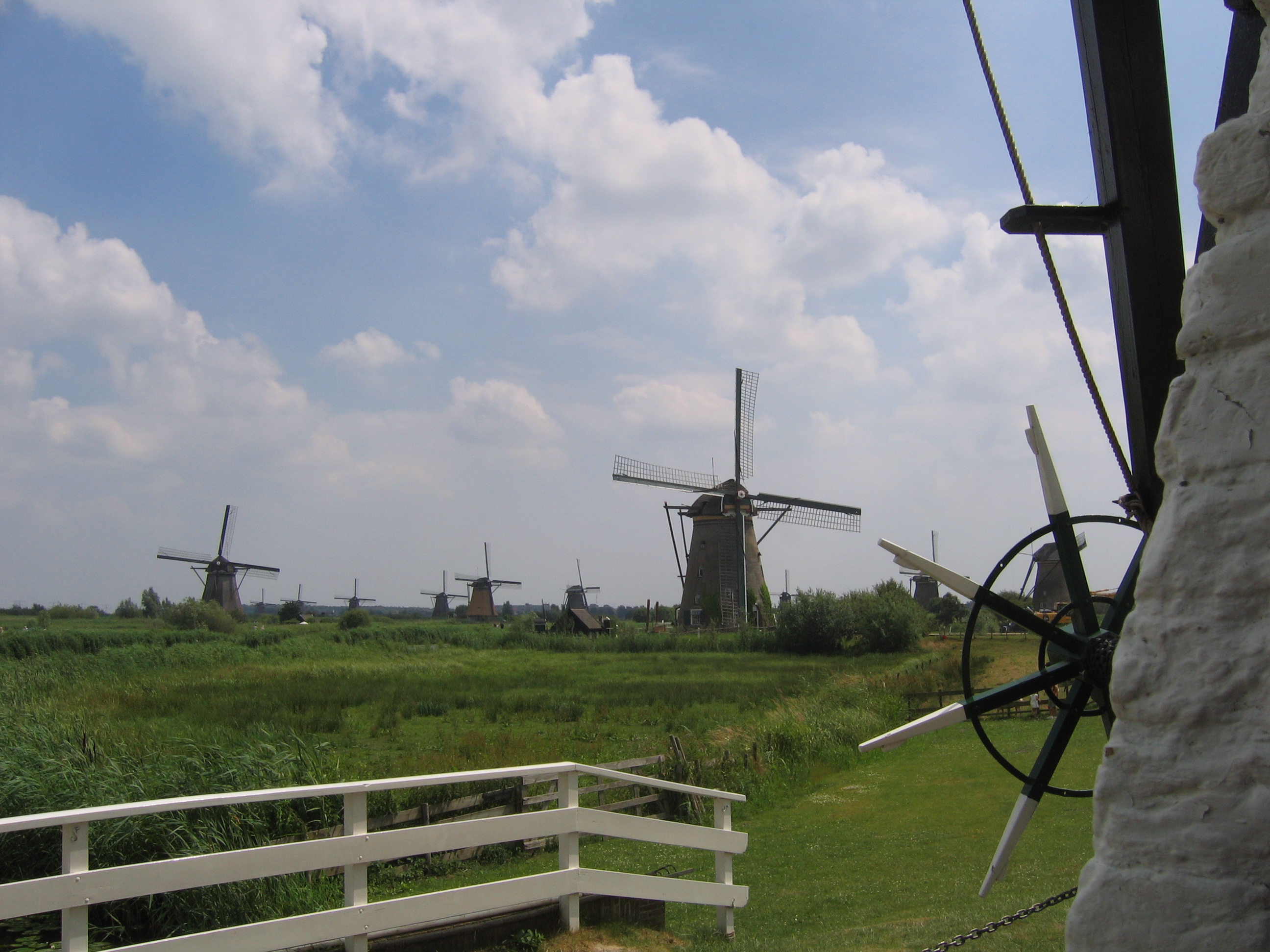
Kinderdyke
Over the weekend we retreated to Maasdam in South Holland, a small rural town where Eveline grew up and where her parents still keep her childhood house. Her father rides his bike 40 km to work daily, as he has for decades, and her mother has a pair of wooden clogs she still uses for working in the garden. We toured the island by fiets, and I discovered this is a lot easier to do when A) the entire country is flat and below sea level, B) you ride street cruisers rather than mountain bikes, and C) the entire country is crisscrossed with dedicated bicycle paths, not just 18” lanes on the side of a road!
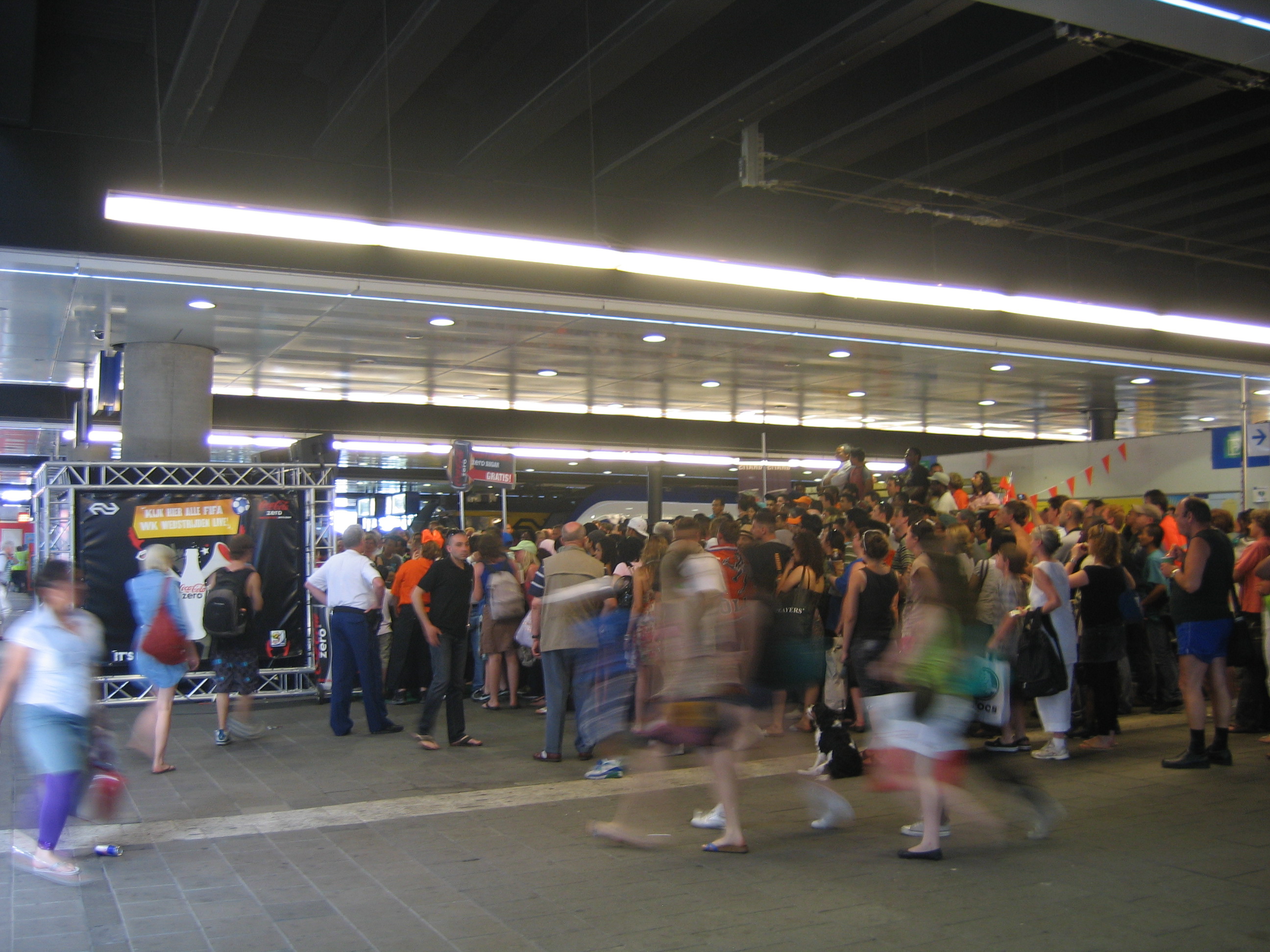
World Cup game ends in five minutes. Your train leaves in three. Where would you be?
Sunday was my first Fourth of July outside the U.S. Thanksgiving in Rome had had all the feel of home, a big feast and a gathering of friends, but there were no fireworks for me for Independence Day. (“So that’s why they always play that movie on TV today!” she says). There is plenty of Red, White, and Blue, however, since those are the colors of the Dutch flag as well – though Orange is the ‘unofficial’ color of the country, William of Orange being the ‘founding father’ if you will. We spent the afternoon touring the windmills of kinderdyke and the surrounding area. It is a little bit eerie to see rivers flowing through fields where the river is consistently higher than the land around it!
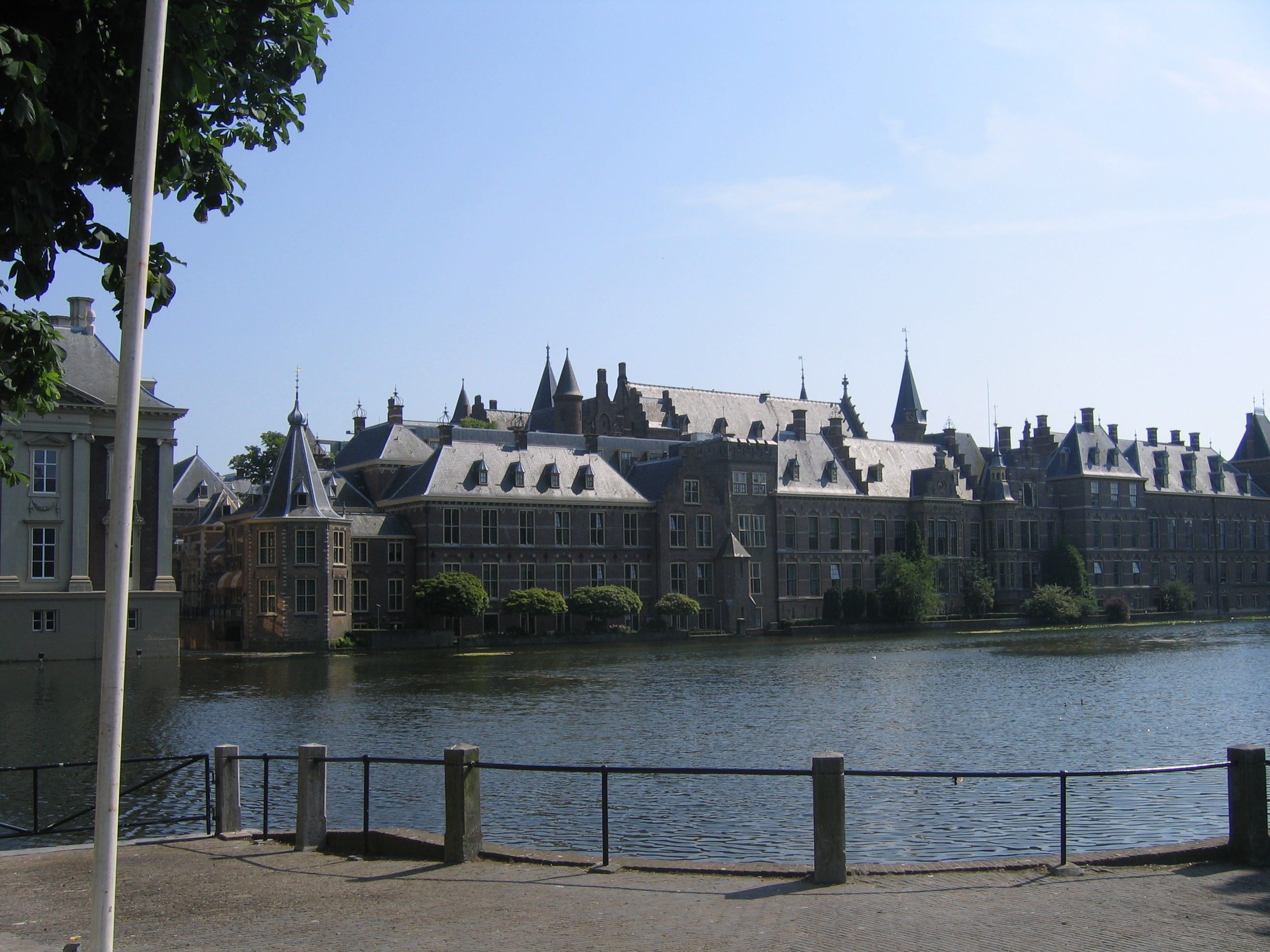
The Binnenhof
My last day was spent with a gathering of the Dutch clergy, honoring the end of the Year of the Priest, in ‘s-Hertogenbosch (Den Bosch for short). The guest of honor, presider and lecturer was the recently retired Cardinal Walter Kasper, who has been president of the Pontifical Council for Christian Unity for the last decade. Between the morning’s Eucharist and the afternoon’s lecture and vespers, we wandered around the town, sampled the famous Bosch Bollen, and toured the city from the canals that run beneath the city.
The cardinal’s address was delivered in German, and we were provided with Dutch translations in advance enough for me to glean the basic points from my host before the lecture began.

Cardinal Kasper in Den Bosch
(As I was searching for an English translation, I came upon a blog, In Caelo et in Terra, that included them and a photo from the event. I have commandeered both, so please give credit where it is due.) His remarks reflected on his more than half century of ordained ministry, and he addresses head-on the topics of clericalism and celibacy, and does not shy away from the scandal. His central point is that the priest must be a servant of joy, must put aside secondary attitudes (clericalism) and focus on Christ and his community. It was a fine way to end my year in Europe, in the company of a great friend sitting at the feet of a great teacher!
Not to be confused with the Netherworld
I have said this before, but it is hard to believe it has been an entire year already. One year ago, I was wrapping up at St. Brendan, still trying to work out visa issues and wondering if I would in fact get to Rome at all!
This morning, as I took my leave of the Eternal City for the summer it was already 30°C (85°F) by 10:00am. By all accounts it has been a relatively mild June, but it is already toasty enough for me. Arriving in Amsterdam a couple hours’ flight north of Rome, it was a much more reasonable 22°C (72°F).
The first thing I saw out the airplane window as we approached the airport was a windmill. Not one of the iconic Don Quixote sort, though, but a modern, white, high tech electricity producer. As for wooden clogs, I did not even have to leave the airport before I encountered a few!
Eveline, a good friend and Dutch theology student who had spent the year at the Lay Centre, was there to greet me and show me around Amsterdam before we left for her university town of Tilburg. This much further north, the days are noticeably longer – more like home. I knew to expect it, but you really cannot prepare for how many bicycles there are in this city! Everyone is on two wheels – kids, parents, professionals in suits/dresses, elderly folk out for a stroll. I can understand why fiets is basically the first Dutch word anyone would learn!
Before Amanda asks, yes, I got to the Van Gogh Museum, but it was closed. Saw the palace, the “new church” (from 1410), various canals, the flower market, Rembrant’s square, ate pannekochen (pancakes) for lunch and Irish pub fare for dinner. Also smelled marijuana wafting through the air at several points on our walk, I got hit on by a guy on a bike, and we overheard a tour guide address his group as they emerged from the red light district: “OK, let’s count everybody. I always lose one of the guys by this point… Hey, where’s Mike? Oh, Hi Mike! Your daughter told me I had to keep an eye on you since she could not come along today!”
Den Haag, Delft, Rotterdam, Maasdam, Tilburg and Den Bosch (with the just-retired Cardinal Kasper) are all on the agenda before heading for home.
Feast of Sts. Peter and Paul
It is appropriate that my last full day in Rome for this year should be the patronal feast of the city.
The idea of tourists coming to Rome to see the Pope is a modern phenomenon. For centuries, pilgrims came to Rome primarily to pray at the tombs of the two great martyr-saints who are honored as the “co-founders” of the Church of Rome, even though Christians were certainly present in the city before either Apostle arrived: Sts. Peter and Paul.
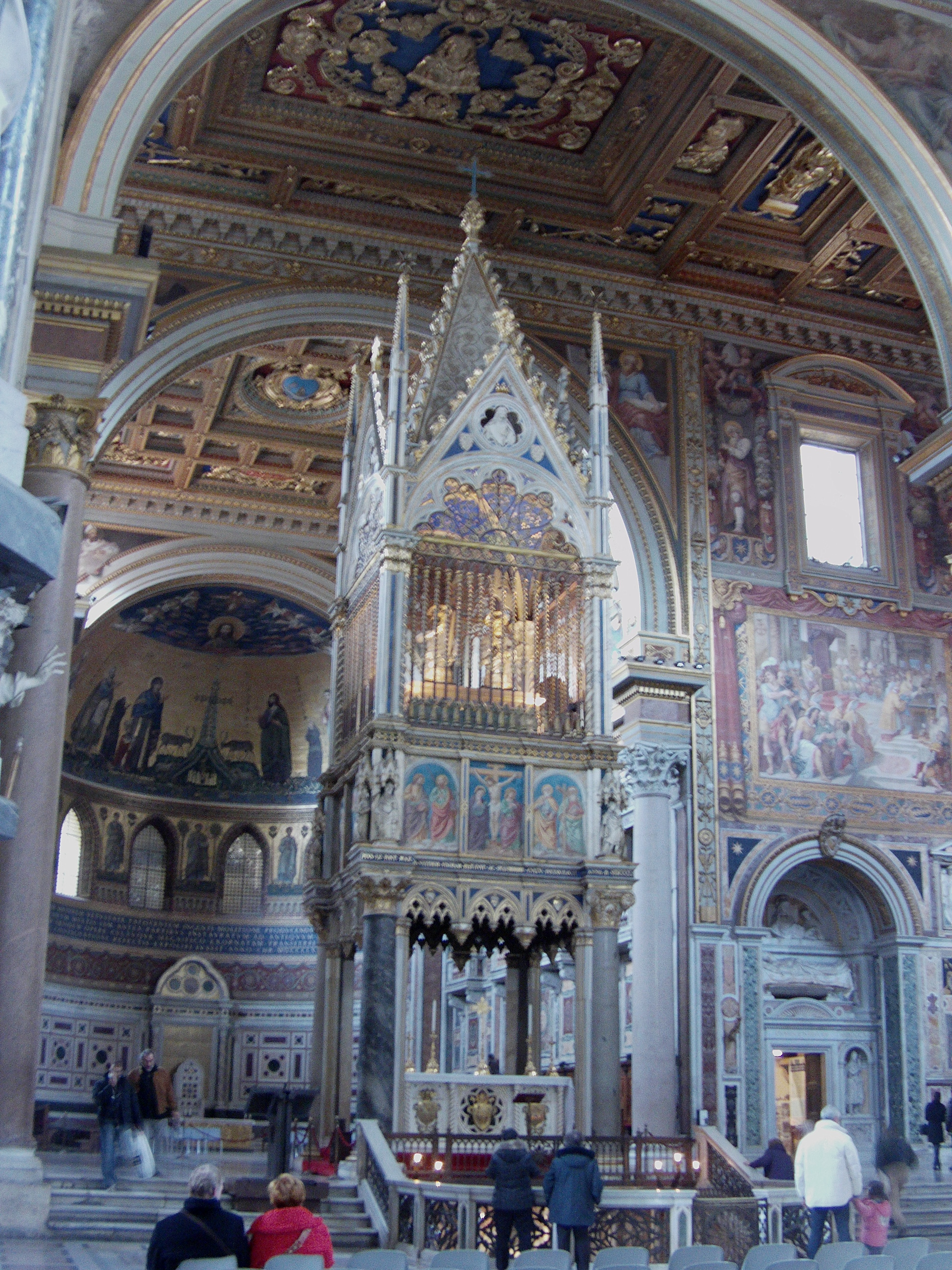
Relics of Sts. Peter and Paul above Papal Altar at San Giovanni Laterano
Throughout the Eternal City, you will see both saints together. On the Piazza in front of St. Peter’s Basilica, you see two giant statues, Peter on the left and Paul on the right. Atop the baldachino over the papal altar in Rome’s Cathedral-Basilica, St. John Lateran, two gold reliquaries house purported relics of each of the saints. The oldest known depiction of either saint is a depiction of both, at the catacombs of St. Thecla.
If you want to see the famous mosaics of the bishops of Rome, from Peter to Benedict, you go not to the Vatican Basilica, but to St. Paul’s Outside the Walls, which from the 4th to the 16th centuries was the largest church in Rome, until the new St. Peter’s was built. The “Successors of Peter” were honored at the Tomb of Paul. No wonder ecclesiologists point out the pope is better named “Successor of Peter and Paul” – if they are not too busy pointing out that neither Peter nor Paul were bishops of the city in the modern sense, but that is another debate.
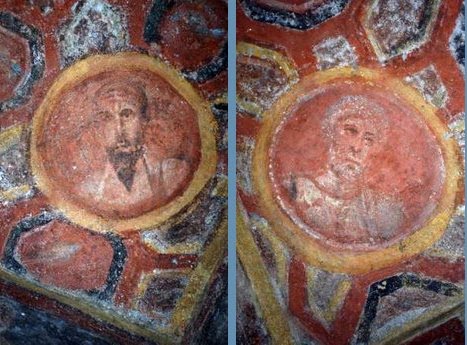
Recently discovered images of Paul (left) and Peter (right), oldest known
Since the beginning of the dialogue between Orthodox and Catholic, one of the traditional signs of fraternity is the exchange of delegations on the feast days of the two Apostolic Sees. Rome sends a delegation to Constantinople on the Feast of St. Andrew, November 30, and Constantinople returns the delegation on the Feast of Sts. Peter and Paul. Metropolitan Gennadios of Sassima lead the group this year, and was the only person to receive the Sign of Peace from the Pope during the morning’s liturgy. In addressing the delegation, Pope Benedict spoke strongly and favorable of the progress toward unity being made in Catholic-Orthodox dialogue, and praised the Patriarch’s recent encyclical on ecumenism (a short read I strongly recommend to all). http://www.patriarchate.org/documents/sunday-orthodoxy-2010
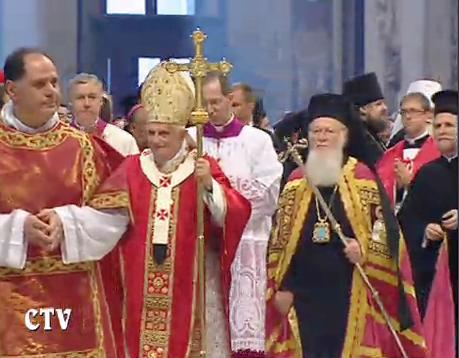
Pallium Mass 2008 - Patriarch Bartholomew and Pope Benedict, the later wearing an adaptation of the pallium
This celebration also serves as the “Pallium Mass” when the (Catholic) Metropolitan Archbishops appointed within the last year come to Rome to receive the symbol of their office. Made from wool shorn of sheep blessed on the Feast of St. Agnes, the pallium is one of the oldest liturgical vestments, having changed size and function over the centuries but remaining in use throughout. The tradition of metropolitans coming to Rome to receive the pallium is recent, however, dating only from 1984. Prior to this they were vested in their own cathedral at the time of their installation as Metropolitan. However, it serves as a powerful symbol of the communion of the bishop of Rome with the archbishops throughout the world.

Metropolitan Gennaidos of Sassima, 2010 delegate of the Patriarch of Constantinople to Rome on the occassion of the Patronal Feast of Sts. Peter and Paul
The unity of the Church is the clear theme of the day– the pallium celebrating the existing full communion between Rome and the churches represented by the new metropolitan Archbishops, and the kiss of peace and exchange with the Orthodox delegation celebrating the impaired communion with the Orthodox Church in hope for full communion in the near future. Appropriate that the city that sees itself at the centre of this union is guided, not by a solitary figure, but the “dynamic duo” of two very different Apostles. May the church continued to be blessed by their common patronage and the balance that they represent!
Over the summer months I will be travelling a little, teaching a little, and spending a lot of time with family and friends near Seattle. My blogging will slow (and indeed I am writing some of these rather post-facto) but I will also have some time for more meaty reflection on some of the themes and events raised during this incredible year in Rome.
Roman June
It is hot, and it is certainly humid. It could be worse, I am told, and there are definitely some redeeming qualities of Roman June. One of which is that it is not Roman August, and I know I will be home for that!
The academic year of the Angelicum was more or less set in the time of St. Thomas Aquinas, though the university’s origins are with the 16th century House of Formation for the Dominican Order. Class begins mid-October and end in May; the entire month of June is set aside for exams. By university statute, they happen in June, the whole of June, and no month but June. Naturally this means that most are scheduled between late May and early June – I was in finals mode for a month, but I have a couple of weeks of freedom to enjoy the City. Two experiences illustrate how to spend these Roman summer days.
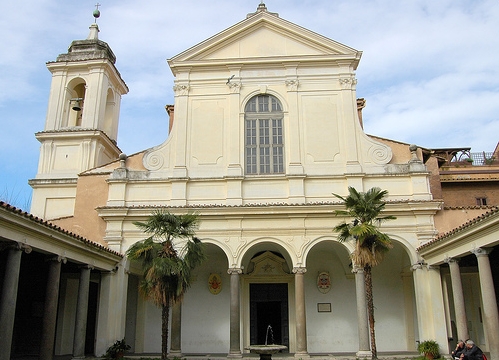
Basilica San Clemente
Sunday, June 13 – An American friend and I decided to head to St. Peter’s for mass. Rather than rushing across town for the 10am, however, we opted for leisurly morning starting with cappuccino and cornetto (croissant with Nutella filling) at my favorite local bar, Café San Celemente – literally across the street from the Basilica San Clemente. We ventured over to San Pietro just in time for the Sunday Angelus, a brief prayer and address by the pope. While there we encountered no less than three different people or groups known to one or the other of us, including one from the states just in Rome for the week! We made it inside for an early afternoon liturgy at the St. Joseph chapel.

Tiber Riverwalk
We spent the next couple of hours touring the basilica and piazza, tourist shopping on the Via della Concilizione, eating pizza by the slice, and then a holy hour devotion at the San Lorenzo youth pilgrimage centre nearby. What could have then been a 30 minute bus ride home turned into a four hour walk along the Tiber with generous time spent at a riverside bar set up for the summer, complete with comfortable lounging couches along the riverwalk. 14 hours out and about, with the only plan for the day being the Eucharist!

Cafe della Pace
Saturday, June 19 – A Danish friend and I decided to get together for coffee and some conversation about mid morning. This time we met near the famous and picturesque Café della Pace, which is the quintessential Roman café – cobblestone street, outside seating, low traffic and a church nearby, all within a couple blocks of Piazza Navona. It comes with quintessential pricing too, so we opted for a humbler, and homier, bookstore/coffee house across the street that charges no more to sit down than to take your coffee at the bar. Two hours later we wander to the Pantheon for lunch on the steps, taken from a pizzeria popular with the municipale – the Roman city cops.  A meander through the city north takes us to the Piazza del Poplo and up to the edge of the Villa Borghese overlooking the piazza for some excellent people watching and a view of the city. From there we part ways and I wander back along the Viale Gabriele D’Annunzio to Chiesa Treinita dei Monti – famous as the church a the top of the Spanish Steps – and the Via Sistina to Maria Maggiore before heading back home.

Trinita dei Monti and Spanish Steps
The Year of the Priest: Corresponsibility of Priests and Laity
The Lay Centre has three major aspects to its ministry of hospitality and formation. The first is the one most familiar to anyone reading my blog or following my studies, which is the community of students and scholars who live in the house of formation throughout the academic year (Oct-June) and who eat, pray and learn together in an ongoing dialogue of life. The second is the ongoing adult formation offered (mostly) to the English-speaking population of Rome. Theology, spirituality, church history, liturgy, art, and architecture offered by faculty of the pontifical universities and visiting scholars every Thursday morning as part of the Vincent Pallotti Institute.
The third piece of the mission is the summer seminars and retreats offered by the lay centre. During June, July, and September groups come in from around the world to spend a week in Rome. Some have their own agenda and primarily enjoy the hospitality of the Lay Centre, while others are sponsored by the Centre directly and open to anyone from around the world.
A few years ago I remember hearing about Rome’s first-ever symposium on Lay Ecclesial Ministry, and recall thinking to myself, “First? This has been going on 50 years and they are only now talking about it???” Little did I know. (One can hear about how slowly time moves in the Eternal City, but you really have to be there to appreciate it, soak it in, and start wondering what all the fuss was about back when you cared about things like deadlines, traffic laws, and absolute concepts of any kind…)
One of the programs offered this summer was the latest in the series touching on lay ecclesial ministry, but with a timely twist. In honor of the Year of the Priest, and timed to coincide with the closing festivities of the year, the theme was taken from Pope Benedict’s address to the annual convention of the diocese of Rome (given at St. John Lateran on May 26, 2009) and again later to the presbytery of Rome at the beginning of the year: “Corresponsibility of Priests and Laity”.
The unique opportunities for a program like this in Rome include access to so much of the Church’s history within walking distance, access to curia officials, access to representatives of the Church from all over the world, and of course the hospitality of the Lay Centre.
The program progressed through the centuries day by day, with an examination of key saints and their experience of “corresponsibility”. We studied St. Paul and his collaborators with Abbot Edmund Power of the Benedictine Abbey of St. Paul Outside the Walls – guardians of the tomb of the great missionary and co-patron of Rome. St. Justin Martyr, a layman, buried at St. Lawrence Outside the Walls. Pope St. Gregory the Great, with his oratory of St. Andrew is literally just over the wall from my Roman home. St. Vincent Pallotti was an early modern pioneer of lay formation.
Contemporary organizations and developments we looked at included the Emmanuel Community, Sant’Egidio, the Pontifical Council for the Laity, and the Union of the Catholic Apostolate. Presenters included Dr. Marian Diaz, Fr. William Henn of the Gregorian, Ms. Ana Crisitina Villa-Betancourt of the PCL, Fr. Jean Baptiste Edart of the Emmanuel Community, and John Breen of the Beda College in Rome. The participants were mostly students and (both lay and ordained) ministers from the U.S., but included one Dutch pastoral life director.
[Further Reflection to Follow]
Santa Sabina and the Aventine
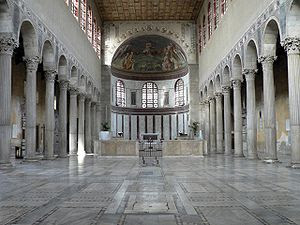
Santa Sabina, Interior
Santa Sabina is the 5th century basilica on the Aventine hill, just south and across the Tiber from the Vatican, that has served as the home of the General Curia (read, worldwide headquarters) for the Order of Preachers since not long after they were founded by St. Dominic in the early 13th century. In the midst of finals, one of my Dominican classmates, Benedict, offered to lead a small group of us through the basilica and adjacent buildings.
A half dozen of us gathered in the very rooms of the founder for mass, both of which were thankfully de-baroquified some years ago. This was another of those inspiring, unscripted days offered by life in Rome, when you can walk in the footsteps of saints and get a taste of the diachronic communion of the Church.
We wandered the hall where Thomas Aquinas slept, studied, and eventually composed at least part of the Summa and other works. The dining room remains the same one that fed the Great Ox. An incredible view of the city and St. Peter’s awaits on the north side. The basilica itself features some unique mosaics and even a stone that pious legend holds was thrown by Satan himself to distract Dominic from prayer. (Another, slightly more recent legend holds that if you touch the stone and it feels cold, you are in a state of mortal sin and must be confessed by a Dominican immediately. Conveniently, the stone is as black as obsidian and kept indoors year round.) Pius V was another resident of the convent, and is often the pope credited for “creating” the tradition of white as the papal color, by refusing to shed his Dominican habit for the then-normal scarlet after election. Whether accurate or not, it is true that Pius V should be well known for publishing the Roman Missal that was the norm for the celebration of the Eucharist throughout the Western church for four centuries – now known most commonly as the Tridentine Rite.
In the neighborhood we also stopped by the basilica of Sant’Alessio and the most famous keyhole in the world, at the headquarters of the Sovereign Military Order of Malta. There, standing in Italian soil, you can gaze through a garden belonging to the SMOM and see a perfectly framed view of the dome of St. Peter’s – three countries in one keyhole. Across the piazza sits the Anselmo, the Benedictine pontifical university that is the traditional center of liturgical education in the Church (outside of Notre Dame, of course!).

View through the keyhole at the Sovereign Military Order of Malta
Intercontinental Cross-Cultural Dialogue is…
… staying up until the early hours in a city that is nearly 2800 years old, talking of life, love and religion with friends from four continents. Feliz Cumpleaño, David!
Pentecost at the Pantheon
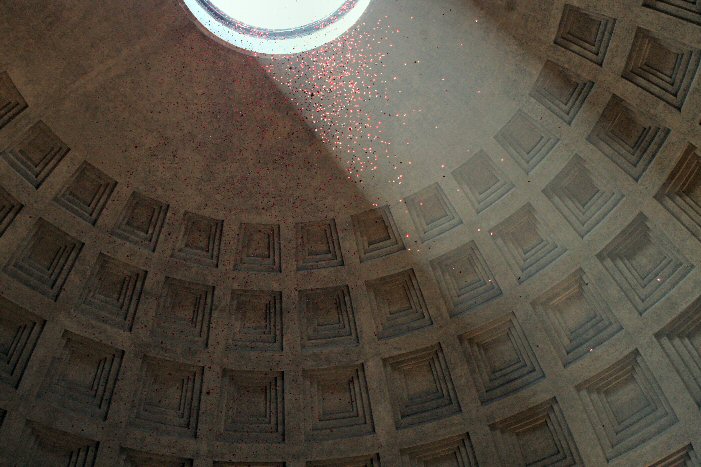
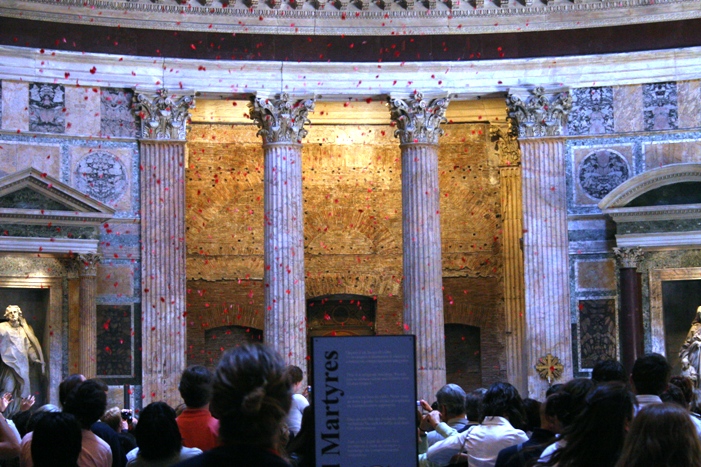
One of the sights to see in Rome is Pentecost at the Pantheon. Since my Jubilee pilgrimage to Rome, they have set up pews and dressed up the altar to bring further attention to the fact that this most-famous of pagan temples is also (since the 6th century) a consecrated church. For the feast of Pentecost, at the end of the liturgy Rome’s fire department drops thousands of red rose petals from the oculus to the floor below, an image of the Spirit appear like tongues of flame around the apostles gathered in the Upper Room. To add to the effect, the sun was clearly cutting through the coouds of incense smoke, and a white bird chose just that moment to fly in and start flying circles around the falling flowers. (One person in the assembly gasped, “look, a dove!” which would have been fitting, but it was just a seagull…)
The Dialogue of Life in Rome
A former student-resident of the Lay Centre returned this semester as a visiting professor at the Pontifical University Gregoriana (the Jesuit university down the road). Dr. Esra Göezler is a Turkish Muslim who had studied in Rome and returned to co-teach a course with Christian and Jewish scholars, and as a scholar-in-residence at the Lay Centre.
Near the end of the semester Esra sat in a panel presentation at the Lay Centre with a German Jesuit and an Italian Jewish reporter titled “Abrahamaic Religions in the Dialogue of Life in Rome” in which each participant shared their experience of living in the Eternal City in the daily life dialogue with the other Abrahamic faiths. The Lay Centre and PISAI – the Pontifical Institute for the Study of Arabic and Islam, another Jesuit faculty in the City – featured prominently in the discussion.
Over the next few days, Esra provided further opportunity for dialogue and encounter, as the Lay Centre hosted the (brand new) Turkish Ambassador to the Holy See, Professor Kenan Gürsoy and his wife for dinner on 25 May. The following evening Padre Miguel Ayuso-Guixot, director of PISAI presided at our final mass and community night of the academic year. We were honored by the presence and insights of all three distinguished guests by Esra’s initiative.
At around the same time we heard good news about our housemate, another extraordinary Muslim scholar, Rezart Beka of Albania. Rezart has been in Rome this year on scholarship from the Nostra Aetate Foundation, set up in 1990 by Pope John Paul II for non-Christians to study Christianity at the pontifical universities in Rome. Scholars usually stay for one semester, and Rezart was already granted an extension. Facing the possibility of losing him as a student next year as the scholarship came to an end, a donor has set up an entirely new scholarship for Muslims to study at PISAI and Rezart is the inaugural recipient!
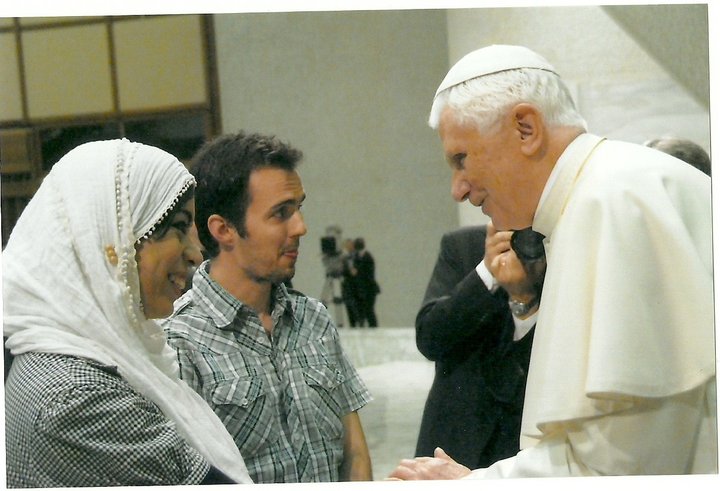
Lay Centre residents Nagwa Zarkaa Elymama (Egypt) and Rezart Beka (Albania) are presented to Pope Benedict XVI
 The Ecumenism Blog