
Home » Posts tagged 'Lay Centre at Foyer Unitas' (Page 7)
Tag Archives: Lay Centre at Foyer Unitas
Saint Andrew the Protoclete
Andrew was the first Apostle of Our Lord, first having been a disciple of John the Baptizer. Sometimes, for some reason, my fellow western Christians forget this and refer to Peter as the first. Peter would have died an anonymous Galilean fisherman if not for his brother, Andrew, who brought him to the Christ.
One of the early successors to Peter and Paul decided to settle the question of when the church year should begin by determining that the first Sunday of Advent, and therefore the first Sunday of the ecclesiastical year, should be that Sunday nearest the feast of the first Apostle. Before that, advent was celebrated in local churches as anywhere from three days to six weeks.
My patron and namesake is also patron of Greece, Russia, Scotland, and Romania, as well as the apostolic founder and patron of the Holy See of Constantinople and the Ecumenical Patriarchate.
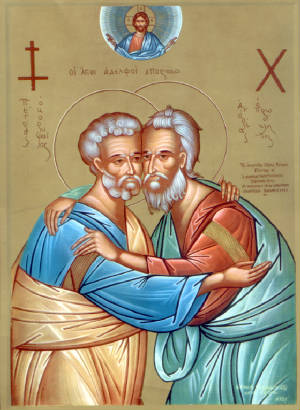
Icon of the Holy Brother Apostles, Peter and Andrew
One of my favorite icons is of the brothers Andrew and Peter embracing. This Icon of the Holy Brother Apostles was written for the 1964 meeting of Patriarch Athenagoras I and Pope Paul VI, a gift from the Successor of Andrew to the Successor of Peter, as a sign of the fraternal relationship of the two churches (also called “sister churches”). A copy of this icon was given to me for my service on the National Planning Committee of the NWCU by then-chairman Allen Johnson.
While much of the western ecumenical world was caught up in the announcement by the Congregation for the Doctrine of the Faith about the Anglican-Catholic personal Ordinariates in October, Cardinal Kasper joined Metropolitan Zizioulas and other representatives of the Catholic and Orthodox Churches on Cyprus for the 11th plenary round of the Joint International Commission for Theological Dialogue. The topic of this round of conversation is “The Role of the Bishop of Rome in the Communion of the Church in the First Millennium”.
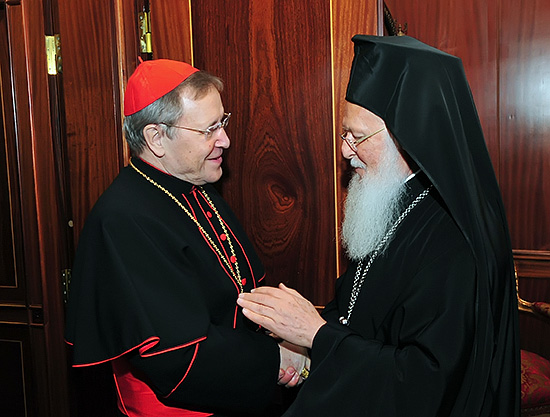
His All Holiness Bartholomew I greets His Eminence Walter Kasper
In honor of the feast of Andrew, the Holy Father sends a personal message and a high-ranking delegation to the Patriarch of Constantinople; a return delegation is sent to the See of Rome to honor the patronal feast of Sts. Peter and Paul every June 29. This year’s address indicated signs of hope for the ongoing dialogue and the central questions to our restored unity – the role and relationship of the universal primacy of Rome and the other major Patriarchates, and the local churches.
The Holy Father’s message to Patriarch Bartholomew for the feast of St. Andrew today highlighted this work as a sign of the growing unity of the churches, and acknowledged the many areas for cooperation even as we are still on the journey to full unity.
Patriarch Bartholomew’s message of welcome to the Roman delegation likewise highlighted the work of the Commission, now tackling some of the most fundamental ecclesiological issues which remain to divide us, namely, primacy in general and that of Rome in particular.
“We are, therefore, convinced that the study of Church history during the first millennium, at least with regard to this matter, will also provide the touchstone for the further evaluation of later developments during the second millennium, which unfortunately led our Churches to greater estrangement and intensified our division.”
He also called attention to the slow progress being made toward the calling of a Great Council of the entire Orthodox world, an event which has not happened in centuries, and which would be akin to an Orthodox Vatican II.
Dinner, the Roman way.
We walked to the ristorante, got there at 10:15pm.
Red house wine, acqua (still), and pizzas, which arrived at almost 11:00.
Ordered dessert at 12:00 midnight. Some kind of delicious strawberries and creme with hot drizzled chocolate and cocoa.
Going to bed at 1:30am, listening to the discotech music coming from around the Colloseum (ah, to be young!).
Post-script: Fireworks at 1:50am, right outside my window. Literally, between here and il Colosseo.
An American Thanksgiving in Rome
When I was studying in the states, at Notre Dame and Catholic University, Thanksgiving was a welcome calm before the storm, a few days to catch one’s breath before the final push toward final exams. Here, the semester is just nearing mid-term, and of course it is not an Italian holiday. I did notice that none of the NAC residents came to class today: The North American College, the residence for diocesan seminarians and priests from the states, had their big Thanksgiving feast for lunch.
Our director, Professora Donna Orsuto and our chef, Feda, spent all day preparing a traditional Thanksgiving feast for the residents and about 25 guests. We had invited classmates and other ‘homeless’ Americans to join us. Two gorgeous roast turkeys, mashed potatoes and gravy, corn and green beans, stuffing, and even pumpkin pie. I was appropriately stuffed. We’re pretty well fed, and Feda does a great job with the Italian fare every night, but for the visitors who were used to living on their own in Rome I think getting a taste of home was truly appreciated.
It is always a nice surprise when a member of the community shares a gift that you did not know they had. The other American students in the house are a married couple, Greg and Karina, from Chicago and Houston, respectively. Karina closed our feast with a soulful rendition of Amazing Grace in a beautiful voice. You could hear a pin drop. There is much to be thankful for, being in Rome in such a community, but moments like that highlight the gifts God gives in a special way.
Happy Thanksgiving from across the pond! May you be blessed with bounty, faith, and friendship!
Sinterklaas came early this year…
On Sunday afternoon, we celebrated the Mia’s 70th birthday. A native of the Netherlands and one of the Lay Centre staff, the celebration involved a few grandchildren. So, even though it was a couple weeks early, we were blessed by the presence of the traditional Sinterklass and his assistant, Zwarte Piet. Eveline’s family had just been visiting and brought some goodies from home, and she shared some of the pepernoten, a traditional St. Nicholas day treat.
One of the things that got me on the good side of our resident Nederlander early on was sharing how my family has celebrated St. Nicholas day as our primary gift-giving day for years, complete with wooden clogs. I nearly lost that endearment on Sunday, however, when I mentioned that though St. Nicholas was a bishop in Asia Minor (modern day Turkey), that Santa Claus lives in the North Pole – without any Zwarte Pieten, just elves.
“Sinterklass comes from Spain, AJ. That’s the way it is.”
Spain? How about the reindeer then?
“Sinterklass comes by boat! What reindeer?”
So I began a brief survey of St. Nicholas beliefs among the nationalities represented in the Lay Centre:
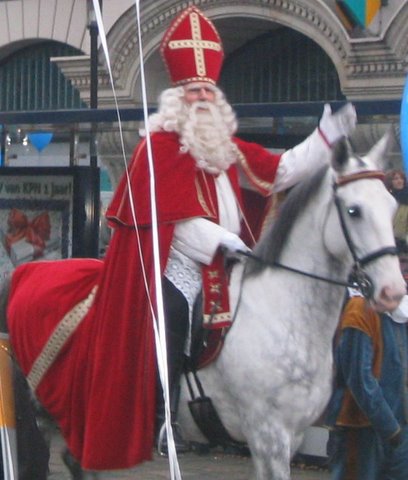
Sinterklaas, Netherlands
In the Netherlands, the big celebration is on December 5th, St. Nicholas Eve. St. Nick lives in Spain, and makes his journey to the Netherlands by boat every year. For about three weeks before his feast day the news reports the location of the steamer… not unlike the Air Traffic Control tracking of Santa’s sleigh in the U.S. Instead of elves, Sinterklaas is assisted by Zwarte Piet (Black Pete) – actually several Swarte Piets. He’s the one who carries the bag, from which children are either given presents if good, and a lump of coal if bad. One version is he’s black from the soot of the chimneys he climbs down to deliver the gifts (an unfitting task for St. Nicholas himself, apparently), another is that he is a Moor, a natural companion of a St. Nicholas who lives in southern Spain.
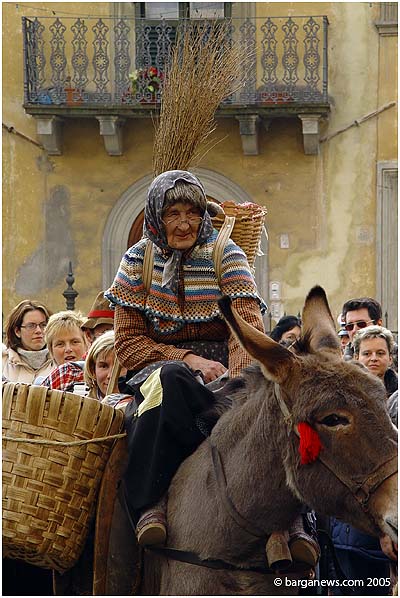
La Befana, Italy
In Italy, it is the old lady/witch Befana, not St. Nicholas, who comes bearing gifts, and she already made a minor appearance on Hallowe’en. Her arrival is usually on Epiphany, January 6. By legend, she had provided housing for the Magi on their journey to find the Christ-child, and refused an invitation to join them, only to decide later that she would seek him out. When she found him, his gift in return was that she would be ‘mother’ to all the children of Italy.
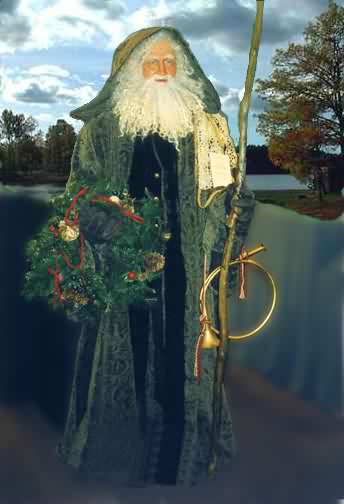
Father Christmas, Britain, Ghana
Only the Christians in Ghana celebrate Christmas, it has not become a secular or national holiday as in the U.S and much of Europe. Once a British colony, it is Father Christmas who comes with gifts. Kassim, though he played an excellent Swarte Piet for never having heard the tradition before, could not provide much more as his Muslim family did not usually celebrate Christmas.
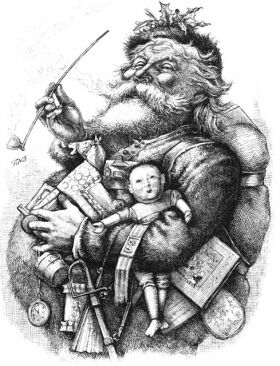
Julenissen, Norway
Norway has the Julenissen, or Yule Elf, who comes to the city-folk by a reindeer-drawn sled but for the country-folk usually arrives on cross-country skis. Clearly a combination of St. Nicholas and the Nordic Yule traditions, he does not bother with chimneys, but will just come in the front door.
Speaking of elves, that provided an interesting aside. As I was explaining that Santa Claus was aided by elves, I got to thinking that they are really more like dwarves than elves, especially if you think in Tolkien terms. Eveline asked something about their wings. Wings? Elves do not have wings!
“So what do you call Tinkerbelle?” Oh, a sprite, or a fairy. Aha! Fairy = Faerie = the Fae = Elves. Interesting that the same origin would conjure such different images, from a Tinkerbelle type fairy to the Elves of Tolkien and Shakespeare’s Midsummer Night’s Dream! Something I probably knew as a child, and had forgotten.
Just like the fact that St. Nick lives in Spain, not the North Pole. How could I forget that?
[There’s a pretty good website that gives much of the information about St. Nicholas and celebrations around the world, as well as ideas for families to celebrate his feast on December 6, Saint Nicholas: Discovering the Truth About Santa Claus.]
Ecumenical Vespers at “del Caravita”
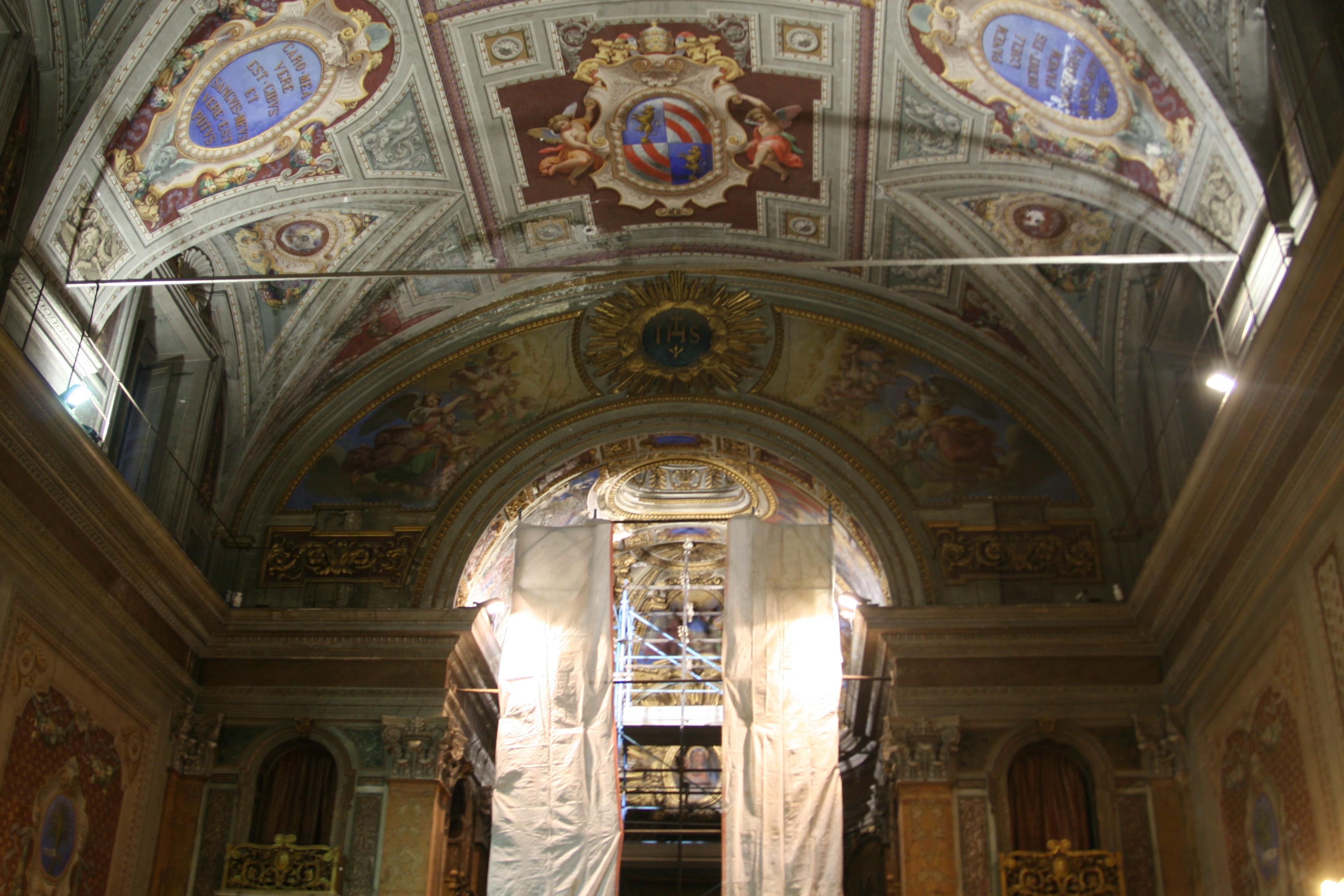
Interior of the Oratory of St. Francis Xavier del Caravita
The Oratory of Saint Francis Xavier “del Caravita” is one of those churches in Rome you would never find unless you knew where to look, even though it is just off one of the main thoroughfares in the City. It is described as “an international catholic community in Rome”, Jesuit in origin but staffed by priests from four different orders. Aside from the national churches for the U.S., England, Ireland, and the Philippines it is the only Catholic church offering weekly Sunday liturgy in English.
On Friday, we celebrated evening prayer presided by Cardinal Kasper, with Archbishop Rowan Williams as the homilist, sponsored by the Anglican Centre in Rome. A simple and beautiful liturgy with what I thought was an especially powerful version of the renewal of baptismal vows, it was a nice counterbalance to the Colloquium the day before: a day of academic lecture complemented by an evening of prayer.

Stian, Rowan Williams, AJ
The pack of news photographers that had followed Dr. Williams throughout the lectures yesterday was back tonight, and it amazes me he was able to focus on preaching with the constant picture taking. Of course, trying to find one of these photos online to share is not easy, this is the best I could do: http://www.catholicpressphoto.com/servizi/2009-11-20%20Vespri/default.htm
After the prayer, we were able to meet the Cardinal, the Archbishop, and even U.S. Ambassador Miguel Diaz and his wife, Marian, who were in attendance. Unfortunately, we only got a couple shots with Archbishop Williams, though I did invite Cardinal Kasper to dine at the Lay Centre sometime. (We’re on the Ambassador’s list already. Somewhere down there…)
The Church of Rome
Every Wednesday brings a guest presider with a normally brief presentation during and after dinner. This week was an opportunity to get a better look at the Church of Rome, from some excellent authorities.
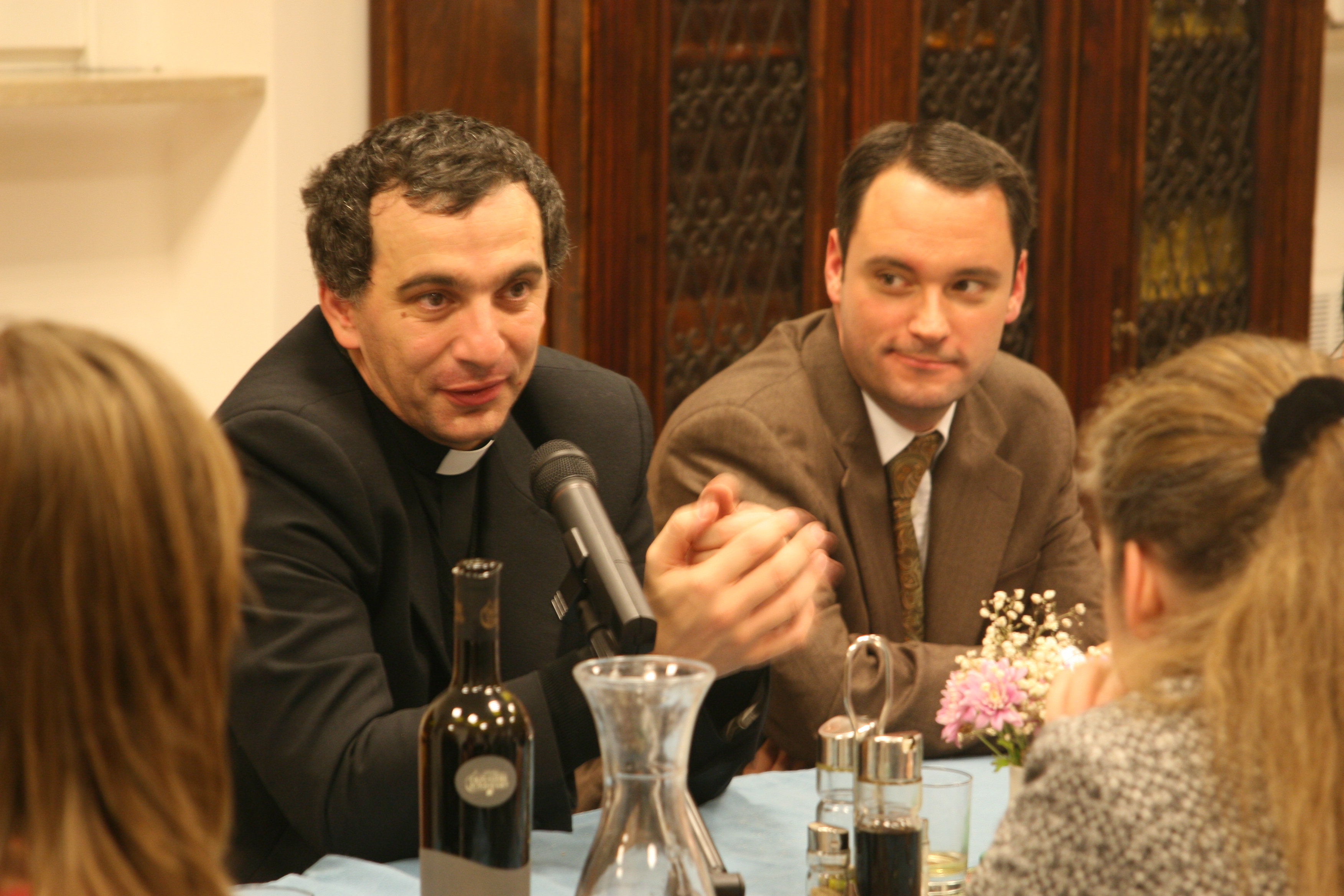
Monsignor Nicola Filippi, Secretary to the Cardinal-Vicar of Rome
Our presider was Don Nicola Filippi, ordained a presbyter of the diocese of Rome in 1995 and named a Chaplain of His Holiness (the lowest grade entitled “Monsignor”) in 2005, he serves as secretary to the Cardinal-Vicar of Rome, Agostino Vallini. Princess Gesine and her husband, Deacon Masimilliano, of the Doria Pamphilj family, joined us as well. Don Masimilliano and Donna Gesine are friends of the Lay Centre and were our generous guides when we visited the family palazzo/galleria last month.
Vested for the liturgy, Don Nicola is the very image of a classical Roman senator, and I think will be a bishop himself in the next decade. Two interesting liturgical observations: there are very few deacons in Italy, I think Masimilliano is one of only two in the suburbicarian diocese where he is incardinated, so it was clear there is room for a more robust development of their role. Also, since communion under both species is not as common in Italy as it is most places in Europe and North America, Monsignor Filippi chose to serve communion by intinction, I think as a kind of pastoral compromise between his custom and ours, which was a first for me.
The Church of Rome, the diocese itself, is an interesting reality. Their diocesan bishop is the pope, and yet, as Father Nicola said, “Rome is Rome, and the Vatican is something else entirely. That’s the other side of the Tiber.” Some of the pastoral and administrative issues sound not all that different from home!.
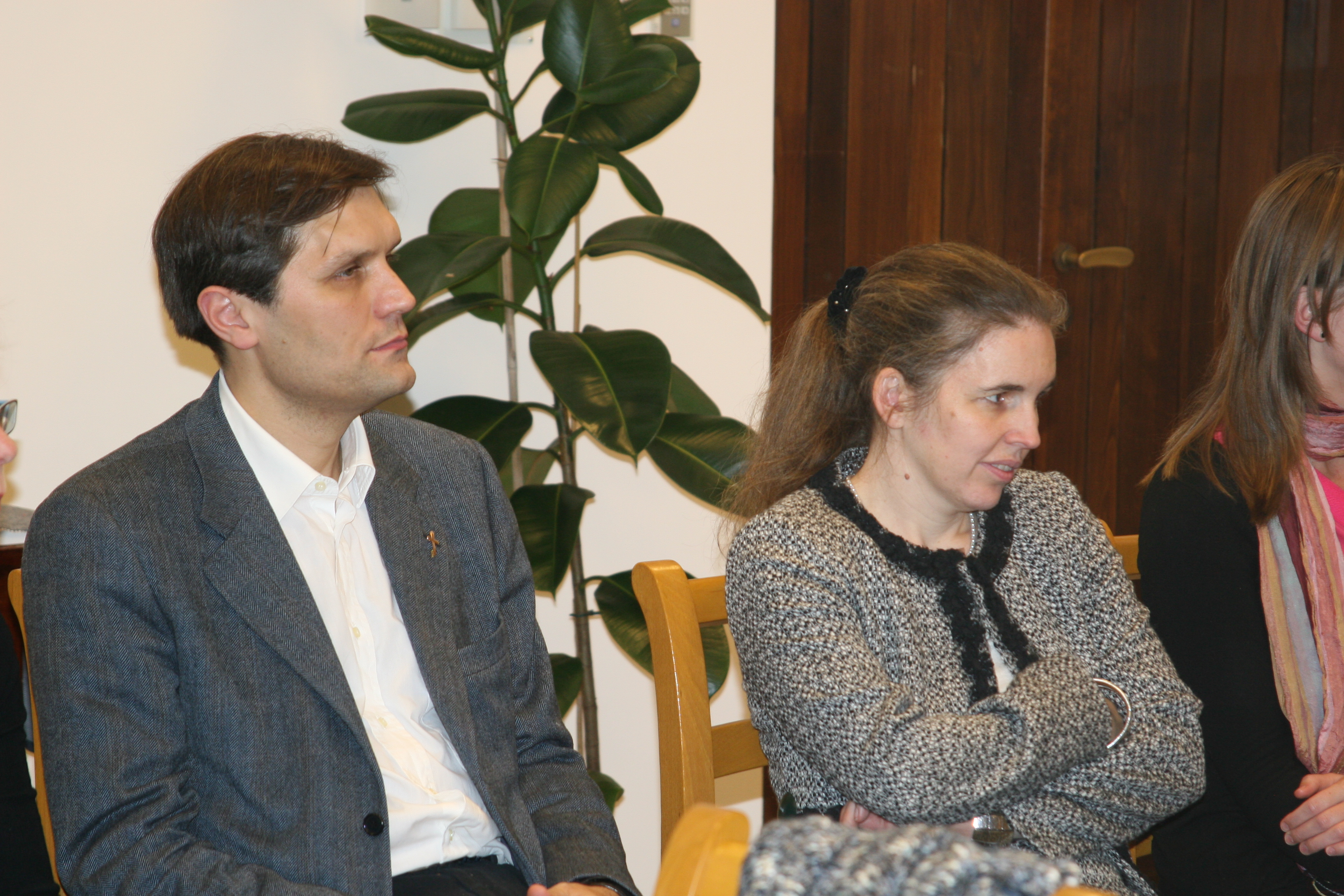
Deacon Don Masimilliano and Donna Gesine Doria Pamphilj
There are about 2.5 million Catholics in the diocese of Rome, and it includes 330 parishes, plus the other 600 or so churches, which are chapels, stations, oratories, or shrines. Though the bishop of Rome is Benedict, Cardinal-Vicar Villani is the ordinary for almost all intents and purposes. He is assisted by seven active auxiliary bishops, one as a kind of vicar general to the Cardinal-Vicar (who is technically the vicar general), five lead regional vicariates, and one is responsible for hospital ministry. The diocesan website lists 1215 diocesan clergy, 1917 clergy from other dioceses, 4800 religious clergy, 124 opus dei clergy, 2050 lay religious, and 1050 lay staff*. (These numbers include retired clergy, I think, and the website also counted all the cardinals, and over 1200 bishops who are probably curial staff and diplomats.)
Compare that to Seattle, with 578,000 Catholics, including 3 bishops, 294 diocesan clergy, 32 clergy from other dioceses, 96 religious clergy, 486 lay religious, about 800 lay ecclesial ministers and 1393 lay teachers. Rome has less than 5 times as many Catholics, but more than 21 times as many clergy, and half as many lay staff*.
*Lay staff listed for Rome included faculty of the pontifical universities, members of commissions and consultors to dicasteries, as well as actual paid staff in Roman offices – virtually no lay ecclesial ministers as we know them in the States.
Only about 40%-50% of the children born in Rome are recorded as being baptized, and there are only about 80 or 90 catechumens each year, though Fr. Nicola indicated that a large number of families may take their children outside the city, and thus to other dioceses, for baptism so it may not be quite as low as that looks.
He spoke about a questionnaire the chancery had been trying to get parishes to fill out regarding pastoral planning, evangelization and sacramental life, and only about 2/3 of parishes responded (I thought this was pretty good, actually). When the Cardinal started visiting pastors who had not sent the response in, one of the first said, “oh, yeah, we forgot about that. I’m sure it’s here somewhere…” and then proceeded to produce the previous year’s questionnaire, still in the original envelope.
As I am sure you have heard, though Italy is nominally 90% Catholic, very few people are very active in the life of the church. For most, it is where you go to get baptized, married, and buried. Just last night a classmate was telling me how, on his first Christmas in Rome, he attended a popular parish nearby and could not find a seat 20 minutes before mass began, and the church was filled with young people. But then, as the opening hymn began, mobile phones came out of pockets to take pictures and he heard several people calling their mothers, “yes, mama, I’m going to church. See, I’m sending you a picture!” Then they left. By the time of the opening prayer, my friend had no problem finding a seat.
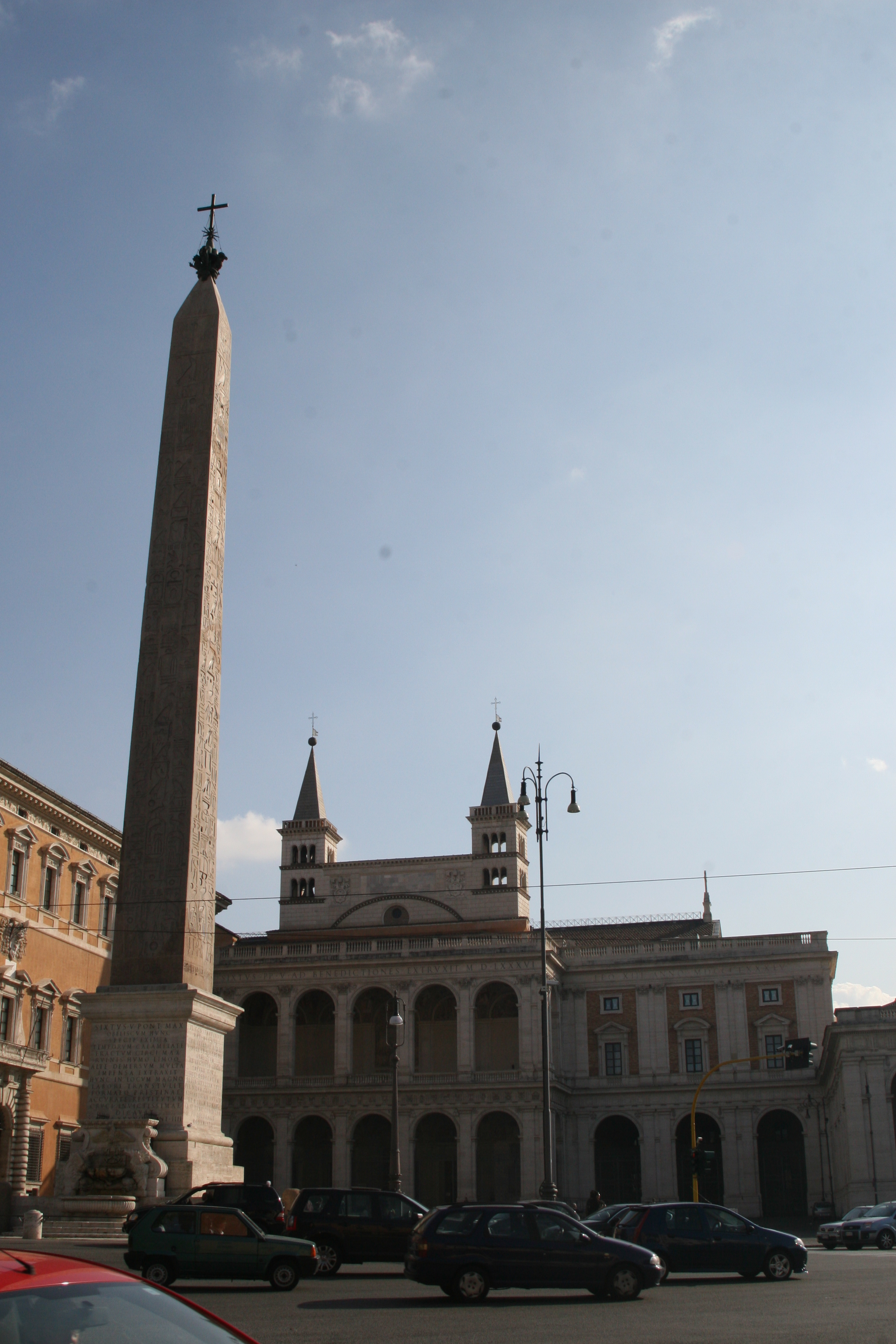
Lateran Archbasilica and Palace; Cathedral and home of the diocesan chancery of Rome
One of the responses that has been very popular in Italy, and in Rome especially, are the lay movements. Whereas the U.S. has seen a greater development in the area of parish life and in lay ecclesial ministry, here there is almost the sense that if you are really serious about your faith you do not go to your parish but spend your time with the movement. Two of the largest in Rome are the Charismatic movement and the Neochatechumenate Way. (I would have guessed Sant’Egidio, Focolare, or Communione e Liberazione).
Unfortunately, some of the biggest problems for the Catholic Church of Rome come from these movements. Poor catechesis, insufficient theological education of the clergy, and the creation of a parallel church to the diocesan-parish structures were all cited as serious issues among the diocesan leadership. The dichotomy of spirituality and theology, so typical of the “classical” western Latin tradition, is noted especially in the Neocatechumate Way with an emphasis on the spiritual and too little attention on the theological. They are also having a challenge with the high number of non-Italian priests coming to serve the communities here, without adequate cultural formation and preparation for the life of the Church in Rome.
This was one more reminder of how slowly my Italian is coming, too, so prayers for that please! I would like to have asked about lay ecclesial ministry in Rome. Next time!
Dr. Rick Gaillardetz and Archdeacon Johnathan Boardman
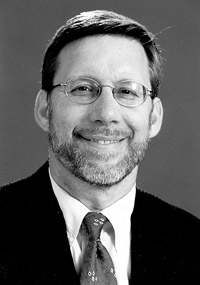 Author of seven pastoral booklets, eight books, and over 100 journal articles, Dr. Richard R. Gaillardetz is one of the most accomplished U.S. ecclesiologists of the current generation. He has been a member of the U.S. Catholic-Methodist dialogue, and his doctoral director was Dominican Father Thomas O’Meara at Notre Dame (who was also my systematics and ecclesiology professor as an undergrad). Rick is married, with four children, and currently serving as the Murray/Bacik Professor of Catholic Studies at the University of Toledo (Ohio, not Spain).
The Venerable Jonathan Boardman is an Anglican presbyter, rector (pastor) of All Saints parish in Rome, and Archdeacon of Italy and Malta for the Anglican diocese of Gibraltar, which covers all of continental Europe.
[An archdeacon in the Anglican Communion, as it once was in the Catholic Church, is basically the vicar general, and in this case one of several where each is assigned a geographic portion of a diocese. Though traditionally this was a role for a deacon, the eventual usurping of all diaconal ministries into the presbyterate included this high office.]
Having either one of these men as guests for dinner and conversation over tea would have been a treat, especially now in the wake of the apostolic constitution Anglicanorum Coetibus. To have both on the same night was a true privilege, especially for an ecumenist/ecclesiologist like me. I would have been happy just to sit back sipping my tea, and listen to them discuss the personal Ordinariates, the history of Anglicans in Rome, and the ecclesiologies of our communions today. Both men are as engaging as they are erudite, though, and welcomed questions and comments from those of us who decided to stay and converse rather than head across town for a party with the other lay students of Rome. (Still working on that bilocation thing)

Anglican Father Jonathan Boardman and Professor Richard Gaillardetz
Professor Gaillardetz has written a great deal in exactly the areas of ecclesiology that interest me, including ecumenism, the diaconate, lay ecclesial ministry and a wide range of other topics. I have no doubt that his work will make a significant contribution to my thesis and dissertation, and it is always a blessing to make a real-life connection with someone whose work informs your own.
Father Jonathan I have met on my two forays to All Saints, first for their dedication feast – the Sunday after the press announcement of the Personal Ordinariates – and for Stian’s debut as Evensong Acolyte Extraordinaire. His comments on the Personal Ordinariates, and his personal openness about his reactions since the first announcement and the subsequent publication of the constitution, were welcome, enlightening, and honest.
[In fact, as i write this, i suddenly realize who it is that Fr. Boardman reminds me of: Bishop Daniel Jenky, CSC! Some similar physical characteristics, spoken style and personality. Good preacher. hmmm….]
“I am not angry about all this… and yet, I’m surprised how angry I was!” probably best describes one of the most common reactions, echoed by Father Boardman while relating an incident where an innocent joke about “competition” [between Catholics and Anglicans] by a Vatican colleague touched a raw nerve.
While both the Archbishop of Canterbury and the Holy See’s own Council for Promoting Christian Unity had little notice before the public announcement, and many Anglicans and Catholics alike have seen this as either “arrogant” or at least “unilateral and insensitive”, some Anglicans have also noted that it is not as if the Anglican Communion or its constituent national churches have always consulted Rome or Constantinople before making a decision that had ecumenical ramifications (such as the ordination of women to the episcopate).
Further, as my friends remind me, there are probably more Catholics – including priests – who have “swam the Tiber” in the other direction than Anglicans who have come into communion with Rome over the last three or four decades.
We also spent some time discussing the theology of the episcopate – or lack thereof – in the apostolic constitution, and wondered why at least a “conditional” ordination wasn’t proposed given the development of Catholic theology on orders in general and Anglican orders specifically since Leo XIII issued Apostolicae Curae.
I have an upcoming post updating my thoughts on the constitution, and I am incorporating some of my gleanings from this conversation there, so I do not want to duplicate it here!
Rome Reports
The local English-language news service just came in to film a special on the Lay Centre, and yours truly got to be the “stock footage of student working in his room”. Probably some great shots of my fingers typing, or the back of my head or something. The show is supposed to be out in a couple weeks; I will post a link when it does.
The Rector Magnificus
It is said that the Dominicans have the best sense of humor, and this is because humor is a necessary part of Dominican spirituality. Without question the funniest guest we have had yet at the Lay Centre is the Rector Magnificus (read: President) of the Angelicum, Father Charles Morerod.
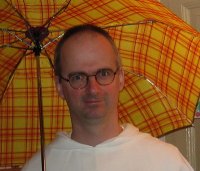
Charles Morerod, OP (Facebook photo)
After celebrating the Eucharist with us, the topic of Father Charles’ discussion was on what it means to be a Dominican. A Swiss Dominican serving as rector of the Angelcium, Secretary of the International Theological Commission, and one of three Catholic representatives on the ongoing dialogue with the schismatic sect of Marcel Lefebvre, there was plenty beyond the Order of Preachers to ask about. (as if that resume is not enough, Fr. Morerod is actually on Facebook! Yes, you can find him on my friend list!)
St Dominic was a Cathedral canon with the Bishop of Osma, Spain on a journey to make arrangements for a royal wedding which never happened. Passing through regions of France dominated by the Albigensians/Cathars, Dominic was taken by the lack of good preaching in the region, which lead the poorly catechized residents to gravitate toward the dualist heresies. Further, he was disturbed by the fact that many of the preachers that were available to the people of the region were failry weatlthy monastics or papal legates. So, instead of returning home, he stayed to preach and eventually a following grew.
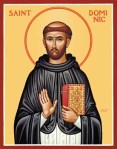
St. Dominic, Founder of the Order of Preachers
He was an efficient organizer, and conscientious that the community not become “his” community (reminds me of Father Scott!) – In fact, his humility was so complete that when he died, his order buried him and promptly forgot which grave was his. When, 13 years later, Pope Gregory IX wanted to formally canonize Dominic, the Order was not entirely sure where to find him. Making their best guess, they opened a sarcophagus and discovered “the smell was quite pleasant, so, it must be the saint!”
Grand(father) Inquisitor at the Lay Centre
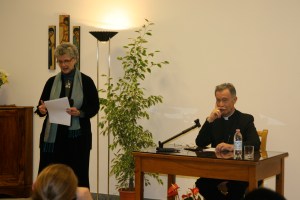
Dr. Donna Orsuto, Most Rev. Luis Ladaria Ferrer, SJ
When meeting with the second-ranking official of the dicastery known for most of its history as the Holy Office of the Inquisition (now the Congregation for the Doctrine of the Faith, CDF), one might not expect a relaxed and cheerful pastor.
One certainly does not expect to hear such pearls as, “We are not here to judge who is ‘really’ Catholic and who is not. We are all striving for holiness, but none of us has reached it. We offer people formation in the Catholic ideal, but everyone struggles with the real application of this in their life” or “Let him who is without sin cast the first stone!”
Yet, this is exactly what we got in the “grandfatherly” Jesuit Spaniard, Archbishop Luis Ladaria Ferrer, Secretary of the CDF at Tuesday night’s inaugural Oasis in the City at the new location of the Lay Centre.
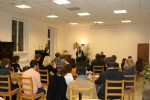
Oasis in the City event at the Lay Centre
Equally reassuring of the man’s Christian heart was his reaction to the fact that the car service that had been arranged to get him to the Lay Centre was 45 minutes late, having left the Archbishop waiting for his ride, without any notice. Any normal person could reasonably expect to be irritated or upset. A typical “VIP” might have just given up and given up on us. More than a couple U.S. hierarchs I have encountered might have thrown a royal fit at such inconvenience. But when the archbishop finally arrived, he got out of the car laughing and waving away Donna’s profuse apologies as if they were not even needed: “These things happen all the time”, he says.

Archbishop Ladaria, Secretary of the Congregation for the Doctrine of the Faith
The bulk of his lecture was on the unsurprising CDF 2008 instruction Dignitas Personae, dealing with a range of bioethical issues including IVF, stem cells, and cloning. It was the questions afterword that brought some of the most interesting comments, including the two quotes above, the first being in response to a question about where to draw the line when someone (such as a politician) does not act or profess a view entirely commensurate with Catholic moral teaching on these complicated issues. Others challenged the Church’s insistence that “human life/personhood begins at conception” from a Thomistic framework which allows for a later development.
My Italian is not good enough to have followed the lecture in its entirety, but the conversation afterword was just as lively. Now if only all of our American hierarchy were as pastoral as this CDF honcho! (Yes, you read that correctly!!)
UPDATE: Didn’t realize the press was here too: http://www.catholic.org/international/international_story.php?id=34844&cb300=vocations
 The Ecumenism Blog