The Ecumenism Blog

Home » Posts tagged 'ecumenism' (Page 5)

Tag Archives: ecumenism

Papal Angelus Address on Christian Unity Sunday

“Conversion to Christ Is the Way That Will Lead … to Full Visible Unity”

* * *

Dear Brothers and Sisters!

During these days, Jan. 18-25, the Week of Prayer for Christians Unity is being observed. This year it has as its theme a passage from the book of the Acts of the Apostles, that sums up in a few words the life of the first Christian community in Jerusalem: “They persevered in the teaching of the apostles, in communion, in the breaking of the bread and prayer” (Acts 2:42). It is very significant that this [year’s] theme was proposed by the Churches and Christian communities in Jerusalem, gathered together in an ecumenical spirit. We know how many trials the brothers and sisters in the Holy Land and the Middle East have to face. Their service is thus still more precious, confirmed by the witness that, in certain cases, has ended in the sacrifice of life. So, while we welcome with joy the points of reflection offered by the communities that live in Jerusalem, we join with them and may this become for everyone a further builder of communion.

Today too, to be a sign and instrument in the world of intimate union with God and of unity among men, we Christians must base our life on these four cardinal principles: life founded on the faith of the Apostles transmitted in the living Tradition of the Church, fraternal communion, the Eucharist and prayer. Only in this way, being closely united to Christ, can the Church effectively accomplish her mission, despite the limits and failures of her members, despite the divisions, which the apostle Paul already had to confront in the community of Corinth, as the second biblical reading for this Sunday recalled: “I exhort you brothers to be united in what you say so that there are not divisions among you, but be in perfect union of thought and feeling” (1:10). The Apostle, in fact, knew that in the Christian community of Corinth discord and division had sprung up; thus, with great firmness he adds: “Is Christ divided?” (1:13). Speaking in this way he acknowledges that every division in the Church is an offense to Christ; and, at the same time, that it is always in him, the one Head and Lord, that we can find unity among ourselves, by the inexhaustible power of his grace.

This is why the Gospel’s summons is always relevant today: “Convert, because the kingdom of heaven is near” (Matthew 4:17). The serious commitment to conversion to Christ is the way that will lead the Church, in the times disposed by God, to full visible unity. The ecumenical encounters that are increasing throughout the world are a sign of this. Here in Rome, besides various ecumenical delegations being present, tomorrow will begin a session of the Commission for Dialogue Between the Catholic Church and the Ancient Eastern Churches. And the day after tomorrow, the Week of Prayer for Unity Among Christians will conclude with the solemn celebration of the vespers of the feast of the Conversion of St. Paul. May the Virgin Mary, Mother of the Church, always accompany us along this path.

[Translation by Joseph G. Trabbic]
© Copyright 2011 — Libreria Editrice Vaticana

The Week of Prayer in Rome

Earlier in the year, a couple fellow classmates and I quipped that ecumenical progress in Rome meant that after centuries of bitter division, competitiveness and even occasional “sheep-stealing”, now the students from the Dominican-run Angelicum are allowed to attend lectures at the Jesuit-staffed Gregorian University, (which is located a short five-minute walk from the Angelicum).

The reality is a little more encouraging, however. The packed schedule of the Week of Prayer for Christian Unity is just one example that ecumenism, which lay at the heart of the Church’s mission, is really present in the City at the heart of the Catholic Church.

It even goes beyond that, in fact. 17 January, the day before the Week of Prayer begins is devoted, in Italy and other European nations, to a day of Dialogue between Christians and Jews. A celebration in Assisi on that date every year is one of the oldest and best known, and regularly includes Angelicum professor Rabbi Jack Bemporad on the agenda.

It is true that it is difficult, though not impossible, to find non-Catholics in the theology and philosophy departments of the Pontifical Universities. Honestly, it is still hard to find non-clerics or religious in some! But, for all that, the capital of the Church has a lot going on during this 2011 Week of Prayer for Christian Unity.

(Being as it is Rome, however, nobody coordinates these events into a single calendar. I had to put together five different sources to get these. Most of which arrived after the week had started!):

Sunday, 16 January

+        18.30 In anticipation of the Week of Prayer, Ecumenical Evensong at the Anglican Church of All Saints, organized by Churches Together in Rome.

Monday, 17 January

+        20.00 Lecture, “The Path Ahead for the Ecumenical Movement in the 21st Century” with Rev. Andrea Joos at Santa Maria del Silenzio. Sponsored by the Daughters of the Church.

 Tuesday, 18 January:

+        12.45 Eucharist celebrated at the Anglican Centre in Rome (Palazzo Doria Pamphilj)

+        15.30 Lecture, “Orthodox Ecclesiology and Postmodernity with Grand Archdeacon Maximos of the Ecumenical Patriarchate at the Pontifical Gregorian University

+        19.00 Worship service at the Italian Methodist Church, sponsored by the Consultation of Evangelical Churches of Rome (Via XX Settembre)

+        20.00 Divine Liturgy in the Byzantine Rite (Ukranian Catholic Church) at Santa Maria in Via Lata (Via del Corso 306)

+        20.00 Lecture, “The Fifth Commandment: Honor Your Father and Mother” with Rabbi Jack Bemporad at Santa Maria del Silenzio.

Wednesday, 19 January

+        10.30 General Audience with Pope Benedict XVI “Prayer is the center of the journey to unity

+        20.00 Divine Liturgy in the Armenian Rite (Armenian Catholic Church) at Sta Maria in Via Lata

Thursday, 20 January

+        16.30 Lecture, “Renewed Mission of the World Council of Churches in the Search for Christian Unity” with Rev. Dr. Olav Fyske Tveit, General Secretary of the WCC. Followed by an Ecumenical Celebration of the Word, presided over by Rev. Trevor Hoggard, Methodist Representative to the Holy See and pastor of Ponte Sant’Angelo Methodist Church, and preaching by Very Rev. Mark Francis, CSV, of the Pontifical Liturgical Institute and the Caravita community. Sponsored by the Lay Centre at Foyer Unitas, the Centro Pro Unione, and the Vincent Pallotti Institute.

+        19.00 Ecumenical Vigil at the parish Gesù Divino Maestro, sponsored by the Diocese of Rome.

+        20.00 Divine Liturgy in the Byzantine Rite (Romanian Catholic Church) at Sta Maria in Via Lata

Friday, 21 January

+        20.00 Divine Liturgy in the Antiochene/West Syrian Rite (Maronite Catholic Church) at Sta Maria in Via Lata

Saturday, 22 January

+        20.00 Divine Liturgy in the Chaldean/East Syrian Rite (Syro-Malabar Catholic Church) at Sta Maria in Via Lata

Sunday, 23 January – Christian Unity Sunday

+        11.00 Eucharist at the Caravita Community with ecumenical guest preacher, Rev. Dr. Roger Ferlo, Director of the Institute for Christian Formation and Leadership at Virginia Theological Seminary.

+        17.00 Ecumenical Evensong at the Episcopal Church of St. Paul “Within the Walls”. Bishop Richard Garrard, presiding. Followed by a presentation of Thomas Tallis’ anthem “Spem in Alium” rendered by four choirs from an ecumenical gathering of churches in Rome

+        18.00 Ecumenical prayer and “fraternal encounter” at the Waldensian Church on Piazza Cavour, sponsored by the Segretariato Attività Ecumeniche – an Italian ecumenical lay movement.

+        20.00 Divine Liturgy in the Roman Rite (Roman Catholic Church) at Sta. Maria in Via Lata. Most Rev. Ernesto Mandara, Auxiliary Bishop of Rome for the Central Sector, presiding.

Monday, 24 January

+        20.00 Divine Liturgy in the Byzantine Rite (Greek Catholic Church) at Santa Maria in Via Lata

Tuesday, 25 January

+        12.45 Eucharist celebrated at the Anglican Centre (Palazzo Doria Pamphili). Reception following.

+        17.30 Solemn Vespers concluding the Week of Prayer for Chrisitan Unity at the Basilica of Saint Paul’s Outside the Walls. His Holiness Pope Benedict XVI will preside and preach. 

+        20.00 Divine Liturgy in the Alexandrian Rite (Ethiopian Catholic Church) at Santa Maria in Via Lata

Pope Benedict XVI: Praying for Christian Unity

The Vatican Website only has the audience text in Italian….

VATICAN CITY, JAN. 19, 2011 (Zenit.org).- Here is a translation of the address Benedict XVI gave today during the general audience in Paul VI Hall. In his address, the Pope centered his meditation on the Week of Prayer for Christian Unity, which is being held these days with the theme “They devoted themselves to the Apostles’ teaching and fellowship, to the breaking of bread and the prayers” (Acts 2:42).

* * *

Dear Brothers and Sisters,

We are celebrating the Week of Prayer for Christian Unity, in which all believers in Christ are invited to join in prayer to witness the profound bond that exists among them and to invoke the gift of full communion. Providential is the fact that prayer is placed at the center of the path to build unity: this reminds us, once again, that unity cannot be a simple product of human action; it is above all a gift of God, which entails growth in communion with the Father, the Son and the Holy Spirit. Vatican Council II states “[t]hese prayers in communion are, without a doubt, a very effective means to implore the grace of unity and constitute a genuine manifestation of the bonds with which Catholics remain united with the separated brethren: ‘For where two or three are gathered in my name, there am I in the midst of them’ (Matthew18:20)” (“Decree Unitatis Redintegratio,” No. 8). The path to visible unity among all Christians resides in prayer, because fundamentally we do not “build” unity, but it is “built” by God, it comes from Him, from the Trinitarian Mystery, from the unity of the Father with the Son in the dialogue of love which is the Holy Spirit and our ecumenical effort should be open to divine action, it must be a daily invocation of God’s help. The Church is His and not ours.

The theme chosen this year for the Week of Prayer makes reference to the experience of the early Christian community of Jerusalem, just as it is described in the Acts of the Apostles (we have heard the text): “And they devoted themselves to the Apostles’ teaching and fellowship, to the breaking of bread and the prayers” (Acts 2:42). We must consider that already at the moment of Pentecost the Holy Spirit descended on persons of different language and culture: this means that the Church embraces from the beginning people of different origins and, yet, precisely from these differences the Spirit creates one body. Pentecost, as the beginning of the Church, marks the enlargement of God’s Covenant with all creatures, with all peoples at all times, so that the whole of creation will walk towards its true objective: to be a place of unity and love.

In the passage quoted from the Acts of the Apostles, four characteristics define the early Christian community of Jerusalem as a place of unity and love, and St. Luke does not wish to describe only an event of the past. He offers it to us as model, as norm for the present Church, because these four characteristics must always constitute the life of the Church. The first characteristic is to be united in listening to the teachings of the Apostles, in fraternal communion, in the breaking of the bread and in prayer. As I already mentioned, these four elements are still today the pillars of the life of every Christian community and constitute just one solid foundation on which to base our search for the visible unity of the Church.

First of all we have listening to the teaching of the Apostles, that is, listening to the testimony that they give of the mission, life, death and resurrection of the Lord Jesus. It is what Paul calls simply the “Gospel.” The first Christians received the Gospel from the mouth of the Apostles, they were united to hear it and to proclaim it, since the Gospel, as Saint Paul affirms, “is the power of God for salvation to every one who has faith” (Romans 1:16). Still today, the community of believers recognizes, in the reference to the teaching of the Apostles, their own norm of faith: every effort made for the building of unity between Christians passes through the deepening of fidelity to the depositum fidei which the Apostles transmit to us. Firmness in the faith is the basis of our communion, it is the basis of Christian unity.

The second element is fraternal communion. In the times of the early Christian community, as also in our days, this is the most tangible expression, above all for the outside world, of the unity among the disciples of the Lord. We read in the Acts of the Apostles — we have heard it — that the first Christians held everything in common and that those who had properties and goods sold them to distribute to the needy (cf. Acts 2:44-45). This communion of their goods has found, in the history of the Church, new forms of expression. One of these, in particular, is that of the fraternal relationship and friendship built between Christians of different confessions. The history of the ecumenical movement is marked by difficulties and uncertainties, but it is also a history of fraternity, of cooperation and of human and spiritual communion, which has changed in a significant way the relations between believers in the Lord Jesus: we are all committed to continue on this path. Hence, the second element is communion which is, first of all, communion with God through faith, but communion with God creates communion among ourselves and is translated necessarily into the concrete communion of which the Acts of the Apostles speak, that is, full communion. No one should be hungry in the Christian community, no one should be poor: it is a fundamental obligation. Communion with God, made flesh in fraternal communion, is translated, concretely, in social effort, in Christian charity, in justice.

Third element. Essential also in the life of the early community of Jerusalem was the moment of the breaking of the bread, in which the Lord himself makes himself present with the only sacrifice of the Cross in his giving himself completely for the life of his friends: “This is my Body given in sacrifice for you … this is the chalice of my Blood … shed for you.” “The Church lives from the Eucharist. This truth does not express only a daily experience of faith, but encloses in synthesis the nucleus of the mystery of the Church” (Encyclical “Ecclesia de Eucharistia,” No. 1). Communion in Christ’s sacrifice is the culmination of our union with God and therefore also represents the plenitude of the unity of the disciples of Christ, full communion. During this Week of Prayer for Unity the lament is particularly alive due to the impossibility of sharing the same Eucharistic table, sign that we are still far from the realization of that unity for which Christ prayed. This painful experience, which confers a penitential dimension to our prayer, must become the motive for a still more generous effort, on the part of all, in order that, eliminating all the obstacles for full communion, the day will come in which it will be possible to gather around the table of the Lord, to break the Eucharistic bread together and all drink from the same chalice.

Finally, prayer, or as St. Luke says, “the prayers,” is the fourth characteristic of the early Church of Jerusalem described in the book of the Acts of the Apostles. Prayer has always been the constant attitude of the disciples of Christ, what supports their daily lives in obedience to the will of God, as attested to us also by the words of the Apostle Paul, who writes to the Thessalonians in his first letter “[r]ejoice always, pray constantly, give thanks in all circumstances; for this is the will of God in Christ Jesus for you” (1 Thessalonians 5:16-18; Ephesians 6:18). Christian prayer, participation in Jesus’ prayer is par excellence a filial experience, as attested to us in the words of the Our Father, prayer of the family — the “we” of the children of God, of the brothers and sisters — that speaks to a common Father. To be in an attitude of prayer, hence, implies being open to fraternity. Only in the “we” can we say the Our Father. Let us open ourselves to fraternity which stems from being children of the one heavenly Father and hence disposed to forgiveness and reconciliation.

Dear brothers and sisters, as disciples of the Lord we have a common responsibility to the world, we must carry out a common service: as the first Christian community of Jerusalem, beginning from what we already share, we must give a strong witness, founded spiritually and supported by reason, of the only God who has revealed Himself and who speaks to us in Christ, to be bearers of a message that directs and illumines the path of the man of our time, often deprived of clear and valid points of reference. Hence, it is important to grow each day in mutual love, committing ourselves to overcome those barriers that still exist among Christians; to feel that a true interior unity exists among all those who follow the Lord; to collaborate as much as possible, working together on the questions that are still open; and above all, to be conscious that in this itinerary the Lord must assist us, he still has to help us much because, without Him, alone, without “abiding in Him,” we can do nothing (cf. John 15:5).

Dear friends, once again it is in prayer where we find ourselves gathered — particularly during this week — together with all those who confess their faith in Jesus Christ, Son of God: let us persevere in it, let us be people of prayer, imploring from God the gift of unity, so that his plan of salvation and reconciliation will be fulfilled in the whole world. Thank you!

[The Holy Father then greeted pilgrims in several languages. In English, he said:]

Dear Brothers and Sisters,

During the Week of Prayer for Christian Unity, all the Lord’s followers are asked to implore the gift of full communion. This year’s theme — “They devoted themselves to the Apostles’ teaching and fellowship, to the breaking of bread and the prayers” (Acts 2:42) — invites us to reflect on four pillars of unity found in the life of the early Church. The first is fidelity to the Gospel of Jesus Christ proclaimed by the Apostles. The second is fraternal communion, a contemporary expression of which is seen in the growing ecumenical friendship among Christians. The third is the breaking of the bread; although the inability of separated Christians to share the same Eucharistic table is a reminder that we are still far from the unity which Christ wills for his disciples, it is also an incentive to greater efforts to remove every obstacle to that unity. Finally, prayer itself helps us realize that we are children of the one heavenly Father, called to forgiveness and reconciliation. During this Week, let us pray that all Christians will grow in fidelity to the Gospel, in fraternal unity and in missionary zeal, in order to draw all men and women into the saving unity of Christ’s Church.

I offer a warm welcome to the students and staff of the Bossey Graduate School of Ecumenical Studies. I thank the choir from Finland for their praise of God in song. To all the English-speaking pilgrims present at today’s Audience, including those from Australia, Canada and the United States, I invoke an abundance of joy and peace in the Lord.

[In Italian, he greeted the youth, sick and newlyweds present:]

I now greet young people, the sick and newlyweds. Dear friends, I invite you to pray for Christian unity. All of you who, with youthful freshness, or with endured self-giving, or with happy spousal love are committed to love the Lord in the daily fulfillment of your duty, contribute to the building of the Church and her evangelizing work. Pray, therefore, so that all Christians will accept the Lord’s call to the unity of the faith in his one Church.

Copyright 2011 — Libreria Editrice Vaticana [Translation by ZENIT]
Week of Prayer for Christian Unity 2011

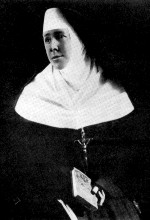
Mother Lurana White, SA

The Week of Prayer for Christian Unity has its origins in the Church Unity Octave, started in 1908 by the founders of an Anglican religious order, the Franciscan Society of the Atonement. The dates were chosen to run the week from the Feast of the Chair of Peter (18 January) to the Feast of the Conversion of Paul (25 January).

18 January was in fact one of two Feasts of the Chair of Peter on the Tridentine calendar, the other being 22 February. Some distinguished these as the Chair of Peter in Rome and the Chair of Peter in Antioch, though it is not clear that that was the original intent of the two dates. Since 1960, only the later date has been celebrated in the Roman calendar as the feast of the Chair of Peter, but the dates for the Week of Prayer remain the same.

(As an interesting aside, with the resurgence of interest in the extraordinary form of the Roman Rite, since Pope Benedict’s 2007 motu proprio Summorum Pontificum allowing more widespread use of the 1962 missal, some liturgical traditionalists observe the January feast date. However, this appears to be incorrect, as the 1962 missal was produced after the change to the calendar mentioned above.)

Fr. Paul Wattson, SA

The original octave focused on Anglican-Catholic reunion, and the themes as approved by Pope Pius X were a great example of what is now known as the “ecumenism of return” – which was common in the post-Vatican I period at the beginning of the last century (and which some fear is making a resurgence in these days… but more on that in a later post).

In fact, even before the Church Unity Octave was established by Father Paul Watson, SA, and Mother Lurana White, SA, there were calls for a time of prayer for Christian Unity. The Lambeth Conference, the decennial synod of the world’s Anglican bishops, in 1878 called for a period of prayer for unity around the feast of the Ascension. In 1895 Pope Leo XIII agreed, establishing a novena for Christian Unity from Ascension to Pentecost.

Since 1935, the Church Unity Octave began to expand to a more comprehensive Week of Prayer for Christian Unity, including prayer for the unity of all Christians. By 1957, there was quasi-official participation in the planning for the worldwide celebrations by a Catholic organization from Lyons, and in 1966 the Week of Prayer for Christian Unity officially became a joint project of the Catholic Church and the World Council of Churches. The materials used throughout the world have been prepared each year by a Joint Working Group of the Faith and Order Commission of the WCC and the Pontifical Council for Promoting Christian Unity.

Additionally, a local ecumenical community prepares the theme and symbols for the Week of Prayer, and this year’s local planners were the churches of Jerusalem.   The theme chosen for 2011 is: “One in the apostles’ teaching, fellowship, breaking of bread and prayer” (cf. Acts 2:42).

Each day of the Week has a different theme:

  • 18 January: The Church in Jerusalem.
  • 19 January: Many Members in One Body.
  • 20 January: Devotion to the Apostles’ Teaching Unites Us.
  • 21 January: Sharing, an Expression of Our Unity.
  • 22 January: Breaking the Bread in Hope.
  • 23 January: Empowered to Action in Prayer.
  • 24 January: Living in Resurrection Faith.
  • 25 January: Called for the Service of Reconciliation.

Compare that to the themes of the original Church Unity Octave, as approved by Pope Pius X just one century ago, to see “development in continuity” in practice for the Catholic Church’s teaching on the ecumenical movement. Unity is still the goal, in obedience to Christ and for the sake of the Church’s mission, but our understanding of this constant truth has clearly matured!

Note, not only the the marked difference in tone, but also the inclusion of prayer for the Jews both then and today, except that now it is on a day preceding the Week of Prayer for Christian Unity. Note also the distinction between European Protestants and American Christians.

Church Unity Octave daily themes (c.1911)

  • 18 January: The Union of all Christians in the one true faith and in the Church
  • 19 January: The Return of separated Eastern Christians to communion with the Holy See
  • 20 January: The Reconciliation of Anglicans with the Holy See
  • 21 January: The Reconciliation of European Protestants with the Holy See
  • 22 January: That American Christians become one in union with the Chair of Peter
  • 23 January: The Restoration of lapsed Catholics to the sacramental life of the Church
  • 24 January: That the Jewish people come into their inheritance in Jesus Christ
  • 25 January: The missionary extension of Christ’s kingdom throughout the world

Final Statement

Final Statement
Fundamentalist or Responsible Citizen?
The Contribution of Religious Communities to the Formation of European Citizens.

28 November to 5 December 2010 Sarajevo, Bosnia and Herzegovina.

Our God has called us here all together, Jews, Christians and Muslims, motivated to encourage young religious people to take a more active role in public life within Europe. In light of the changing religious composition of European societies, increased xenophobia, and a trend towards excluding religion from civil discourse, our aim was to propose ways in which young religious European citizens can take a more active role in fulfilling their duties towards society as a whole.

We are concerned over the rise of extremist attitudes, sometimes identified with fundamentalism, whether religious or secular. We believe that religions, cultures and civil systems can work together towards common  objectives.

We assert that religious identity should not be excluded from the public sphere, and that in order to achieve a fairer society, people of all backgrounds and beliefs must take an equal part in civil activities.

To achieve this, we recommend:

Formal, informal and non-formal educational initiatives:

  • to raise awareness about the role of religious communities within
    society;
  • to raise awareness of civil duties within religious communities;
  • to increase understanding of different religions and perspectives;
  • to help all people to see beyond stereotypes;

Dialogue and collaboration:

  • on an individual level: getting to know each other, listening, and
    sharing life experiences;
  • between religions and secular authorities;
  • to build networks involving different religious and secular communities
    and policy influencing organisations;

Engagement:

  • by young religious citizens in politics, media and NGO work;
  • in setting an example, becoming involved in voluntary services.

These are activities that will need to be continued by all members of European society on a long-term basis. We must persevere towards a more committed, more responsible and more inclusive society, all together.

Sarajevo, 4th December 2010

Sarajevo 2010: Fundamentalist or Responsible Citizen?

Karin Kops (Estonia) addressing the conference

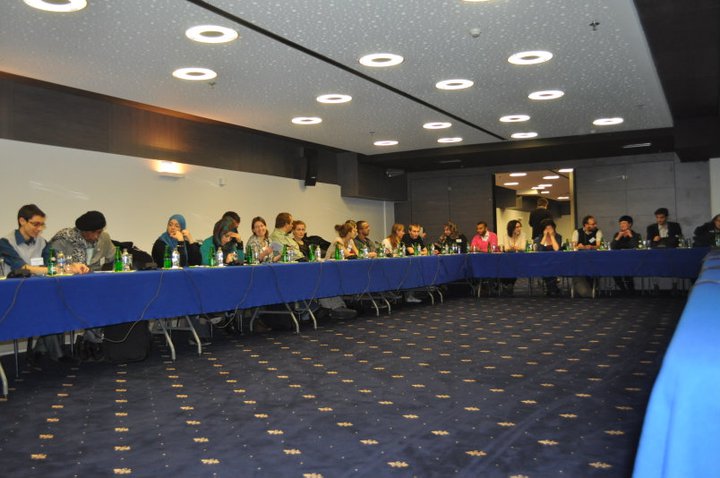
For the last week, I have been blessed with the opportunity to be in Sarajevo with a great group of young people from all over Europe. We gathered for a conference entitled Fundamentalist or Responsible Citizen? The Contribution of Religious Communities to the Formation of European Citizens. The sponsoring agencies included the Ecumenical Youth Council in Europe (EYCE, affiliated with the WCC), the Forum of European Muslim Youth and Student Organizations (FEMYSO), and the Council of Europe. This summit marked the culmination of a three-year Campaign to Overcome Fundamentalism spearheaded by EYCE. 

I should note that “youth” means something different here than in the U.S., as anyone involved in World Youth Day would be aware. At home, especially when speaking of “youth ministry”, we are talking of teens in middle school and high school, age 12-18 or so. Over here, “youth” means university age, in its broadest implications, so the participants ranged from 20 to 35. After almost a decade of involvement in National Workshops on Christian Unity and some NCC events in the States, it was striking to be one of the older people in the room rather than one of the youngest. 

About 45 people were gathered, roughly twenty each were Christian or Muslim, and only four or five were Jewish. I think only four of us were Catholic, with Orthodox, Protestant and even pre-protestant communities represented (i.e., Moravians, Czech Brethren, and Waldensians). Most European states were represented, with the Iberian countries being the only noticeable absence. I was the only non-European, but for my European credentials I was ‘representing’ the Vatican as a pontifical university student – that is, quite unofficially. 

The highlight of the week was the other participants. My roommate was a student from Lithuania. I spent time at a British pub called “Cheers” with a theologian-staffer to the Icelandic bishops’ national office, a protestant pastor’s kid from Northern Ireland living in the Republic, and a Romanian seminarian friend who lead the planning of the whole event (and just turned 22). One of my first conversations was with a Palestinian Briton about the situation in the Holy Land, and my experiences there with the Russell Berrie Fellowship. I shared shisha with a Turkish Muslim woman living in Cairo, and burek with two Albanians from Macedonia and a Latvian who has seen more of the world than I likely ever will! And the list goes on. 

Hasan Patel, photo courtesy of Khaoula Amouri

Despite having studied in Rome for the last year, this was the first time to really talk about Europe per se with Europeans – really to listen and observe as they discussed it themselves – especially on such a relevant issue as the role of religion and secularity in nation, state, and European society. (Most of my classmates are African, Asian, and some from the Americas and what Europeans there are mostly from the east, and a minority.) 

While not an academic conference exactly, the presentations were on topic and promoted good discussion. We had a welcome from the Mufti of Sarajevo and President of the Interreligious Council (IRC), a panel with Muslim, Orthodox, and Catholic representatives of the Bosnian IRC, and presentations from Bashy Quarishy of Denmark, Hasan Patel and Imam Ajmal Masroor of the UK, and Dirk Thesenvitz of Germany. At the end of the week, a subcommittee of participants collated the week’s comments and discussion and drafted a Final Statement, which was signed by all the participants. As part of that committee, I wish we had had more time, as there were a few areas that we felt could have been better phrased, but considering the actual drafting was done in about three hours, by committee for approval by the whole, it seemed to come together rather well. 

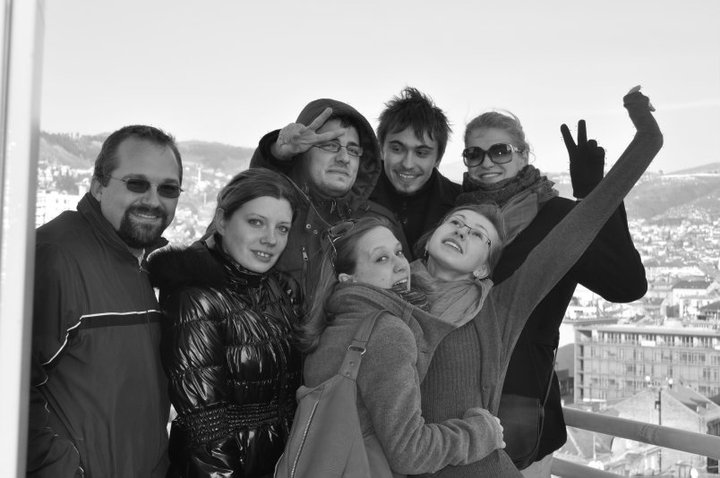
Baltic and Balkan friends, photo courtesy Kristina Jureviciute

Caravita Community Celebrates 10 Years

Eucharist in the Caravita Community

I have mentioned it before, but the Caravita Community is a quasi-parish that meets at the Oratory of Saint Francis Xavier “del Caravita”. It is comprised of an international assortment of Anglophones, with members from about 20 different countries, and is staffed by priests from four different religious orders. Most of its membership travel frequently, and it is a particularly welcoming place for English-speaking pilgrims to Rome. Several people I have meet are in Rome regularly as general officers for their religious community, students or faculty at the pontifical universities, on diplomatic assignment, or staff in the Roman curia. While i try to worship at a variety of churches on Sunday to get a truly catholic experience of the Church, the Caravita Community is always and already familiar.

This weekend they celebrated their 10th anniversary, though even this recent endeavour reflects the longer tradition of the place. Prior to October 2000, however, it had not been used as a place of regular worship since 1925.

Named after the Jesuit Pietro Gravita who was responsible for its construction, the oratory was built between 1618 and 1633 on the site of an existing church, San Nicola de Forbitoribus, and then completely rebuilt between 1670 and 1677 (Baroque, anyone?) The Oratory was constructed to house the nine different lay “congregations” (which would later become to Sodality movement) linked with the work of the Jesuits and served as a centre for lay formation and social outreach in the 17th and 18th centuries. The first women’s lay “congregation” was housed here.

The importance of lay ministry and formation, the dedication to the social mission of the church, and active ecumenical participation remain a part of the community’s identity. Similarly, a rich artistic heritage rests in the place, from 17th century frescoes to the 18th century performance of the teenage Wolfgang Amadeus Mozart, his debut in the Roman court. In honor of a new organ installed into the oratory, part of the weekend’s events included a concert dedicated “Mostly Mozart”.

A symposium entitled “How Firma  Foundation: The Role of the laity and the Church’s Mission in the Third Millennium” included presentations from John Padberg, SJ on the history of Lay Confraternities, a report from Kerry Robinson of the National Leadership Roundtable, and an analysis of last year’s African Synod by Cardinal Peter Turkson of the Pontifical Council for Justice and Peace.

(The symposium and concert occurred while I was at the day of Reflection at Tre Fontane, and no one seems to have recorded the talks. I am trying to track down the speakers’ papers or notes, if they are available…)

The conclusion of the weekend was Ecumenical Evensong, with participation from the membership of Churches Together in Rome, the ecumenical organization for English-language churches in the City. Canon David Richardson, the Archbishop of Canterbury’s Representative to the Holy See, presiding and Donald LaSalle, SMM of the Caravita Community staff preaching.

Teaching in New Orleans

What does a humanities graduate student do for summer work in this economy? “Not much” is the punch line most are looking for, but I have had a few rewarding opportunities for which I am grateful.

Holy Name of Jesus Parish Church, Loyola Unviersity New Orleans

There is still some room on my schedule for some others, if you know of any! Some of my usual work was not available – I have served as faculty or field staff for the Vicar for Clergy, the Faith Formation, Liturgy, and Youth & Young Adult Ministry offices in the past, but several budgets have been cut, and other classes were booked as early as January, and I only started looking in February!

I will be teaching two courses on the Eucharist for our Liturgy Ministers Institute, and working with a couple parishes on leadership development and reorganizational processes, but the most interesting offer was a 10-hour course for the Archdiocese of New Orleans’ Institute for Catechetics and Spirituality, which I taught this week. “An Introduction to Ecumenism and Interreligious Dialogue” – ten hours is nowhere near enough, but sadly more than most in ministry get!

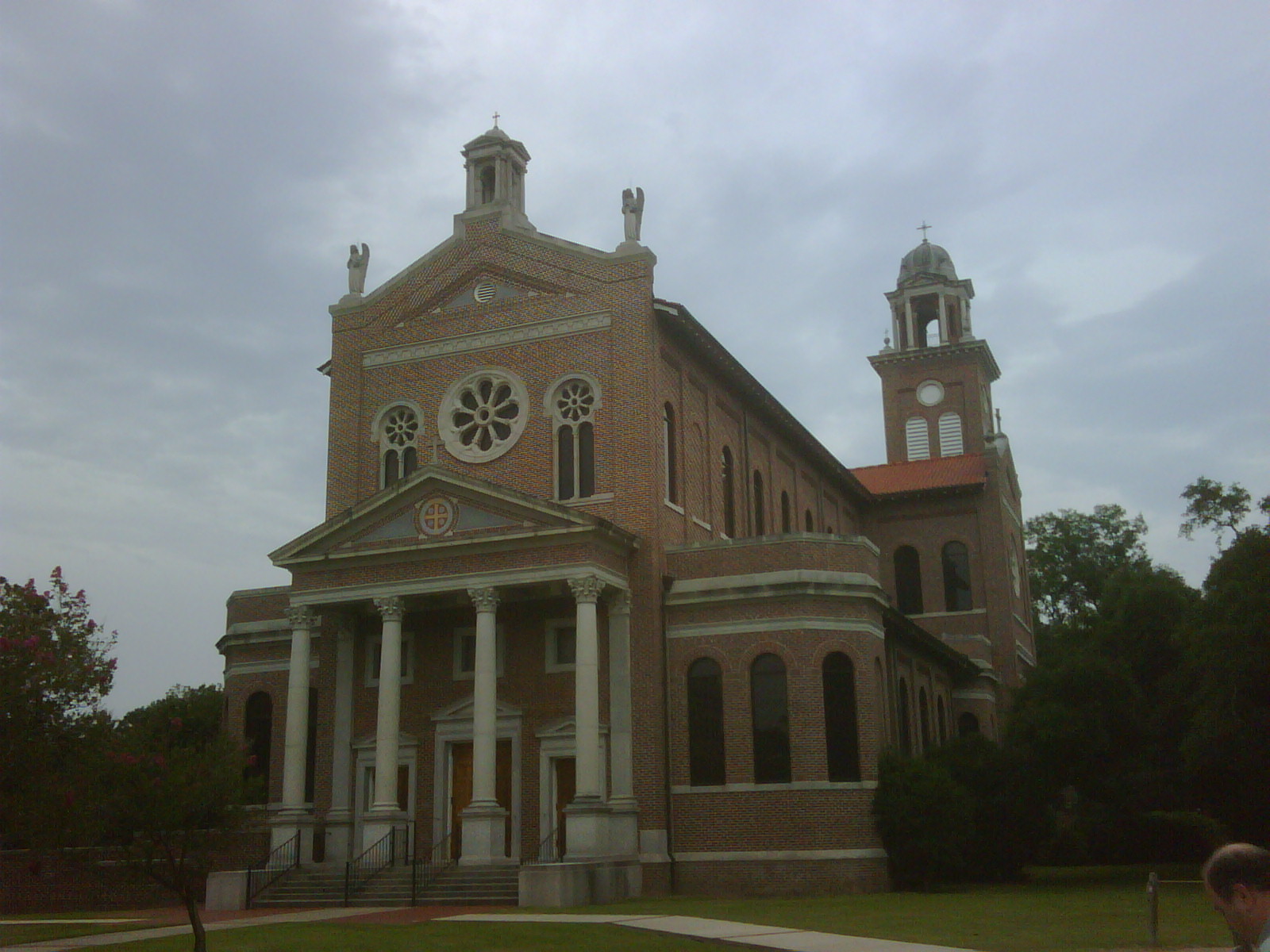
St. Joseph Abbey Church

The Big Easy was hot and humid, but a year and Rome had prepared me. I was only stateside for a few days and just about recovered from jetlag when I left back across the country on a flight almost as long as the one that brought me home from the Netherlands – a reminder that Euclidean geometry does not apply when making flight plans!

My host for the week was a friend and fellow ecumenist/lay ecclesial minister, Buddy Noel. My first moments in New Orleans provided an opportunity for prayer. On his way to the airport to pick me up, Buddy was caught in one of the South’s infamous downpours, and his car hydroplaned into the one in front of him in a backup on the Interstate. At least 12 cars were involved in a number of different collisions in the same area at the same time. His car totaled, Buddy was able to walk away with only bruises from the seatbelt and airbag. As he was making calls from the side of the road, his phone died. Long story short, he got a ride to the airport and had to have them page me, just a couple hours after his accident. I have been given great hospitality before, but this takes things to the extreme!

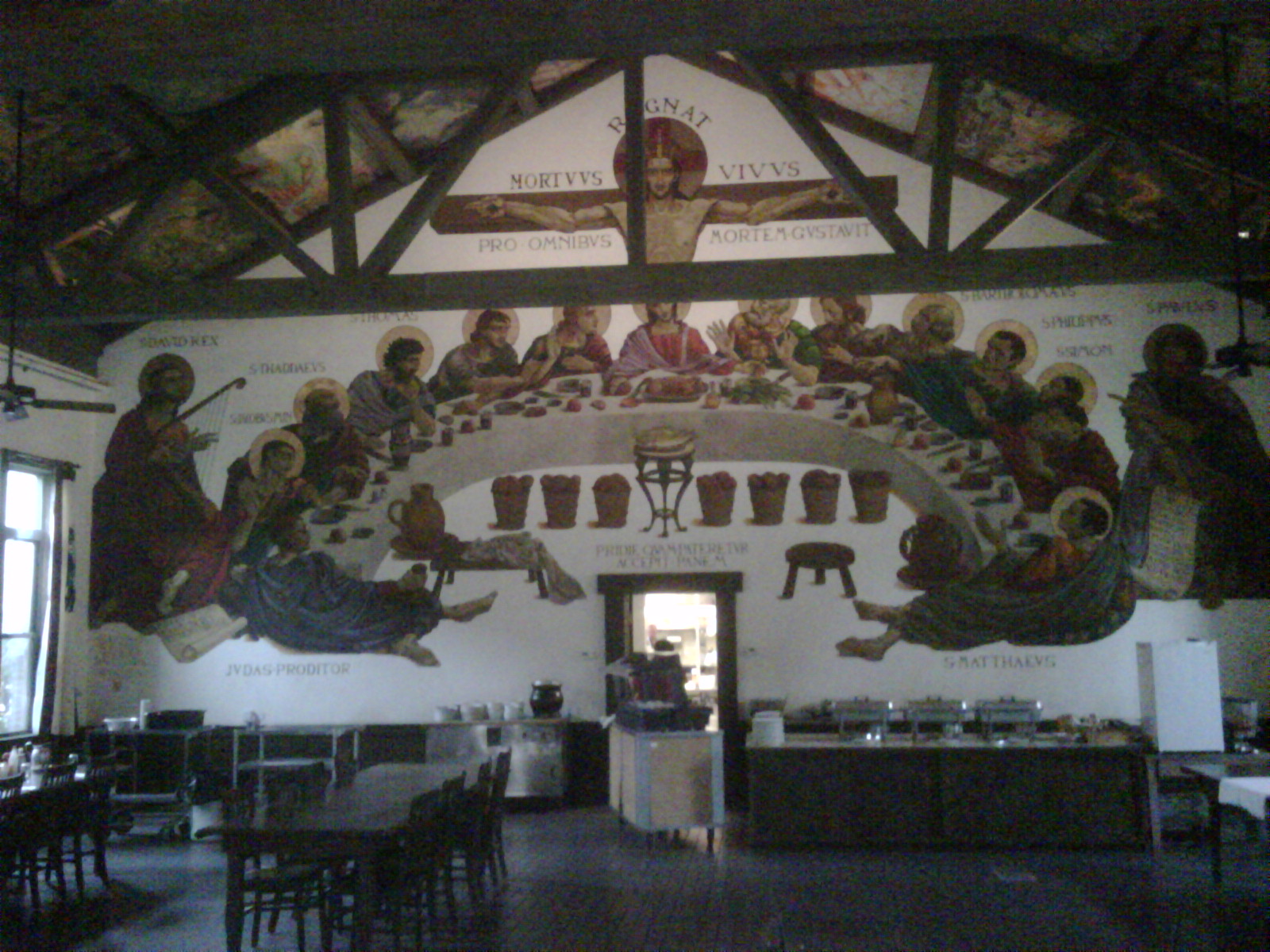
Last Supper, Refectory of St. Joseph Abbey

With a small group for the class, I was able to tailor much of it to some of the questions and expectations of the students, who were a mix of parochial school teachers, parish staff, and interested lay people. And nothing reinforces one’s own studies like teaching a topic, especially when you have to distill the highlights of a dozen years of study into a few hours. It also gave me plenty of time to talk with people and find out a little about the state of the church in one of the Catholic culture centers of the U.S. It was also only my second time to New Orleans, the last being just before Katrina; this time, they were just fitting the well with the new device to see if they could finally stop the largest oil disaster in history.

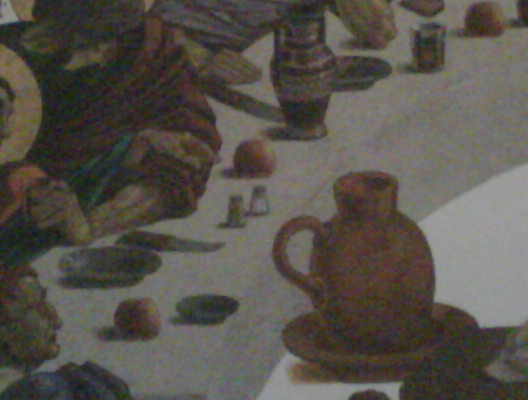
Last Supper (detail): Salt and pepper shakers, eh?

Archbishop Gregory Aymond has been the Ordinary there for just about a year, the first native of the diocese to serve as its bishop. Everyone I spoke with was positive about his appointment, with sentiments ranging from pride for a home-town boy done well to enthusiasm for his ecclesiology – and apropos to my visit – his commitment to local ecumenism.

The city has recovered its population and most of its infrastructure from Katrina, which hit nearly five years ago, but there have been changes. The Lower Ninth Ward looked like a field with a few funky, new houses scattered throughout – you would never know it had been a crowded urban neighborhood until the storm surge. There were still signs of the Katrina, a few gutted and abandoned houses throughout the city, a few roads sinking into the silt, but these were the exception rather than the rule. One of my students had been involved in a Chinese Catholic community that had been fairly active before the storm, whose members are now in diaspora around the country; A similar story with some of the small Eastern Catholic parishes in the diocese.  Several people have simply moved to the other side of Lake Pontchartrain.

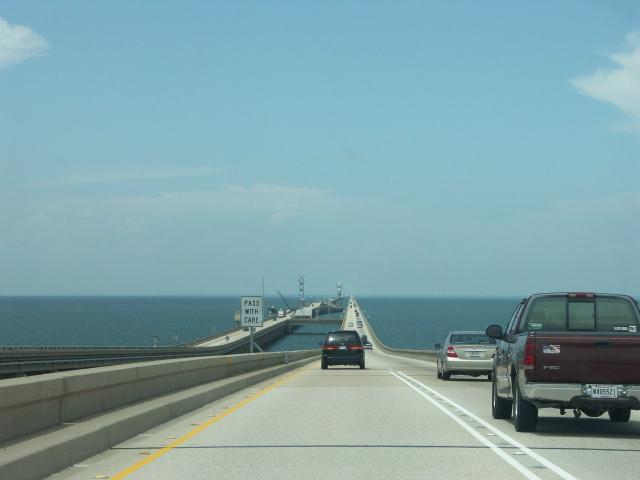
Lake Pontchartrain Causeway

The hospitality was generous and the food was excellent; the company was both! I was blessed to talk with new people each night, sample my first Po’Boys and some Gulf Coast seafood (sans oil), and wander the French Quarter, complete with obligatory beignet and Café au Lait. We prayed evening prayer with the Benedictines at St. Joseph Abbey, and I rode across the longest bridge in the world. Imagine driving onto a bridge and not being able to see land at the far side! The Lake Pontchartrain Causeway is about 24 miles (38.5km) from one shore to the other.

One little tidbit I picked up that fellow pastors and pastoral workers would find interesting, as well as the discussions around parish closings and reconfigurations after Katrina, was the relationship of parish and parochial school. Unlike the northwest, where a fractional minority of Catholic students attend Catholic schools, most in New Orleans do so. The relationship is a little better developed in some respects, as well – for example, the parish Director of Religious Education oversees the curriculum and instruction in both the parish religious education and youth ministry programs as well as the parish school classrooms.

Archbishop Gregory Aymond of New Orleans

The Dutch, I Presume?

Holland and Netherlands are not the same thing, and the people and language are Dutch (though Flemish works, too). It does not help the rest of us, I suppose, that the Dutch national team was competing in the World Cup as Holland, though it was in fact the whole of the Netherlands represented. Holland is the western part of the Netherlands, one of the regions and once-independent states that combined to form the Netherlands, which itself is part of the region known variously as the Low Countries and the Benelux region (Belgium-Netherlands-Luxembourg).

In fact, while Eveline and I were touring the canals of Den Bosch, the volunteer tour boat captain asked the 20 people on board how many were from Holland. Considering I was the only person not speaking Dutch, I was surprised when Eveline was the only one to raise her hand – the rest were from elsewhere in the Netherlands: Friesland, Zeeland, Gelderland et al.

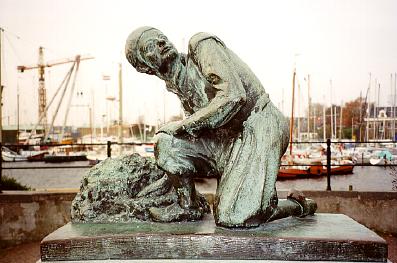
Hans Brinker, the boy everyone knows about for sticking his finger in the dyke to keep it from flooding. Everyone but the Dutch, that is.

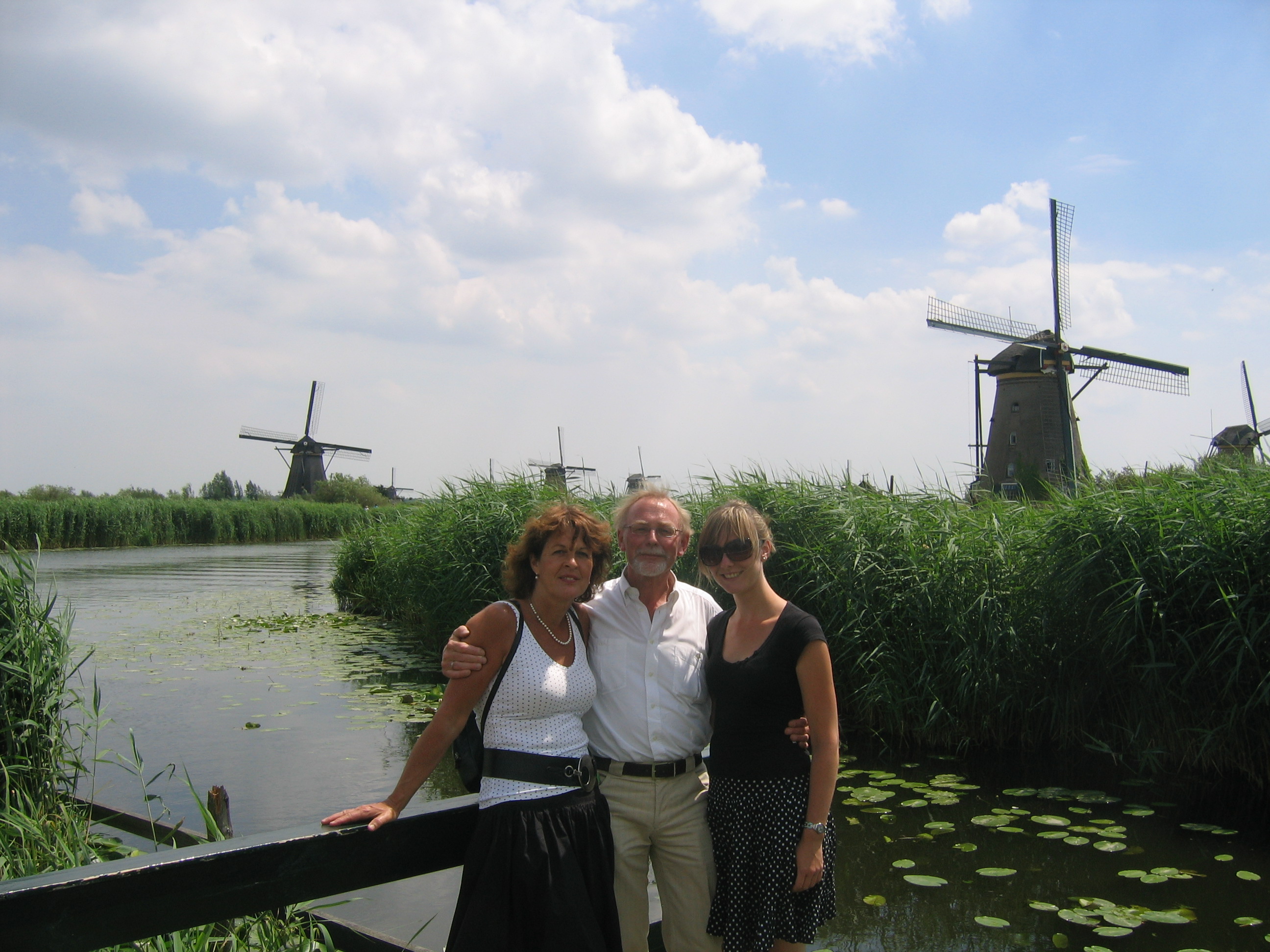
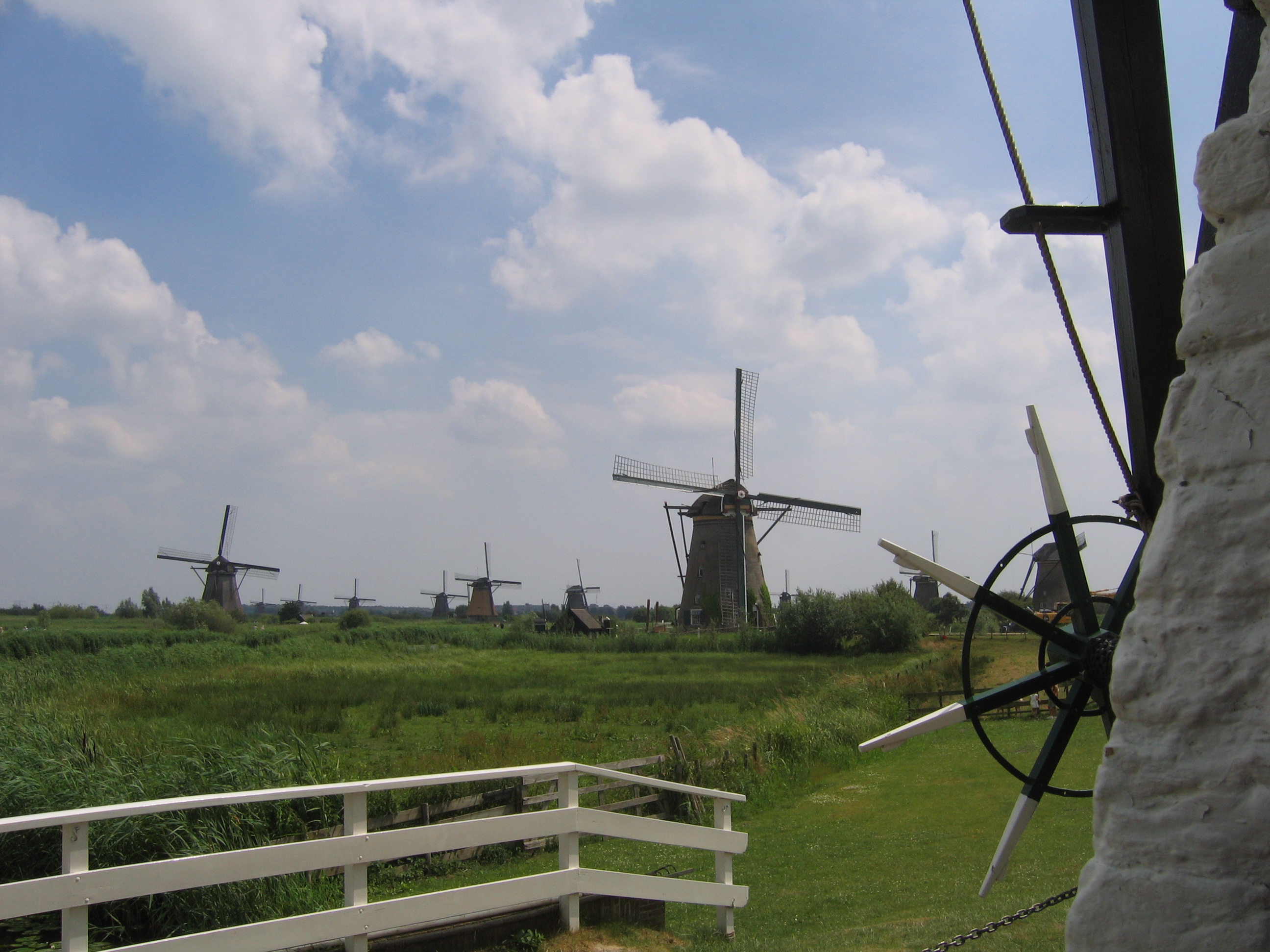
A few people asked what my impressions of the Netherlands were, and what my expectations had been. Everyone seemed genuinely surprised that growing up on the far end of America, I had even heard about their country as a child. When visiting Kinderdyke, a picturesque concentration of nearly 20 windmills, we saw a notation in the guestbook reading, “It is a childhood dream come true to see these! Thank you!” The mild scoffing by the natives at the remark earned an explanation from me that indeed the mills and dykes of the Netherlands are known to us since childhood. Who knew that most Dutch have never heard of Hans Brinker?

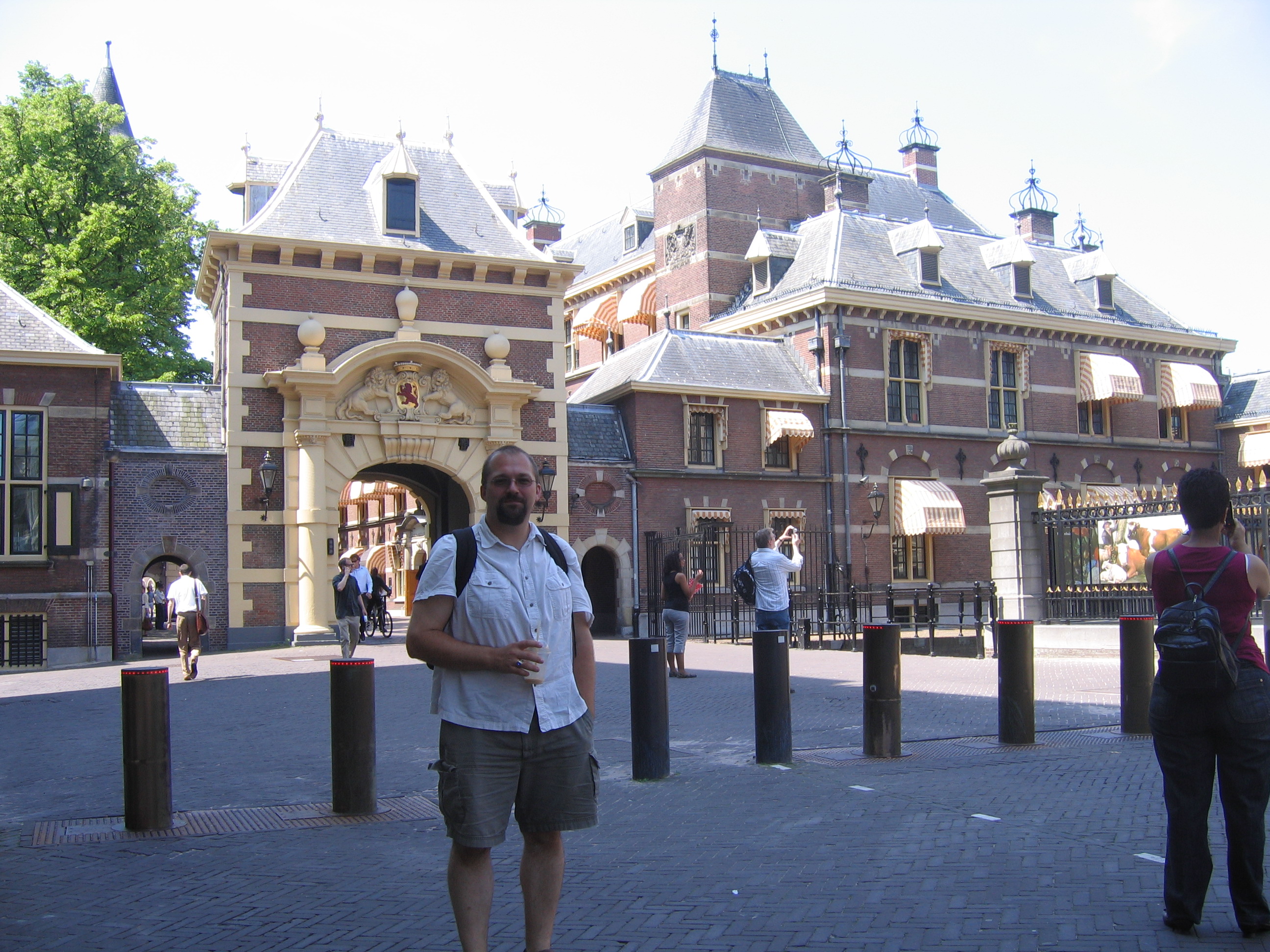
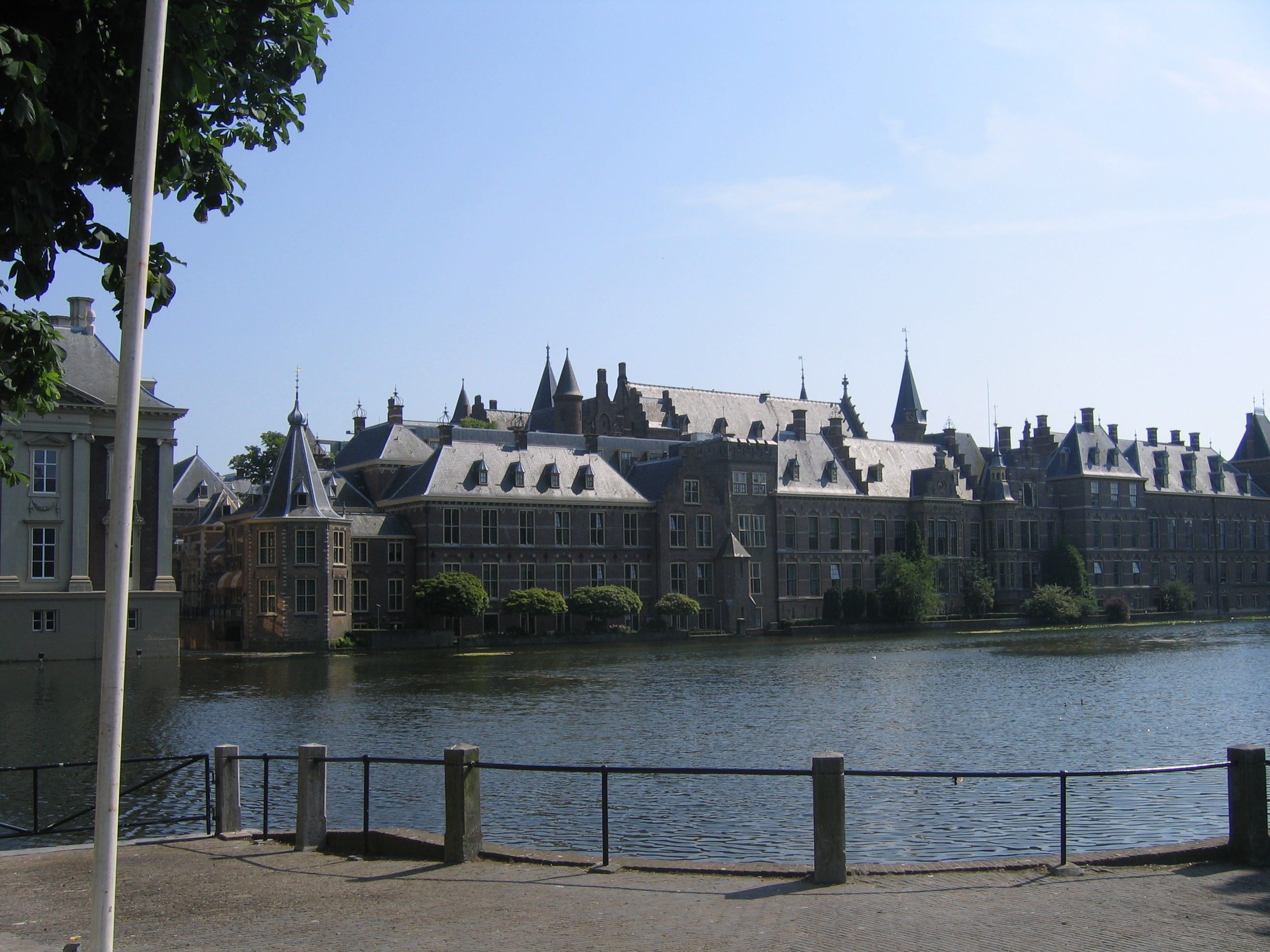
In front of the Binnenhof, home of the Dutch States-General (parliament)

A few words to describe my impressions? Fiets (bicycles)! Windmills, dykes, canals, and polders. Skating. Decorated bread! Drop (liquorice). Small country and houses. Friendly people, hospitality. Stroopwafels and Gouda (‘how-da’) cheese. [The Netherlands is about 16000 square miles – roughly 2/3 the size of Western Washington;  the size of Massachusetts and Connecticut combined.]

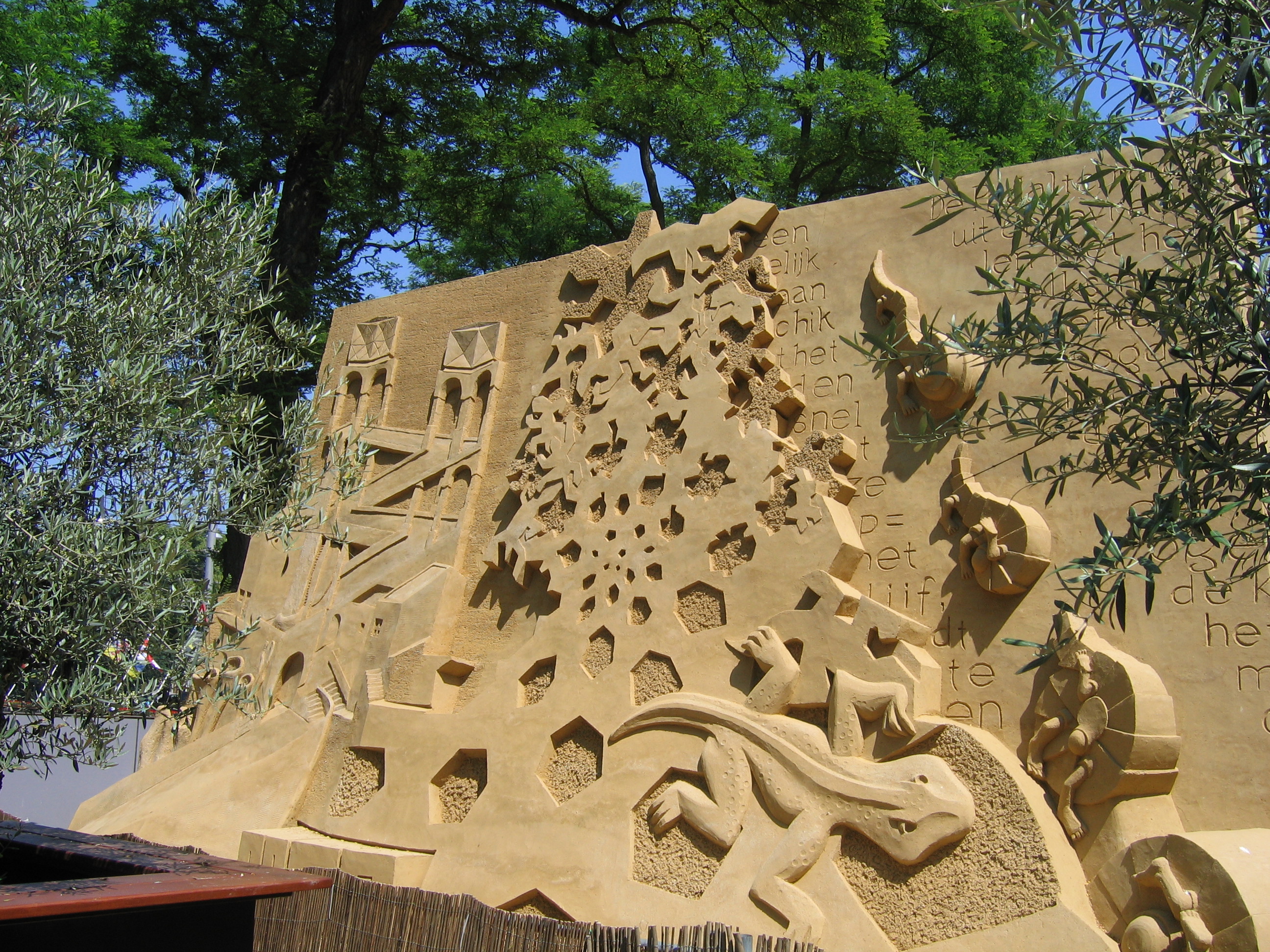
M.C. Escher tribute in sand

During a game of Dutchopoly, which was lost to the aforementioned theologian-diplomat, I got a pop quiz from her mom: “Do Americans know any [contemporary] famous Dutch people?” Schillebeecx, of course! And Visser t’Hooft. (Pronounced tohft, not tooft, I discover after the laughter subsides…) M.C. Escher is well known, but I doubt many know he was Dutch. Historical figures are more likely: Spinoza, Erasmus, Van Gogh. I had already mentioned Hans Brinker to mostly blank stares. But actors, musicians, athletes? Not so sure…

My generous hosts

After Amsterdam, I got a full day to explore the university town of Tilburg, Eveline’s college home for the last five years. Big, beautiful, rarely visited churches; bicycles in the tens of thousands parked at the train station; a large outdoor shopping district. I discovered almost immediately that the Dutch do not anticipate size-13 American feet when designing stairs.

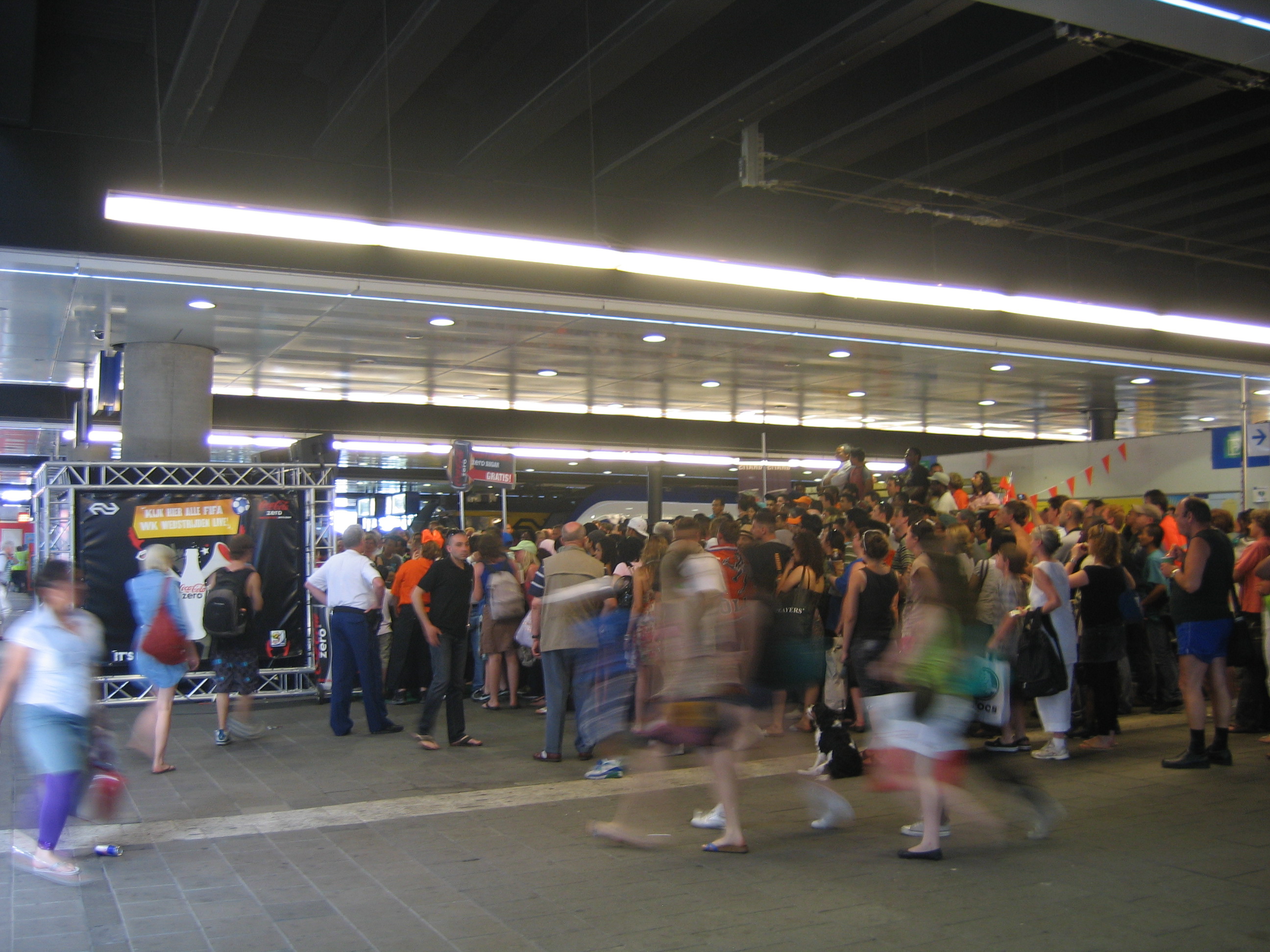
Amsterdam may be the capital, but the seat of government is Den Haag (The Hague), which is where the Queen, parliament, and the embassies cluster, not to mention the international criminal courts. Like Amsterdam it dates from about the 13th century, and retains a great deal of European charm. A little less so, Rotterdam, which we visited next. Though an older city, its historic center was all but completely demolished during WWII. Definitely something to be in the midst of The Hague and the sea of orange as Holland won its way to the World Cup finals!

Kinderdyke

Over the weekend we retreated to Maasdam in South Holland, a small rural town where Eveline grew up and where her parents still keep her childhood house. Her father rides his bike 40 km to work daily, as he has for decades, and her mother has a pair of wooden clogs she still uses for working in the garden. We toured the island by fiets, and I discovered this is a lot easier to do when A) the entire country is flat and below sea level, B) you ride street cruisers rather than mountain bikes, and C) the entire country is crisscrossed with dedicated bicycle paths, not just 18” lanes on the side of a road!

World Cup game ends in five minutes. Your train leaves in three. Where would you be?

Sunday was my first Fourth of July outside the U.S. Thanksgiving in Rome had had all the feel of home, a big feast and a gathering of friends, but there were no fireworks for me for Independence Day. (“So that’s why they always play that movie on TV today!” she says). There is plenty of Red, White, and Blue, however, since those are the colors of the Dutch flag as well – though Orange is the ‘unofficial’ color of the country, William of Orange being the ‘founding father’ if you will. We spent the afternoon touring the windmills of kinderdyke and the surrounding area. It is a little bit eerie to see rivers flowing through fields where the river is consistently higher than the land around it!

The Binnenhof

My last day was spent with a gathering of the Dutch clergy, honoring the end of the Year of the Priest, in ‘s-Hertogenbosch (Den Bosch for short). The guest of honor, presider and lecturer was the recently retired Cardinal Walter Kasper, who has been president of the Pontifical Council for Christian Unity for the last decade. Between the morning’s Eucharist and the afternoon’s lecture and vespers, we wandered around the town, sampled the famous Bosch Bollen, and toured the city from the canals that run beneath the city.

The cardinal’s address was delivered in German, and we were provided with Dutch translations in advance enough for me to glean the basic points from my host before the lecture began.

Cardinal Kasper in Den Bosch

(As I was searching for an English translation, I came upon a blog, In Caelo et in Terra,  that included them and a photo from the event. I have commandeered both, so please give credit where it is due.) His remarks reflected on his more than half century of ordained ministry, and he addresses head-on the topics of clericalism and celibacy, and does not shy away from the scandal. His central point is that the priest must be a servant of joy, must put aside secondary attitudes (clericalism) and focus on Christ and his community. It was a fine way to end my year in Europe, in the company of a great friend sitting at the feet of a great teacher!

English Translation

Feast of Sts. Peter and Paul

It is appropriate that my last full day in Rome for this year should be the patronal feast of the city.

The idea of tourists coming to Rome to see the Pope is a modern phenomenon. For centuries, pilgrims came to Rome primarily to pray at the tombs of the two great martyr-saints who are honored as the “co-founders” of the Church of Rome, even though Christians were certainly present in the city before either Apostle arrived: Sts. Peter and Paul.

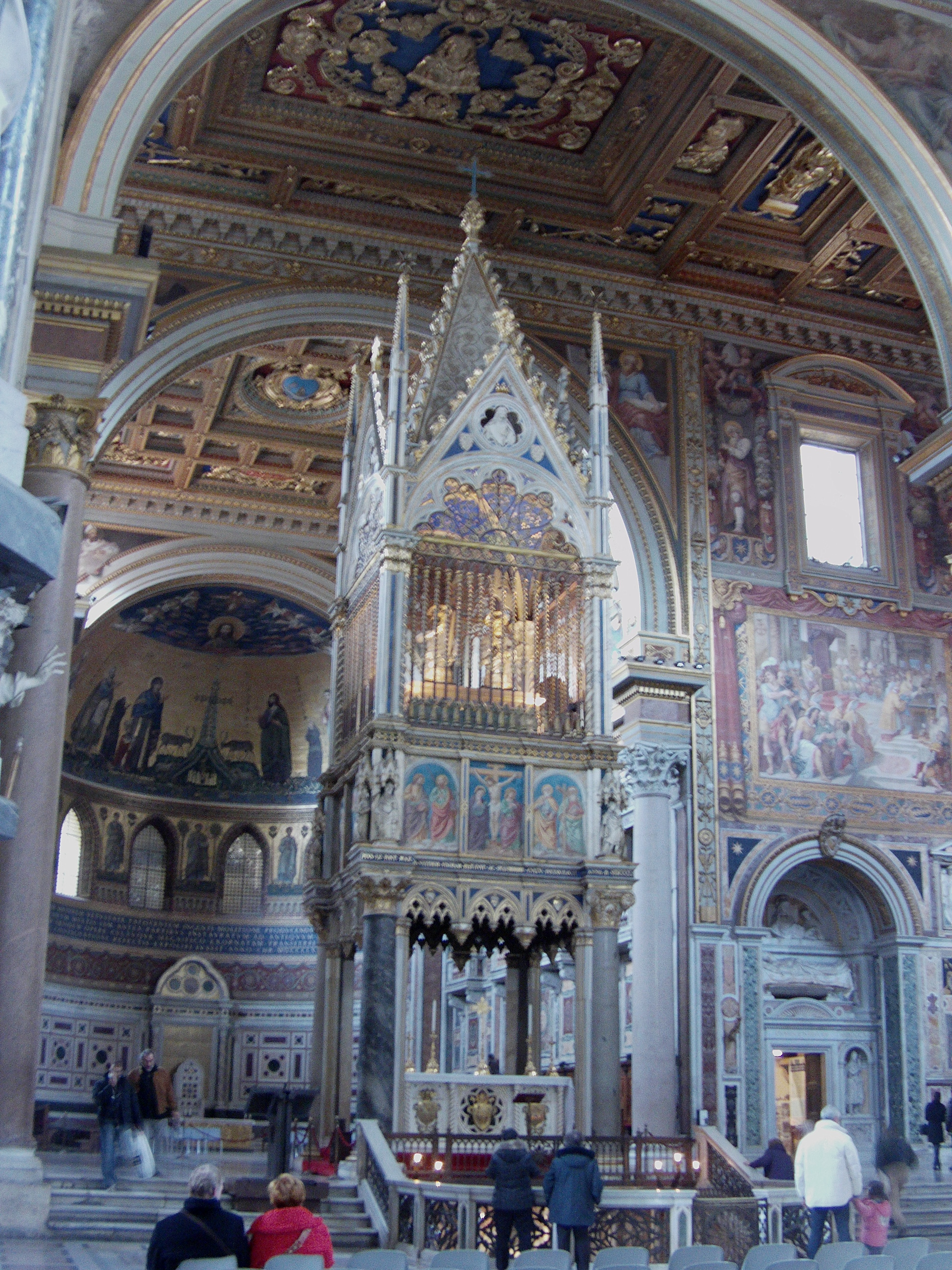
Relics of Sts. Peter and Paul above Papal Altar at San Giovanni Laterano

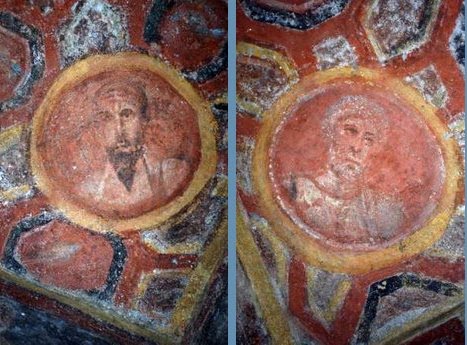
Throughout the Eternal City, you will see both saints together. On the Piazza in front of St. Peter’s Basilica, you see two giant statues, Peter on the left and Paul on the right. Atop the baldachino over the papal altar in Rome’s Cathedral-Basilica, St. John Lateran, two gold reliquaries house purported relics of each of the saints. The oldest known depiction of either saint is a depiction of both, at the catacombs of St. Thecla.  

If you want to see the famous mosaics of the bishops of Rome, from Peter to Benedict, you go not to the Vatican Basilica, but to St. Paul’s Outside the Walls, which from the 4th to the 16th centuries was the largest church in Rome, until the new St. Peter’s was built. The “Successors of Peter” were honored at the Tomb of Paul. No wonder ecclesiologists point out the pope is better named “Successor of Peter and Paul” – if they are not too busy pointing out that neither Peter nor Paul were bishops of the city in the modern sense, but that is another debate.

Recently discovered images of Paul (left) and Peter (right), oldest known

Since the beginning of the dialogue between Orthodox and Catholic, one of the traditional signs of fraternity is the exchange of delegations on the feast days of the two Apostolic Sees. Rome sends a delegation to Constantinople on the Feast of St. Andrew, November 30, and Constantinople returns the delegation on the Feast of Sts. Peter and Paul. Metropolitan Gennadios of Sassima lead the group this year, and was the only person to receive the Sign of Peace from the Pope during the morning’s liturgy. In addressing the delegation, Pope Benedict spoke strongly and favorable of the progress toward unity being made in Catholic-Orthodox dialogue, and praised the Patriarch’s recent encyclical on ecumenism (a short read I strongly recommend to all).   http://www.patriarchate.org/documents/sunday-orthodoxy-2010

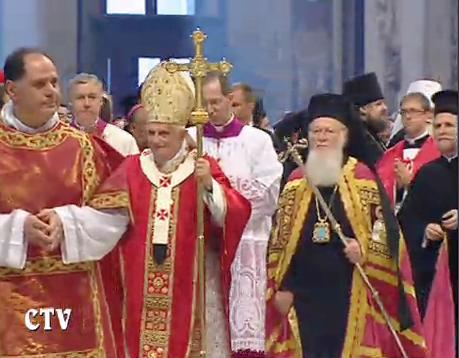
Pallium Mass 2008 - Patriarch Bartholomew and Pope Benedict, the later wearing an adaptation of the pallium

This celebration also serves as the “Pallium Mass” when the (Catholic) Metropolitan Archbishops appointed within the last year come to Rome to receive the symbol of their office. Made from wool shorn of sheep blessed on the Feast of St. Agnes, the pallium is one of the oldest liturgical vestments, having changed size and function over the centuries but remaining in use throughout. The tradition of metropolitans coming to Rome to receive the pallium is recent, however, dating only from 1984. Prior to this they were vested in their own cathedral at the time of their installation as Metropolitan. However, it serves as a powerful symbol of the communion of the bishop of Rome with the archbishops throughout the world.

Metropolitan Gennaidos of Sassima, 2010 delegate of the Patriarch of Constantinople to Rome on the occassion of the Patronal Feast of Sts. Peter and Paul

The unity of the Church is the clear theme of the day– the pallium celebrating the existing full communion between Rome and the churches represented by the new metropolitan Archbishops, and the kiss of peace and exchange with the Orthodox delegation celebrating the impaired communion with the Orthodox Church in hope for full communion in the near future. Appropriate that the city that sees itself at the centre of this union is guided, not by a solitary figure, but the “dynamic duo” of two very different Apostles. May the church continued to be blessed by their common patronage and the balance that they represent!  

Over the summer months I will be travelling a little, teaching a little, and spending a lot of time with family and friends near Seattle. My blogging will slow (and indeed I am writing some of these rather post-facto) but I will also have some time for more meaty reflection on some of the themes and events raised during this incredible year in Rome.