
Home » La vita Roma (Page 5)
Category Archives: La vita Roma
Benedict Resigns – Not exactly ‘unprecedented’
Popes have resigned in the past, and more than once, despite popular mythology to the contrary, at least including:
- Pope St. Pontian in 235
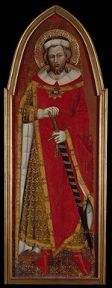
Pope St. Pontian, resigned in 235 AD
- Pope Silverius in 537
- Pope John XVIII in 1009
- Pope Benedict IX in 1045
- Pope Gregory VI in 1046
- Pope Celestine V in 1294
- Pope Gregory XII in 1415

Several others are not entirely clear whether it was resignation or deposition, including at least Pope Marcellinus in 308 and Pope Liberius in 366.
Plus there were others who are now considered antipopes who resigned, but at the time may not have been so clear who was the legitimate bishop of Rome. Some popes were deposed, others excommunicated. What I remember from history courses was that about 10% did not serve until death (and not all who did died of natural causes).
Modern popes have considered resignation as an option, most famously:
- Pius VII in 1804 prepared a letter of resignation, to be put into effect if he was captured and imprisoned
- Pius XII in 1943, for the same reason
- Paul VI considered retiring at the age of 75, in 1972, to conform to the law that asked the same of all other bishops
- John Paul II said in 1979 that he was open to the same idea, and it is said that he had a conditional document prepared as early as 1989, and again in 2000.
- Benedict XVI told the cardinals in the days after he was elected that he would resign if necessary, and addressed it again in 2010 in his interview with Peter Seewald, Light of the World
Back in 2000, ecclesiologist Fr. Richard McBrien penned an article for the Tablet, asking the question of resignation with respect to the pontificate of John Paul II. His book, Lives of the Popes: The Pontiffs from St. Peter to Benedict XVI, is one of a handful of good, contemporary resources on the topic.
We need to think more broadly than the bishop of Rome. We have seen other patriarchs and heads of churches resign, both within the Catholic Church, and in broader Christendom. All of them in positions that, in virtually all cases, were also considered normally held until death.
Consider just recently:
- The Catholic Coptic Patriarch Antonios I Naguib resigned in January 2013, at age 77.
- The Catholic Chaldean Patriarch Emmanuel III Delly resigned in December 2012, at age 85.
- The Catholic Maronite Patrairch Nasrallah P. Sfeir resigned in March 2011, at age 90.
- Archbishop Rowan Williams of Canterbury resigned, effective December 2012, at age 62.
- Metropolitan Jonah of the Orthodox Church in America resigned in July 2012, at age 53.
So, while it has been almost 600 years since the last bishop of Rome willingly retired, we can and will get used to the idea. It takes remarkable integrity to lead by such strong example.

Retired professors retire for second time
Benedict Resigns – Press office update
Some helpful reminders from the Vatican Press Office:
- Pope Benedict XVI has given his resignation freely, in accordance with Canon 332 §2 of the Code of Canon Law.
- Pope Benedict XVI will not take part in the Conclave for the election of his successor.
- Pope Benedict XVI will move to the Papal residence in Castel Gandolfo when his resignation shall become effective.
- When renovation work on the monastery of cloistered nuns inside the Vatican is complete, the Holy Father will move there for a period of prayer and reflection.
Benedict Resigns – Why are you surprised?
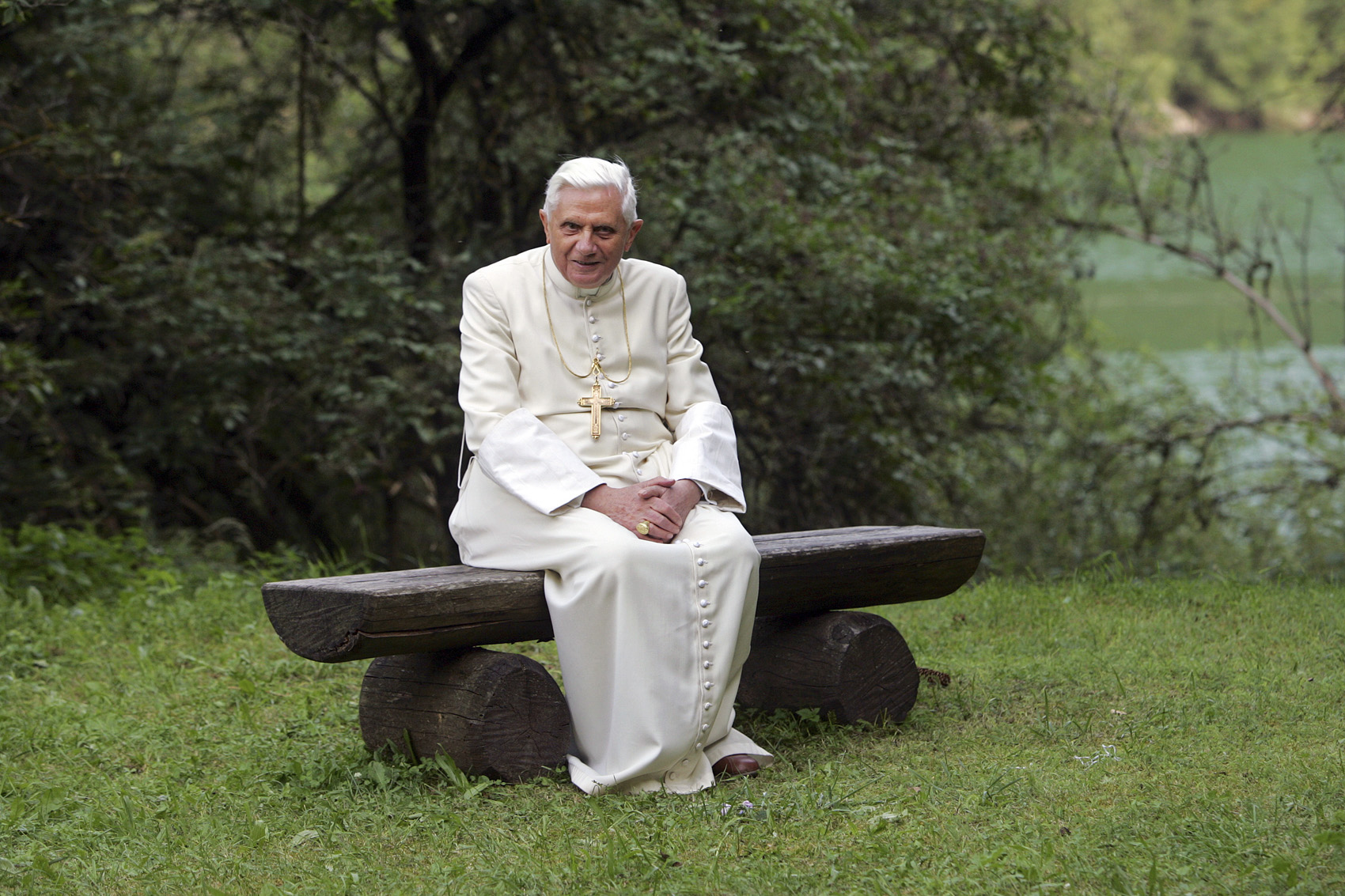 I saw the facebook comments first, before the news: “wow,” “unexpected,” “shocked,” “surprised.” One priest went so far as to say the pope had broken his heart.
Why are you surprised?
He told us he was going to resign if his health or abilities failed, when he was elected, and again just a couple years ago:
‘‘If a pope clearly realizes that he is no longer physically, psychologically and spiritually capable of handling the duties of his office, then he has a right, and under some circumstances, also an obligation to resign,’’ Pope Benedict XVI, Light of the World, 2010
He, better than most, knows the effect on the church and the Roman curia by the long, lingering illness of a bishop of Rome.
He is 85, and his pontificate has been nearly 8 years – almost exactly the length of the average pontificate over the last 2000 years.
He is a better theologian than any pope we have had in centuries, and knows well that, like all bishops, he can resign. And like all bishops, you do the same thing with a retired pope that you do with a retired bishop – it is not such a problem.
He knows the history of the papacy, that includes some obvious cases of papal resignation (St. Pontian, Benedict IX, Gregory VI, Clement V, Gregory XII), and several others who have been removed. Nearly 10% of all popes did not serve until death, if I remember correctly.
He is also an unquestionable champion of Catholic identity, culture and orthodoxy, so no one can claim that only a “liberal” or “reformer” pope would do this, as Paul VI had contemplated doing during his pontificate.
And above all he is a man of integrity and courage, who has done what is right in the face of pressure to simply conform to unrealistic expectations. He is not resigning because of disgrace or failure, he is retiring because it is the right thing to do for the Church, and for himself.
I think I have never been so proud of a pope in a lifetime of loving the Church.
Pope Benedict Resigns
Pope Benedict XVI on Monday said he plans on resigning the papal office on February 28th. Below please find his announcement.
Dear Brothers,
I have convoked you to this Consistory, not only for the three canonizations, but also to communicate to you a decision of great importance for the life of the Church. After having repeatedly examined my conscience before God, I have come to the certainty that my strengths, due to an advanced age, are no longer suited to an adequate exercise of the Petrine ministry. I am well aware that this ministry, due to its essential spiritual nature, must be carried out not only with words and deeds, but no less with prayer and suffering.
However, in today’s world, subject to so many rapid changes and shaken by questions of deep relevance for the life of faith, in order to govern the bark of Saint Peter and proclaim the Gospel, both strength of mind and body are necessary, strength which in the last few months, has deteriorated in me to the extent that I have had to recognize my incapacity to adequately fulfill the ministry entrusted to me.
For this reason, and well aware of the seriousness of this act, with full freedom I declare that I renounce the ministry of Bishop of Rome, Successor of Saint Peter, entrusted to me by the Cardinals on 19 April 2005, in such a way, that as from 28 February 2013, at 20:00 hours, the See of Rome, the See of Saint Peter, will be vacant and a Conclave to elect the new Supreme Pontiff will have to be convoked by those whose competence it is.
Dear Brothers, I thank you most sincerely for all the love and work with which you have supported me in my ministry and I ask pardon for all my defects. And now, let us entrust the Holy Church to the care of Our Supreme Pastor, Our Lord Jesus Christ, and implore his holy Mother Mary, so that she may assist the Cardinal Fathers with her maternal solicitude, in electing a new Supreme Pontiff. With regard to myself, I wish to also devotedly serve the Holy Church of God in the future through a life dedicated to prayer.
From the Vatican, 10 February 2013
BENEDICTUS PP XVI
Lay Centre on EWTN
In other news… The Lay Centre at Foyer Unitas appears on the 4 February, EWTN “Vaticano” feature. The Lay Centre at Foyer Unitas is Rome’s premier collegio for lay students at the pontifical universities, institutes, and athenae.
The whole clip is only 27.00 long, and the section on the Lay Centre begins at 21.00
[embedding is not functioning at the moment, but you can go to the link here:]
Week of Prayer for Christian Unity 2013 – Rome
[From the archives, published for record only]
A list of events in Rome for the WPCU 2013:
Thursday, 17 January: Giornata di Riflessione Ebraico-Cristiana
17:30 – Pontificia Università Lateranense, Aula Pio XI –
Non commettere adulterio
– Rabbino capo della Comunità ebraica di Roma, Riccardo Di Segni;
– Padre Reinhard Neudecker sj., professore emerito del Pontificio Istituto Biblico;
– Rettore Magnifico dell’Università Lateranense, S.E. Monsignor Enrico Dal Covolo.
Friday, 18 January
07:45 – Pont. Univ. Gregoriana, Cappella Comunitaria –
Santa Messa Presiede: P. Adrien Lentiampa
17:30 – Cappella di Santa Brigida –
Celebrazione ecumenica dei Vespri
- S.E. Cardinal Kurt Koch
- S.E. Kari Mäkinen, Arcivescovo della Chiesa evangelico-luterana di Finlandia
19:00 – Chiesa Valdese di Via IV Novembre 107 –
celebrazione ecumenica in apertura della settimana di preghiera
organizzata dalla consulta delle chiese evangeliche di Roma
19:00 – Parrocchia di S. Gioacchino in Prati, Piazza dei Quiriti, 17 –
celebrazione ecumenica di preghiera e inaugurazione della mostra biblica ecumenica
19:30 – Lay Centre at Foyer Unitas –
Vespers with Rev. Milan Žust, SJ,
Pontifical Council for Promoting Christian Unity
Presentation on the Week of Prayer by Prof. Teresa Francesca Rossi, Centro Pro Unione
And students of The Catholic University of America (Washington, DC)
Saturday, 19 January
16:00 – Basilica di Santa Maria sopra Minerva –
Celebrazione ecumenica finlandese della festa di S. Enrico di Finlandia
– Sua Eccelenza Kari Mäkinen, arcivescovo della chiesa evangelica-luterana di Finlandia
– S.E.R. Mons. Teemu Sippo, SCI, vescovo della diocesi cattolica di Helsinki
– Sua Eminenza Leo, arcivescovo della chiesa ortodossa in Finlandia
I canti saranno eseguiti dai cori giovanili della Cattedrale di Turku.
Dopo la celebrazione ci sarà un rinfresco nella casa di Santa Brigida, piazza Farnese 96.
18:00 – Pontificio Collegio Beda, Viale San Paolo 18 –
Celebrazione per la Settimana di preghiera per l’unità
Sunday, 20 January
10:00 – Christus Kirche, Chiesa evangelica luterana, Via Toscana –
Eucaristia presieduta dall’Arcivescovo Kari Mäkinen (Turku, Finlandia),
11:00 – Caravita Community at Oratorio San Francesco Saverio, Via del Caravita –
Sunday Eucharist with Ecumenical Guest Preacher
Very Rev. Canon David Richardson, ChStJ, Preaching
16:30 – Chiesa battista, Via della Bella Villa, 31 (Centocelle) –
pomeriggio ecumenico di fraternità e preghiera, organizzato dal gruppo romano del SAE e dalla Chiesa battista di Centocelle presso i locali della
18:00 – Chiesa metodista, Via Firenze 38 –
celebrazione per la Settimana di preghiera per l’unità
Churches Together in Rome
Monday, 21 January
12.25 – Cappella Universitaria, Pont. Univ. Gregoriana –
Momenti di Preghiera Ecumenica (Ortodossa): Ivan Plavsic
Tuesday, 22 January
11:00 – Parrocchia della Trasfigurazione, Piazza della Trasfigurazione (Monteverde Nuovo) –
Incontro e Agape fraterna con la Chiesa copto-ortodossa,
12.25 – Cappella Universitaria, Pont. Univ. Gregoriana –
Momenti di Preghiera Ecumenica (Protestante): Taneli Ala-Opas
12:45 – Anglican Centre of Rome –
Eucharist for the Week of Prayer for Christian Unity, Lunch following
18:30 – Parrocchia di San Barnaba –
Veglia Ecumenica Diocesana
Preside: Cardinale Agostino Vallini, Vicario Generale di Roma
Wednesday, 23 January
12.25 – Cappella Universitaria, Pont. Univ. Gregoriana –
Momenti di Preghiera Ecumenica (Cattolica): Michel e Deema
19:00 – Lay Centre at Foyer Unitas –
Community Evening and Eucharist with Rev. Prof. Frederick Bliss, SM,
Professor of Ecumenism and Dialogue, Pontifical University of St. Thomas Aquinas
(residents only)
Thursday, 24 January
12:30 – Pont. Univ. Gregoriana, Aula Magna
Film sull’ecumenismo “Bells of Europe”
16:30 – Centro Pro Unione –
Cosponsored by the Centro Pro Unione and the Lay Centre at Foyer Unitas
Dignitatis Humanae: What has it given to the Church and the World?
Lecture by Rev. Prof. Ladislas Orsy, SJ
Visiting Professor of Law, Georgetown University
Followed by an Ecumenical Celebration of the Word
Presider: Very Rev. Canon David Richardson, ChStJ, Archbishop of Canterbury’s Representative to the Holy See
Preacher: Rev. Austin K. Rios, Rector of St. Paul within the Walls
Friday, 25 January
07:45 – Pont. Univ. Gregoriana, Cappella Universitaria –
Santa Messa conclusiva, presiede: P. JÁN ĎAČOK
17:30 – Basilica of St. Paul outside the Walls –
Solemn Vespers with Pope Benedict XVI
Closing of the Week of Prayer for Christian Unity and the Feast of the Conversion of Paul
18.30 – Oratorio San Francesco Saverio del Caravita –
Free Organ recital and dedication of newly restored 1790 Priori Organ,
RSVP
19:00 – Pontifical Gregorian University, Aula F007 –
Dialogue and Reconciliation Today: The Irish Process
Mary McAleese, President emeritus of the Republic of Ireland
Sunday, 27 January
10:00 – Parrocchia della Trasfigurazione, Piazza della Trasfigurazione (Monteverde Nuovo) –
Santa Messa presieduta dal Cardinale Walter Kasper, Presidente emerito del Pontificio Consiglio per la promozione dell’unità dei cristiani, con la partecipazione dell’Istituto Ecumenico di Bossey (Svizzera),
Divina Liturgia nei vari riti cattolici
dei giorni di Settimana di Preghiera per l’unita dei Cristiani
– Basilica Di Santa Maria in Via Lata –
alle ore 20:00
– Venerdì, 18 Rito Armeno Pont. Collegio Armeno
– Sabato, 19 Rito Siro-maronita Ordine Maronita della B.M.V.
– Domenica, 20 Rito Romano Presiede: Mons. Matteo Zuppi
– Lunedì, 21 Rito Siro-malabarese Pont. Collegio Damasceno Venerdì
– Martedì, 22 Rito Bizantino-romeno Pont. Collegio Romeno
– Mercoledì, 23 Rito Bizantino-greco Pont. Collegio Greco
– Giovedì, 24 Rito Bizantino-ucraino Padri Basiliani di S. Giosafat
– Venerdì, 25 Rito Etiopico Pont. Collegio Etiopico
Jean Vanier
[From the archives of half finished posts]
Jean Vanier, founder of L’Arche, spoke to a crowded aula magna at the Pontifical Gregorian University in mid-November [2012].
Advertised on the university homepage only three days in advance, perhaps it is not a surprise that the organizers at the Greg initially put us into a smaller aula across the hall. And arriving twenty minutes early, it seemed they might be right – there were so few people in the aula we felt we had time to get coffee. At just five minutes to starting time, however, the place was packed to overflowing, and we were moved to the largest room at the Jesuit university, and still had standing room only, when the towering 84-year old arrived a few minutes later.
L’Arche is one of the “new movements” in the Church that is particularly characteristic of the Italian and Latin American churches, but originated with Vanier in French Canada. A philosopher and author of at least 30 books, he co-founded L’Arche in 1964, which is now present in 40 countries and 150 different communities.
The purpose of the community is friendship with people with disabilities – much like the commitment of Sant’Egidio to befriend the poor. The idea is about relationship more than about service. Of the people without disabilities who enter into the community and its projects, Vanier said,
“The mystery is that many people come to L’Arche, assistants, wanting to do good. But then they discover something, that they are not there just to do good to people, but to enter into relationship with them. And then many of them discover their difficulty in relating, They don’t know how to love. They have difficulty in accepting their difficulties.”
L’Arche, he says, “is a place of transformation for people with disabilities, but also a place of transformation for the assistants, who become more human. And many of them really discover the whole mystery of the Gospels.”
Few people could have earned such a response from the Roman university crowd: An ovation on arrival, rapt attention, and a room-busting crowd on short notice and minimal advertising.

Students listen attentively to Jean Vanier’s presentation (in French)
Eastern Catholics explain tradition, value of married priests
Tuesday, November 13, 2012
By Cindy Wooden Catholic News Service
ROME (CNS) — In Eastern Christianity — among both Catholics and Orthodox — a dual vocation to marriage and priesthood are seen as a call “to love more” and to broaden the boundaries of what a priest considers to be his family, said Russian Catholic Father Lawrence Cross.
Father Cross, a professor at the Australian Catholic University in Melbourne, was one of the speakers at the Chrysostom Seminar in Rome Nov. 13, a seminar focused on the history and present practice of married priests in the Eastern churches.
The Code of Canons of the Eastern (Catholic) Churches insist that “in the way they lead their family life and educate their children, married clergy are to show an outstanding example to other Christian faithful.”
Speakers at the Rome conference — sponsored by the Australian Catholic University and the Sheptytsky Institute of Eastern Christian Studies at St. Paul University in Ottawa — insisted the vocation of married priests in the Eastern churches cannot be understood apart from an understanding of the sacramental vocation of married couples.
“Those who are called to the married priesthood are, in reality, called to a spiritual path that in the first place is characterized by a conjugal, family form of life,” he said, and priestly ordination builds on the vocation they have as married men.
Father Cross and other speakers at the conference urged participants to understand the dignity of the vocation of marriage in the way Blessed John Paul II did: as a sacramental expression of God’s love and as a path to holiness made up of daily acts of self-giving and sacrifices made for the good of the other.
“Married life and family life are not in contradiction with the priestly ministry,” Father Cross said. A married man who is ordained is called “to love more, to widen his capacity to love, and the boundaries of his family are widened, his paternity is widened as he acquires more sons and daughters; the community becomes his family.”
Father Basilio Petra, an expert in Eastern Christianity and professor of theology in Florence, told the conference, “God does not give one person two competing calls.”
If the church teaches — as it does — that marriage is more than a natural institution aimed at procreation because it is “a sign and continuation of God’s love in the world,” then the vocations of marriage and priesthood “have an internal harmony,” he said.
Father Petra, who is a celibate priest, told the conference that in the last 30 or 40 years some theologians and researchers have been making a big push to “elaborate the idea that celibacy is the only way to fully configure oneself to Christ,” but such a position denies the tradition of married priests, configured to Christ, who have served the church since the time of the apostles.
Father Thomas J. Loya, a Byzantine Catholic priest and member of the Tabor Life Institute in Chicago, told the conference it would be a betrayal of Eastern tradition and spirituality to support the married priesthood simply as a practical solution to a priest shortage or to try to expand the married priesthood without, at the same time, trying to strengthen Eastern monasticism, which traditionally was the source of the celibate clergy.
He called for a renewed look at what the creation of human beings as male and female and their vocations says about God to the world.
Father Peter Galadza of the Sheptytsky Institute told conference participants that the problem of “cafeteria Catholics” who pick and choose which church teachings they accept is found not just among Catholics who reject the authority of the church’s leaders; “those who believe they are faithful to the magisterium” also seem to pick and choose when it comes to the church’s official recognition of and respect for the Eastern tradition of married priests.
“We know we are only 1 percent of the world’s Catholics, but Eastern Catholics have a right to be themselves,” he said.
“As we celebrate the 50th anniversary of the opening of the Second Vatican Council, we hope the same Holy Spirit who guided the authors of its decrees would guide us in implementing them,” he said, referring specifically to Vatican II’s affirmation of the equality of the Latin and Eastern churches and its call that Eastern churches recover their traditions.
“There has been a long history of confusing ‘Latin’ and ‘Catholic,'” he said, and that confusion has extended to an assumption that the Latin church’s general discipline of having celibate priests is better or holier than the Eastern tradition of having both married and celibate priests.
The speakers unanimously called for the universal revocation of a 1929 Vatican directive that banned the ordination and ministry of married Eastern Catholic priests outside the traditional territories of their churches. The directive, still technically in force, generally is upheld only when requested by local Latin-rite bishops.
Copyright (c) 2012 Catholic News Service/U.S. Conference of Catholic Bishops
http://www.uscatholic.org/news/2012/11/eastern-catholics-explain-tradition-value-married-priests
Christians in the Middle East, with Dr. Habib Malik
On Monday, Nov 5, the Social Sciences Faculty of the Angelicum hosted a lecture on Christians in the Middle East, as a kickoff event for their new Al Liqa’ Project.
History Prof. Habib Charles Malik of the Lebanese American university offered his reflections and recommendations on the Christians of the Middle East focused on the events between the Arab Spring, and the release of the Apostolic Exhortation, Ecclesia in Medio Oriente, which was delivered during Pope Benedict’s Apostolic visit to Lebanon in September.
Prof. Malik began with the state of the question. There are about 12 million Christians in the middle East he estimates, not counting Latin immigrants, which include about 8 million Copts in Egypt, another 3 million in the Levant – Melkites, Maronite, Syriac, Greeks, Armenians, Latins and Protestants – and the Assyrians and Chaldeans in Iraq, a population that has been decimated since the U.S.-lead invasion of 2003. There remain less than a million.
Emigration out of the region has been going on since the advent of the 21st century, due laregely to attacks on the communities. During the raging civil war in Syria, he describes both sides – the Alawite Shi’a administration and the Salfist Sunni insurgents (and others) – as targeting Christians and attempting to pin the attacks on the opposing forces. They have become the primary targets of opportunity.
Malik was critical of the Arab Spring as a misnomer – the so-called Facebook generation of young democracy-minded types had not held together beyond the revolutions, and instead we have what he suggested to be called a ‘Salafi Spring.’ Tunisia is one of the few places he sees a genuine road to democracy, though throughout the region, the moderate Sunni voices are too often weak and unheard – and often in just as much danger as the Christians of the region, if they speak up against extremism.
Middle Eastern Christians are caught in the middle of several conflicting and potentially destructive polarities in the region:
- Sunni vs. Shiite: With a rough north-south border running through Iran, Iraq, Syria and Lebanon, the most explosive region of volatility around this divide is in Syria, with a small Alawite (Shi’a) administration and a larger Salafi (Sunni) insurgency.
- Arab vs. Persian: Centered around Saudi Arabia and Qatar on one side and Iran on the other, with corollary polarities between Turkish and Israeli interests.
- Salafi and Jihadist vs. Despotic Regimes – The false sense of security under a ruthless dictator should not be preferred over the uncertain volatility of the powers emerging from the revolutions.
- Sino-Russian vs. Euro-American interests in the region, often complicated by western neglect or ignorance of culture, religion, and society in the area couple with agendas more concerned with petroleum and other natural resources than with human rights and religious freedom.
Given this, many of the region’s Christians have trepidations about the Arab Spring, fearing that it will bring not a transition to greater democracy, but simply create an extended power vacuum that could be manipulated by militant extremists.
But not all of Prof. Malik’s talk painted such a gloomy picture. There was an enthusiastic and grateful welcome of the Post-Synodal Apostolic Exhortation, which Pope Benedict delivered in Beirut six weeks ago. There is, as always, a desire to be better understood by the west in general, the Latin Church, and by the Holy See. Many see Pope Benedict has grasping many of the complexities and delicacies of Christianity in its birthplace, and see in the exhortation recognition of the historic, current and eschatological dimension of the predicament of indigenous Christians, while outlining their unique responsibilities as Christians in the midst of the world of Islam.
He did suggest a few critiques, or observations for improvement, in the exhortation:
- The frequent use of Lebanon as a role model, he says, seems to be putting the cart before the horse. The potential is there, certainly, but there is still a long way to go.
- The high praise of the Middle East Council of Churches ignores the record of nearly exclusive focus on Palestine and missed opportunities in other areas
- Interreligious dialogue needs to be a dialogue of truth and charitable but honest witness, not of the common platitudes he sees throughout
- Finally, the pleas for a healthy secularity may resonate with a Eurocentric West, but make no sense in Islam where there is no differentiation between the realms of sacred and secular authority. This kind of language might just push Christians out of the area to seek the kind of healthy secularity to be found in the U.S. and elsewhere.
“How can the Christians navigate between the depressing realities of the Arab upheavals and the hope offered to them in the Apostolic Exhortation? How can they internalize and employ the latter to overcome the anticipated negative fallout from the former?” Some thoughts and recommendations presented by Prof. Malik:
- The Church and the world press need to continue to put pressure by shining light on even the smallest abuses. Even dictators don’t like bad press.
- The international community must insist that new states’ constitutions include religious liberty and hold them accountable.
- The litmus test of the Arab Spring is and will be the treatment of religious minorities. Need to consider a ‘federalism’ option.
- People of the region must actively promote rights and ’universal liberal values’
- They need the encouragement and support of the Christian World
- Inspiration from the Year of Faith and the carefully selected opening mass reading of Mark 8-27-35, with its focus on ecumenism as a witness of unity in the face of interreligious dialogue and as a prerequisite for survival and evangelization.
- Let Maronites take a lead, from their relative stability, but open more to the Anglo-Saxon world, as they have been to the Francophone
- Unhindered pilgrimage access to the Holy Places is still not guaranteed for the Christians of the middle east, as it is for those from anywhere else. This ought to change
October ends, rendiamo grazie a Dio!
What a month! I finished my license just in time to enjoy one of those kinds of incredible months that only Rome can offer.
Synod, canonizations, Vatican II celebrations and conferences, patriarchs and primates, friends, new Fellows, community and work. The next few days I really will catch up some of the experiences.
In the mean time prayers for those in the wake of Sandy, and thanks for the many friends I have been able to see and speak to in these days!
 The Ecumenism Blog