
Home » La vita Roma (Page 16)
Category Archives: La vita Roma
Leaving Assisi
Disclaimer: You may have noticed some incongruity between posts and pictures. In the rush between returning to Rome from Assisi on Epiphany, and Nancy leaving for the states the next day, I did not have time to download our pics and videos from that part of the trip! So, I have had to make use of others’ photos. This is why the “Rainy Assisi” pics have blue skies!
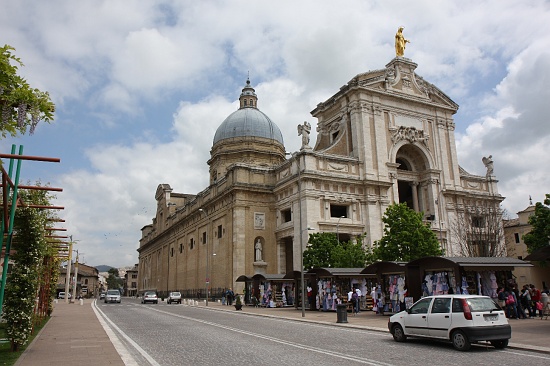
Basilica Santa Maria degli Angeli, Assisi
The train station for Assisi is on the valley floor, in the “new” town called Santa Maria degli Angeli, after the church there – though still in the municipal limits of Assisi.
The Basilica of Santa Maria degli Angeli (St. Mary, [Queen] of the Angels) is constructed over the small chapel that Francis rebuilt in response to his vision of the San Damiano crucifix which told him to repair the Lords house which was falling into ruin. He thought it meant the small deteriorating chapel below the town, on some unused property of one of the local monasteries. Only later did he realize the Lord was probably not being so literal, and meant to reform the Church itself. It is easy to forget that the Reformations really started about 300 years before Luther!
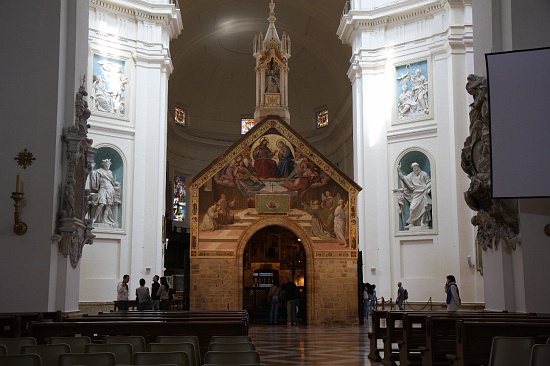
Porzincola inside Santa Maria degli Angeli
Here in Rome there is a statue outside of the Lateran of St. Francis and companions pleading their case before Pope Innocent III, who, according to pious legend, had a dream of Francis supporting a tilting church and interpreted it to mean he would help sustain the Church from collapse.
The small chapel that he rebuilt, and the portion of land it is on, are known as the Porzincola – the small portion. After his death, they literally built the new basilica over his little chapel, which is still intact in the centre of the new church. It is not hard to imagine what he would say of this huge “memorial” to his humble little house of the people of God!
For those of us from the States, especially on the west coast, it is important to remember the history of Franciscan missionaries who brought their Assisi roots to California’s shores. Three of their many missions were named after churches here in Assisi: Santa Chiara inspired Santa Clara, San Francesco inspired San Francisco, and Francis’ Porzincola inspired the name of a little place – El Pueblo de Nuestra Señora la Reina de los Angeles del Río de Porciúncula – more commonly known as L.A.
Rainy Assisi

Rocca Maggiore Fortress, Assisi
The day we decided to hike to the very top, to the Rocca Maggiore fortress, it was raining. Yet, the view was worth it, especially as a heavy fog rolled in from the valley devouring the town. Watching one big church after another disappear in a mist so thick as to be tangible, I was reminded of the old tales of Brigadoon (that, and of a Stephen King novel, the Mist). In this spiritual retreat centre of central Italy, three days with three very different characters served once again to remind me of the mystery and awe of God’s handiwork!

Piazza Communale, Santa Maria Sopra Minerva, Assisi
We spent the afternoon revisiting the shops to pick up souvenirs, and drying off in a Café just across form San Rufino Cathedral (also recommended by Rick Steves’). Unfortunately for me (or for my family, I guess), my memory of where I saw the gifts I wanted to get for some of my family did not serve, so I had to leave some places empty handed. We did find a place selling a local cheese made with black and white truffles, and fresh pasta, which we put together for dinner. Delicious! Such a pity Nancy left the cheese here when she left for home!
Only 3500 people live within the walls of the historic town, though 25,000 within the city limits which mostly sprawl on the valley below. For this small number, there are almost 100 churches. Ok so some of these have been deconsecrated, but still, for that number of Catholics in the U.S., one church the size of any of the basilicas would be more than sufficient! This could explain why you see sparse numbers at mass sometimes, is that there are too many options!

My favorite Franciscan, Dr. Lorelei Fuchs of the Franciscan Sisters of the Atonement, taken at the National Workshop on Christian Unity
However, sparse numbers was not a problem in Assisi’s cathedral on a Tuesday afternoon. We had about half an hour to kill before the shuttle picked us up, and as I may have mentioned, it was raining. So we ducked inside the Cathedral thinking we could sit and pray or look at the artwork in relative comfort. The place was packed! But not a car in the piazza, which had been full on Sunday! Imagine a few hundred teens, a dozen Franciscan friars, and a Charismatic praise and worship service. And they say there is no life in the church here!
Snowy Assisi
The only snow I have had in Italy! We woke up to a thin blanket of the white stuff, and got to spend the day under a very gentle snowfall. We completed our tour of the town, which is more or less a stroll through the major churches, and stopping for another Umbrian five-course meal.
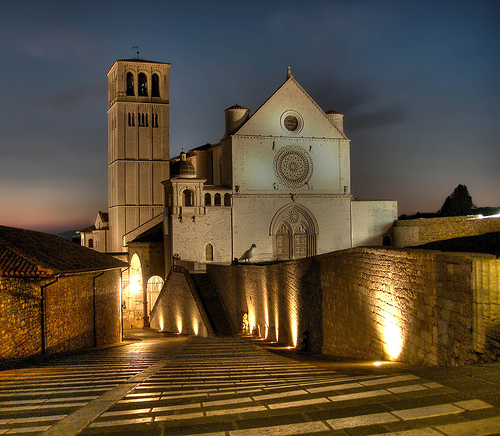
Basilica of St. Francis
On the way down from the higher end of town where we start the day to the big Basilica of San Francesco, we stopped by the small, old church of San Stefano whose bells are said to have rung miraculously by themselves at the moment St. Francis died. In itself, the church is a testament to the simple style of the age, created without an architect, just the stonemasons putting together a basic design that would serve its purpose: a house for the church.
The Basilica San Francesco is massive, three stories from the crypt to the lower basilica to the upper, with two huge piazzas, one off of the upper and lower basilicas respectively. It was at this site that Pope John Paul II called his World Day of Prayer for Peace in 1986 and again in 2003, gathering leaders of every major Christian communion and of virtually every religion on the planet, from the Dalai Lama to First Nations peoples from the Pacific Northwest.
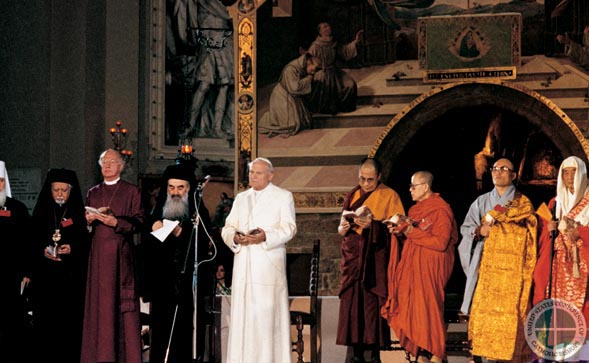
First World Day of Prayer for Peace, 1986
It is said that Francis was the first to use a presepe, a nativity scene or crèche, in commemoration of Christmas, and Italian churches go all out, especially in Assisi. An entire stable is converted for a life-size display near the Roman Amphitheatre, and the Piazza San Francesco also has a life-size display. Within every church we stopped at were scenes with sometimes hundreds of figures, rolling hills, light and water effects, sometimes music. In the Benedictine Abbey church of San Pietro, the lighting and sound effects were timed to give a full rotation of the day and night, with corresponding village sounds, birds, etc.
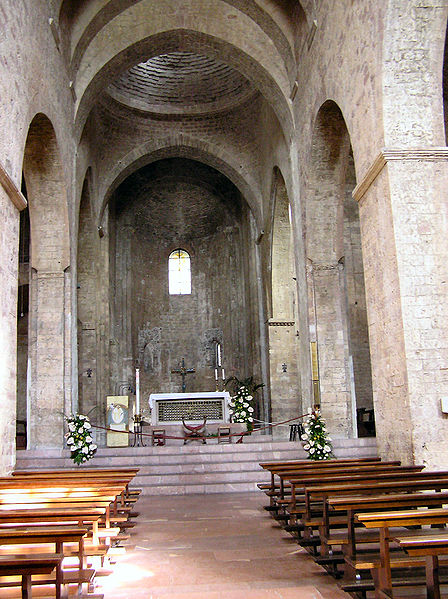
Abbey Church of San Pietro, Assisi, Built 970 AD
Sunny Assisi
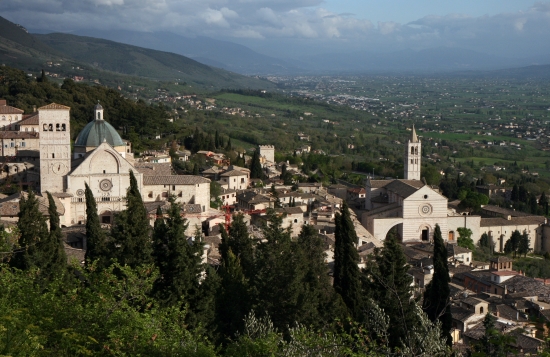
Cathedral of San Rufino (left) and Basilica of Santa Chiara (right) in Assisi
The last time I was in Europe, I had only made a day trip to Assisi. This time, we spent three full days in this quiet Umbrian hill town made famous for its twin medieval saints, San Francesco (Francis) and Santa Chiara (Clare). It was probably my favorite part of our holiday, and I cannot thank Nancy enough for arranging for us to stay there as long as we did – and in such comfort as we did.
Through her timeshare, we landed a last-minute deal at some vacation condos 5km from the old city. (I wanted to stay in a cave to get the full Franciscan experience, but she convinced be that the on-site sauna would serve just as well: both are dark and damp, and not very spacious. Not sure Francis would be sold on the idea though…)
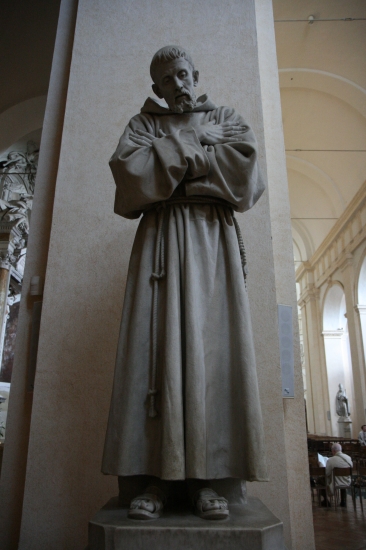
St. Francis statue at Cathedral of San Rufino
The first day was a beautiful, cold, crisp, clear day, sunny and freezing. I cannot tell you how nice it is to have the lucury in this town not to feel as though one has to see everything in a day. You can – it is not very big – but you get so much more out of the experience with a leisurely pace. We decided to roughly follow the Rick Steves’ Assisi stroll, and started at the higher end of town with the old Roman Amphitheatre, now converted for use as a restaurant with a garden.
Because of the fame of Francis and Clare, I always think o Assisi as the quintessential medieval town that it became by the 13th century, but forget that long before that it was also a Roman town, built in 295 BC. Before the Romans, it was Etruscan. Before that, there were Umbrians in the area, perhaps as early as 1000 years before Christ.
By the end of the third century AD, the town and environs had been largely converted to Christianity by Bishop Rufino, a martyr and the patron saint of Assisi, for whom the cathedral is named. We arrived there just in time to join the Sunday Eucharist, which happened to have an American Franciscan presiding (in Italian). The small baptismal font is near a plaque noting some of the notables who had been baptized there, including Sts. Francis and Clare, Gabriel of Our Lady of Sorrows (the young Passionist saint whose sanctuary we visited in novemeber) and Frederick II.
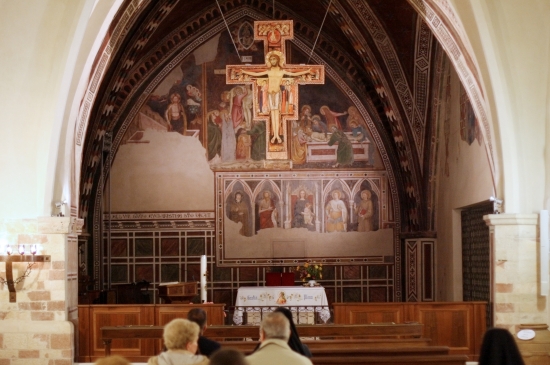
Chapel of the San Damiano Crucifix at Santa Chiara "Francis, my house is in ruins. Fix it!"
After mass we took a tour of the Cathedral crypt, one of Francis’ frequent places of prayer, mostly dating from the 9th century and later, but including the third century ossuary thought to have held the remains of Bishop St. Rufino, the martyr Apostle of Assisi.
Down the hill from the Cathedral is the Basilica Santa Chiara and a beautiful view of the valley below, including the “new” part of Assisi, also known for its major church, Santa Maria dei Angeli. In addition to the resting place of the little rich girl who “fell in love” with the older Francis and his order, a side chapel holds the cucifix that was in the Church of San Damiano, where Francis had his conversion experience.
Just off the piazza Santa Chiara was the site of the best meal we had all week, a small trattoria 50 meters off the main street boasting traditional Umbrian cuisine. Plenty of time in the shops nearby, and we did not make it much further than the central Piazza Communale, on which you can find an original Roman temple rededicated as a Christian church.
Roman Weather, Translated
I had to share the following email from a friend and fellow Lay Centre resident. Just another sign of the cultural encounter living in Rome:
Our local weather forecast from the American “weather.com”:
Rome: Windy, rain.
But when you click on the Rome weather forecast from the big Italian weather website, they say that the forecast is:
PEGGIORAMENTO, marcata fase perturbata e ventosa per Capodanno.
LAZIO PROSSIMI GIORNI: Il vento di Ponente sarà il vero protagonista dell’avvio del 2010 e sono attese mareggiate piuttosto consistenti sulle zone costiere esposte. Si avrà un calo termico, che potrà favorire qualche nevicata sui monti appenninici. Il freddo diverrà maggiore nel week-end, quando tuttavia si attende un temporaneo miglioramento con ampi rasserenamenti.Which roughly means:
A WORSENING, with markedly disrupted (perturbed) phases and windiness for the New Year.
LAZIO in the coming days: The West Wind will be the real protagonist of the start of 2010, and expectations are for quite large storm surges on exposed coastal areas. There will be a thermal drop, which may encourage some snow on the Apennines. The cold will become even greater during the weekend, however, when a temporary improvement is expected, with ample clearing (literally: ample re-serenity-making).
PS: I am way behind on updating posts, so you’ll get most of the Christmas holiday updates in one fell swoop when i edit and upload pictures; we are off to Assisi tomorrow for a couple days so it will be after that! Do not forget to look for “older” posts that might show up later!
New Year’s in Rome: Best View in the City!
It rained, it poured; God provided his own fireworks display. So, we stayed indoors with a simple dinner and watched Angels and Demons to identify landmarks and pull apart Dan Brown’s ignorance of conclave procedures! Just in time for the display at the Colosseo though, the rain let up and we went up to the terrace. It is as if they planned them just for us!
Here are a couple clips that Nancy filmed from my window – the show starts about 20 seconds into the first one. They are literally firing them off just at the edge of our gardens; no zoom necessary.
[OK, it seems i cannot embed videos without an upgrade. I will load them to YouTube, which you can access here.]
Taormina, Sicilia
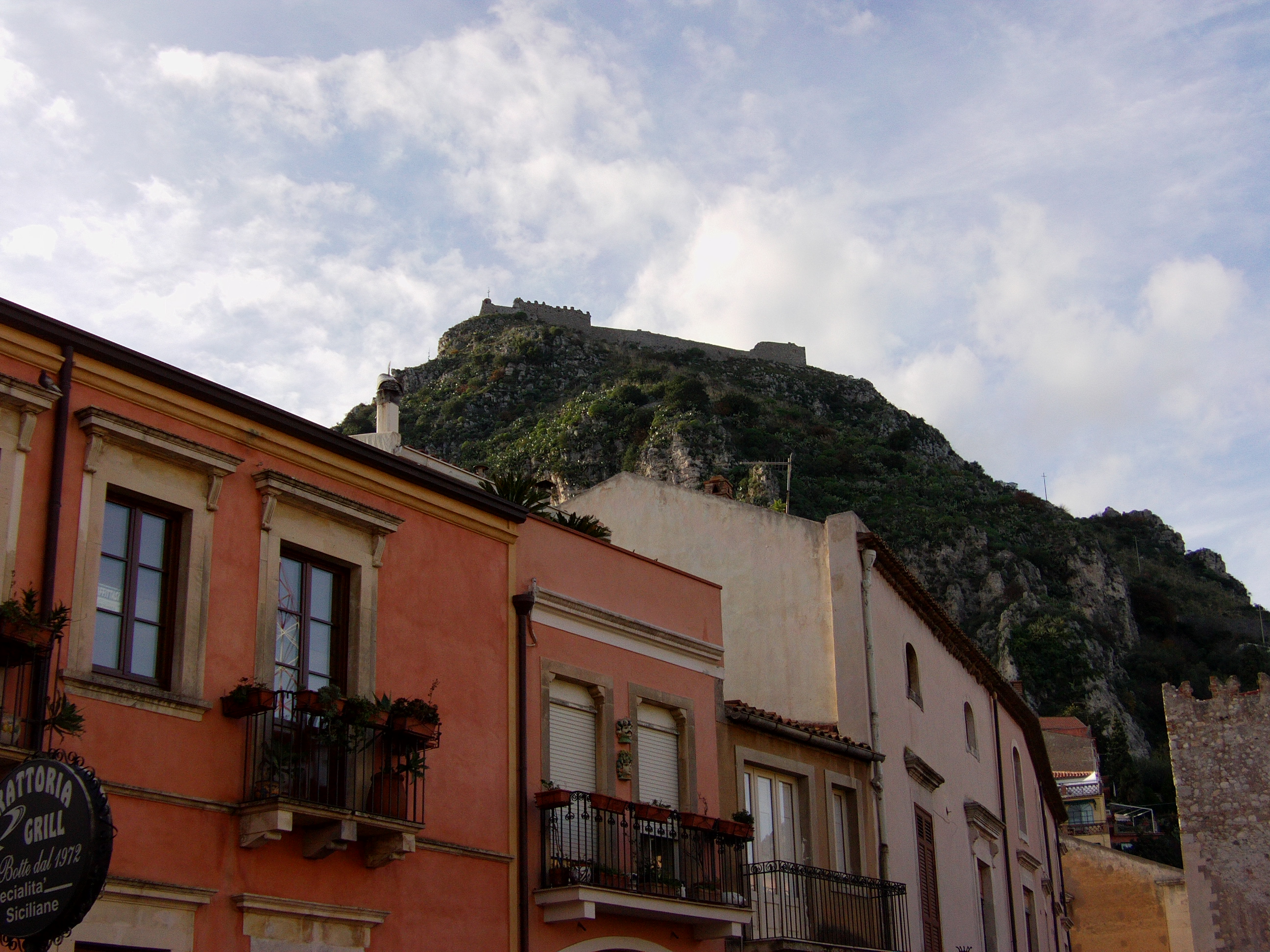
Castel Molina above Taormina, Sicilia
The rest of our stay was a sunny and warm 21°C (70°F). We got to explore the beaches and decided to hike from Letojanni to Taormina. Turns out there are no pedestrian friendly paths from one to the other, but we did find some cool ruins of unknown antiquity in some of the less accessible parts of the beach between the towns. (see below)
Taormina itself has been around since sometime around the 9th century BC, it seems. The Greeks built a theatre here in the third century BC, and the Romans expanded and improved it a couple hundred years later. It commands a magnificent view of the Mediterranean and Mount Etna – Europe’s largest active volcano, which looms above the town.
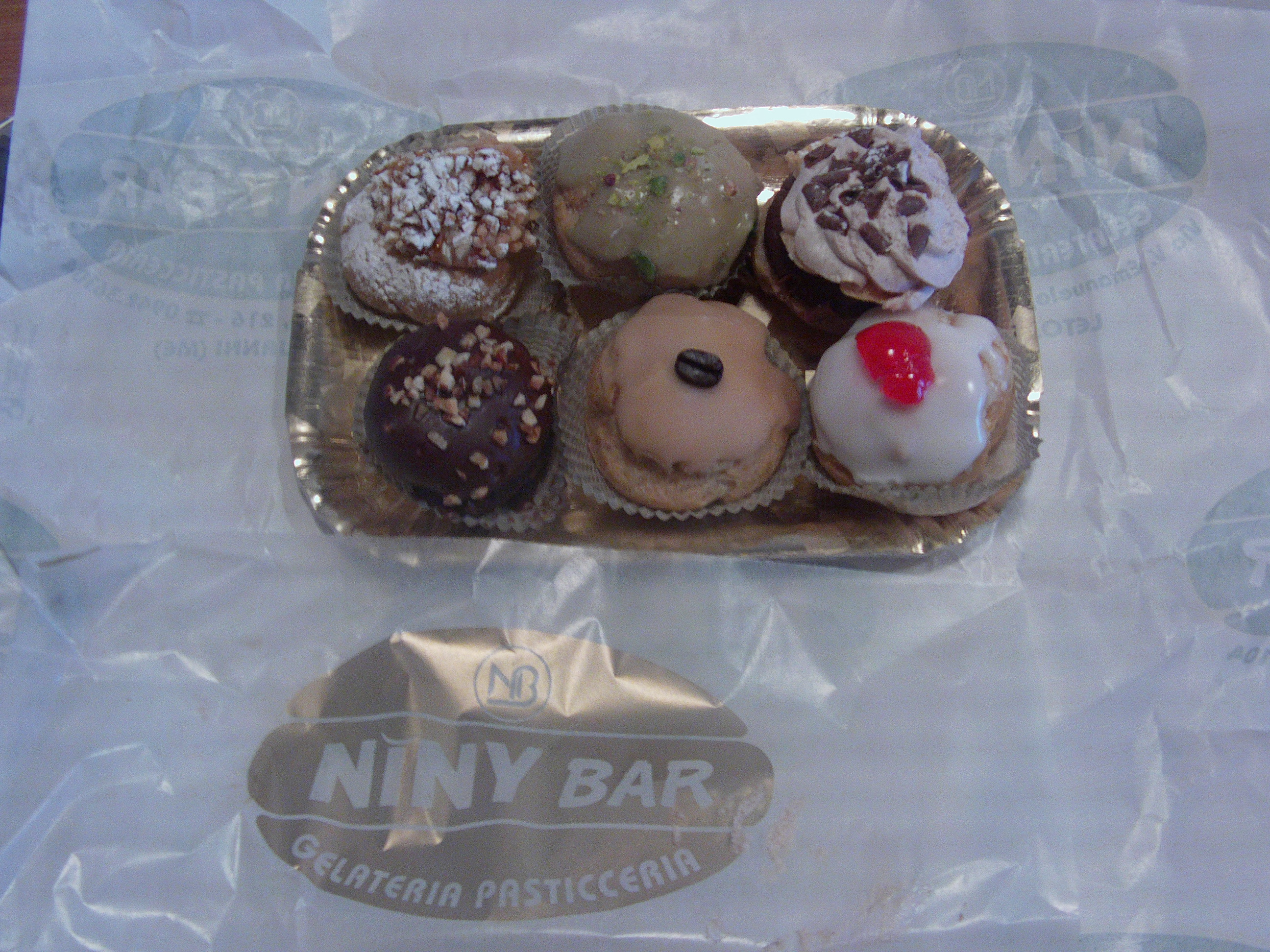
Delectable Sicilian pastries
We enjoyed a Sicilian pizza with a view of the bay, and rode a cable car down to the beach, ate canola and sampled various pasticcherie for their dolci. The best was also found in Letojanni’s Piazza Durante at the Niny Bar, with a great ambiance. Unfortunately, the coffee did not compete with the less sophisticated place we tried before, just across the piazza, but the little pastries they make here are incredible.
While we got some good photos, i also found another travel blog with several really good ones: http://www.galenfrysinger.com/taormina_sicily.htm
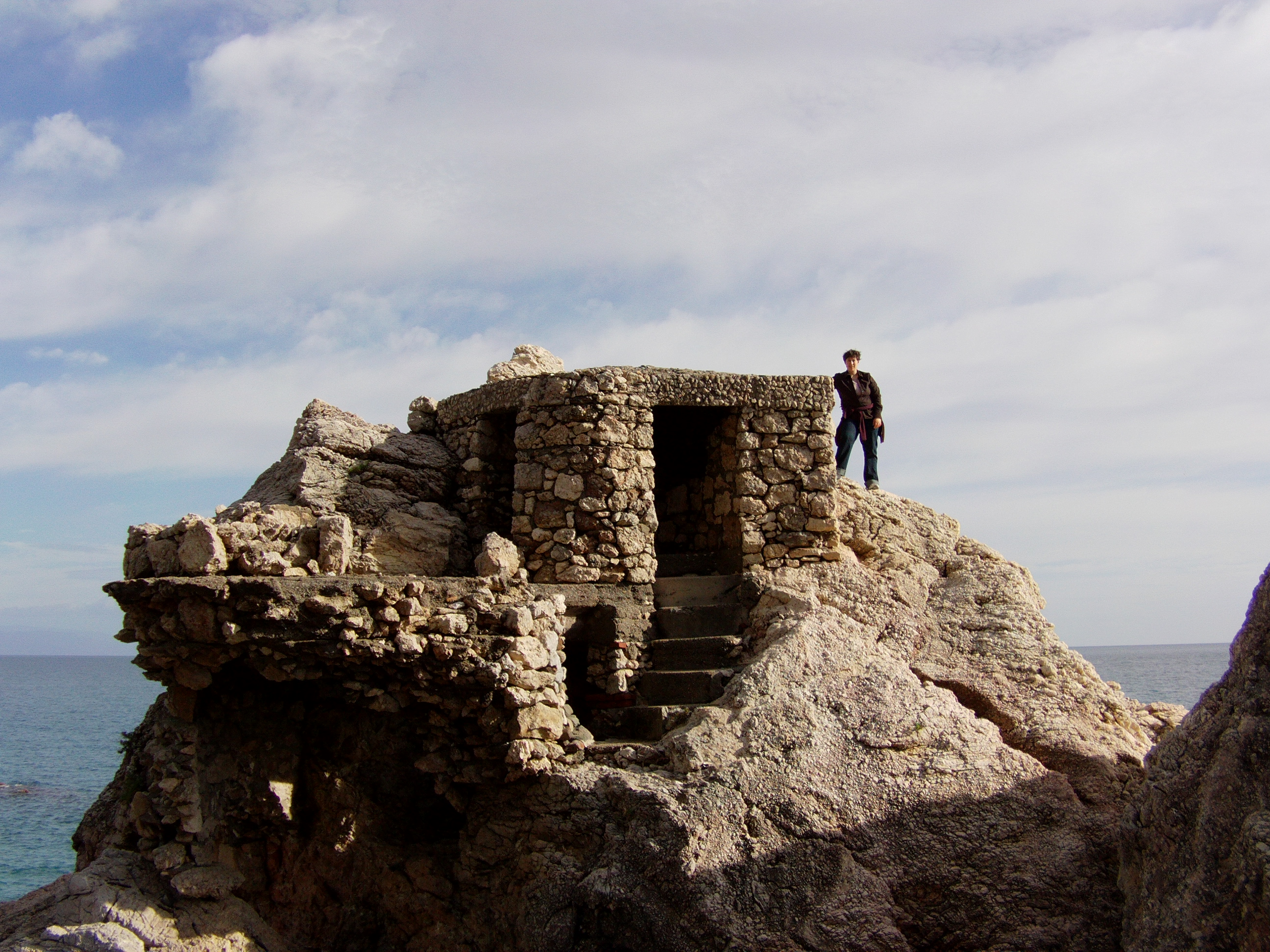
Cool ruin of unknown antiquity #1
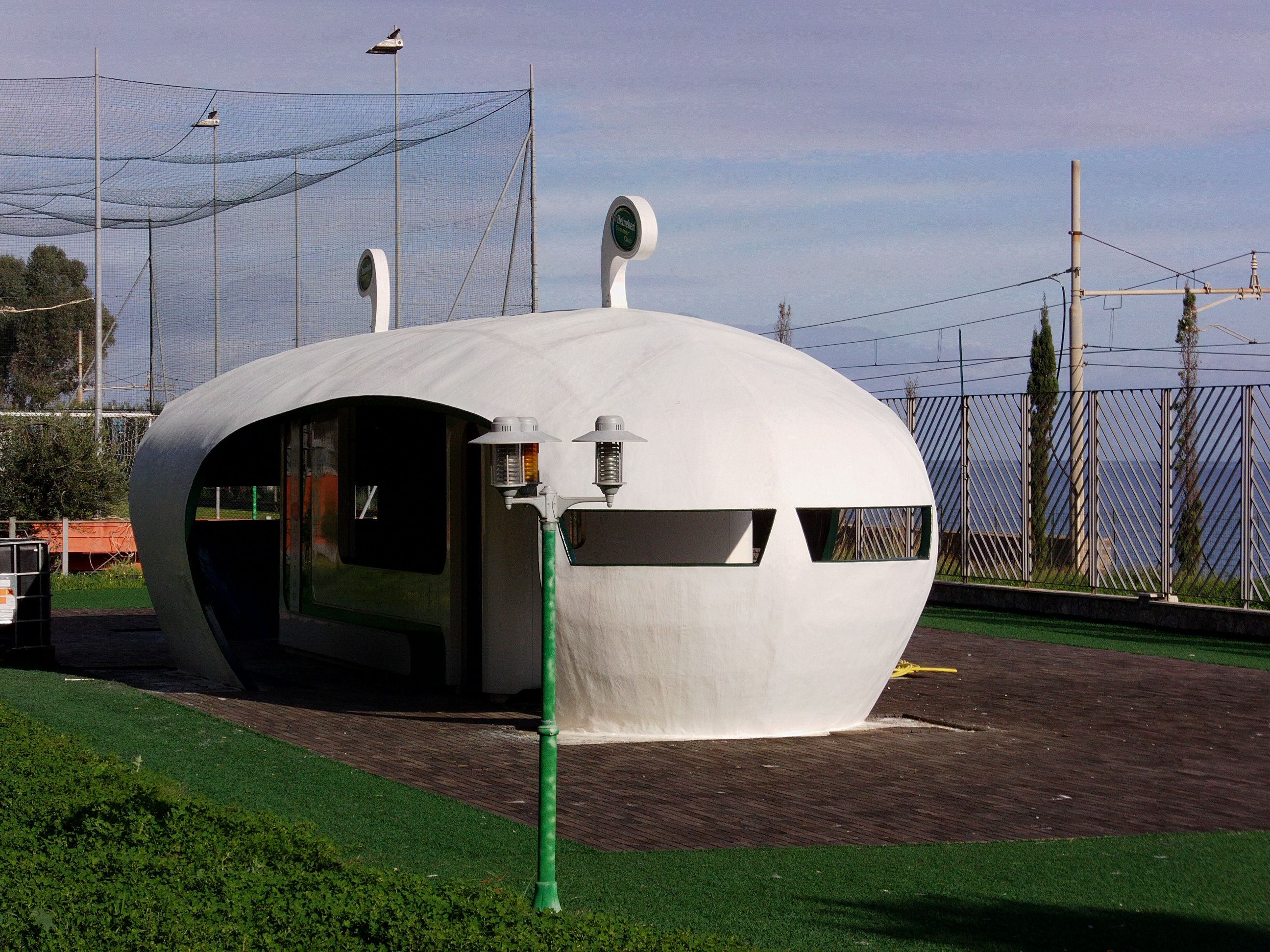
Cool ruin of unknown antiquity #2
Letojanni, Sicilia
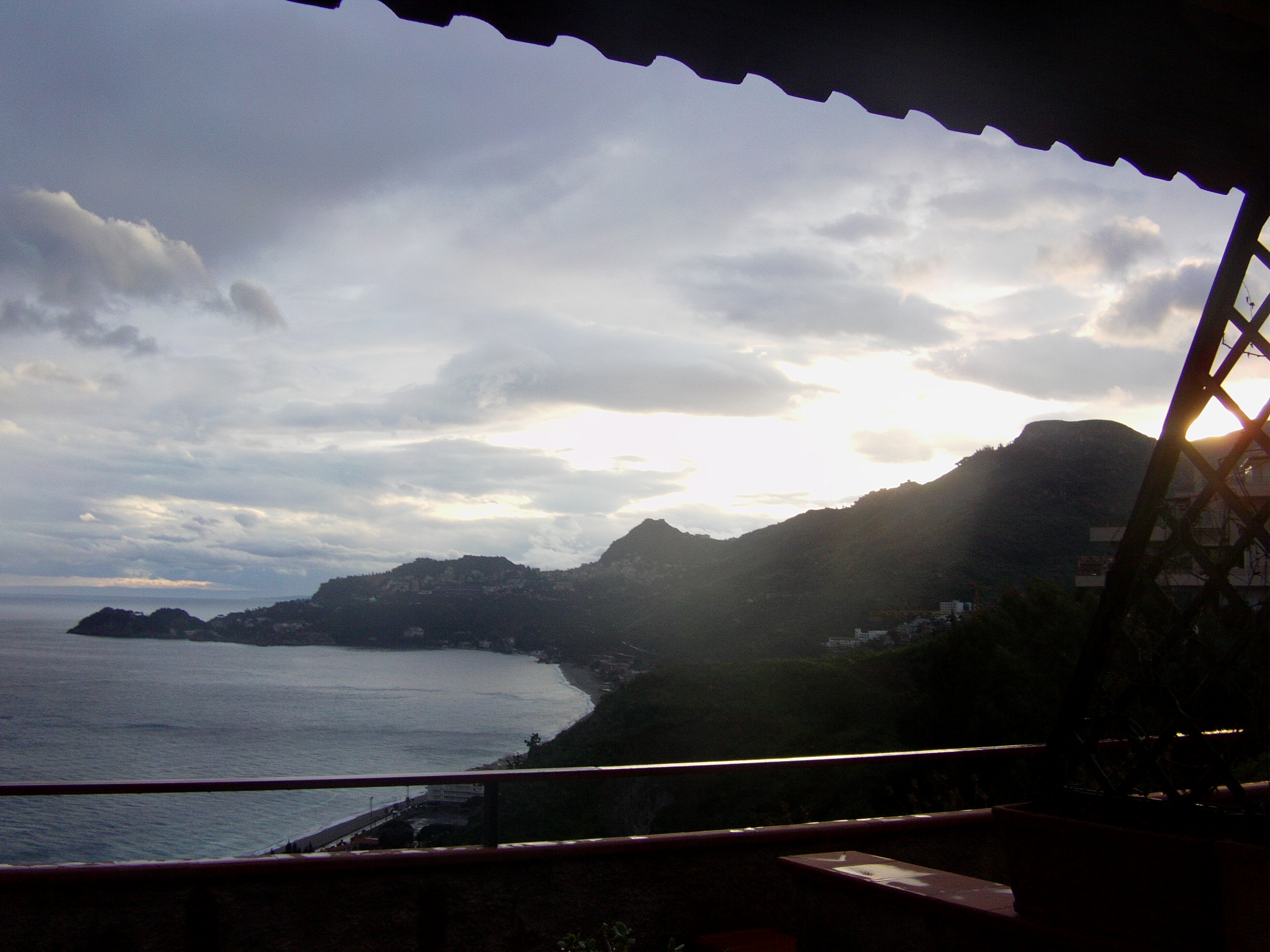
Letojanni and the Mediterranean
Letojanni is a summer resort town, and we were there in the off-season. On the first day, as we hiked down the hill from the resort to town in the rain (about 3km, and 500’ down) it reminded me of Ocean Shores or Leavenworth in the off-season. If you see it during the peak, you cannot get enough of the place, but if you come when nobody’s around you see everything there is to see in about half a day. Nancy’s main frustration was that even the places that were open for lunch apparently did not serve pizza on Sundays or until dinner. Mine was walking back to the resort. Uphill. In the rain. Wearing shorts.
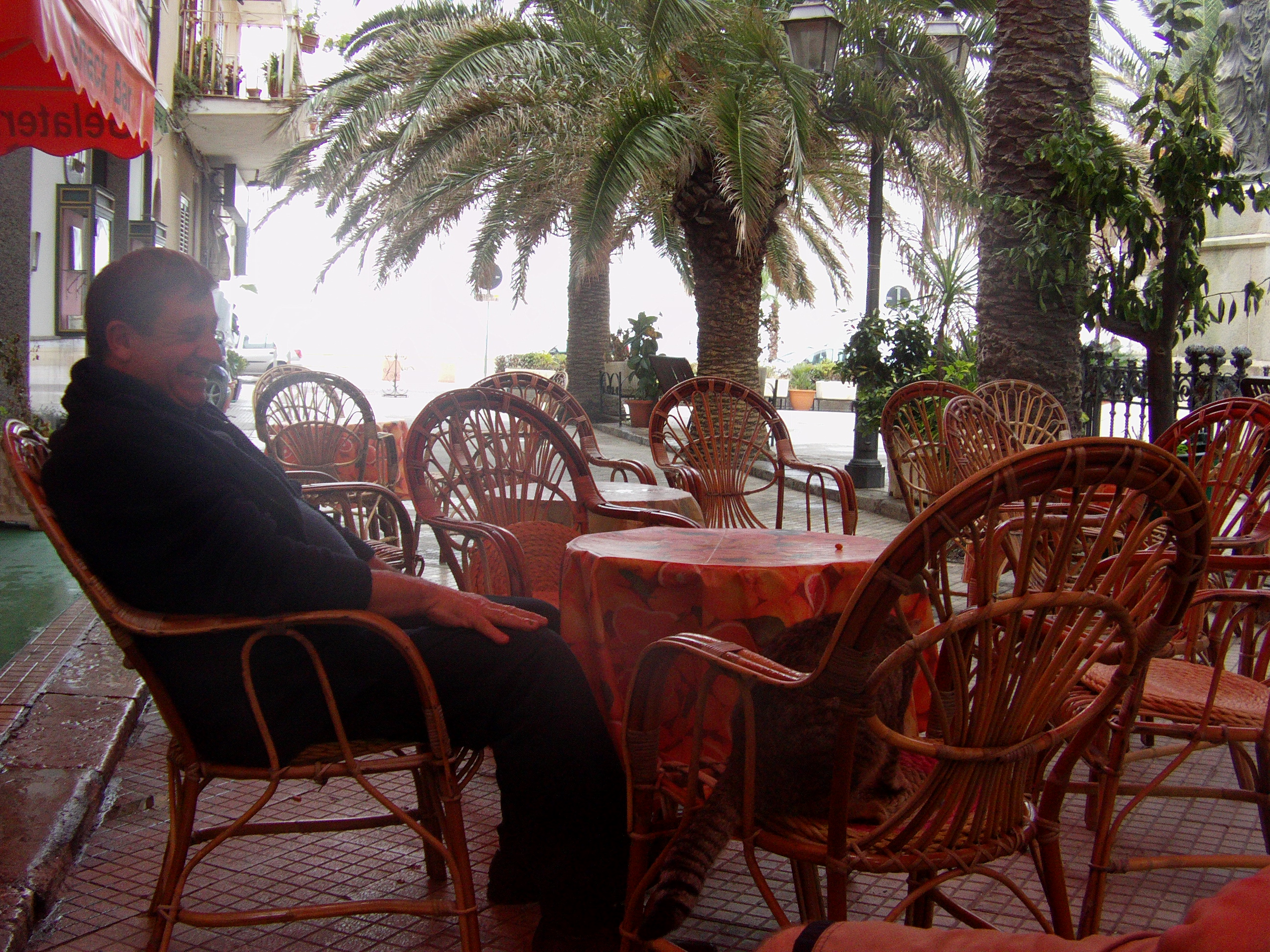
Cafe on Piazza Durante, Letojanni, Sicilia
Thankfully, first impressions are not always accurate. It was Sunday, after all, so many places were closed and the locals were at home observing the Sabbath. And even in the winter, rain is not too common so all the locals were wisely waiting it out. We did stop for a caffé under the awnings of the rather tacky looking “Palm Beach Café”, right on Letojanni’s main square, Piazza Durante, faced by the Church of San Guiseppe. The caffé was excellent, and the server was a genial guy who shared about his trip to the U.S. and about how it was nice and quiet now, but in the summer it was crazy with foreign tourists – Japanese… Americans… Italians…
When we did get back to the room, the view was worth the hike.
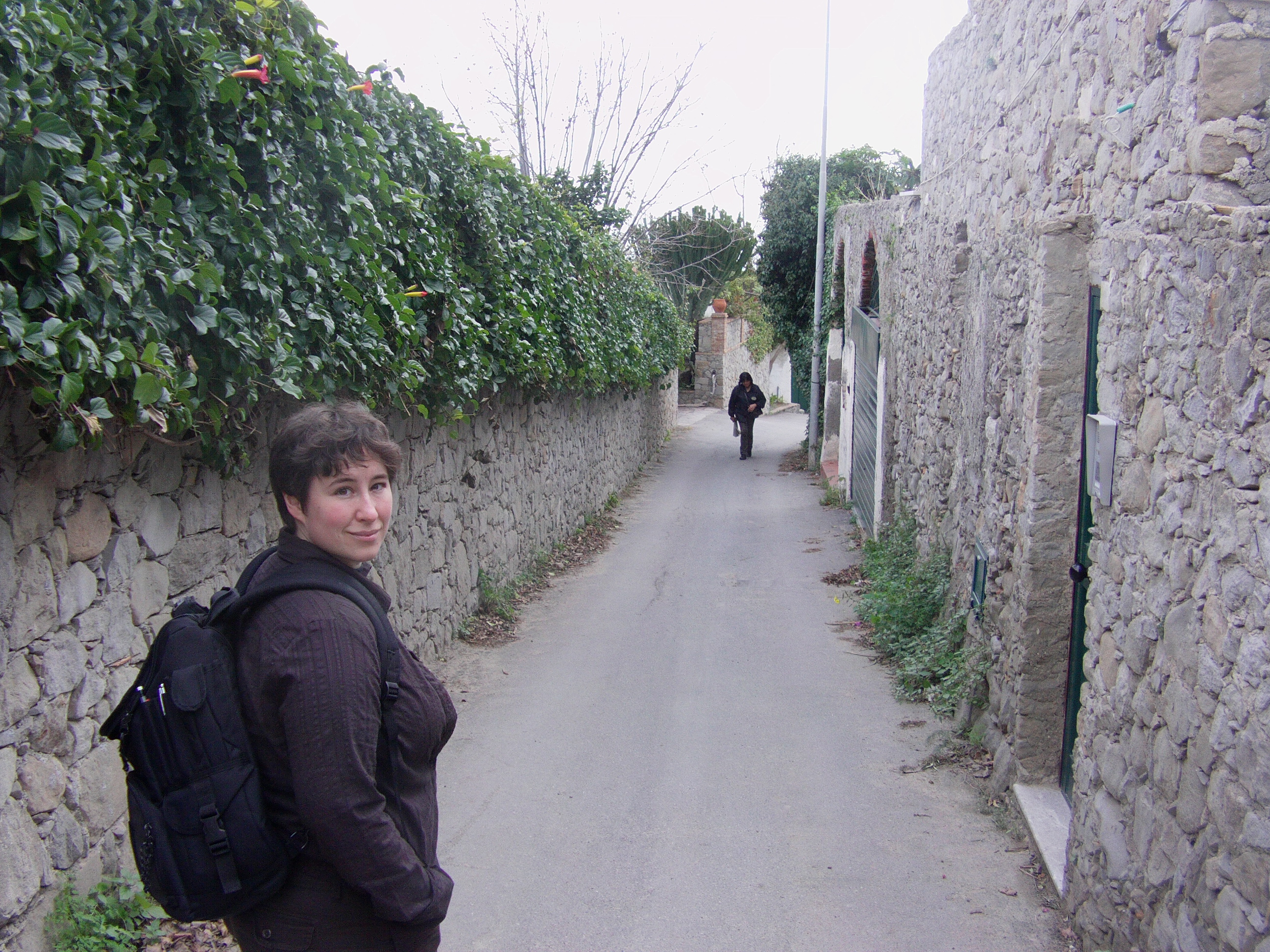
Small town, small roads, small Nancy...
Sicily or bust
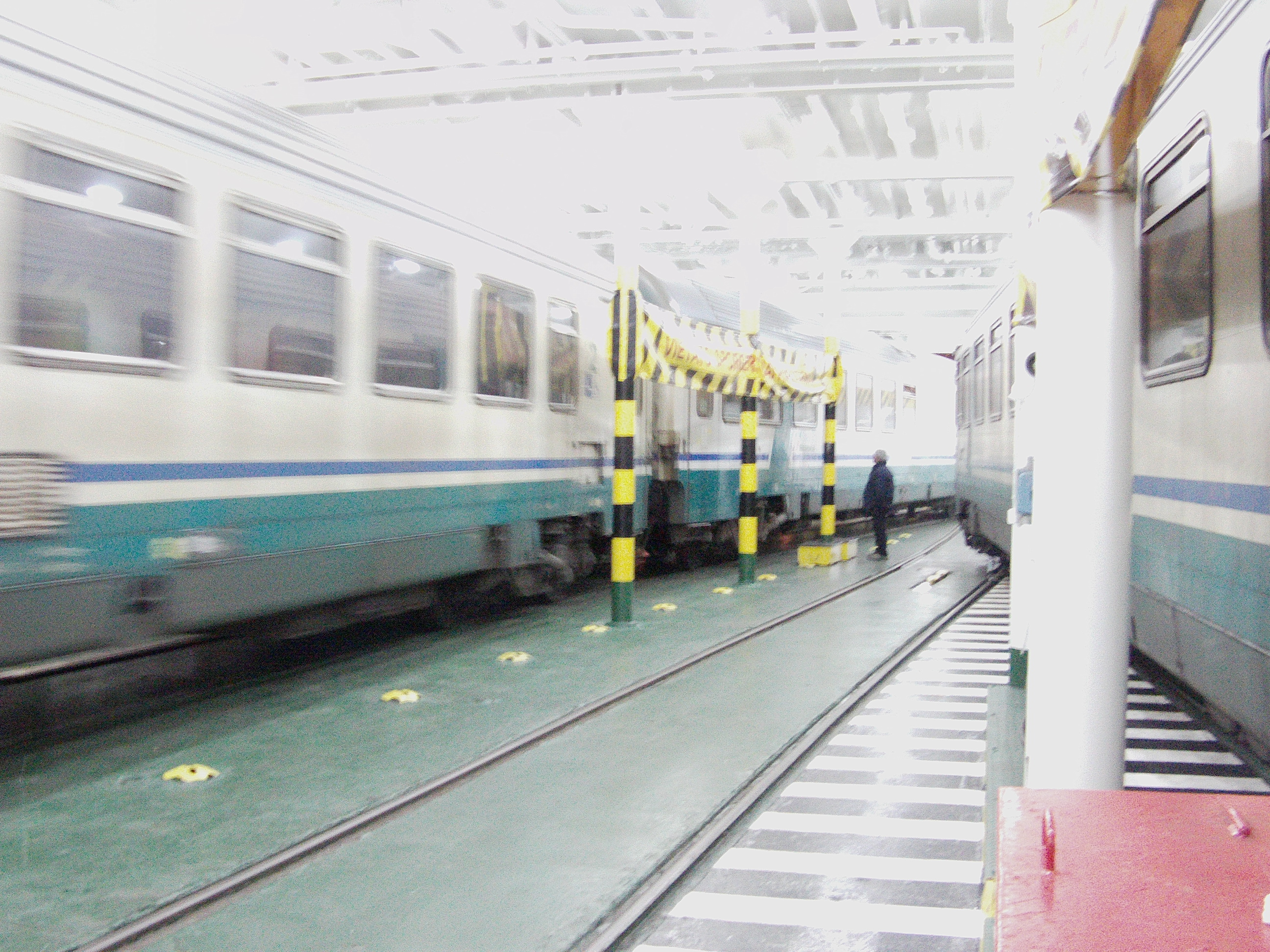
Trains. On a Boat.
It is a nine hour train ride from Rome to Taormina, about 750 km (466mi), and worth the extra 20 Euros for first class – which just means you get a semi-private cabin with up to passengers instead of open seating among sixty.
Before we left, a friend and classmate here told us that the way they got the train from the mainland to Sicily was by loading the passenger cars on a boat and then shipping us across! There’s only a mile and a half at the straits! If there’s a tunnel running 26 miles from England to France, surely they had a bridge or something for Italy to Sicily. Our skepticism melted when we got to the port of Villa San Giovanni, where, as predicted, they drove the train right onto a massive ferry and we set sail for the Sicilian port of Messina!
When we arrived at about 930pm, we discovered that the train station was actually 5 km drive up a winding road up a vertical climb of 700’ to the town of Taormina. But, we were actually staying a couple towns over, in Letojanni – 7 km away.
Christmas Day at the Lay Centre
We slept. Instead of venturing back to Piazza San Pietro, we decided to sleep in and watch the Urbi et Orbi on TV – a better view, and with no public transit running, we would have spent half a day just getting there and back.
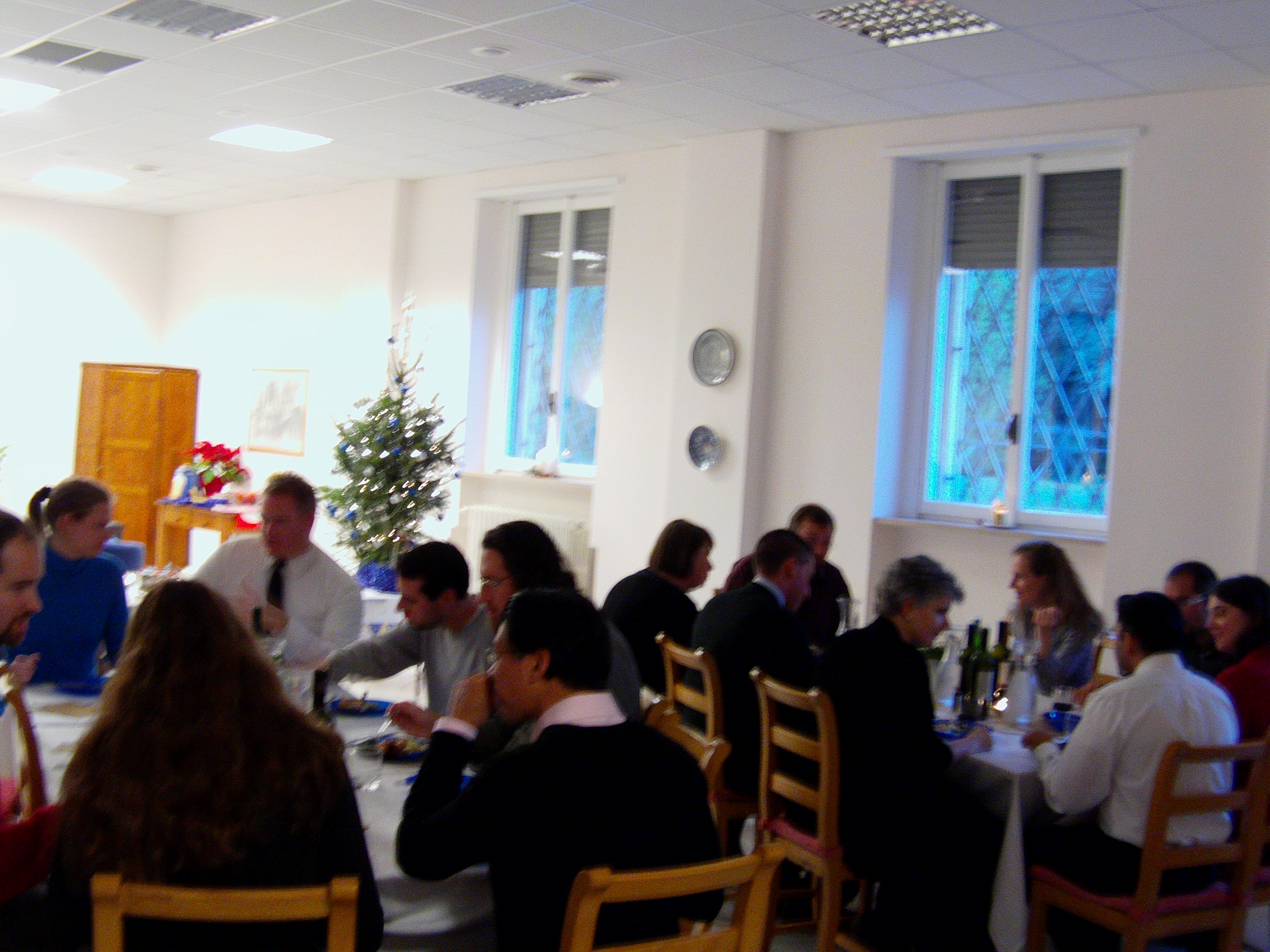
Christmas dinner
In the afternoon, the seven of us staying at the Lay Centre were joined by twice as many guests for a Christmas dinner prepared by Donna with a little help from Nancy and me. As with Thanksgiving, it was nice to offer hospitality to friends and colleagues here in Rome, separated from home and family. We entertained guests from the U.S. and U.K., Ukraine, Uzbekistan, and a few countries that do not start with the letter “U”.

Colosseum "crown of light"
David had spent a day or two preparing a piñata, a custom which only three or four of us were familiar with, and he and I got to torment the blindfolded volunteers with our maneuverings. The measures of success for a piñata: several people tried (and failed), lots of laughter, and lots of candy!
As we were getting ready to head back in for dessert, the Colosseum lit up the sky with a “crown of light” in honor of the coming of the Christ-light into the world. Not as busy as yesterday, but a welcome celebration!
 The Ecumenism Blog