
Home » Church and World (Page 10)
Category Archives: Church and World
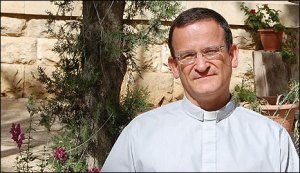
Very Rev. David Neuhaus, SJ
Very Rev. David Neuhaus, SJ
The Synod of Bishops is meeting in extraordinary session for the Middle East for the first time in church history, and one of the few synod fathers who is not a bishop is our guest presider and presenter this evening, Jesuit David Neuhaus, Patriarchal Vicar for the Hebrew-Speaking Catholics in the Latin Patriarchate of Jerusalem.
The Patriarchate is the diocese covering Israel, Palestine, Jordan and Lebanon serving the 70,000 Latin Catholics living in this area. In Israel, only 2% of the population is Christian, and the majority of these (about 90%) are Arab. There is a small but significant number of Hebrew-speaking Catholics, however, that requires special attention and holds a unique place in the Church.
Like migrant workers anywhere, these families are made of the first-generation workers, many now parents, who came to Israel looking for work, but maintaining their primary identity with their country of origin. Many of these are Filipino. Now, their children, who have been born and raised in Israel, are “culturally” Jewish – they speak Hebrew, go to school in Hebrew, know the popular religious imagery and stories of Judaism as a child in the States or the UK would know basic “cultural” Christian stories and images even if not a Christian (Christmas itself being a great example). The vicariate then ministers, primarily in catechesis, to these children who are Israeli, ‘culturally’ Jewish, but religiously Christian. Like Jews in a secularly Christian culture, the biggest threat to these Christians in a secularly Jewish culture is assimilation.
It was one of the first places in the world granted blanket approval for the liturgy and sacraments to be celebrated in the vernacular, as early as 1955. At the time, the liturgy had to be in one of the three sacred languages: Latin, Greek, or Hebrew. If one of those three happened also to be the vernacular, in this case Hebrew, you were set. Eleven priests serve the 500 members of the vicariate.
Fr. David is one of a rarer sort, a convert from Judaism. Born in South Africa the son of German Jews, he migrated to Israel at the age of 15, less than two weeks after the assassination of Stephen Biko. There his first encounter with Christianity was with an 89-year old Russian Orthodox babushka whose principal character marker was joy. He met with her regularly until her death at 93. When he told his parents, as a teen, that he intended to become Christian, I can imagine there was a little scepticism mixed in with the expected disappointment. They told him to wait a decade, and if he still wanted to convert then, he could. Ten years later he began the formal catechumenate process.
Conversant in Hebrew, Arabic, Italian, English, and French, Fr. David was drawn to the Melkite liturgy, but also to the Jesuit community, where he eventually applied to be part of the province serving the Holy Land, based in Lebanon. He is the only Israeli citizen in the Church’s flagship religious order.
He shared with the community about the church in the Holy Land, his vicariate, and about the Synod on the Middle East. The purpose of this special assembly of the Synod was
“…to confirm and strengthen Christians in their identity, through the Word of God and the sacraments; and to deepen ecclesial communion among the particular Churches, so that they can bear witness to the Christian life in an authentic, joyful and winsome manner. Essential elements in this witness in our lives are ecumenism, interreligious dialogue and the missionary effort.”
This gathering of the Synod is remarkable for several reasons. For the purpose of this Assembly, the Middle East indicates 18 states, a region with a total population of approximately 356,174,000 people, of whom only 5.7 million are Catholic, representing 1.6% of the total population. The region is home to seven of the 23 Churches sui iuris that comprise the Catholic Church.
It is perhaps the first time that the Catholic bishops of the Middle East have met as a group. The Assembly itself is predominately representative of the Eastern Catholic Churches: of the 185 Synod Fathers, 140 are Eastern Catholic. In addition to the regular participants, there are 36 experts and 34 auditors, plus three special guests: an Israeli Rabbi, a Lebanese Mufti (Sunni), and an Iranian Ayatollah (Shi’ite). This marks only the second time that a Jewish leader has spoken at a Synod assembly, and the first that Muslim leaders have done so.
Working languages of this Assembly are Arabic, English, French and Italian; scheduled for only 14 days, it is the shortest gathering of the Synod in its history.
Despite streamlining in the meetings since Pope Benedict’s election, there still are some organizational challenges. There is no real order to the speakers’ interventions, for example: Fr. David gave his five-minute speech between the Maronite bishop of Sydney and the Chaldean bishop of Kirkuk, Iraq.
The main concern is the coherence of Catholic presence in the Middle East, the question of dialogue is most pressing in terms of Islam and religious freedom. With Judaism, our dialogue flourishes in the west, where Judaism is a minority, but in Israel where Christianity is the minority it is harder to ‘get on the radar’. Many Israeli’s can go most of their lives never having met a Christian, as a Christian, and those who encounter the work of the vicariate are often surprised to find Christianity taught in Hebrew, rather than an imported western language and culture. The challenge of dialogue can be partially in the overlap of culture and religion, ethnicity and identity in the region, a challenge to separate the religious from the political, at least to an extent. A the same time there is unique opportunity for bridge building in a place where most Christians are Arab, east can meet west and Arab can meet Israeli, all under the roof of the Catholic Church.
In terms of ecumenism in the Holy Land, Fr. David shared an anecdote from the visit of some (western, Anglophone) pilgrims. He took them to a particular holy site, which is administered by an Orthodox monastery. After knocking for several minutes, an irritated monk opened the door and demanded to know what they wanted. At first he refused entry, but eventually allowed them to look around, “but no praying!!” He proceeded to follow them around, suspicious that they might commit the apparent sacrilidge of Catholic prayer in an Orthodox holy space.
“Some of you may be wondering about the reception we have just had,” our Jesuit starts. “Consider the first arrival of Latin Christians, the crusades – the sacking of Jerusalem and the wholesale slaughter of men, weomen and children – Muslim, Jew and Christian alike. Then consider the controversy of the erection of the Lutheran/Anglican diocese, and even of the Latin patriarchate in the last century. We (Latins) have not always been the most Christian when coming to these places.” He continues with the history and information about the site as the monk, who had been listening all along, slips out the back. Just before they get ready to leave, he asks them to wait, “I have prepared something for you” and offers refreshment. Before they finish, he invites them to pray.
The healing of memories was one of the key themes of John Paul II’s approach to ecumenism, and it starts with us and an honest look at our common heritage. Some debts may be too great to pay, but cannot be ignored. Some small acts of honesty can go a long way in a place so sensitive to such memories.
Archbishop-elect adiaphora
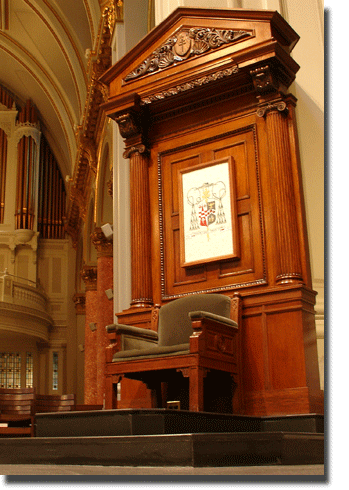 While looking for more information on Seattle’s new Metropolitan Archbishop, I came across a couple of interesting asides.
According to his introductory remarks yesterday, Bishop Sartain only got the call from the nuncio just a week before the announcement here and yesterday’s short-notice welcome liturgy. As I said, as late as Tuesday some key (lay) leadership in the diocese were still unaware of the pending announcement, and at least as late as Monday most priests of the diocese were likewise unaware. Pretty remarkable then that so many were able to gather for the welcome liturgy on Thursday, which our Cathedral staff documented nicely here.
The other interesting aside was the official announcement on Vatican Information Service, which seemed to make the archdiocese much larger than i thought it was. I cross-checked the diocesan statistics, and found a couple of discrepancies. Below is the blurb from VIS
VATICAN CITY, 16 SEP 2010 (VIS) – The Holy Father appointed Bishop James Peter Sartain of Joliet in Illinois, U.S.A., as metropolitan archbishop of Seattle (area 64,269, population 5,141,000, Catholics 964,000, priests 313, permanent deacons 104, religious 551), U.S.A. The archbishop-elect was born in Memphis, U.S.A. in 1952, he was ordained a priest in 1978 and consecrated a bishop in 2000. He succeeds Archbishop Alexander J. Brunett, whose resignation from the pastoral care of the same archdiocese the Holy Father accepted, upon having reached the age limit
VIS has the total population of the archdiocese at 964,000 – nearly double the archdiocesan statistic of 577,400. Instead of 313 priests, our statistics indicate a total of 290. Though when you add up the constituent numbers indicated by the diocese, you get another number entirely, 322. (131 active diocesan; 63 retired, ‘absent’, or active elsewhere; 96 religious; 32 externs). 100 deacons instead of 104, not so far off. Only 486 religious (men and women), though, instead of 551 – and it is not clear if the priest-religious are counted here as well.
One of my long-standing pet peeves is that you will note neither includes a statistic on lay ecclesial ministers, though a few years ago Archbishop Brunett commissioned a study in the archdiocese that indicated over 800, which does not include Catholic school teachers. Five years after the publication of the USCCB’s guideline document Co-Workers in the Vineyard, and more than fifty years after the first modern lay ecclesial ministers began service in the U.S., it is hard to believe that we are so well hidden that we cannot be counted!
New Archbishop for Seattle

Bishop J. Peter Sartain of Joliet
Since coming home for the summer, the rumors have been flying. Meeting over coffee or a local microbrew with pastors, curial staff, and local ecumenical leadership over the last several weeks, the two consistent questions have, “So, what is it like living in Rome?” and, “Who do you think the new archbishop will be? Have you heard any rumors over there?” A month ago, even the current AB was asking me the same questions, and not in that order.
This morning’s announcement came to me by text while I slept, out of town and disconnected from the internet. To be honest, it was also a bit of a surprise. So far, all I know about J. Peter Sartain is what I have read online (now that I have found a connection) and unsurprisingly the writer with the most to say about it is Rocco Palmo at Whispers in the Loggia.
Even as recently as Tuesday, folk here were still in the dark. Archbishop Brunnett had been out of town for his brother’s funeral, and though we have been anticipating the announcement shortly after Bishop Cupich’s Sept 3 installation in Spokane, Sartain’s name never seemed to be on anyone’s list. The favorites have been bishops like George Thomas, Gerald Kicanas, and, until the incident with the hospital administrator, Thomas Olmstead. Blase Cupich had been among them until tapped for Spokane.
Sartain is a native of Memphis, and has served as bishop of Little Rock, AR, and Joliet, IL. The hope for either a native Washingtonian or at least someone from west of the Rockies is again delayed, but most see the South and the Midwest as a better starting point than the East Coast (which, from here, starts at the Mississippi) considering the vast ecclesial and cultural differences at work.
Though the Hunthausen years started before I was born and ended with the Cold War, the memory of the Visitation and the pain it brought for the most involved Catholics in Seattle at the time is still strong. There are a lot who, not without reason, fear that the perspective remained in Rome that Seattle needs to be “reined in” – from what, though, would be a disputed question. (There is something for a future post!)
We are church in one of the most unchurched regions in the country. The fear of being run through the ringer again is felt even outside the Catholic community. One of the alternative weeklies, The Stranger, ran an article on their Slog yesterday asking, “Will Seattle’s Next Archbishop Be an Anti-Gay Doctrinal Conservative?” That should say something about the challenges our new bishop will face. The question is, as another blogger put it, how to be true to the faith without effectively becoming “Attila the Hun”, real or perceived.
At the same time, between new generations growing up without these memories and significant numbers of immigrants from out of state and out of the country, other concerns weigh as heavily.
For more than a generation, the number of lay ecclesial ministers have outnumbered priests in parishes, and the diaconate is now equal in number to the diocesan presbyterate and growing, while the later relies heavily on help from religious communities and foreign externs. Many are asking what the archbishop-elect’s experience is with creative ecclesial leadership.
More than thirty languages are used in the celebration of the Eucharist on a weekly basis, and nearly half the population of the archdiocese is Spanish-speaking. So is Bishop Sartain, apparently.
Seattle-area Christians have a long and strong history of ecumenical cooperation, though it has been more focused on social justice advocacy than on intentional ecumenism, ie the goal of Christian unity. Being religious in an overwhelmingly non-religious environment, interreligious dialogue is critical. At the same time, and indeed as an integral partner with dialogue, evangelization both “old” and “new” is a high priority.
Like anywhere in the U.S., we have a polarized church, with some groups of priests unwilling to even talk to others, the parishioners falling prey to the hyper-dichotomized political situation and bringing it into the pews. There have been situations where the pastoral staff of a parish, theologically educated and ecumenically involved, comes under fire from the lay leadership which is more likely formed by EWTN and pop apologists (or vice versa).
I once had a parishioner approach me, grateful for my presence as pastoral associate in the parish because, she said, “all the other parish staff in this deanery are pro-choice, and it is nice to have a pro-life person in charge!” Knowing most of my ministry peers, it was difficult to see how anyone could read them that way, but it is indicative of the tensions and mistrust in too many situations. Another time, a school parent and faith formation commission member told me they had a great pastor, but that the staff undermined his prophetic, orthodox teaching – unaware, apparently, that the pastor had hired each one of the staff to be collaborators with him in ministry to the parish, and fully supported their ministry. A third example came at the first meeting of a JustFaith group, when a parishoner introduced herself as “probably not belonging here, since [she] was a Republican” – as if Catholic Social Teaching depends on one’s political views!
It will be an interesting time for our Archbishop-elect, and I look forward to hearing more from and about him. As I learn more, I will share it! Please keep him, me, and all the People of God in Western Washington in your prayers!
Teaching in New Orleans
What does a humanities graduate student do for summer work in this economy? “Not much” is the punch line most are looking for, but I have had a few rewarding opportunities for which I am grateful.
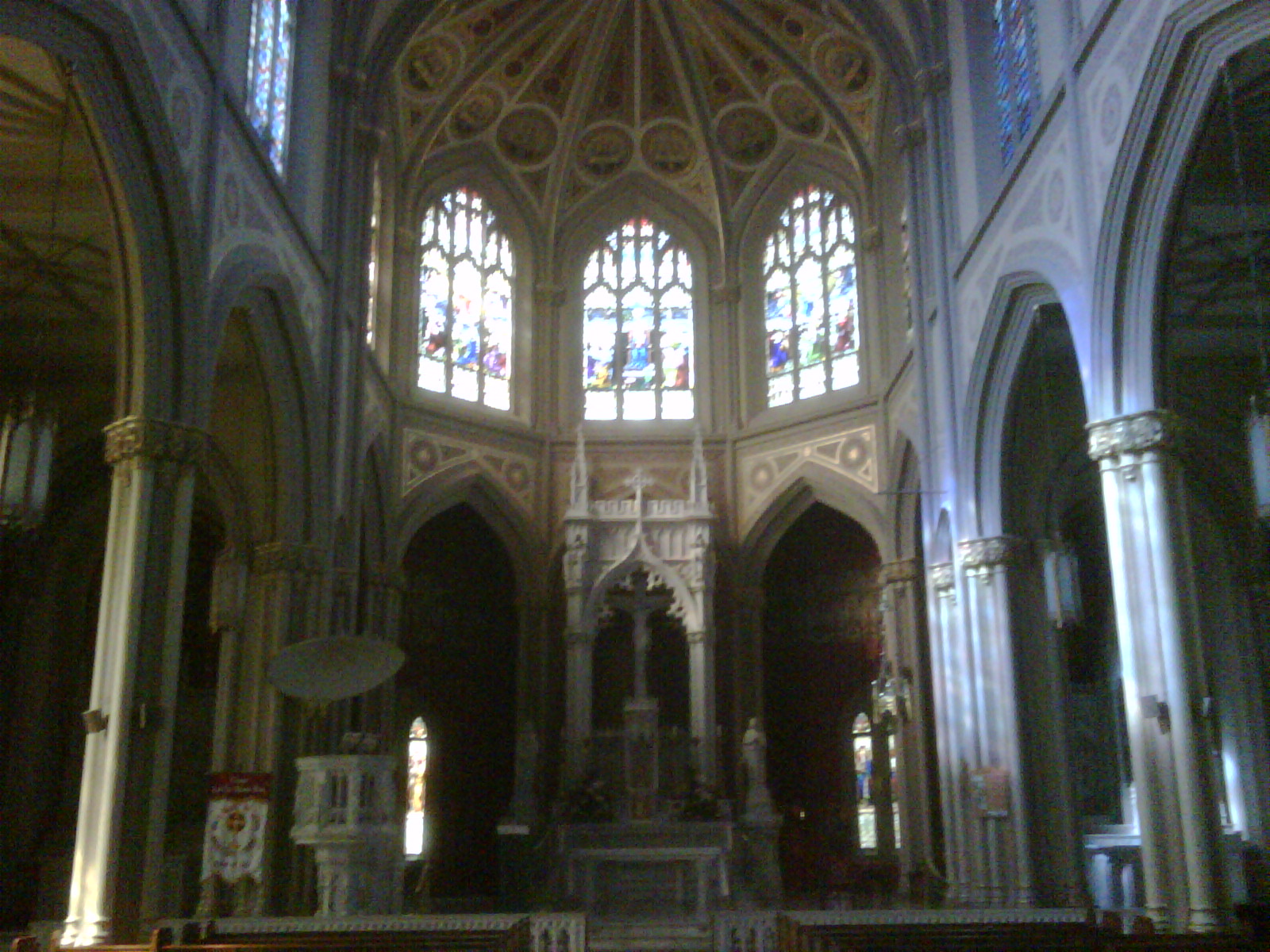
Holy Name of Jesus Parish Church, Loyola Unviersity New Orleans
There is still some room on my schedule for some others, if you know of any! Some of my usual work was not available – I have served as faculty or field staff for the Vicar for Clergy, the Faith Formation, Liturgy, and Youth & Young Adult Ministry offices in the past, but several budgets have been cut, and other classes were booked as early as January, and I only started looking in February!
I will be teaching two courses on the Eucharist for our Liturgy Ministers Institute, and working with a couple parishes on leadership development and reorganizational processes, but the most interesting offer was a 10-hour course for the Archdiocese of New Orleans’ Institute for Catechetics and Spirituality, which I taught this week. “An Introduction to Ecumenism and Interreligious Dialogue” – ten hours is nowhere near enough, but sadly more than most in ministry get!
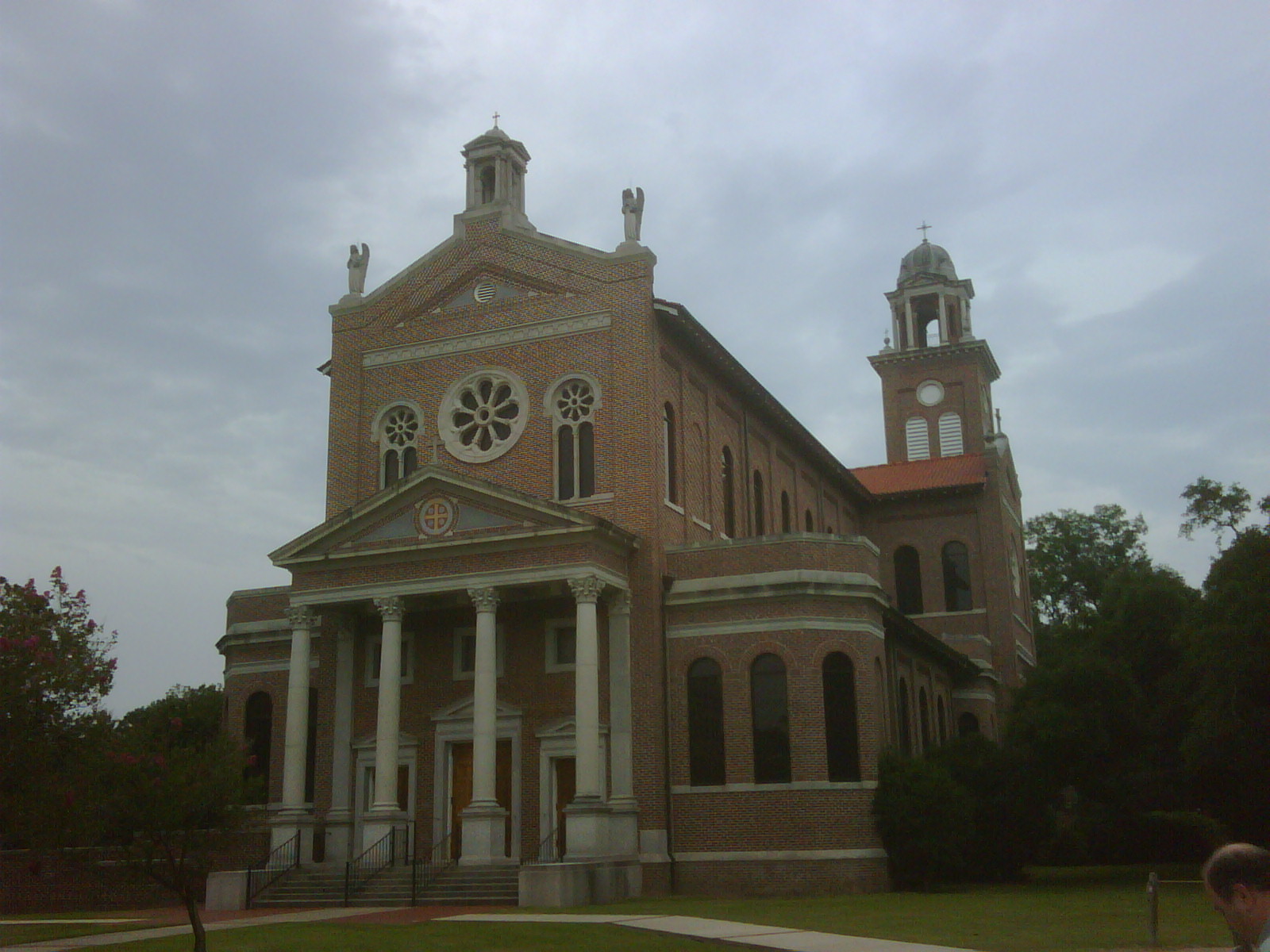
St. Joseph Abbey Church
The Big Easy was hot and humid, but a year and Rome had prepared me. I was only stateside for a few days and just about recovered from jetlag when I left back across the country on a flight almost as long as the one that brought me home from the Netherlands – a reminder that Euclidean geometry does not apply when making flight plans!
My host for the week was a friend and fellow ecumenist/lay ecclesial minister, Buddy Noel. My first moments in New Orleans provided an opportunity for prayer. On his way to the airport to pick me up, Buddy was caught in one of the South’s infamous downpours, and his car hydroplaned into the one in front of him in a backup on the Interstate. At least 12 cars were involved in a number of different collisions in the same area at the same time. His car totaled, Buddy was able to walk away with only bruises from the seatbelt and airbag. As he was making calls from the side of the road, his phone died. Long story short, he got a ride to the airport and had to have them page me, just a couple hours after his accident. I have been given great hospitality before, but this takes things to the extreme!
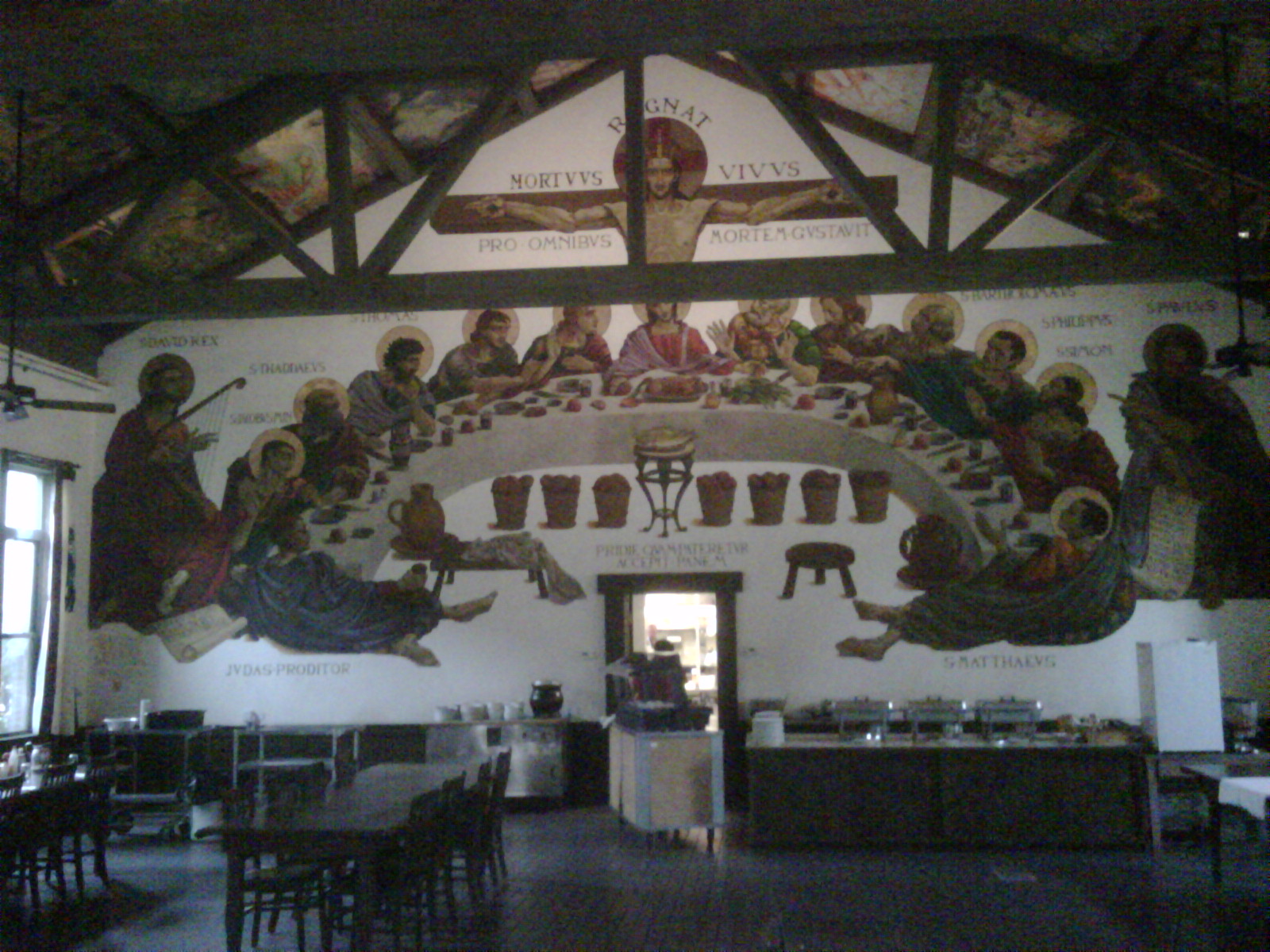
Last Supper, Refectory of St. Joseph Abbey
With a small group for the class, I was able to tailor much of it to some of the questions and expectations of the students, who were a mix of parochial school teachers, parish staff, and interested lay people. And nothing reinforces one’s own studies like teaching a topic, especially when you have to distill the highlights of a dozen years of study into a few hours. It also gave me plenty of time to talk with people and find out a little about the state of the church in one of the Catholic culture centers of the U.S. It was also only my second time to New Orleans, the last being just before Katrina; this time, they were just fitting the well with the new device to see if they could finally stop the largest oil disaster in history.
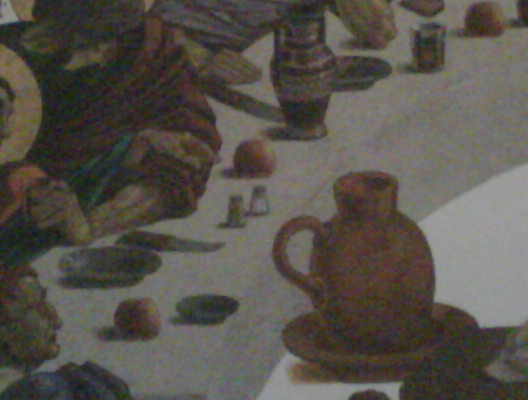
Last Supper (detail): Salt and pepper shakers, eh?
Archbishop Gregory Aymond has been the Ordinary there for just about a year, the first native of the diocese to serve as its bishop. Everyone I spoke with was positive about his appointment, with sentiments ranging from pride for a home-town boy done well to enthusiasm for his ecclesiology – and apropos to my visit – his commitment to local ecumenism.
The city has recovered its population and most of its infrastructure from Katrina, which hit nearly five years ago, but there have been changes. The Lower Ninth Ward looked like a field with a few funky, new houses scattered throughout – you would never know it had been a crowded urban neighborhood until the storm surge. There were still signs of the Katrina, a few gutted and abandoned houses throughout the city, a few roads sinking into the silt, but these were the exception rather than the rule. One of my students had been involved in a Chinese Catholic community that had been fairly active before the storm, whose members are now in diaspora around the country; A similar story with some of the small Eastern Catholic parishes in the diocese. Several people have simply moved to the other side of Lake Pontchartrain.
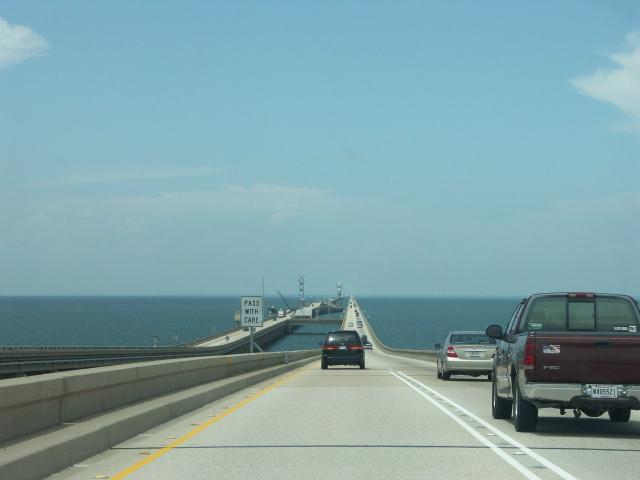
Lake Pontchartrain Causeway
The hospitality was generous and the food was excellent; the company was both! I was blessed to talk with new people each night, sample my first Po’Boys and some Gulf Coast seafood (sans oil), and wander the French Quarter, complete with obligatory beignet and Café au Lait. We prayed evening prayer with the Benedictines at St. Joseph Abbey, and I rode across the longest bridge in the world. Imagine driving onto a bridge and not being able to see land at the far side! The Lake Pontchartrain Causeway is about 24 miles (38.5km) from one shore to the other.
One little tidbit I picked up that fellow pastors and pastoral workers would find interesting, as well as the discussions around parish closings and reconfigurations after Katrina, was the relationship of parish and parochial school. Unlike the northwest, where a fractional minority of Catholic students attend Catholic schools, most in New Orleans do so. The relationship is a little better developed in some respects, as well – for example, the parish Director of Religious Education oversees the curriculum and instruction in both the parish religious education and youth ministry programs as well as the parish school classrooms.
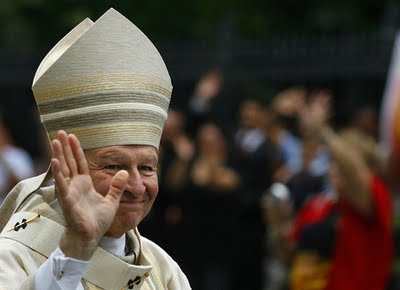
Archbishop Gregory Aymond of New Orleans
The Dutch, I Presume?
Holland and Netherlands are not the same thing, and the people and language are Dutch (though Flemish works, too). It does not help the rest of us, I suppose, that the Dutch national team was competing in the World Cup as Holland, though it was in fact the whole of the Netherlands represented. Holland is the western part of the Netherlands, one of the regions and once-independent states that combined to form the Netherlands, which itself is part of the region known variously as the Low Countries and the Benelux region (Belgium-Netherlands-Luxembourg).
In fact, while Eveline and I were touring the canals of Den Bosch, the volunteer tour boat captain asked the 20 people on board how many were from Holland. Considering I was the only person not speaking Dutch, I was surprised when Eveline was the only one to raise her hand – the rest were from elsewhere in the Netherlands: Friesland, Zeeland, Gelderland et al.
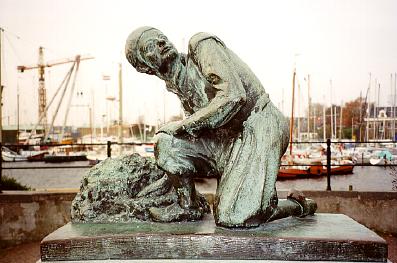
Hans Brinker, the boy everyone knows about for sticking his finger in the dyke to keep it from flooding. Everyone but the Dutch, that is.
A few people asked what my impressions of the Netherlands were, and what my expectations had been. Everyone seemed genuinely surprised that growing up on the far end of America, I had even heard about their country as a child. When visiting Kinderdyke, a picturesque concentration of nearly 20 windmills, we saw a notation in the guestbook reading, “It is a childhood dream come true to see these! Thank you!” The mild scoffing by the natives at the remark earned an explanation from me that indeed the mills and dykes of the Netherlands are known to us since childhood. Who knew that most Dutch have never heard of Hans Brinker?
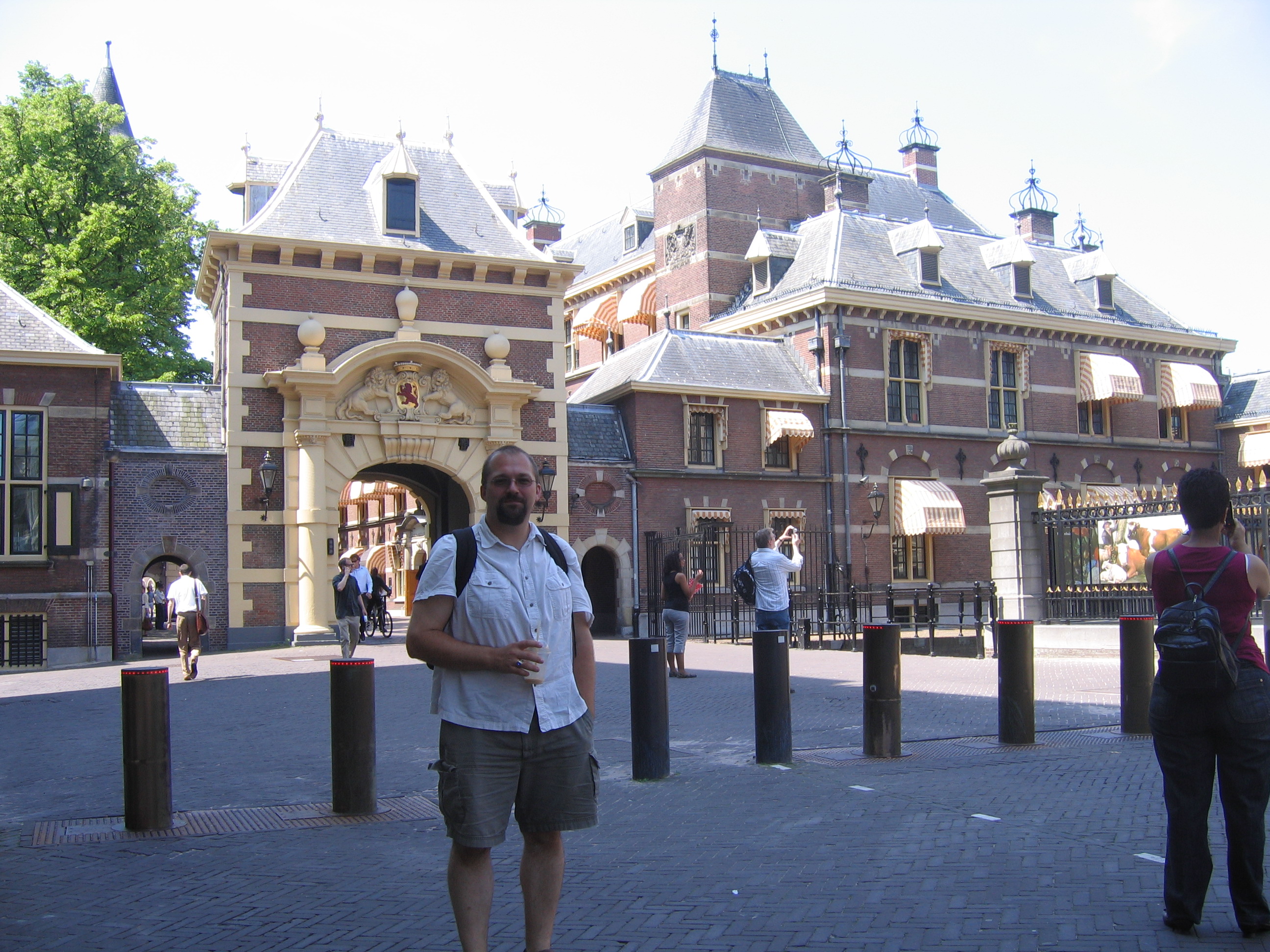
In front of the Binnenhof, home of the Dutch States-General (parliament)
A few words to describe my impressions? Fiets (bicycles)! Windmills, dykes, canals, and polders. Skating. Decorated bread! Drop (liquorice). Small country and houses. Friendly people, hospitality. Stroopwafels and Gouda (‘how-da’) cheese. [The Netherlands is about 16000 square miles – roughly 2/3 the size of Western Washington; the size of Massachusetts and Connecticut combined.]
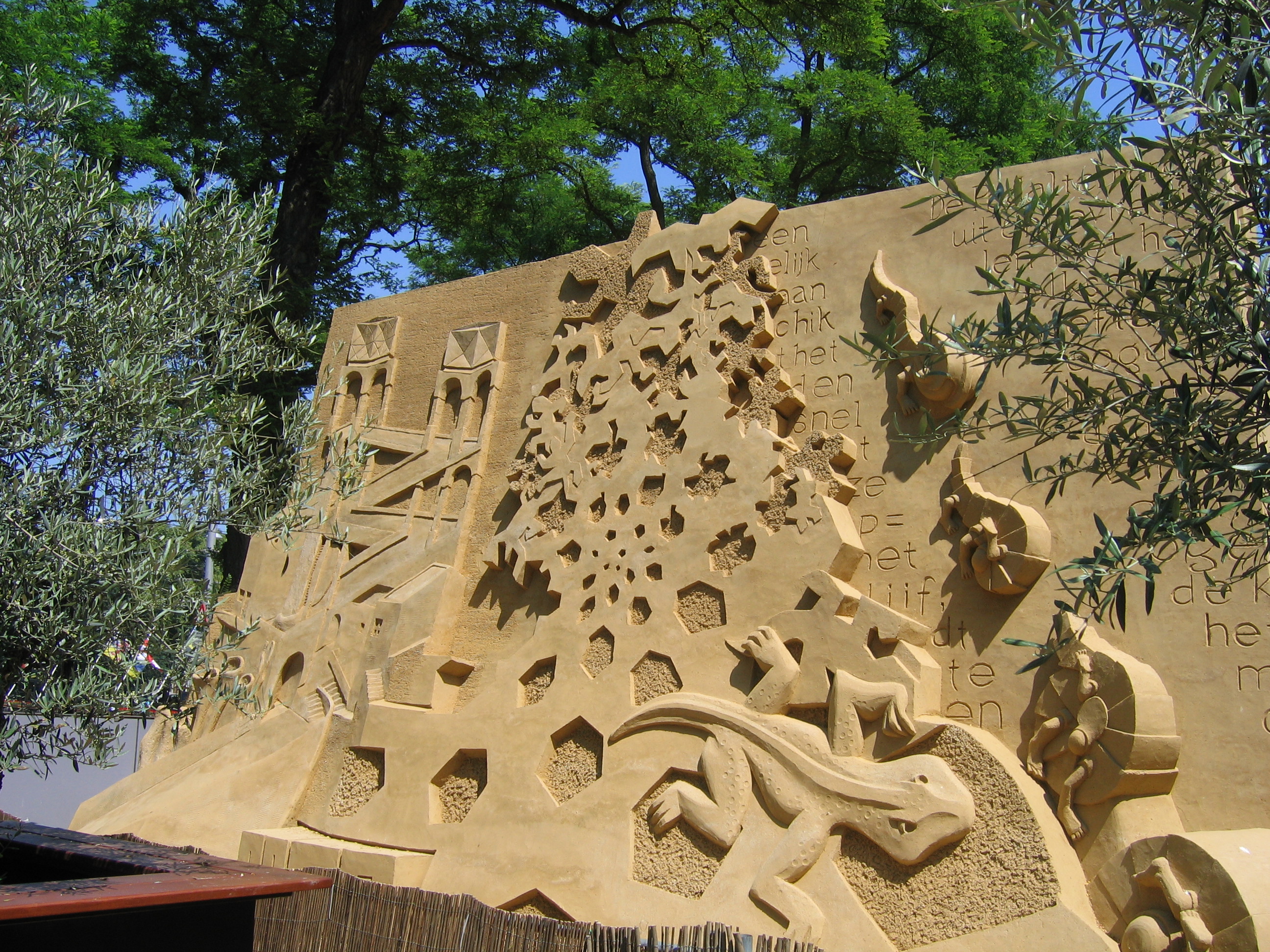
M.C. Escher tribute in sand
During a game of Dutchopoly, which was lost to the aforementioned theologian-diplomat, I got a pop quiz from her mom: “Do Americans know any [contemporary] famous Dutch people?” Schillebeecx, of course! And Visser t’Hooft. (Pronounced tohft, not tooft, I discover after the laughter subsides…) M.C. Escher is well known, but I doubt many know he was Dutch. Historical figures are more likely: Spinoza, Erasmus, Van Gogh. I had already mentioned Hans Brinker to mostly blank stares. But actors, musicians, athletes? Not so sure…
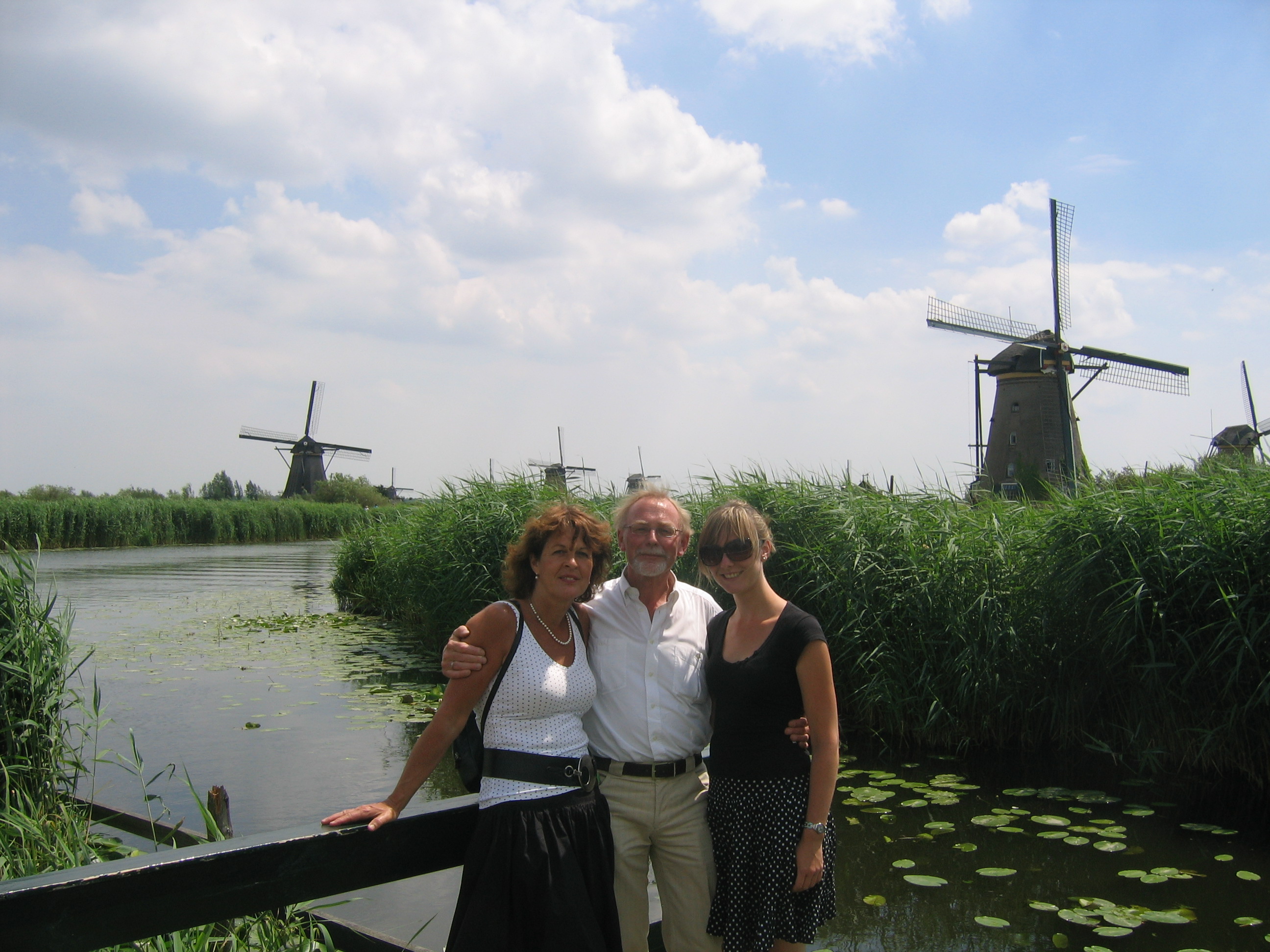
My generous hosts
After Amsterdam, I got a full day to explore the university town of Tilburg, Eveline’s college home for the last five years. Big, beautiful, rarely visited churches; bicycles in the tens of thousands parked at the train station; a large outdoor shopping district. I discovered almost immediately that the Dutch do not anticipate size-13 American feet when designing stairs.
Amsterdam may be the capital, but the seat of government is Den Haag (The Hague), which is where the Queen, parliament, and the embassies cluster, not to mention the international criminal courts. Like Amsterdam it dates from about the 13th century, and retains a great deal of European charm. A little less so, Rotterdam, which we visited next. Though an older city, its historic center was all but completely demolished during WWII. Definitely something to be in the midst of The Hague and the sea of orange as Holland won its way to the World Cup finals!
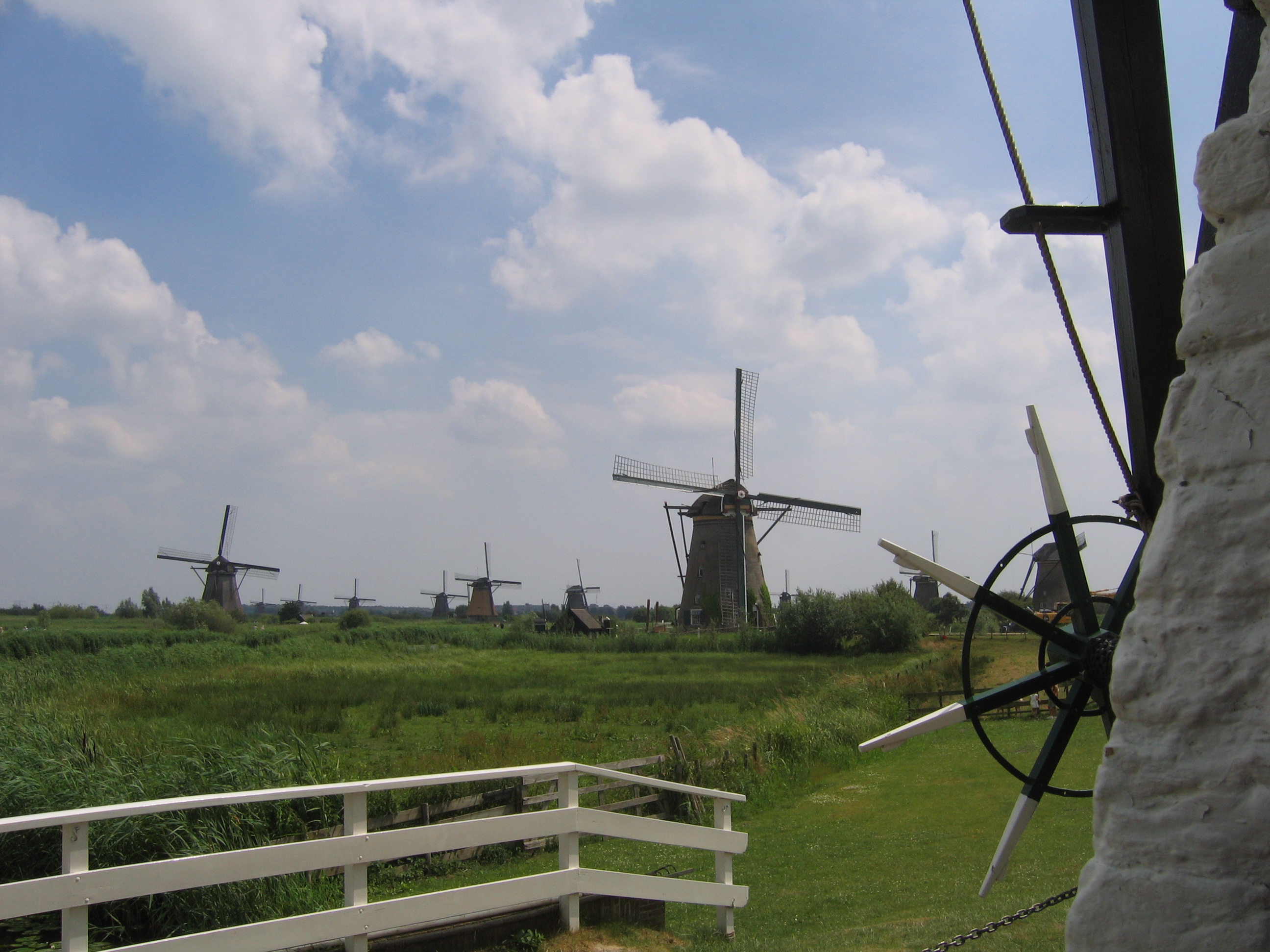
Kinderdyke
Over the weekend we retreated to Maasdam in South Holland, a small rural town where Eveline grew up and where her parents still keep her childhood house. Her father rides his bike 40 km to work daily, as he has for decades, and her mother has a pair of wooden clogs she still uses for working in the garden. We toured the island by fiets, and I discovered this is a lot easier to do when A) the entire country is flat and below sea level, B) you ride street cruisers rather than mountain bikes, and C) the entire country is crisscrossed with dedicated bicycle paths, not just 18” lanes on the side of a road!
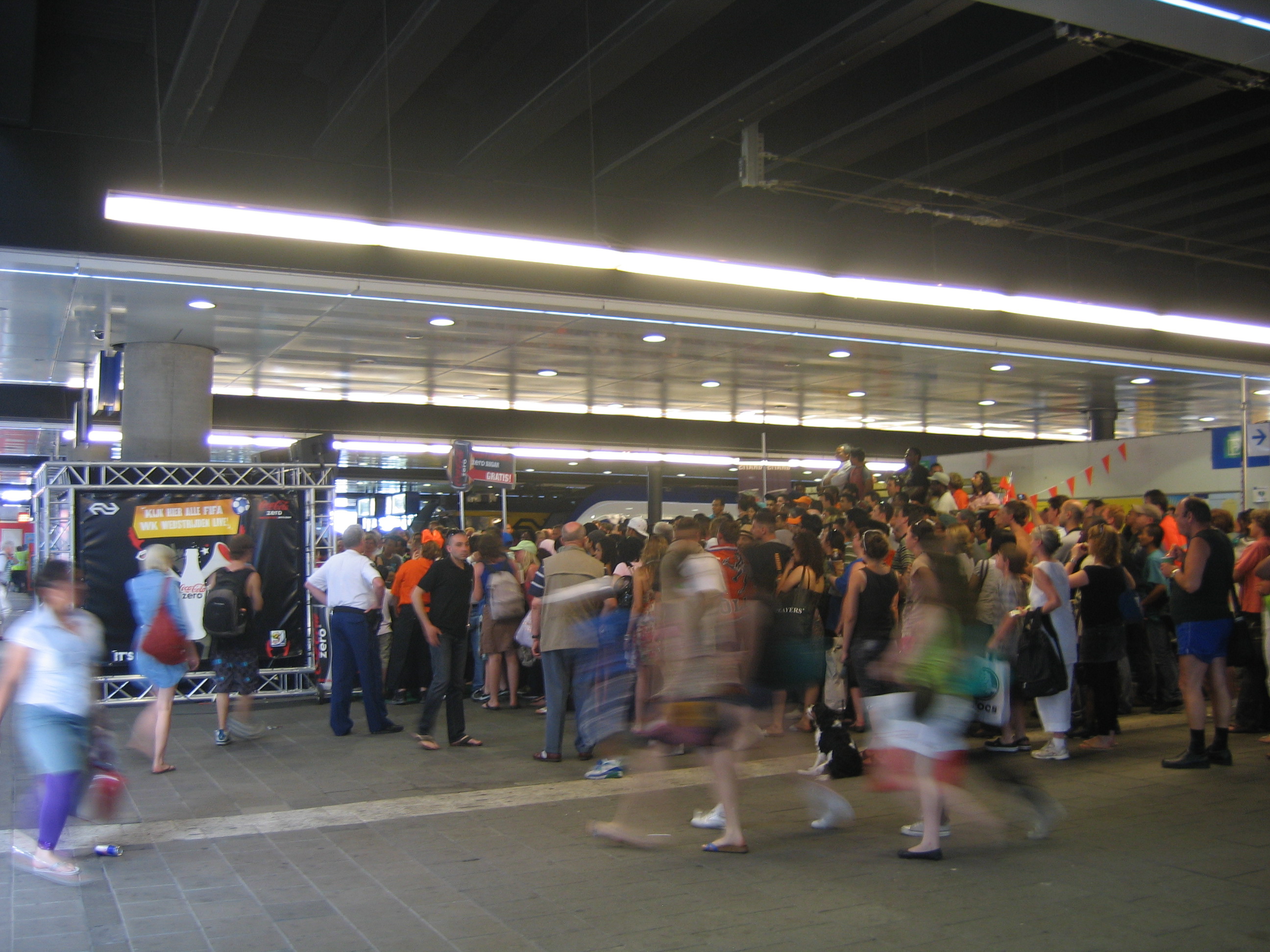
World Cup game ends in five minutes. Your train leaves in three. Where would you be?
Sunday was my first Fourth of July outside the U.S. Thanksgiving in Rome had had all the feel of home, a big feast and a gathering of friends, but there were no fireworks for me for Independence Day. (“So that’s why they always play that movie on TV today!” she says). There is plenty of Red, White, and Blue, however, since those are the colors of the Dutch flag as well – though Orange is the ‘unofficial’ color of the country, William of Orange being the ‘founding father’ if you will. We spent the afternoon touring the windmills of kinderdyke and the surrounding area. It is a little bit eerie to see rivers flowing through fields where the river is consistently higher than the land around it!
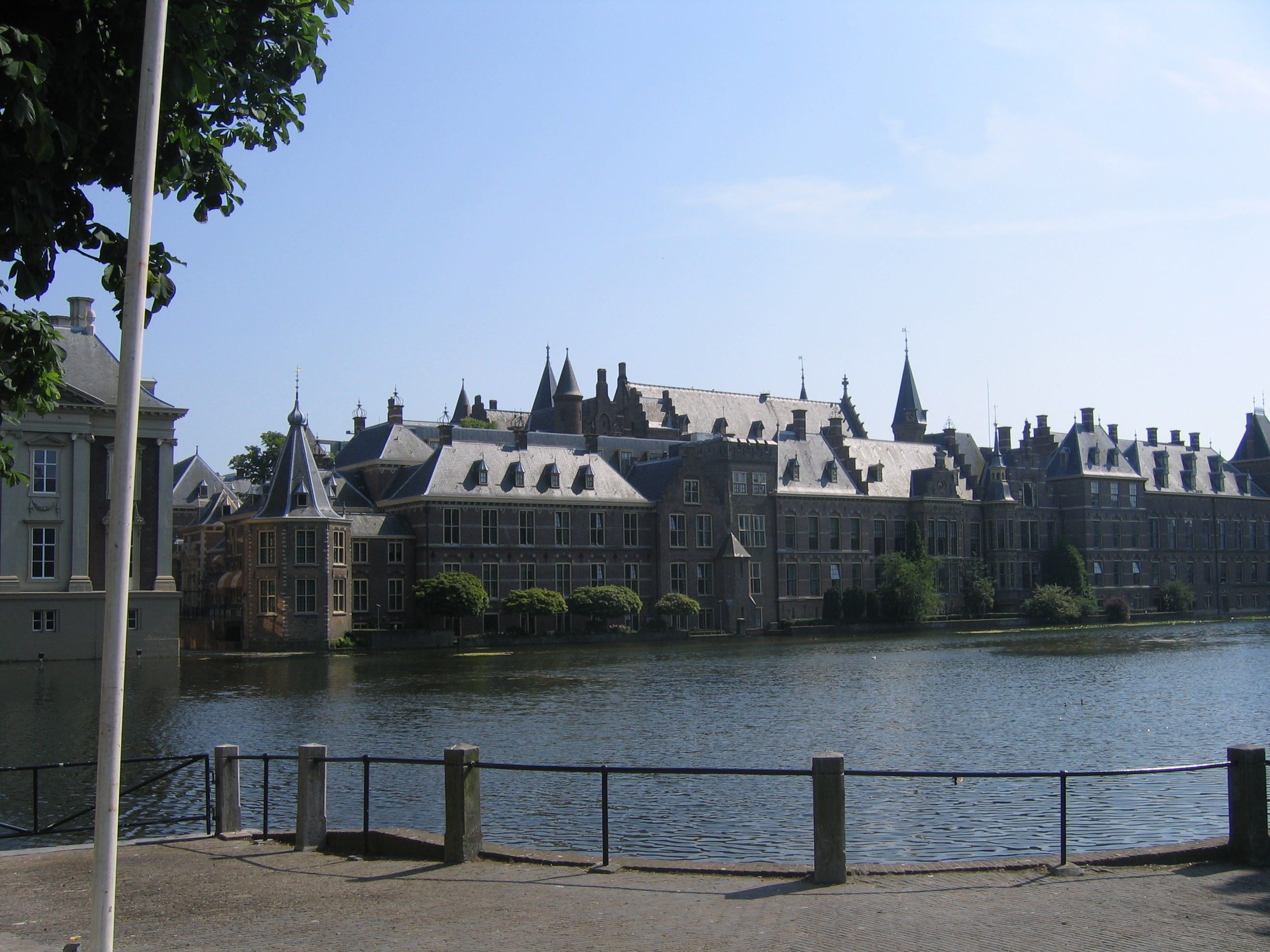
The Binnenhof
My last day was spent with a gathering of the Dutch clergy, honoring the end of the Year of the Priest, in ‘s-Hertogenbosch (Den Bosch for short). The guest of honor, presider and lecturer was the recently retired Cardinal Walter Kasper, who has been president of the Pontifical Council for Christian Unity for the last decade. Between the morning’s Eucharist and the afternoon’s lecture and vespers, we wandered around the town, sampled the famous Bosch Bollen, and toured the city from the canals that run beneath the city.
The cardinal’s address was delivered in German, and we were provided with Dutch translations in advance enough for me to glean the basic points from my host before the lecture began.

Cardinal Kasper in Den Bosch
(As I was searching for an English translation, I came upon a blog, In Caelo et in Terra, that included them and a photo from the event. I have commandeered both, so please give credit where it is due.) His remarks reflected on his more than half century of ordained ministry, and he addresses head-on the topics of clericalism and celibacy, and does not shy away from the scandal. His central point is that the priest must be a servant of joy, must put aside secondary attitudes (clericalism) and focus on Christ and his community. It was a fine way to end my year in Europe, in the company of a great friend sitting at the feet of a great teacher!
Chancellor and Parent: Common sense on the abuse crisis
In 2002, Chancellor David Spotanski of the Belleville diocese delivered a 10-page memo to his bishop, Wilton Gregory. In the last week, he decided to publish the memo after years of sharing it privately with friends and colleagues, and was interviewed by BustedHalo‘s Bill McGarvey. The canonist is a lay ecclesial minsiter and a father of three. (Mr. McGarvey finds this “a little unusual” even though 25% of U.S. dioceses currently have a lay chancellor, and there is nothing about the position that requires, or even recommends, a cleric in the office – but that is an aside!)
Some worthy highlights of the interview:
“It is important on occasion to remind ourselves that the only affiliation that’s required to speak up in this church is baptism. From that moment forward we are full-fledged members with a God-given right and a God-driven obligation to help fix what’s wrong in our church and in the world.”
“If there’s any lesson we in the church should have learned by now, but still seem to struggle with,” Spotanski said, “it’s that disclosure is always better than discovery.” (Emphases original.)
“I was asked recently what advice I’d give the bishops today, and these three things came to mind immediately:
- We have to stop making rules without consequences.
- We have to stop patting ourselves on the back for quickly enacting policies our people reasonably presumed had been in place for 2,000 years.
- We have to stop comparing our crisis-driven responses to those of secular institutions for which we were all taught the Church would be our secure, God-given sanctuary when those worldly institutions inevitably failed us.
I would add to that a renewed sense of urgency. I closed my 2002 memorandum this way: “More than anything else, Christ’s Church should be about preserving and promoting innocence, not accelerating its ruin. Pardon the platitude, but it’s time we stopped protecting our past and did something to fortify our future.” We don’t have the luxury of “thinking in centuries” any longer, and we’re running out of second chances.”
Full interview available at http://www.bustedhalo.com/features/one-parents-demand-for-justice/; Thanks to Whispers in the Loggia for bringing it to my attention in the first place!
The memo can be read here. I strongly encourage you to take the time to read it, to remind yourself (as if you need it) of where we have been and how far we have yet to go.
Quote of the Day
First tip to Catholic News Service; full quote from John Allen, Jr.:
In terms of what we today can discover in this message, attacks against the pope or the church don’t come just from outside the church. The suffering of the church also comes from within the church, because sin exists in the church. This too has always been known, but today we see it in a really terrifying way. The greatest persecution of the church doesn’t come from enemies on the outside, but is born in sin within the church. The church thus has a deep need to re-learn penance, to accept purification, to learn on one hand forgiveness but also the necessity of justice. Forgiveness does not exclude justice. We have to re-learn the essentials: conversion, prayer, penance, and the theological virtues.
Pope Benedict XVI,
In-flight press conference en route to Portugal
Reform and Renewal for the Catholic Church in Ireland

Most Rev. Diarmuid Martin, Archbishop of Dublin
By an accident of history, or some mysterious move of the Holy Spirit, it has happened that I was in graduate school in capital cities of the church when the Clerical Sex Abuse and Cover-up Scandals hit the press in the last decade. When the firestorm that started in Santa Rosa spread to Boston and the rest of the U.S., I was in Washington, D.C. at The Catholic University of America. This time around I am at the Angelicum in Rome as the Church in Europe begins to do public penance for the same sins.
There are some significant differences. Eight years ago, one cause of great suffering for people who loved the Church was the abject
failure of most of its leadership to respond with absolute clarity and contrition. In 2002, the Dallas Charter finally implemented norms simliar to those that Archbishop Hunthausen of Seattle had pioneered back in 1985 after the very first media scandal of sacerdotal sex abuse. But I have no recollection of any leading bishop standing up publicly and denouncing the evil committed by fellow bishops. If an effort was made to reprimand even the most grevious offenders, bishops who protected predator priests, it was done behind the “mafia-like code of silence” that was described in the U.S. Bishops’ own commissioned study of the scandal.
By contrast, when Ireland became the first country in a wave of European church scandals, Dublin’s Archbishop, Diarmuid Martin, did not hold back from publicly calling on fellow bishops to resign if they had been indicted or implicated by the state’s criminal investigation. He has not hesitated in stating simply that the Church had sined, in its highest levels of leadership, and that healing required real admission of guilt and an openness to change.
That seems to me all that most people want – a little honesty, and a clear sense that 1) the Church’s leadership recognizes the full extent of the problem, 2) the bishops are willing to take to task their own numbers as appropriate, and 3) all of this is absolutely transparent. It is not enough to protect us against the priest predators in the first place, which the U.S. Bishops’ Conference policies seem to have been doing admirably well, where implemented, but the final piece required is to hold accountable those who allowed this all to happen in the first place.
Today, Archbishop Martin wrote an extended letter that was published on the archdiocesan website, detailing his thoughts on the situation and his vision for renewal. It is honest and straightforward, and touches on a number of critical issues. If every bishop were so committed to living the Gospel with such humility and transparency, I think the millions who love Christ and his church, but have been hurt by their “shepherds” would begin to heal and return to the life of faith with a renewed spirit that the church has not seen in a long time.
Archbishop Martin admits he is disheartened and discouraged about the “level of willingness to really begin what is going to be a painful path of renewal and of what is involved in that renewal.” This makes him one of a small handful of bishops publicly in solidarity with most Catholics I know – whether lay or ordained, secular or ecclesiastical, traditional or progressive.
“ Why am I discouraged? The most obvious reason is the drip-by-drip never-ending revelation about child sexual abuse and the disastrous way it was handled. There are still strong forces which would prefer that the truth did not emerge. The truth will make us free, even when that truth is uncomfortable. There are signs of subconscious denial on the part of many about the extent of the abuse which occurred within the Church of Jesus Christ in Ireland and how it was covered up. There are other signs of rejection of a sense of responsibility for what had happened. There are worrying signs that despite solid regulations and norms these are not being followed with the rigour required.”
He acknowledges a deeper root, a contributing factor – people in Ireland have been catechized but not evangelized. Similar to the graduates of Catholic schools in the U.S. they know about the faith but do not live it. He laments the growing division between parish and catholic school, and the failure of most parishes to engage young people, who he says more and more find the parish “alien territory”.
He discusses the church’s communications strategy, which critics had labeled as “catastrophic”, he responds,
“My answer is that what the Murphy report narrated was catastrophic and that the only honest reaction of the Church was to publicly admit that the manner in which that catastrophe was addressed was spectacularly wrong; spectacularly wrong “full stop”; not spectacularly wrong, “but…” You cannot sound-byte your way out of a catastrophe.”
How refreshing to hear, simply, “we were wrong.” Not, “we are under attack”, or “why are you picking on us, there are other abusers too!”, et al.
He engages the whining “defenses” of the Church offered by some and dismisses them easily. It does not matter if sexual abuse by priests is only a small percentage of abuse over all, or if the culture of the late 60’s was more sexually permissive, or if “experts” then did not share the view of experts now on the cause and potential cure of abuse. The Church has always known good from evil, and in too many cases failed to choose the good.
“The Church is different; the Church is a place where children should be the subject of special protection and care. The Gospel presents children in a special light and reserves some of its most severe language for those who disregard or scandalise children in any way.”
Tied into the necessary renewal of the parishes, he speaks plainly about the need for the renewal of seminaries and priestly formation, unreservedly identifying clericalism as one of the root sins that must be eliminated if we are to move on from this crisis.
“Renewal of the Church requires participation and responsible participation. I have spoken about the need for accountability regarding the scandal of sexual abuse. I am struck by the level of disassociation by people from any sense of responsibility. While people rightly question the concept of collective responsibility, this does not mean that one is not responsible for one’s personal share in the decisions of the collective structures to which one was part.
We need to take a radical new look at the formation of future priests. I am working on plans to ensure that for the future in Dublin our seminarians, our prospective deacons and our trainee lay pastoral workers in the Archdiocese of Dublin will share some sections of their studies together, in order to create a better culture of collaborative ministry. The narrow culture of clericalism has to be eliminated. It did not come out of nowhere and so we have to address its roots in seminary training. We also have to ensure that lay pastoral workers understand that all mission in the Church is calling and requires a self-understanding which is theological in essence.”
Despite his discouragement with the prophets of doom and despair, the protectors of pedophiles, and those still in denial about the true nature of these sins, he ends with a note of hope:
“The Catholic Church in Ireland, as I said, will have to find its place in a very different, much more secularised culture, at times even in a hostile culture. It will have to find that place by being authentic and faithful to the person and the message of Jesus Christ. The agenda for change in the Church must be one that comes from its message and not from pressure from outside and from people who do not have the true good of the Church at heart. We all have reasons to be discouraged and to be angry. There is a sense, however, in which true reform of the Church will spring only from those who love the Church, with a love like that of Jesus which is prepared also to suffer for the Church and to give oneself for the Church.”
The full text of the Archbishop’s letter can be read here.
Papal Q & A in Malta
On his brief visit to Malta, the Holy Father entertained questions from Maltese “youth” (Euro-speak for young adults in their 20s and 30s). The opener speaks for more young Catholics I have met in my ministry than any other, and the Pope’s response is worth reading.
The Question:
I wish to speak on behalf of those young people who, like me feel they are on the outskirts of the Church. We are the ones who do not fit comfortably into stereotyped roles. This is due to various factors among them: either because we have experienced substance abuse; or because we are experiencing the misfortune of broken or dysfunctional families; or because we are of a different sexual orientation; among us are also our immigrant brothers and sisters, all of us in some way or another have encountered experiences that have estranged us from the Church. Other Catholics put us all in one basket. For them we are those “who claim to believe yet do not live up to the commitment of faith.”
To us, faith is a confusing reality and this causes us great suffering. We feel that not even the Church herself recognizes our worth. One of our deepest wounds stems from the fact that although the political forces are prepared to realize our desire for integration, the Church community still considers us to be a problem. It seems almost as if we are less readily accepted and treated with dignity by the Christian community than we are by all other members of society.
We understand that our way of life puts the Church in an ambiguous position, yet we feel that we should be treated with more compassion – without being judged and with more love.
We are made to feel that we are living in error. This lack of comprehension on the part of other Christians causes us to entertain grave doubts, not only with regards to community life, but also regarding our personal relationship with God. How can we believe that God accepts us unconditionally when his own people reject us?
Your Holiness, we wish to tell you that on a personal level – and some of us, even in our respective communities – are persevering to find ways in which we may remain united in Jesus, who we consider to be our salvation.
However, it is not that easy for us to proclaim God as our Father, a God who responds to all those who love him without prejudice. It is a contradiction in terms when we bless God’s Holy Name, whilst those around us make us feel that we are worth nothing to him.
We feel emarginated, almost as if we had not been invited to the banquet. God has called to him all those who are in the squares and in the towns, those who are on the wayside and in the country side, however we feel he has bypassed our streets. Your Holiness, please tell us what exactly is Jesus’ call for us. We wish you to show to us and the rest of the Church just how valid is our faith, and whether our prayers are also heard. We too wish to give our contribution to the Catholic community.
Your Holiness, what must we do?
The Answer:
“Every personal encounter with Jesus is an overwhelming experience of love. Previously, as Paul himself admits, he had ‘persecuted the church of God violently and tried to destroy it’ (Gal 1:13). But the hatred and anger expressed in those words was completely swept away by the power of Christ’s love. For the rest of his life, Paul had a burning desire to carry the news of that love to the ends of the earth.
Maybe some of you will say to me, Saint Paul is often severe in his writings. How can I say that he was spreading a message of love?
My answer is this. God loves every one of us with a depth and intensity that we can hardly begin to imagine. And he knows us intimately, he knows all our strengths and all our faults. Because he loves us so much, he wants to purify us of our faults and build up our virtues so that we can have life in abundance. When he challenges us because something in our lives is displeasing to him, he is not rejecting us, but he is asking us to change and become more perfect.
That is what he asked of Saint Paul on the road to Damascus. God rejects no one. And the Church rejects no one. Yet in his great love, God challenges all of us to change and to become more perfect.
Saint John tells us that perfect love casts out fear (cf. 1 Jn 4:18). And so I say to all of you, “Do not be afraid!” How many times we hear those words in the Scriptures! They are addressed by the angel to Mary at the Annunciation, by Jesus to Peter when calling him to be a disciple, and by the angel to Paul on the eve of his shipwreck. To all of you who wish to follow Christ, as married couples, as parents, as priests, as religious, as lay faithful bringing the message of the Gospel to the world, I say, do not be afraid! You may well encounter opposition to the Gospel message.
Today’s culture, like every culture, promotes ideas and values that are sometimes at variance with those lived and preached by our Lord Jesus Christ.
Often they are presented with great persuasive power, reinforced by the media and by social pressure from groups hostile to the Christian faith. It is easy, when we are young and impressionable, to be swayed by our peers to accept ideas and values that we know are not what the Lord truly wants for us. That is why I say to you: do not be afraid, but rejoice in his love for you; trust him, answer his call to discipleship, and find nourishment and spiritual healing in the sacraments of the Church.
Here in Malta, you live in a society that is steeped in Christian faith and values. You should be proud that your country both defends the unborn and promotes stable family life by saying no to abortion and divorce. I urge you to maintain this courageous witness to the sanctity of life and the centrality of marriage and family life for a healthy society. In Malta and Gozo, families know how to value and care for their elderly and infirm members, and they welcome children as gifts from God. Other nations can learn from your Christian example.
In the context of European society, Gospel values are once again becoming counter-cultural, just as they were at the time of Saint Paul In this Year for Priests, I ask you to be open to the possibility that the Lord may be calling some of you to give yourselves totally to the service of his people in the priesthood or the consecrated life. Your country has given many fine priests and religious to the Church. Be inspired by their example, and recognize the profound joy that comes from dedicating one’s life to spreading the message of God’s love for all people, without exception.
I have spoken already of the need to care for the very young, and for the elderly and infirm.
Yet a Christian is called to bring the healing message of the Gospel to everyone. God loves every single person in this world, indeed he loves everyone who has ever lived throughout the history of the world. In the death and Resurrection of Jesus, which is made present whenever we celebrate the Mass, he offers life in abundance to all those people.
As Christians we are called to manifest God’s all-inclusive love. So we should seek out the poor, the vulnerable, the marginalized; we should have a special care for those who are in distress, those suffering from depression or anxiety; we should care for the disabled, and do all we can to promote their dignity and quality of life; we should be attentive to the needs of immigrants and asylum seekers in our midst; we should extend the hand of friendship to members of all faiths and none.
That is the noble vocation of love and service that we have all received.
Bishop Don Bolen
He got the call on the feast of the Immaculate Conception, 8 December 2009. “The Holy Father would like you to be bishop of Saskatoon.”
It is significant then, that his ordination as bishop take place today, on the feast of the Annunciation, 25 March 2010.
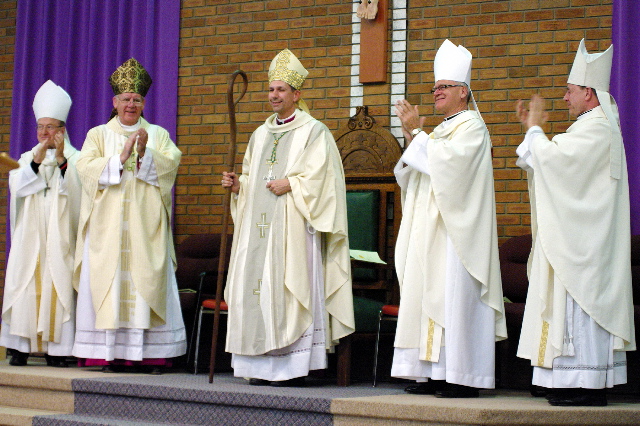
Bishop Don Bolen at his ordination
In between these two events, I had the privilege of being the bishop-elect’s student in Rome for his half of a course on Methodism and its dialogue with the Catholic Church. I even wrote up a short blog article about the class and my first encounter with Msgr. Bolen, here.
I had offered some first impressions at the end of that blog. Over lunch on his next-to-last day in Rome, Father Don mentioned that someone had directed him to my blog about him, and he suggested that perhaps I should revisit my impressions now that we had gone through an entire class together. Fair enough.
The people of Saskatoon are blessed among Canadians. That is all there is to it.
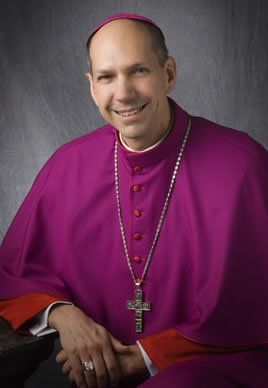
Bishop Don Bolen of Saskatoon, Saskatchewan, Canada
Most bishops have no training or formation to become bishop, not really. They see how their bishop acts, think what they would do, and that’s about it. Bishop Bolen spent years on the Vatican desk covering the dialogues with the Anglicans and the Methodists, where episcopacy and authority, indeed ecclesiology in general, are the major issues of discussion. What better formation than to be a theologian-pastor studying the highest level conversations about what it means to be a bishop, ecumenically, especially when Ratzinger is Pope and Kasper is President of the Pontifical Council for Promoting Christian Unity? Granted, it is one thing to engage in discussion about the episcopacy, and another to live it out, but what an opportunity!
So that’s the leadership aspect. What about teaching? At the end of our course, (team taught by Bishop Don and the Rev. Dr. Trevor Hoggard, the Methodist Representative to the Holy See) several of us had concluded this was one of the most valuable courses offered, in terms of both method and content. It was pretty straightforward: Get a solid introduction to the Methodist church from a Methodist pastor/theologian, get a thorough overview of the dialogue from the Catholic perspective, and culminate in a mock-dialogue with actual participants from the international dialogues, complete with Anglican observer.
The celebration of his ordination as bishop in Saskatoon was attended by several ecumenical leaders locally, and by a delegation from Rome that included Bishop Brian Farrell, Secretary of the PCPCU, Fr. James Puglisi, SA, Father-General of the Friars of the Atonement and Director of the Centro Pro Unione, Very Rev. David Richardson, ChStJ, the Archbishop of Canterbury’s Representative to the Holy See, and others. I have included a link to the pictures that the diocese has put up about the event, including a slide show.
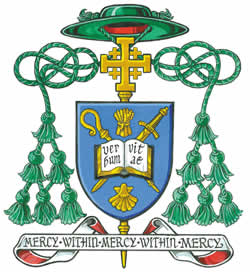 His motto is “Mercy within Mercy within Mercy” and his coat of arms and biographical information are here. Weslyan hymns specifically chosen by the bishop were a central part of the ordination liturgy, as was an ecumenical prayer service that looks to have been very well attended.
Being bishop is no easy task and my prayers are with this newest of Canada’s episcopate. Coming from a diocese that has not seen a ‘normal’ transition of episcopal leadership since before I was born, I can especially appreciate what it means for a local church to find a shepherd that makes such a good fit, and I hope the coming years are fruitful and filled with the Spirit.
 The Ecumenism Blog