
Angelicum Leads the Way in Rome for Eucharistic Adoration
Rome Reports is an English-language news program based in Rome, and broadcasting to several countries. They recently did a feature of the Angelicum, apparently the only Pontifical Univeristy in Rome with daily Eucharistic Adoration, including interviews with familiar faces: Benedict Croell, OP; Matthew John Paul Tan, PhD (another Russell Berrie Fellow); and Jill Alexy, M.Div. (fellow Notre Dame alumn).
You can watch the clip here: http://www.youtube.com/watch?v=z8Wh3YqLOoU
Quote of the Day
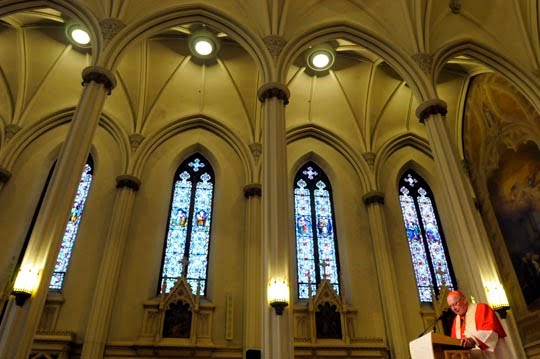
Visible union with the Catholic Church does not mean absorption into a monolith, with the absorbed body being lost to the greater whole, the way a teaspoon of sugar would be lost if dissolved in a gallon of coffee. Rather, visible union with the Catholic Church can be compared to an orchestral ensemble. Some instruments can play all the notes, like a piano. There is no note that a piano has that a violin or a harp or a flute or a tuba does not have. But when all these instruments play the notes that the piano has, the notes are enriched and enhanced. The result is symphonic, full communion. One can perhaps say that the ecumenical movement wishes to move from cacophony to symphony, with all playing the same notes of doctrinal clarity, the same euphonic chords of sanctifying activity, observing the rhythm of Christian conduct in charity, and filling the world with the beautiful and inviting sound of the Word of God. While the other instruments may tune themselves according to the piano, when playing in concert there is no mistaking them for the piano. It is God’s will that those to whom the Word of God is addressed, the world, that is, should hear one pleasing melody made splendid by the contributions of many different instruments.
William Cardinal Levada
Five Hundred Years After St. John Fisher: Benedict’s Ecumenical Initiatives to Anglicans
Delivered at Queen’s University, Kingston, Ontario
March 6, 2010
Mar Bawai Soro
One of my intensive courses this semester is “The History of Aramaic Christianity”, taught by Mar Bawai Soro, a bishop of the Chaldean Catholic Church whose name is probably familiar to anyone who has been involved in ecumenism the last few years. He was also our guest for dinner at the Lay Centre this evening. (And though he did not share this, he was the person who, during the Jubilee Year 2000, recieved from Pope John Paul II the cross carried at the Stations of the Cross at the Colosseum. The pope carried it to the first two stations, handed off to Bishop Bawai for the second two, who then handed it off again.)
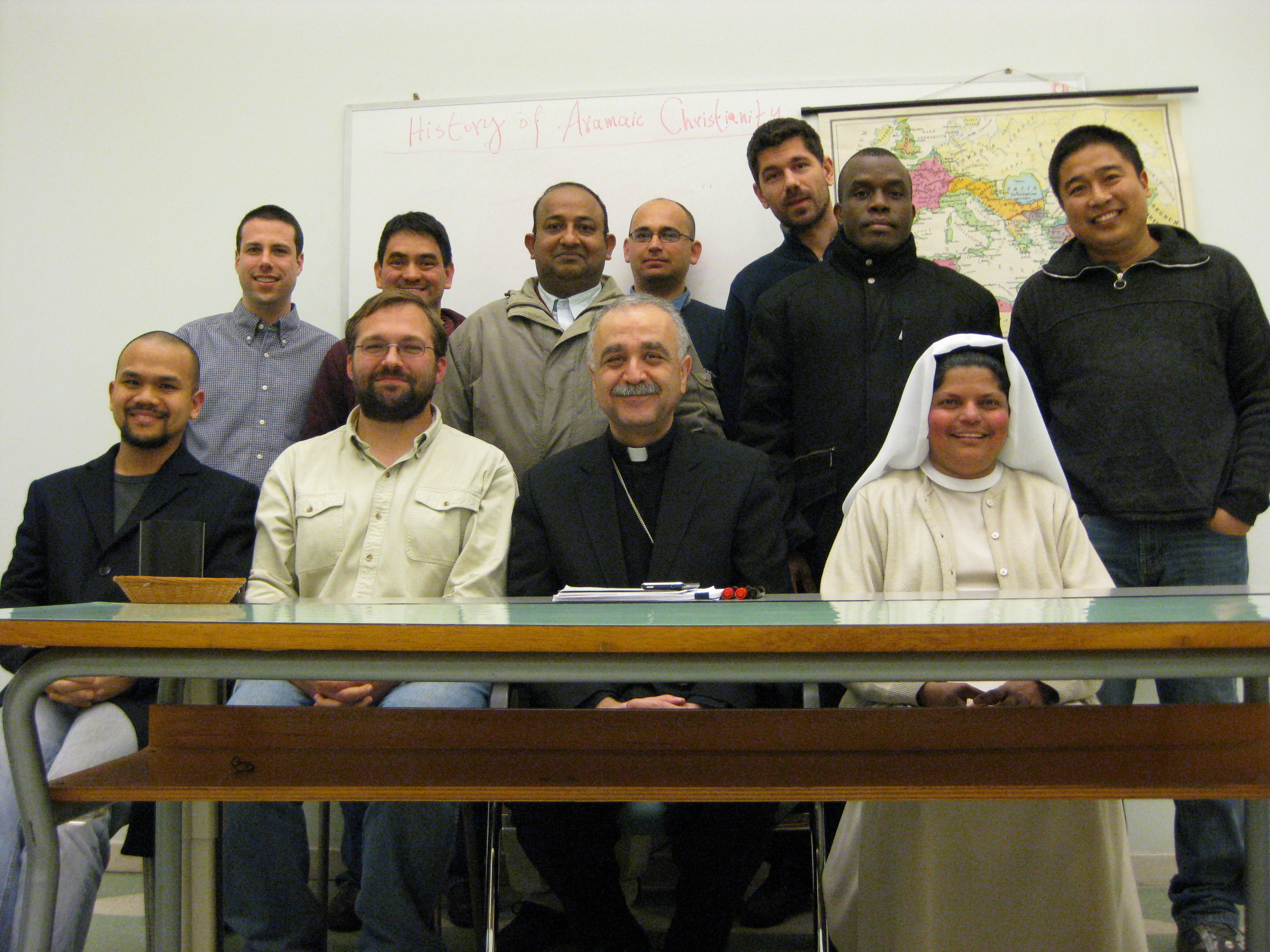
History of Aramaic Christianity, Angelicum, 2010
In most church history classes I have taken or taught, the focus is usually on the history of the Church within the Roman empire, and subsequently the nations were in direct succession from that Empire. Sometimes it gets even more eclipsed if the focus is purely on the Latin Church, the churches directly associated with the ritual and patriarchal patrimony of the church of Rome itself (ie, the Roman Catholic Church). It is sometimes news enough for people to realize there were four other apostolic sees within the Roman empire besides Rome! But we have often forgotten entirely the church in Asia, beyond the borders of the ancient Roman Empire.
The focus of our studies for this course have been on that Church of the East – not the Eastern or Oriental Orthodox Churches, but further east, in Mesopotamia and what was part of the Persian Empire at the time of Constantine. This church never enjoyed the status of being an official religion of the empire, as did the church in the empire of Rome and Constantinople. In fact, persecution only increased after Christianity became associated with the enemy to the west. To this day, being Christian in this area makes you suspect of collaboration with the “West” – whether that is Emperor Constantine or President Bush, and whether the dominant religion is Persian Zoroastrianism or Shi’a Islam.
This was the church of refuge for the Nestorians and the theological School of Antioch, driven across the border in the aftermath of the Council of Ephesus in 431, and a place where the theological battle between Monophysites and Nestorians was waged for centuries. The first stopping point for the missionary activity of the Apostle Thomas, the Mesopotamian church was the mother church of the earliest Christians in India, still known as Mar Thoma (St. Thomas) Christians. Missionaries of this church had reached Mongolia and China by the sixth century, and some scholars have suggested communities as far as Japan.
The current heirs to this tradition include:
- The Assyrian Church of the East, with about 250,000 members, traditionally centered in Iraq
- The Chaldean Catholic Church, with about 750,000 members, centered in Iraq
- The Syro-Malabar Catholic Church, with about 4 million members centered in the state of Kerala, India

Mar Bawai Soro
Much of the Church of the East’s history has been marked by political and ecclesial isolation – first by being the Christians outside the Roman empire, then ecclesially, and throughout by being more or less constantly a persecuted minority in Zoroastrian Persia, or Muslim Arab and Mongol rule. Several times in the last six centuries dioceses and other groups of the faithful would resume full communion with Rome. The first, in 1445 was the archbishop of Cyprus and his diocese, who after a couple generations were unfortunately Latinized and assimilated into the Latin (Roman) Catholic Church. A couple others only lasted for a century or so, eventually leaving communion again. Finally, the Patriarch (one of two rivals, anyway) and his cohort came in to full communion in 1830, giving us the current Chaldean Catholic Church. The rival patriarchal line and those in communion with it remain today as the Assyrian Church of the East, though they were the line which had been in Catholic communion for a century or so during the 16th and 17th centuries.
For 20 years, Bishop Bawai served this church as a bishop and as their top theologian and ecumenical officer (a sort of Ratzinger-Kasper combo, if you will), and participated in the Assyrian-Catholic dialogue from its inception, through the Common Christological Declaration of 1994 and the preparation of the Common Sacramental Declaration that was to follow.
For those who wonder about the products of ecumenism, it only took 8 years of dialogue to resolve the Christological issue that split the church 1500 years ago, and confess together that :
Our Lord Jesus Christ is true God and true man, perfect in his divinity and perfect in his humanity, consubstantial with the Father and consubstantial with us in all things but sin. His divinity and his humanity are united in one person, without confusion or change, without division or separation. In him has been preserved the difference of the natures of divinity and humanity, with all their properties, faculties and operations. But far from constituting “one and another”, the divinity and humanity are united in the person of the same and unique Son of God and Lord Jesus Christ, who is the object of a single adoration.
This is why there is always hope!
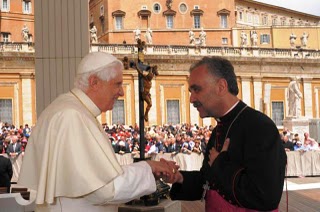 Of course, that hope is always needed. The reality of the impending full communion with the Catholic Church provoked some nervousness. Understandably, I suppose: Comparatively, we are beyond huge (4400 Catholics for every one Assyrian Christian), and the prospect of the Patriarch becoming a mere cardinal, as some bloggers have put it, was uninviting. Their decision was to suspend the dialogue, and to suspend the bishop.
After finding no appeal, Mar Bawai and about 5000 faithful, including 30 deacons and a half dozen priests, came into full communion with the Chaldean Catholic Church in 2008.
Prayers for for the faithful departed
Eternal rest grant unto them, O Lord, and let perpetual light shine upon them. May the souls of the faithful departed, through the mercy of God, rest in peace. Amen.
There was a time in my life when it seemed I was bouncing from one crisis to another, from one tragedy to another. Often these were the deaths of friends or family, or the family of good friends. Because of my own losses, I became particularly sensitive to those of my friends, and there was a time when it seemed every email I sent out was a plea for prayers.
As many of my friends know, by the time I turned 21 I had experienced the death of 21 friends, family, and acquaintances – I had been to more funerals than weddings until sometime in my early or mid-20’s. I have learned (or, better, begun to learn) the importance of grieving, of celebrating life, and the reality that death is not the only way to lose someone – sometimes it is not even the most painful.
Whatever fear of death I may have had has long gone, though the fear the loss of people I love remains – but i know even the worst are only temporary. There is a reason for our hope in Christ, our belief in the resurrection and in the communion of saints, after all!
This has been a hard week for a number of people. I have specific prayer intentions that I want to share, but I do so with a certain caveat (or two).
First, by this small series of losses, I am overwhelmed again by the destruction in Haiti and the massive loss of life there, and the ongoing struggle for basic needs to be met in what has long been the poorest nation in the Western hemisphere. To steal from another commentator, what has happened there is not one huge tragedy, but the concentration of a million tragedies. The individual story should not be lost in the large numbers. For me, these few stories unrelated to the Haiti disaster have put it in stark relief, and refreshed my prayer for the people there.
Second, these are not self-interested intentions. My breath caught at reading one email, and I can relate to the people most affected, but I am not the one who has lost friends or family this week: So please do not pray for “AJ’s bad week”!
On Wednesday (24 Feb), Dr. Gail Walton, the longtime director of the liturgical Choir at Notre Dame’s Basilica of the Sacred Heart died after a long battle with cancer. I knew Gail personally from my four years at ND, as an altar server at the basilica during the same liturgy that her choir served. Several friends, including a couple among my closest at ND, were in the Liturgical Choir and are attending her funeral tomorrow. It is for them, and for Gail’s family and dearest friends that I ask prayers.
On Thursday (25 Feb) it was reported that an alumnus of my high school, Mt. Si in Snoqualmie, WA, was killed in action in Afghanistan. I did not know Eric Ward, as he graduated 12 years after me, but he is the first Mt. Si alumn killed in the war on terror, and I remember vividly how much death can impact the small community there.
On Friday, (26 Feb) one of my fellow Fellows, Fr. M. Thangaraj from Tamil Nadu, India sent a brief email letting us know that his brother, Irudayaraj had died the previous day and was being buried on Friday. Given such a quick burial, Thangaraj was not planning on heading back to India.
On Saturday, (27 Feb) as you all know an 8.8 earthquake hit Chile, the epicenter being not far from Concepción where new Lay Centre resident Claudio is from. He was eventually able to reach a cousin who had heard from his immediate family and assured him that they were OK, but as of yesterday he had not been able to talk to them directly through phone or Skype. Obviously this also reminded everyone of the recent quake in Haiti, where another intended Lay Centre resident, Luis, was working for the archdiocese.
Today (Monday, 1 March) I got another email from Val, our reluctant Fellowship go-to guy, who passed on word that Fr. Thangaraj’s mother had died as well – just a few days after her elder son. Given the loss of mother and brother within days of each other, Thangaraj is heading home to India.
For Thangaraj especially, but for all whose lives have been touched by death and disaster this week, please pray for healthy grief, for healing, for faith in times of trial, and for the perseverance of hope.
Out of the depths I cry to You, O Lord; Lord, hear my voice.
Let Your ears be attentive to my voice in supplication.
If You, O Lord, mark iniquities, Lord, who can stand?
But with You is forgiveness, that You may be revered.
I trust in the Lord; my soul trusts in His word.
My soul waits for the Lord more than sentinels wait for the dawn.
More than sentinels wait for the dawn, let Israel wait for the Lord,
For with the Lord is kindness and with Him is plenteous redemption;
And He will redeem Israel from all their iniquities.
(De Profundis, Psalm 130)
Roman Forum, Palatine Hill, and il Colosseo
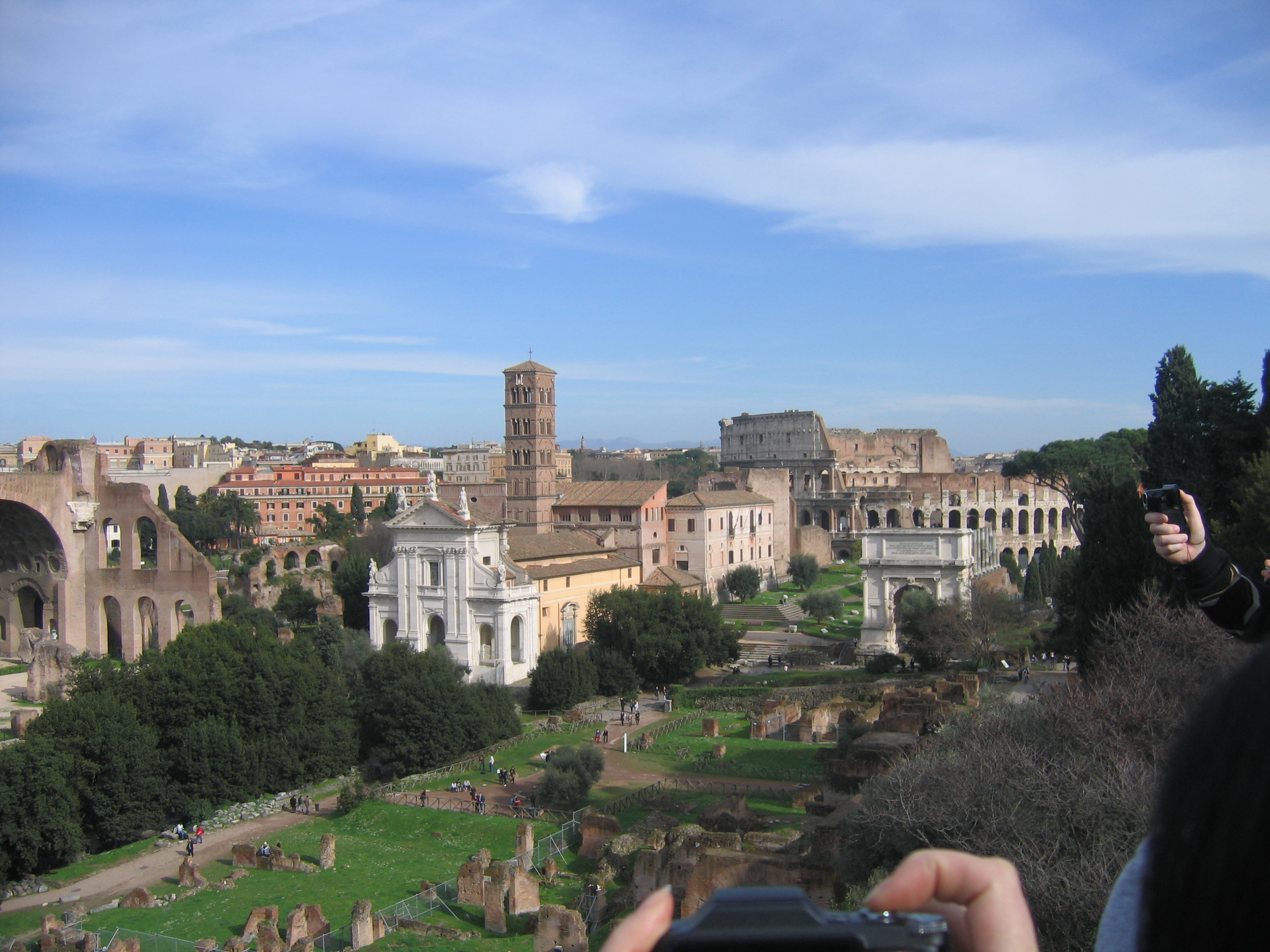
Via Sacra in Roman Forum
There is a bit of social wisdom that notes that we tend to forget to be tourists in our own backyard. When you visit somewhere, you make sure to see all the ‘sights’ – the places that make the place what it is, whether natural beauty, historic memorials, art or architecture or some other human achievement. But when you live there you can just get used to the routine and forget to explore.
This is how I spent the first five months in Rome, with the Roman Forum visible from my window, but had not made it into the ruins. Even with Nancy’s visit, some of the tourist activities got dropped from the agenda due to rain or just too many to do. So, finally I had the time and the timing to spend part of this beautiful weekend exploring the Palatine Hill, Colosseo and the Foro Romano.

Frescoes from the house of Caesar Octavius Augustus
On the Palatine hill, which is visible from our terrace, you can see iron-age huts, honored even in Imperial times as the house of Remus and Romulus, founder of Rome. The house of Augustus Caesar and his wife, Livia – strikingly humble in comparison to the other palaces (especially Nero’s!) The entire complex, the Palatine and the Forum, are connected and in some ways are like a giant park – just that the benches you picnic on are likely fallen columns two millennia old.
The forum is in fact the old city centre. IN the middle of it is the original forum, a small piazza surrounded by temples and government buildings, and the rest now included is a network of roads, buildings, and monuments. The Via Sacra runs through the middle from the Colosseo to the Capitoline hill, passing through the arch of Titus commemorating the victorious conquest of the Jewish Rebellion in 70 AD on one end, and the arch of Septimus Severus on the other, commemorating his victories a century and a half later in Mesopotamia.
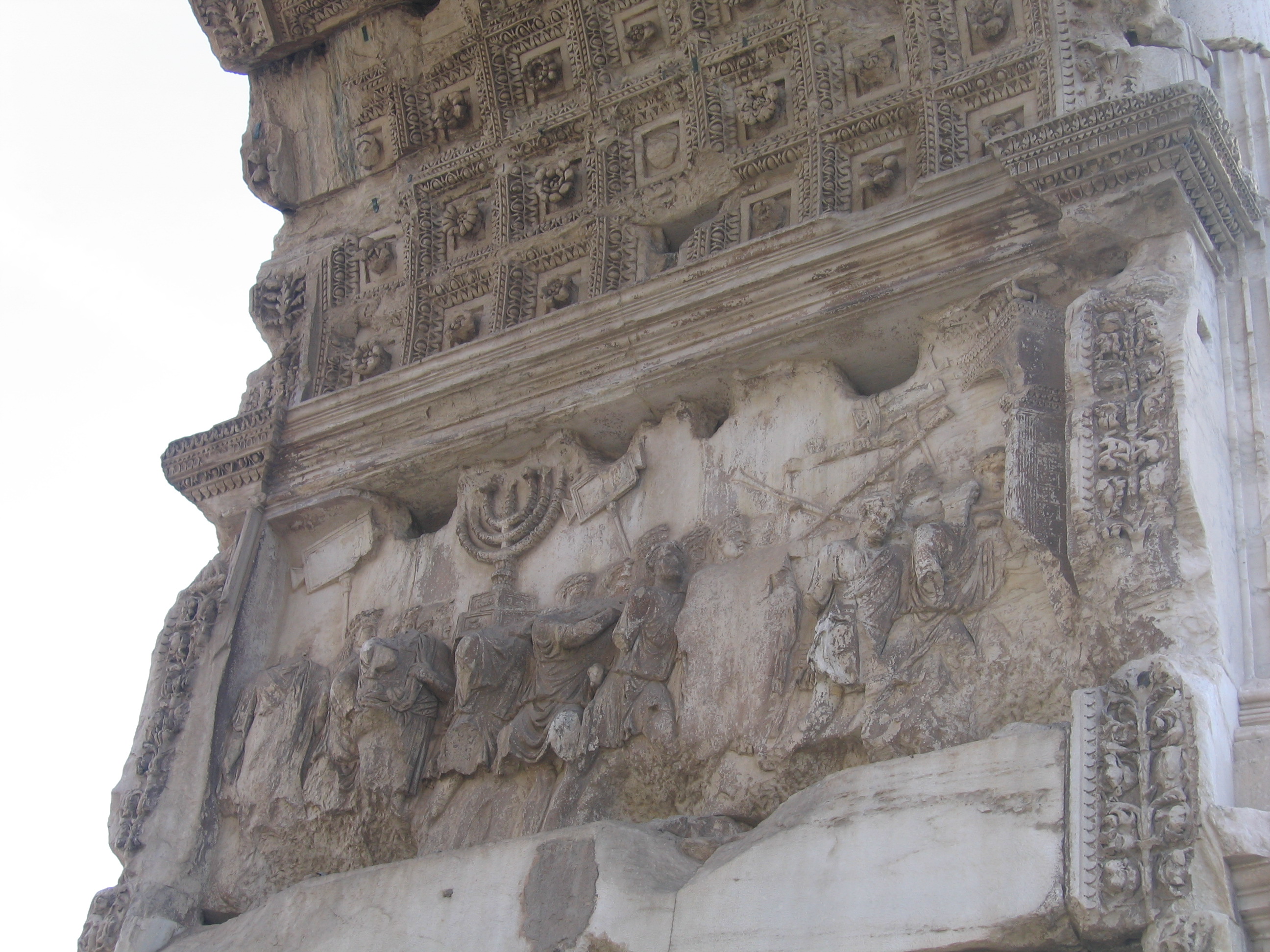
Arch of Titus, depicting the looting of the Temple of Jerusalem
After a week in Jerusalem and seeing the Temple Mount, with the juxtaposition of the Western Wall and the Dome of the Rock, to come back to Rome and see the Titus arch commemorating the looting of the Temple gives some interesting perspective of that episode in history which influences the stability of peace in the middle east even today!
Emperor-cult temples line the road, including a spot close to my heart, the temple dedicating the site of Julius Caesar’s funeral pyre – the first temple built for an Emperor promoted to deity in the Roman pantheon. What is left of it is neither large, nor particularly attractive, but given that I was born on the anniversary of his assassination, I have to admit I have always felt some kind of connection. Perhaps that is why I liked playing Risk so much…
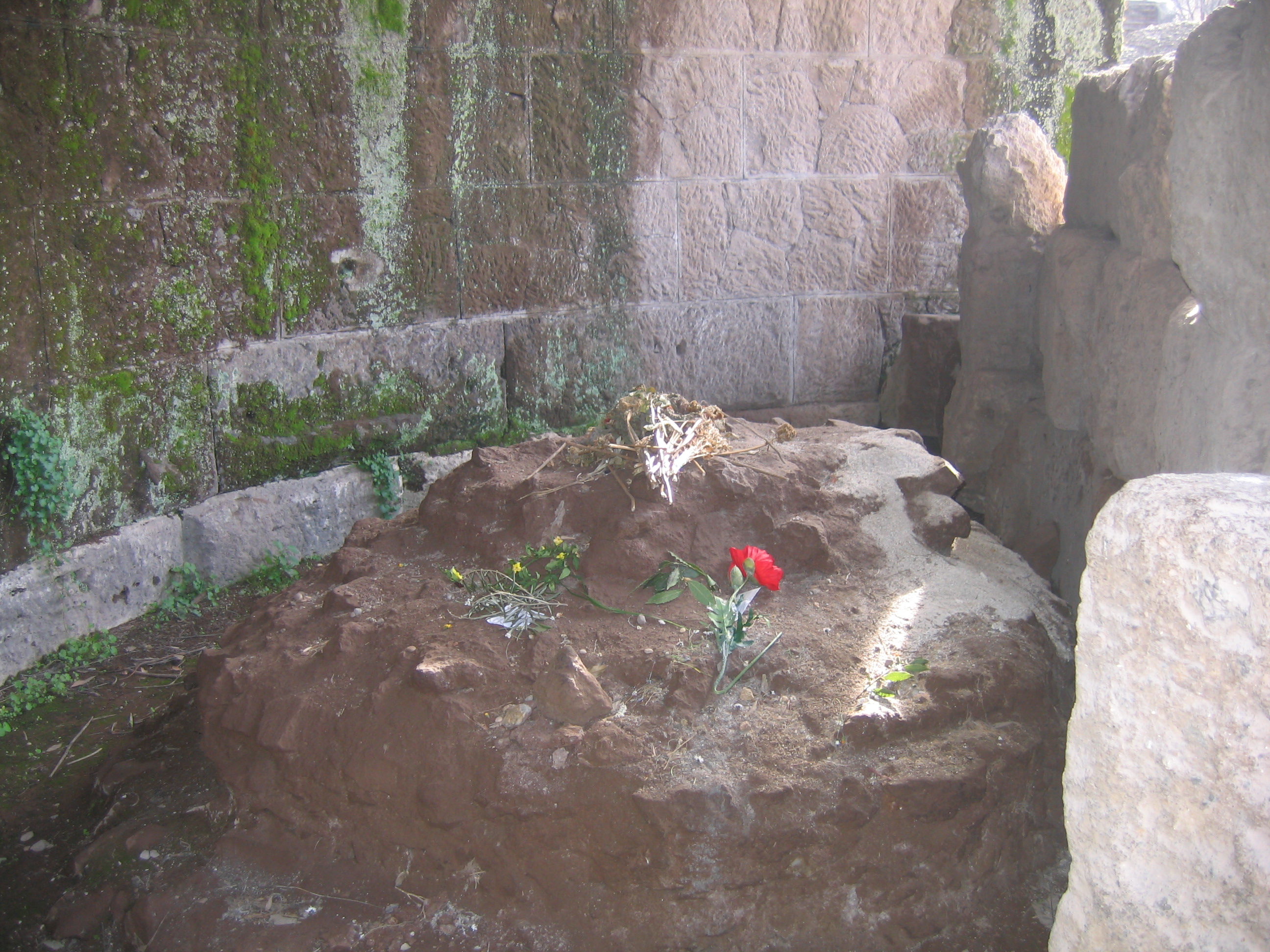
Julius Caesar's "Grave" - Temple on the site of his funeral pyre
The house of the vestal virgins and the Temple of Vesta is nearby. Charged with keeping the City’s eternal flame going inside the Temple, the Virgins were consecrated to service and honored among Romes citizens – they even had box seats at the Coliseum rivaling the Emperors! The six Vestal Virgins were chosen from noble families at a young age, and commissioned to serve for 30 years. At the age of 40 they could retire with a respectable dowry, marry, raise a family, etc. On the other hand, the punishment for violating the vow of chastity during the 30 years was a pretty chilling death – sealed alive in a crypt with a single loaf of bread and a lamp.
The massive basilica of Constantine sits on the edge of the forum, visible from the Via dei Fori Imperiali, as is the ancient Roman curia house and senate building.

Flavian Amphitheatre (Colisseum)
On the closer end of the forum is the Flavian Amphitheatre (the Colosseo), our next-door neighbor. It could seat almost as many fans as Notre Dame Stadium, complete with retractable awning. It was built on the site of a private lake built by Nero for his sprawling palace complex, as one of the efforts for the Emperor to regain the popular support lost by Nero’s cruel insanities. Admission was free, and included food and wine for spectators.
Apparently, the name Colosseo was a medieval one. Nero had had a 100’ statue of himself built at the entrance to his estate. When Flavius and company demolished his residence and built the amphitheatre, the statue remained. Centuries latter, the colossal statue influence the name of the even more impressive building next to it…
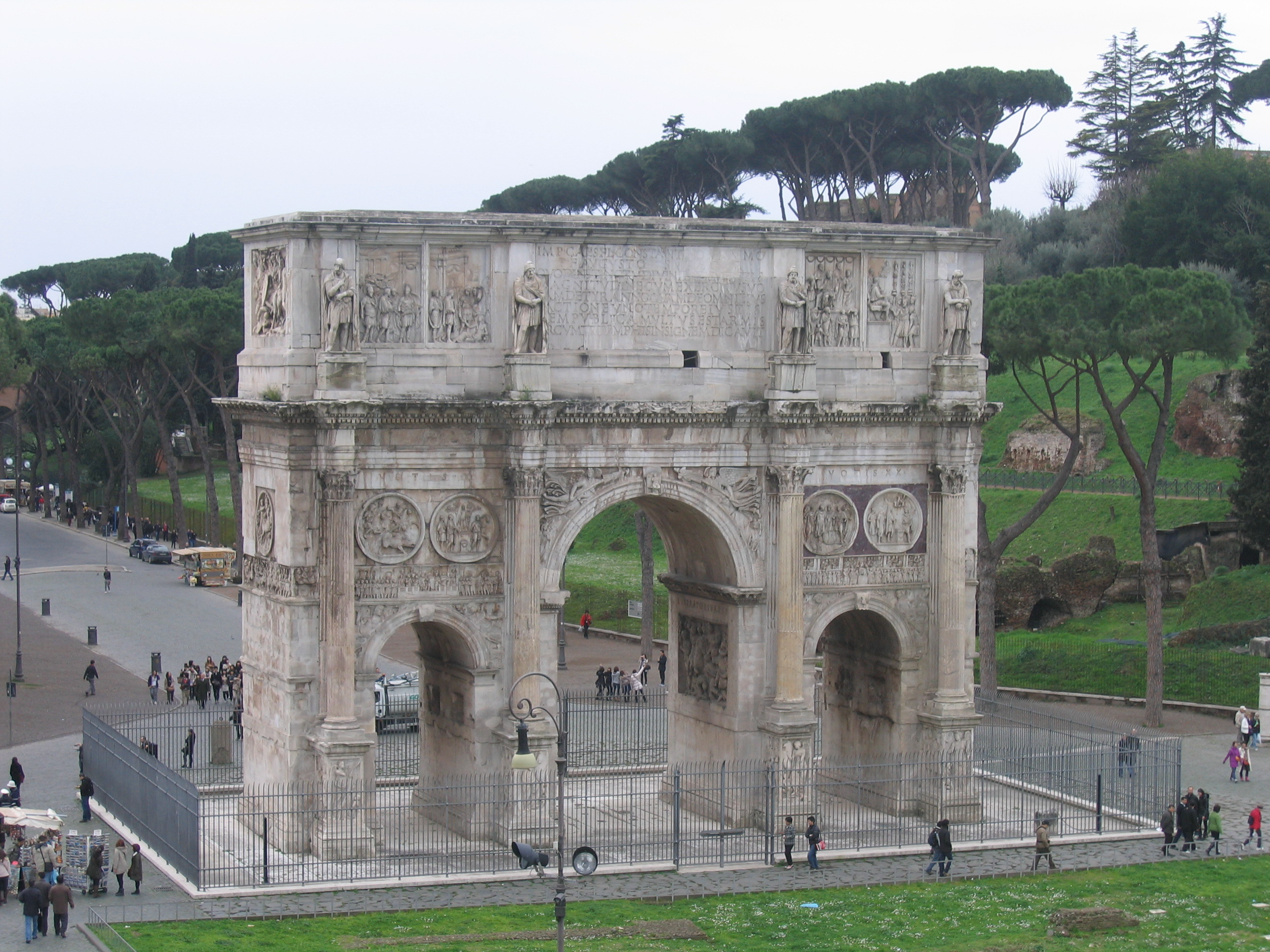
Arch of Constantine, taken from upper level of Colisseum
[Update 3.7.10 – I did not get a picture, but for the last week there have been protesters literally camping out in external alcoves on the second story of the Colosseo, about 30 feet above ground, in tents with banners and bullhorns, protesting immigration and housing issues.]
On the plaza between the coliseum and the Via Sacra is another triumphal arch, built by Constantine honoring the triumph of Christianity in the Empire – but using images and statues borrowed from other memorials and palaces around Rome.
Archbishop Giorgio Corbellini
The Secretary of the Governorate of the Vatican State and the President of the Office of the Labour of the Vatican State joined us for the celebration of the Eucharist and a short dinner presentation. This is the office responsible for the civil government aspects of the world’s smallest soverieng nation – Utilities, communications, stamps and coins, goods and supplies, facilities, police and fire services, and labor. Though each office within the Holy See has its own recruiting and hiring practices, the Labor office is responsible for orientation to employment in the Vatican and to ongoing human resource concerns. There also exists a labor council, elected from among Vatican employees of different fields, to advise the Cardinal President of the Governorate.
The archbishops responsibilities also extend to the extraterritorial buildings and properties in and around Rome, which enjoy – to various degrees – status similar to an embassy, a little bit of one country in the middle of another. At least part of the Passionist Monastery in which the Lay Centre resides is considered extraterritorial, depending on whether you ask the Archbishop’s boss or the city of Rome!
Archbishop Corbellini is one of just a handful of bishops ordained personally by Pope Benedict XVI since his election as bishop of Rome in 2005.
“Legacy” discussion with Ambassadors Ertharin Cousin and Miguel Diaz
It was the first time I had to prepare my passport just to come home for dinner. But, it is a small price to have a “movie night” with two sitting U.S. Ambassadors.
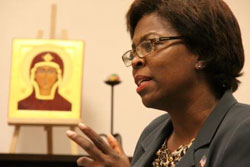
U.S. Ambassador Ertharin Cousin at the Lay Centre
In honor of African-American history month, the first celebrated in Rome by two of our ambassadors both appointed by our first African-American President, the Lay Centre co-hosted a viewing of the PBS documentary, Legacy, with a discussion afterword led by U.S. Ambassador to the Holy See, Dr. Miguel Diaz, and U.S. Ambassador to the U.N. Food Organizations in Rome, Ms. Ertharin Cousin.
It was a change of pace from the theological, philosophical, and pastoral discussions that dominate the day, and the two Ambassadors made a good team, sharing from their personal experience and staying to answer a number of questions and facilitate discussion from a well-mixed audience of about 50 (the limit imposed by embassy security, apparently).
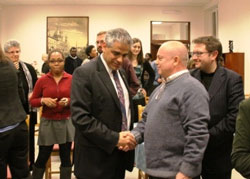
Ambassador Miguel Diaz at the Lay Centre
Much of the discussion ranged around the elements common to any family or individual succesfuly overcoming individual and systemic oppression, disadvantage, or other challenges. Faith, family and community were the key themes, especially noted as the only sources to help when even “the system” failed in its intended aid. (I can think of one person in my own life, for example, who though qualified to receive unemployment still has not – after being unemployed for six months! Sometimes the Roman beaurocracy does not seem so bad…)
In an age when the postmodern generations are facing the juxtaposition between a life of being told “you can be whatever you want to be” by parents, teachers,a nd society at large with a decade of economic crises and limited opportunity, even Ambassador Cousin’s son once commented to her, “how can we ever achieve more than your generation has achieved? There’s nothing left for us!” Echoing the generation across social and racial lines, the “entitlement” generation which was “promised” six-figure salaries straight out of college often cannot even get a job at McDonalds. How is that for disillusionment on a large scale?
This is the new challenge – instead of trying to instill hope when adversity seems everywhere, how do you instill humility instead of entitlement?
Ash Wednesday with Timothy Radcliffe, OP
“The problem is, in our culture, we tend to equate doctrine with doctrinaire and morals with moralism.”

Timothy Radcliffe, OP
The former Master of the Dominican Order, the British Friar Timothy Radcliffe addressed a packed Salonne Vincenzo Palotti in the Lay Centre at Foyer Unitas tonight – about 120 people in all, including more women religious than I have seen at any event in Rome outside of a papal liturgy!
Balancing genuine evangelization and witness, with dialogue and charity, seems to be the greatest challenge facing Christians today. We have to counter a broad-culture message of relativism, but do so without falling into fundamentalism. How to show a better way, without arrogance? This seems like the simplest message of the Gospel, but any honest listener will hear thousands of stories of would-be or former Christians who lost their faith – not in God – but in the poor example of the Christians they encountered.
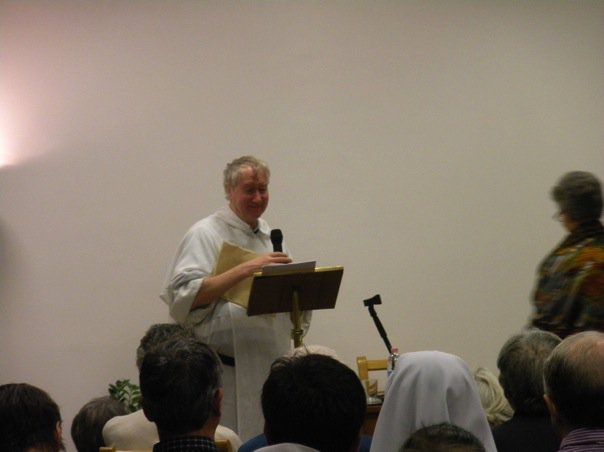
Fr. Timothy at Lay Centre
On one hand, you hear casual dismissal of dogma and doctrine as if such concepts are passé, and not worth discussion. On the other, you hear defenders of the faith doing more damage than any secular press ever could. So, how do be true to the Gospel while in a positive engagement of culture? That was the part of Fr. Timothy’s address that I was able to hear.
He is a gifted preacher – no surprise, given his years at the helm of the Order of Preachers – and a humble man of apparent spirituality. If you ever have the chance to hear him, I suggest you do so. I look forward to an opportunity when I am not taking my turn as porter, so I can get the full message!
New Semester in Rome
It is hard to believe my first semester is already finished! That is ¼ of the way through for the two years of my Fellowship and the S.T.L. – and a good time for a general progress report!
I had hoped to return to grad school and maintain a perfect GPA, since my undergraduate and first round of grad school grades were moderately good, but not great.
(That’s the problem with being so involved in extracurricular activities, you tend to forget important details like deadlines! I calculated, near the end of my time at ND, that my cumulative GPA would have been .5 higher if I had just turned everything in on time!)
The Roman academic system grades on a 10-point scale, rather than a 4-point scale. According to our Order of Studies, they look like this:
- 10-9.75 Summa Cum Laude (Highest Honors) = 3.9-4.0
- 9.74-8.51 Magna Cum Laude (High Honors) = 3.4-3.89
- 8.50-7.51 Cum Laude (Honors) = 3.0-3.39
- 7.50-6.51 Bene (Good/Acceptable) = 2.6- 2.99
- 6.50-6.00 Probatus (Probation) = 2.4-2.6
- 6.00-0.00 Fail
Another difference between the Roman system and the American version that I am more used to, is that while the Roman system (at least at the Angelicum) tends to have less required reading and papers, your entire grade for a semester can depend on one 15-minute oral exam, or a single written in-class final.
There is a two-week break between classes when all the exams are supposed to take place, but with our Jerusalem seminar in the middle of that period, most of mine were done when the exam period started.
The second semester is already shaping up to include a bit more reading and more balanced variety of assignments. Here is the list of my courses for the rest of the year:
- Acting Acts: Survey on the Pentecostal/Charismatic Movement
- Catholic Understanding of Interreligious Dialogue
- Christ Beyond the Church
- History of Aramaic Christianity
- Methodology of Biblical Interpretation and its Significance for Jewish-Catholic Understanding
- Ministry of the Ecumenical Officer
- Philosophical Elements in Catholic-Protestant Dialogue
- Reformation Theology in Context
- Sacramental Character
So the perfect 10 I was aiming for? Missed it, with just one class – and I do not know what I got wrong on the final! Ah well, at least it leaves room for improvement! Other good news, is that when i met with the dean to register for the second semester, he pointed out that with the credit i have been given from my previous academic work and experience, i could finish the License early – i only have a couple seminars left, the thesis and comprehensive oral exam.
 The Ecumenism Blog