
Russian National Orchestra in the Vatican
How often is St. Peter’s Square turned into a parking lot? The cabbie that dropped us off said he has lived in Rome for half his life, and never seen it. But that was the sight that greeted us as we were dropped off at the Paul VI Auditorium for what promised to be an enjoyable afternoon out with the Holy Father (and a few other folk).
These two days have been celebrated as “Russian Culture Days at the Vatican”, one of the key public events of which was today’s concert by the Russian National Orchestra, a gift of the Russian Patriarch Kirill I to Latin Patriarch Benedict XVI.
Metropolitan Hilarion Alfeyev, the President of the Department for External Affairs of the Patriarch of Moscow (read: top ecumenist), personally presented the gift of the concert to His Holiness, which included a Symphony in Five Parts composed by the metropolitan himself. The concert included pieces by Rachmaninov, Rimski-Korsakov, and Musorgskij by the Russian National Orchestra; a variety of pieces by the Russian National Horn Choir, and another selection from Musorgskij and Rachmaninov with the Synod Choir of Moscow before all three combined for the final Symphony piece by Metropolitan Hilarion.
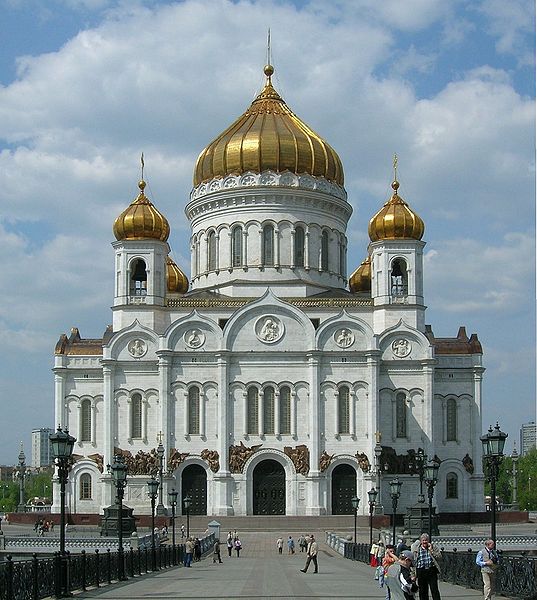
Cathedral of Christ the Savior, Seat of the Patriarch of Moscow and All Russia
On the way into the building, I kept getting saluted by the Swiss Guard. At first I kept looking to see if they were saluting everyone, or if some bishop was walking behind me. Eventually we figured that in my black suit with a small red Jerusalem cross in my lapel (a souvenir from my recent pilgrimage) they may have mistaken me for a Knight of the Holy Sepulcher! Not sure there are any this young, though!
As most know, I have an affinity for things Russian, including the music, so this was a special treat for me – to combine my love of Russia, ecumenism, the Church and the Vatican all into one event. We also got seats just behind and to the right of the Holy Father and the cardinals, which made it that much more exciting. This was my first time inside the Paul VI auditorium, which can seat about 6000 people, and which is entirely powered by solar panels on the roof.
There is no question that, with the election of Benedict XVI and even more so with the election of Kirill I, relations between Rome and Moscow have thawed considerably. We continue to pray for the unity of the world’s largest Orthodox Church and the Catholic Church, and look forward to fruits of dialogue even more beautiful than an afternoon’s concert!
Dinner and a movie – Cajun style!
The Drs. Diaz and family were back at the Lay Centre this evening. This time, the U.S. Ambassador to the Holy See, his wife (and fellow theologian) Marian, and two of their boys brought over a Cajun-themed dinner to help celebrate a culture night focusing on Lousiana. Apparently, culture and movie nights were a fairly common activity at Villa Richardson under Ambassador Mary Ann Glendon, and the Diaz family is looking to continue the custom at least occasionally in partnership with the Lay Centre (which Ambassador Diaz called the family’s second home in Rome this evening!).
The public affairs officer in the Embassy is J. Nathan Bland, a Lousiana native who shared a presentation about the people, faith, culture and cuisine of his home state. We were doubly honored by the presence of Nathan’s mother who was visiting Rome for the first time! Nathan shared his experience growing up as an African-American Catholic, a double minority in northern Louisiana, and his journey of discovery of black Catholic history and experience. The Ambassador then shared thoughts on his experience working with Latino and African-American Catholic theology.
The evening was capped with a viewing of Disney’s Princess and the Frog, notable as the first Disney feature film whose protagonist is an African-American, and is set in New Orleans.
I do not know the last time I have seen a room of 40 grown adults watching a Disney movie, but it was a sight to see! The food was good, too!

Disney's Princess and the Frog
Self-Emptying and Identity in a Secular World
The Gregorian (my current university’s Jesuit rival just around the corner) has been hosting a lecture series this semester on Religion and Identity, featuring speakers from a number of countries speaking on a variety of related topics. While some of my housemates made it to most of the program (Eveline, Rezart, and Esra especially), I had conflicts most days and only made it to one.

Prof. Harvey Cox
As I was walking across the garden on my way out, I ran into Monsignor Dick Liddy, a priest from Seton Hall University who was staying at the Lay Centre this week along with the rest of the New Jersey school’s “core faculty”. Upon inquiry, I told him I was headed to a lecture entitled “Kenosis and Identity in a Secular World” with an American theologian Harvey Cox.
“Harvey Cox? He was big around here when I was a student!” …which was in the late 60’s.
Thus was my introduction to the man shortly thereafter presented at the Pontifical Gregorian University in Rome as the “most renowned contemporary American theologian”. I have to confess, though the name rang a bell because of my post-academic reading in Pentecostalism and postmodernism, I cannot honestly say I encountered his work in four years at Notre Dame, or in two at CUA. It is possible, there was a lot of reading and it is hard to remember every author I encountered. I certainly never read his 1965 landmark work, The Secular City, much to the shock of my north-European colleagues here: “It’s THE book of our age! How could you not have read it?” said one.
Seems I have more to read than thesis material this summer.
Still, it is impressive to meet someone whose work was already so influential 45 years ago, and is still not merely alive and well, but actively teaching and writing!
The key message of his presentation was this: is it ever truly dialogue if we are guaranteed to “emerge safely”? That is, if we know we will emerge unscathed, unchanged, untouched by dialogue, have we actually engaged in dialogue at all? We have to empty ourselves to engage the other, be open to being convinced by the other while being true to our own identity.
His frequently engaged image was that of an anchor. While most of us think of the anchor as the ultimate brake, the best way to stay stuck in one position to ride out the storm, there is another use. Lest we think we must drop anchor and wait til the “storm” (of modernity, postmodernity, society, whatever) passes, we are called to remember the other use for this ancient symbol of our faith – assistance staying upright and navigating the rough seas while on the move to a destination.
[Again, I have a disclaimer, I am writing these up a month behind, and I do much better reading a text than listening. And anyone who has ever seen my handwriting knows that even taking notes without my computer does not help much!]
Chancellor and Parent: Common sense on the abuse crisis
In 2002, Chancellor David Spotanski of the Belleville diocese delivered a 10-page memo to his bishop, Wilton Gregory. In the last week, he decided to publish the memo after years of sharing it privately with friends and colleagues, and was interviewed by BustedHalo‘s Bill McGarvey. The canonist is a lay ecclesial minsiter and a father of three. (Mr. McGarvey finds this “a little unusual” even though 25% of U.S. dioceses currently have a lay chancellor, and there is nothing about the position that requires, or even recommends, a cleric in the office – but that is an aside!)
Some worthy highlights of the interview:
“It is important on occasion to remind ourselves that the only affiliation that’s required to speak up in this church is baptism. From that moment forward we are full-fledged members with a God-given right and a God-driven obligation to help fix what’s wrong in our church and in the world.”
“If there’s any lesson we in the church should have learned by now, but still seem to struggle with,” Spotanski said, “it’s that disclosure is always better than discovery.” (Emphases original.)
“I was asked recently what advice I’d give the bishops today, and these three things came to mind immediately:
- We have to stop making rules without consequences.
- We have to stop patting ourselves on the back for quickly enacting policies our people reasonably presumed had been in place for 2,000 years.
- We have to stop comparing our crisis-driven responses to those of secular institutions for which we were all taught the Church would be our secure, God-given sanctuary when those worldly institutions inevitably failed us.
I would add to that a renewed sense of urgency. I closed my 2002 memorandum this way: “More than anything else, Christ’s Church should be about preserving and promoting innocence, not accelerating its ruin. Pardon the platitude, but it’s time we stopped protecting our past and did something to fortify our future.” We don’t have the luxury of “thinking in centuries” any longer, and we’re running out of second chances.”
Full interview available at http://www.bustedhalo.com/features/one-parents-demand-for-justice/; Thanks to Whispers in the Loggia for bringing it to my attention in the first place!
The memo can be read here. I strongly encourage you to take the time to read it, to remind yourself (as if you need it) of where we have been and how far we have yet to go.
Indulgences as Ecumenical Barometer
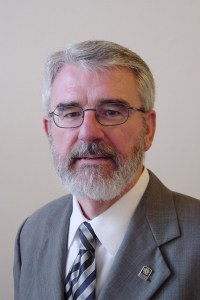
Prof. Michael Root
Leave it to a Lutheran to research and understand indulgences to the point that he probably knows more about them than any Catholic other than the Major Penitentiary himself. Not just any Lutheran, of course, but Professor Michael Root, a lay ecclesial minister and theologian-ecumenist of the Evangelical Lutheran Church in America. I have had the pleasure of meeting Dr. Root and listening to him on a few occasions – at Oberlin for the F&O anniversary, in Graymoor for a USCCB institute, and at a NWCU or two over the years.
He was in Rome to teach an intensive course at the Gregorian on eschatology in ecumenical perspective (which the Angelicum ecumenism students never heard about until after the fact) and he spoke at the Centro Pro Unione this afternoon. For as high-caliber a presentation as this was, attendance was dismal, I am sad to say, perhaps because of good weather combined with the laissez-faire approach to communication in the Eternal City (“Why is it called the Eternal City? Because that’s how long everything takes!”)
Nevertheless, Professor Root presented a finely honed bit of research on the development of the idea of indulgences in the Catholic Church, its perception and reception in ecumenical encounter and dialogue, and suggested that some of the most recent language of the Church on indulgences is palatable even to Lutheran seminarians! We have come a long way since the Reformation.
Despite these deep changes in indulgence theology, one can still find holy cards printed with actual numbers of “days off” of purgatory for each indulgence, as if time exists in eternity! Most people, Catholic and Protestant alike, probably know nothing about the theory of indulgences that represents theology any more recent than the Reformation. Trent, if we are lucky.
In preparing for the Great Jubilee of 2000, Pope John Paul II had called together an ecumenical commission to advise on the preparations for the Jubilee. One of the points raised was the fact that another planning commission had announced a plenary indulgence for the Jubilee before considering its ecumenical impact, and apparently without applying the pope’s own theology of indulgences to the practice! It was what might be called a catechetical moment for some of the Jubilee planners, and the spark that ignited Prof. Root’s interest in the topic.
A small example of the development in indulgence theology and its slow reception was raised by a member of the audience. The Council of Trent banned the sale of indulgences more than 400 years ago, but even in the run up to the Jubilee 2000, the pope’s own Cathedral, San Giovanni Laterno, had prepared worship aids which included something along the lines of “the purchase of indulgences can be done through the following means…” Though there was no actual sale of indulgences, the language still reflected this idea some four centuries after it had been forbidden by the Catholic Church itself!
The text of the lecture itself will be far more valuable than my month old notes on it, but it does not seem to be online yet. Perhaps in the next copy of the Centro Pro Unione Bulletin. I will repost when available. It will be worth the read!
Quote of the Day
First tip to Catholic News Service; full quote from John Allen, Jr.:
In terms of what we today can discover in this message, attacks against the pope or the church don’t come just from outside the church. The suffering of the church also comes from within the church, because sin exists in the church. This too has always been known, but today we see it in a really terrifying way. The greatest persecution of the church doesn’t come from enemies on the outside, but is born in sin within the church. The church thus has a deep need to re-learn penance, to accept purification, to learn on one hand forgiveness but also the necessity of justice. Forgiveness does not exclude justice. We have to re-learn the essentials: conversion, prayer, penance, and the theological virtues.
Pope Benedict XVI,
In-flight press conference en route to Portugal
Reform and Renewal for the Catholic Church in Ireland

Most Rev. Diarmuid Martin, Archbishop of Dublin
By an accident of history, or some mysterious move of the Holy Spirit, it has happened that I was in graduate school in capital cities of the church when the Clerical Sex Abuse and Cover-up Scandals hit the press in the last decade. When the firestorm that started in Santa Rosa spread to Boston and the rest of the U.S., I was in Washington, D.C. at The Catholic University of America. This time around I am at the Angelicum in Rome as the Church in Europe begins to do public penance for the same sins.
There are some significant differences. Eight years ago, one cause of great suffering for people who loved the Church was the abject
failure of most of its leadership to respond with absolute clarity and contrition. In 2002, the Dallas Charter finally implemented norms simliar to those that Archbishop Hunthausen of Seattle had pioneered back in 1985 after the very first media scandal of sacerdotal sex abuse. But I have no recollection of any leading bishop standing up publicly and denouncing the evil committed by fellow bishops. If an effort was made to reprimand even the most grevious offenders, bishops who protected predator priests, it was done behind the “mafia-like code of silence” that was described in the U.S. Bishops’ own commissioned study of the scandal.
By contrast, when Ireland became the first country in a wave of European church scandals, Dublin’s Archbishop, Diarmuid Martin, did not hold back from publicly calling on fellow bishops to resign if they had been indicted or implicated by the state’s criminal investigation. He has not hesitated in stating simply that the Church had sined, in its highest levels of leadership, and that healing required real admission of guilt and an openness to change.
That seems to me all that most people want – a little honesty, and a clear sense that 1) the Church’s leadership recognizes the full extent of the problem, 2) the bishops are willing to take to task their own numbers as appropriate, and 3) all of this is absolutely transparent. It is not enough to protect us against the priest predators in the first place, which the U.S. Bishops’ Conference policies seem to have been doing admirably well, where implemented, but the final piece required is to hold accountable those who allowed this all to happen in the first place.
Today, Archbishop Martin wrote an extended letter that was published on the archdiocesan website, detailing his thoughts on the situation and his vision for renewal. It is honest and straightforward, and touches on a number of critical issues. If every bishop were so committed to living the Gospel with such humility and transparency, I think the millions who love Christ and his church, but have been hurt by their “shepherds” would begin to heal and return to the life of faith with a renewed spirit that the church has not seen in a long time.
Archbishop Martin admits he is disheartened and discouraged about the “level of willingness to really begin what is going to be a painful path of renewal and of what is involved in that renewal.” This makes him one of a small handful of bishops publicly in solidarity with most Catholics I know – whether lay or ordained, secular or ecclesiastical, traditional or progressive.
“ Why am I discouraged? The most obvious reason is the drip-by-drip never-ending revelation about child sexual abuse and the disastrous way it was handled. There are still strong forces which would prefer that the truth did not emerge. The truth will make us free, even when that truth is uncomfortable. There are signs of subconscious denial on the part of many about the extent of the abuse which occurred within the Church of Jesus Christ in Ireland and how it was covered up. There are other signs of rejection of a sense of responsibility for what had happened. There are worrying signs that despite solid regulations and norms these are not being followed with the rigour required.”
He acknowledges a deeper root, a contributing factor – people in Ireland have been catechized but not evangelized. Similar to the graduates of Catholic schools in the U.S. they know about the faith but do not live it. He laments the growing division between parish and catholic school, and the failure of most parishes to engage young people, who he says more and more find the parish “alien territory”.
He discusses the church’s communications strategy, which critics had labeled as “catastrophic”, he responds,
“My answer is that what the Murphy report narrated was catastrophic and that the only honest reaction of the Church was to publicly admit that the manner in which that catastrophe was addressed was spectacularly wrong; spectacularly wrong “full stop”; not spectacularly wrong, “but…” You cannot sound-byte your way out of a catastrophe.”
How refreshing to hear, simply, “we were wrong.” Not, “we are under attack”, or “why are you picking on us, there are other abusers too!”, et al.
He engages the whining “defenses” of the Church offered by some and dismisses them easily. It does not matter if sexual abuse by priests is only a small percentage of abuse over all, or if the culture of the late 60’s was more sexually permissive, or if “experts” then did not share the view of experts now on the cause and potential cure of abuse. The Church has always known good from evil, and in too many cases failed to choose the good.
“The Church is different; the Church is a place where children should be the subject of special protection and care. The Gospel presents children in a special light and reserves some of its most severe language for those who disregard or scandalise children in any way.”
Tied into the necessary renewal of the parishes, he speaks plainly about the need for the renewal of seminaries and priestly formation, unreservedly identifying clericalism as one of the root sins that must be eliminated if we are to move on from this crisis.
“Renewal of the Church requires participation and responsible participation. I have spoken about the need for accountability regarding the scandal of sexual abuse. I am struck by the level of disassociation by people from any sense of responsibility. While people rightly question the concept of collective responsibility, this does not mean that one is not responsible for one’s personal share in the decisions of the collective structures to which one was part.
We need to take a radical new look at the formation of future priests. I am working on plans to ensure that for the future in Dublin our seminarians, our prospective deacons and our trainee lay pastoral workers in the Archdiocese of Dublin will share some sections of their studies together, in order to create a better culture of collaborative ministry. The narrow culture of clericalism has to be eliminated. It did not come out of nowhere and so we have to address its roots in seminary training. We also have to ensure that lay pastoral workers understand that all mission in the Church is calling and requires a self-understanding which is theological in essence.”
Despite his discouragement with the prophets of doom and despair, the protectors of pedophiles, and those still in denial about the true nature of these sins, he ends with a note of hope:
“The Catholic Church in Ireland, as I said, will have to find its place in a very different, much more secularised culture, at times even in a hostile culture. It will have to find that place by being authentic and faithful to the person and the message of Jesus Christ. The agenda for change in the Church must be one that comes from its message and not from pressure from outside and from people who do not have the true good of the Church at heart. We all have reasons to be discouraged and to be angry. There is a sense, however, in which true reform of the Church will spring only from those who love the Church, with a love like that of Jesus which is prepared also to suffer for the Church and to give oneself for the Church.”
The full text of the Archbishop’s letter can be read here.
Judaism and Christianity in Islamic Perspective
The Russell Berrie Foundation supports an enormous amount of activity in a wide variety of fields. The John Paul II Center for Interreligious Dialogue and the Russell Berrie Fellowships at the Pontifical University of St. Thomas Aquinas in Rome are just the most recent, though positioned to have profound impact on the life of the church.
One aspect of the Foundation’s work in Rome is the sponsorship of an annual John Paul II Lecture in Interreligious Understanding, featuring a prominent scholar or religious leader. The inaugural lecture was delivered in 2008 by Archbishop Donald Wuerl of Washington, D.C. and the second was offered in 2009 by the Chief Rabbi of Poland, Michael Schudrich. After two years of leading pastors, this year’s lecture was delivered by a world-class scholar, Dr. Mona Siddiqui of the University of Glasgow.
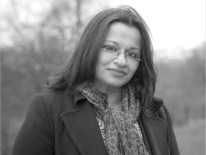
Professor Mona Siddiqui
The original date for the lecture was to take place the day before our Mosque visit, but was delayed to volcanic activity! It turned out to be a good way to celebrate Cinco de Mayo, however!
The Berrie Fellows had the privilege to lunch with Dr. Siddiqui, Ms. Angelica Berrie, and the members of the Foundation and the IIE who were in town for the event yesterday after the seminar on Mary in Islam. In an unexpected re-enactment of the wisdom from Luke 14.1-11, I had situated myself at the end of the table to allow others near the honored guest, and after some shuffling I suddenly found myself placed between Dr. Siddiqui and Ms. Berrie – two fascinating women! And both so very approachable, a gift I appreciate more and more the longer I am in service to the Church.
During today’s featured lecture, Dr. Siddiqui addressed the history of interaction between Jews, Christians, and Muslims from the Islamic perspective, and focusing on the religious rather than the political realities of our day. The importance of dialogue is something she underlined, not for the sake of conversion, but for the sake of compassion.
“Furthermore, many in the West are aware that despite media frenzy at times, dialogue is not a necessity, it is an option even a privilege. Inter religious work can be a symbol of unity across civilisations and it can also reverberate amongst the followers of the faith. But it works best when there is both text and context. There are many Muslims and Christians who remain convinced that dialogue is fundamentally flawed, not just theologically but also in practical terms. How can Muslims and Christians talk about the same God when they hold such different understandings of the same God? If dialogue is not directed at conversion to Christ or to the event of the Qur’an, what is its real purpose? …
Inter religious work has never been about implicit or explicit conversion. As a Muslim who has lived most of her life in the West, I have learnt that faith speaks to faith in many ways. Dialogue has been a process of learning and accepting, of questioning and appreciating, of self-doubt and humility. Most importantly it has been to understand that talking about a common humanity demands much generosity in the face of practical difference.”
The full transcript is available here, and a video of the lecture here.
Mary in Islam
 Dr. Mona Siddiqui presaged tomorrow’s Annual John Paul II Lecture on Interreligious Dialogue with a visit to the seminar Fr. Fred Bliss has been conducting on Mary in Ecumenical Dialogue (which incidentally, uses the Seattle Statement as its primary text). This is my summary of her presentation, with a little reflection.
One of the few things most (western) Christians would know about Islam is that Jesus is respected as a prophet and messenger of God – though not as God himself. Less well known is that Mary is also mentioned from the Qur’an, and considered by some also as a prophet (though not a Messenger). She is, in fact, referenced more frequently in the pages of the Qur’an than in the New Testament. Instead of Mary, Mother of God, the reference is almost always to ‘Isâ, son of Miryam. Mary’s elevation to a place of respect is owing to her being mother of one of the great prophets. There are 114 suras (chapters) in the Muslim holy book, eight of which are devoted to, or named for, a person. One of these is Mary of Nazareth, to whom the 19th sura is dedicated.
Islam does not hold a view of original sin and the need for salvation from sin that dominates Augustinian-influenced Christianity. Adam’s first act of sin was also his first act of the will, and was apparently a part of the divine plan from the beginning that he would populate the Earth (which is part of the result of his choice). We are not born into a state of sin so much as we are inclined to commit particular sins. Nevertheless there is a sort of myth that sometime before birth, we are each of us ‘pricked’ by the devil, which has a similar effect. Mary and Jesus were spared this pricking for much the same reason that the doctrine of the Immaculate Conception was developed, to recognize Mary’s holiness and purity as a worthy mother of a great prophet and Messenger.

ARCIC II Seattle Statement: Mary, Grace and Hope in Christ
The virgin birth of Jesus is affirmed, though the Qur’an and its commentators never focus as much on the physicality of all this, as in some of the extreme Christian views. For Islam, Mary’s purity was ethical and spiritual rather than physical. And nothing about a perpetual virginity.
She is a popular person of devotion, especially for Muslim women. Her role is perhaps not as prominent as Fatima, the daughter of the prophet, who is especially revered among Shi’ah Muslims as the mother of successors to the Prophet Mohammad.
Most popular sport in the world, except in the U.S.
There are 10 men living in the Lay Centre this semester, representing Albania, Chile, Greece, Italy, Mexico, Serbia, and the U.S. When i walked in to the student kitchen to make some tea, they were all there watching a soccer match… all, that is, except for the Americans. Eveline thought it would make a good picture, a glimpse of the “dialogue of sport”, if you will.
(Due to space constraints, Theodosius did not make the picture, along with Claudio’s head and half of Andrea. Note that the sole American in the room is behind the pillar making tea.)

Watching the Game: Andrea, Milvio, David, Dimitrios, Radmilo, Rezart, Claudio
 The Ecumenism Blog